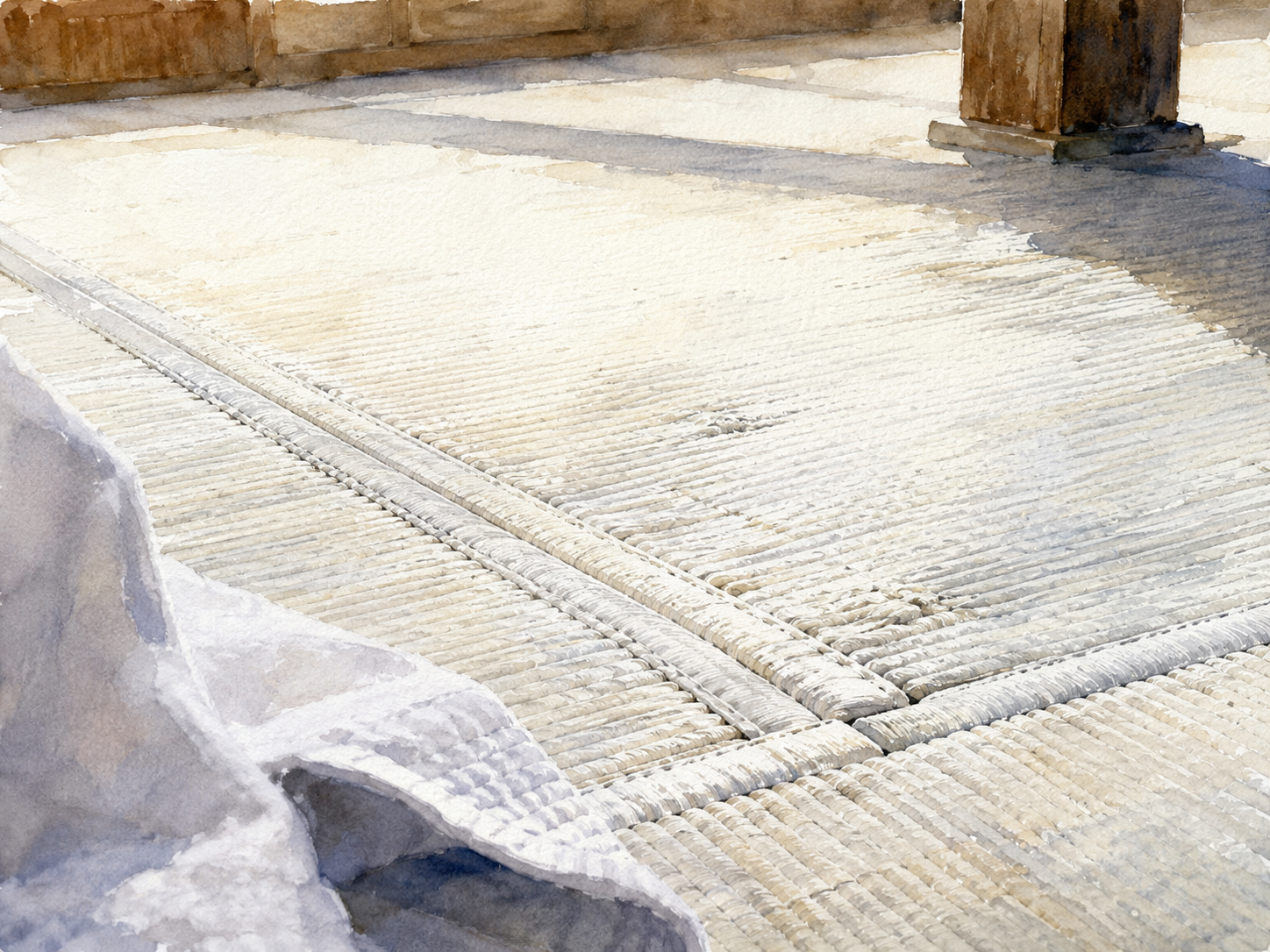
Where the Light Comes to Rest
Critique
1. Introduction This watercolor painting depicts a serene indoor space with great sensitivity. The exact creation date and background details of this artwork remain unknown. The scene evokes the interior of a traditional Japanese building, presenting a tranquil atmosphere that invites the viewer into a state of quiet contemplation. 2. Description A floor featuring a fine grid pattern occupies the majority of the canvas. In the lower-left foreground, a soft, white cloth-like object is draped gently over the surface. The base of a wooden pillar and a partition appear in the upper-right corner, while light casts long shadows. 3. Analysis The diagonal lines of the floor grid provide the composition with depth and direction. Strong contrasts of light and shadow add a dramatic, three-dimensional dimension to the flat surface. The organic form of the white object contrasts sharply with the straight geometric lines of the architecture. 4. Interpretation and Evaluation This work captures the quiet transition of light and the silent moments within a daily space. The delicate rendering of complex light reflections and the stable diagonal composition deserve high praise. The transparent watercolor technique is perfectly suited to the calm and peaceful theme. 5. Conclusion Overall, this painting successfully presents quiet beauty by making the presence of light the central subject. Although it first appears as a simple room sketch, close study reveals a sophisticated design. The perfect harmony of light and shadow leaves a lasting impression of tranquility.
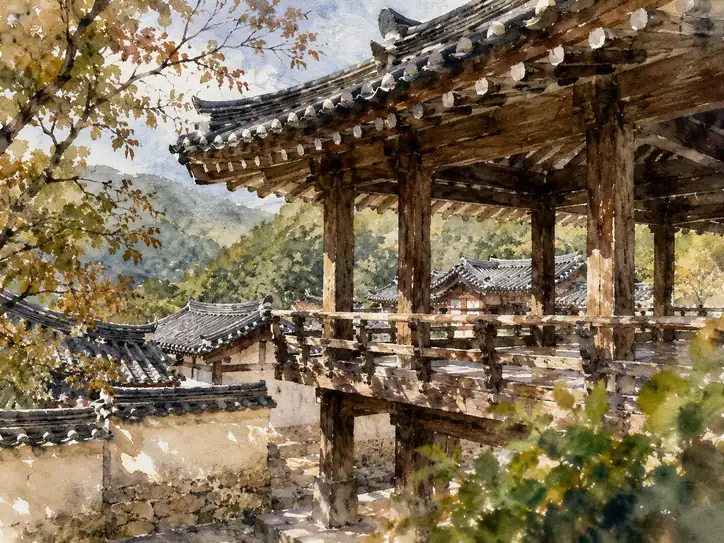 Serene Sanctuary of Autumn
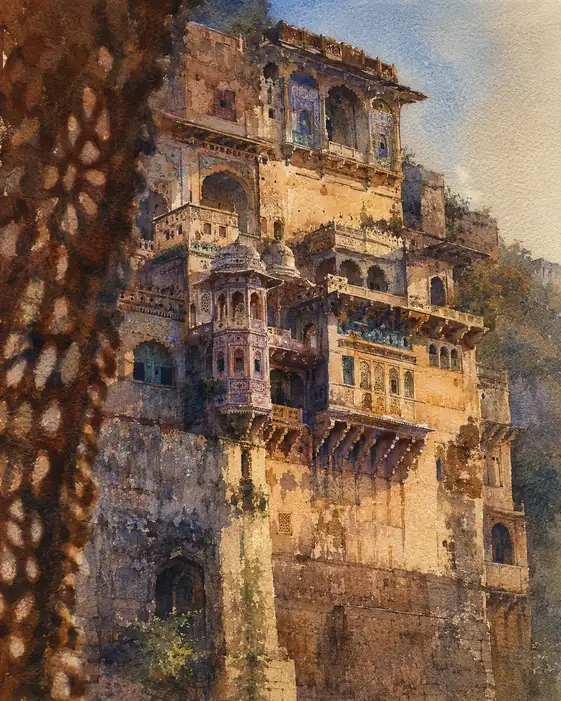 Blue Tiles and Weathered Stone
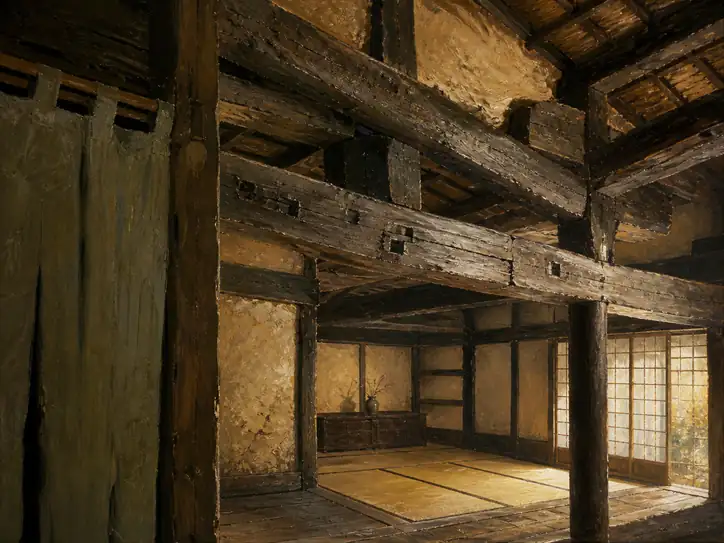 The Breath of Ancient Beams
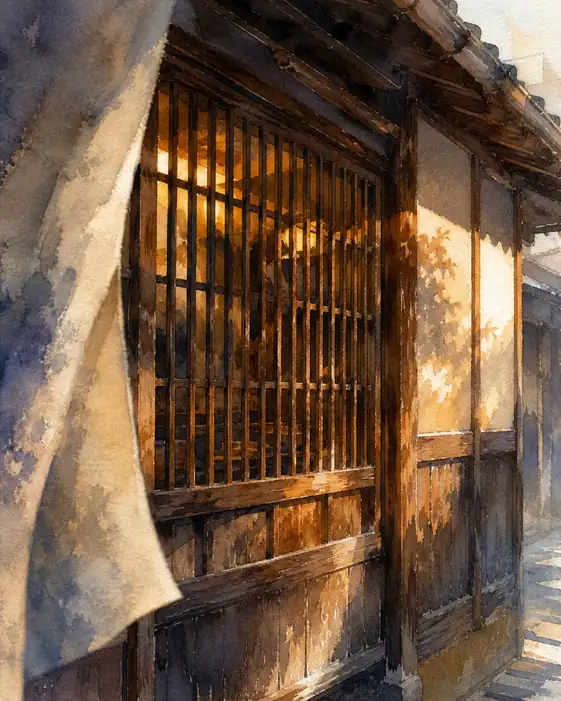 Shadows Dancing on the Lattice
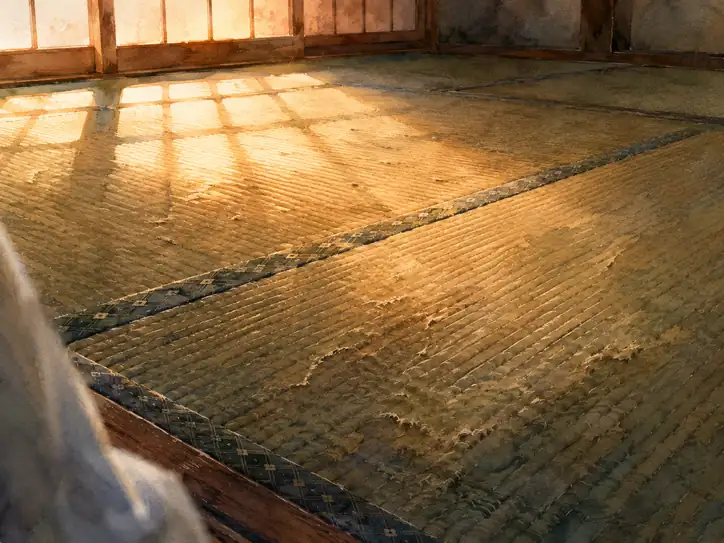 Traces of Time
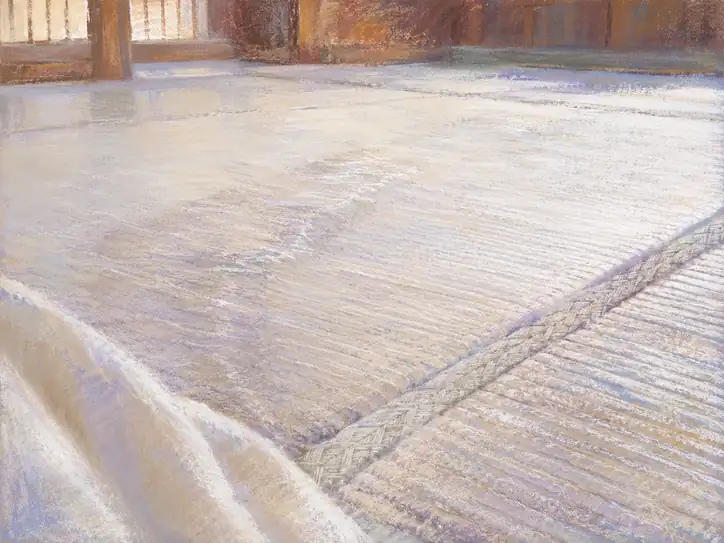 Echoes of Silence
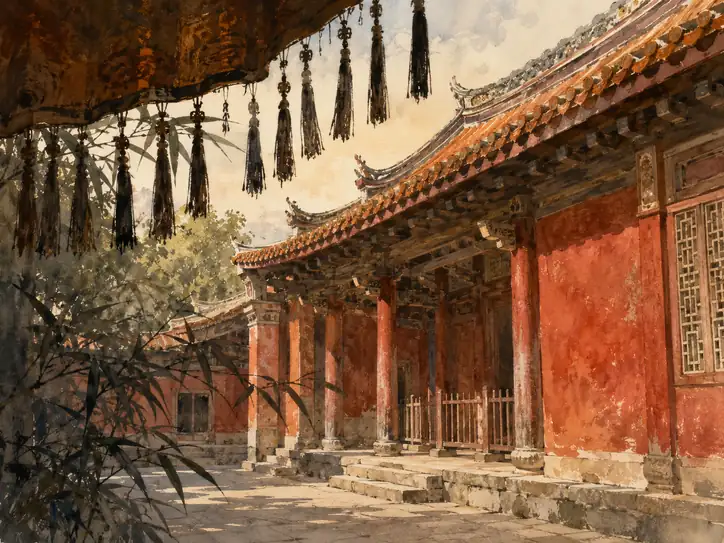 Where Sunlight Whispers to Vermilion
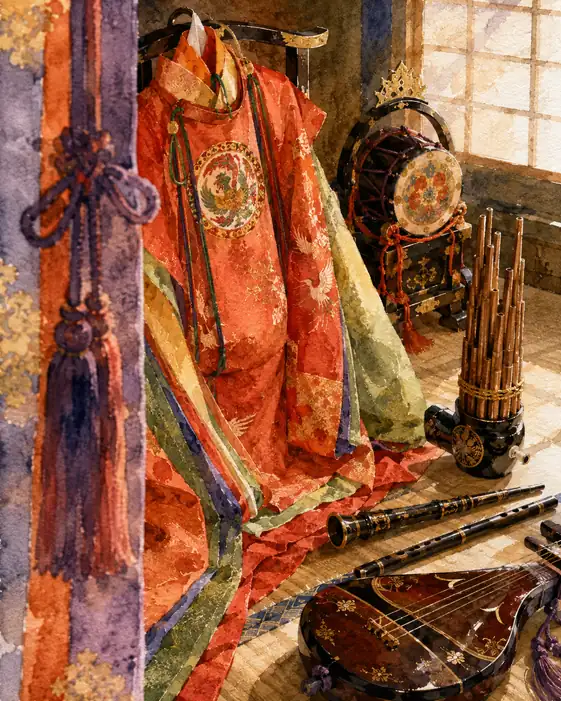 Echoes of Eternal Elegance
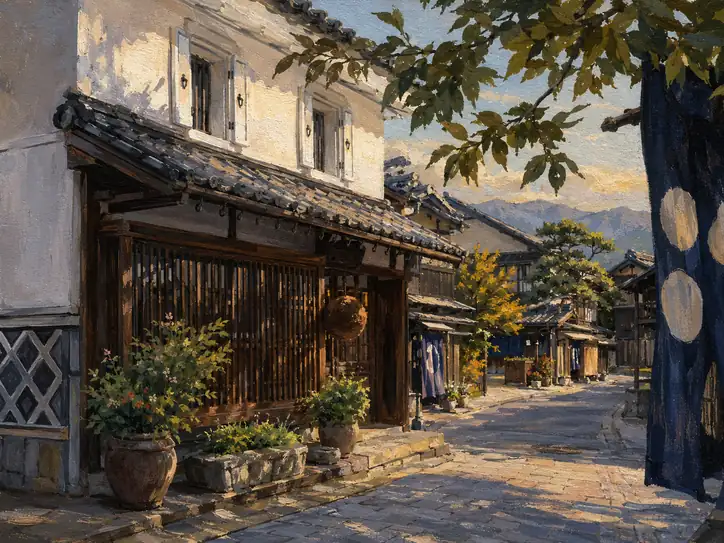 The Golden Hour in a Hidden Village
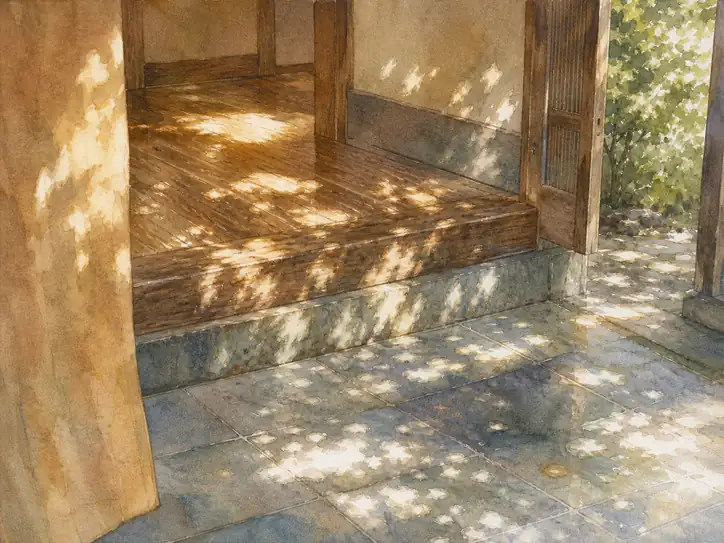 The Starry Threshold of Sunlit Memories
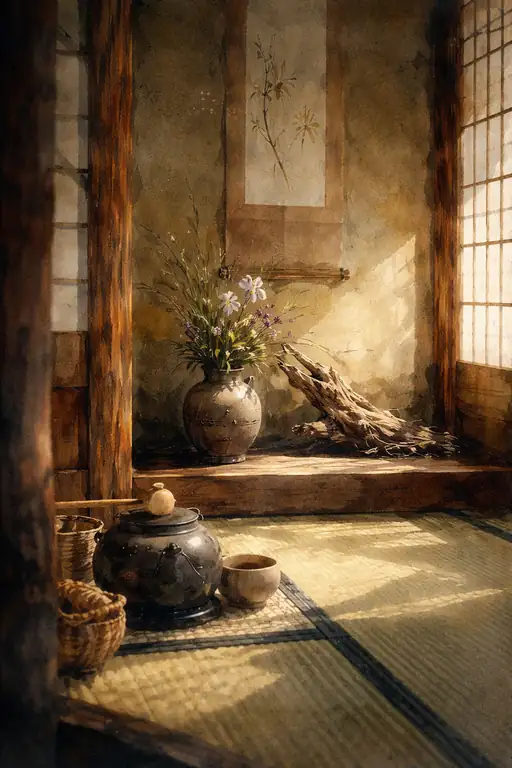 Stillness of the Tea Room
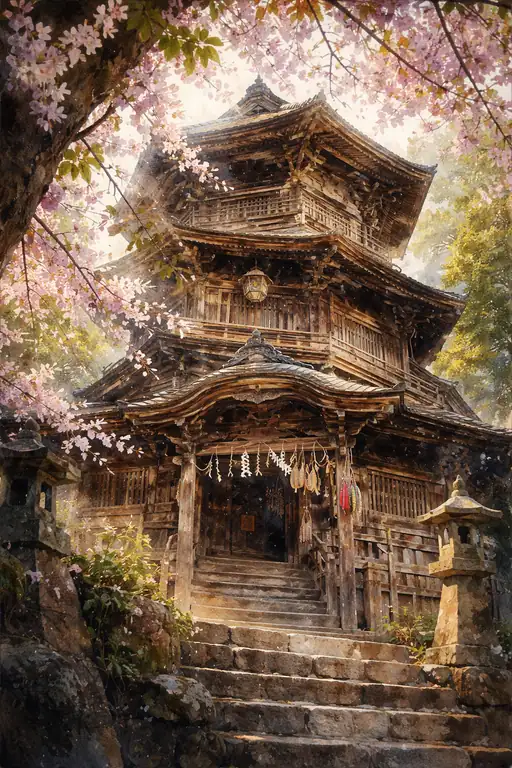 Spring's Quiet Benediction