Unwritten Destinies
Critique
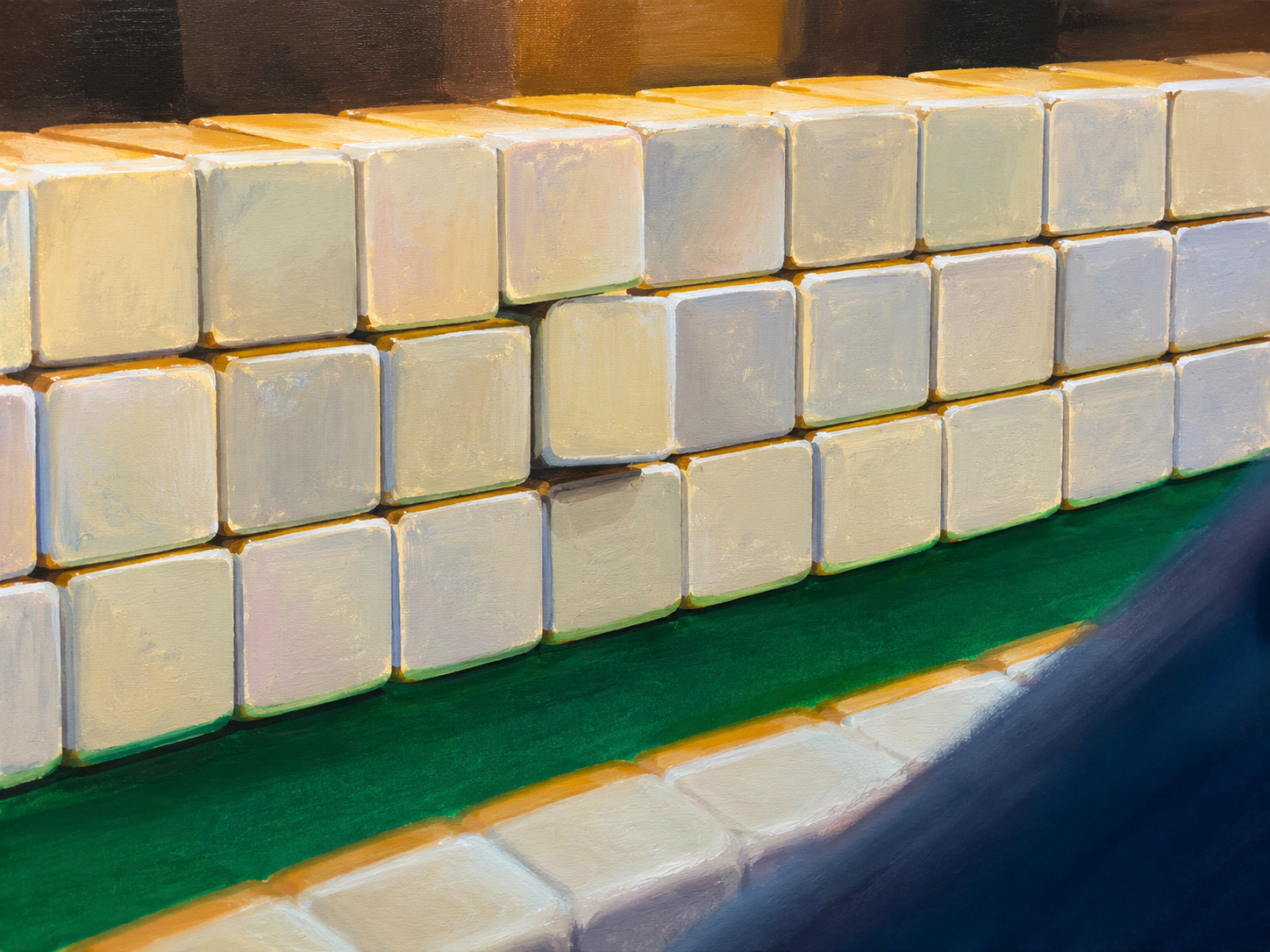
1. Introduction This still life painting depicts stacked Mahjong tiles, highlighting geometric composition and light play. The canvas shows numerous tiles systematically arranged on a green tabletop, with more tiles aligned in the foreground. This structured placement and warm lighting evoke the quiet excitement and anticipation before a game begins. 2. Description Running from the center to the background, white rectangular tiles are stacked in two neat rows, forming a long wall. The blank sides of the tiles are shown, capturing a smooth plastic texture. The green table felt covers the middle, while a diagonal row of tiles occupies the immediate foreground. 3. Analysis The primary aesthetic appeal is the geometric pattern and balanced layout formed by the straight lines and cuboid shapes. The repetition of identical tiles creates a pleasing visual rhythm and order. The palette coordinates the ivory-white of the tiles with the vivid green tabletop and warm yellow highlights. 4. Interpretation and Evaluation The wall of stacked tiles symbolizes the unpredictability of the upcoming game and the hidden drama of competition. By focusing on the blank sides of the tiles, the artwork transcends specific gaming connotations to achieve a clean abstraction. The contrast between bright light and soft shadows lends a poetic depth. 5. Conclusion At first, this work appears to be a literal illustration of Mahjong equipment. However, the delicate color gradations and precise spatial division inject vitality and depth into the canvas. Ultimately, the viewer looks beyond the tiles' gaming function, appreciating the sculptural beauty of light and shadow in this sophisticated masterpiece.
 Traces of Destiny
 A Moment Left Behind
 The Chain of Time
 A Dialogue of Silent Stones
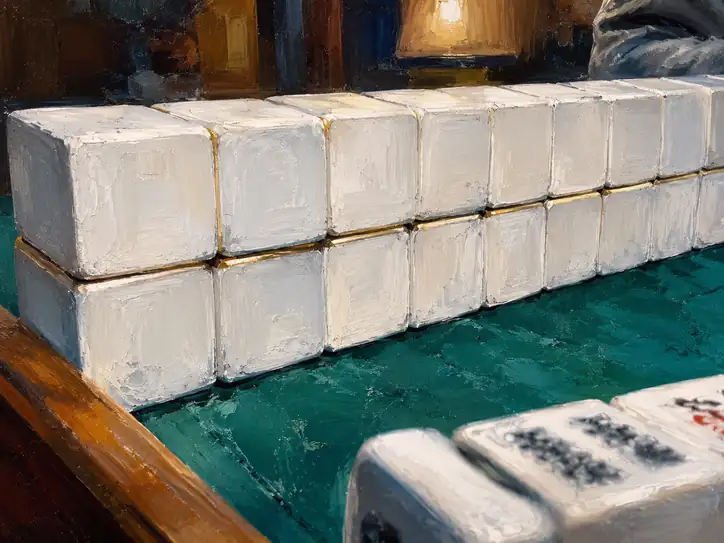 The Unbroken Wall
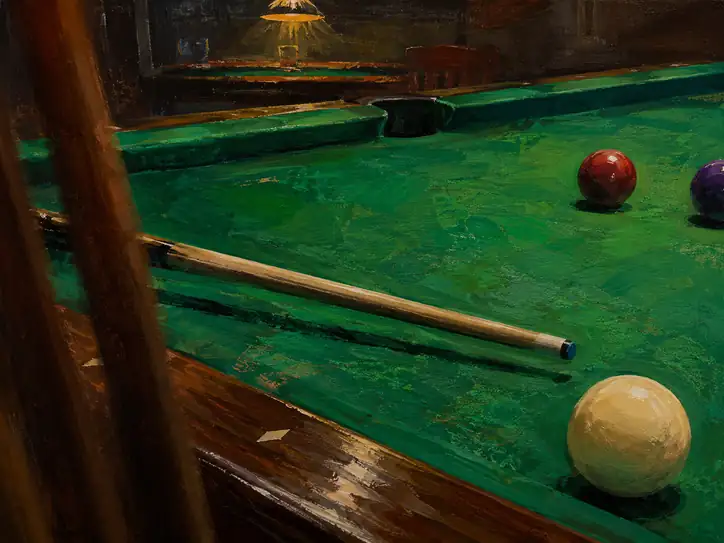 Echoes in the Green Silence
 A Breath Before the Fall
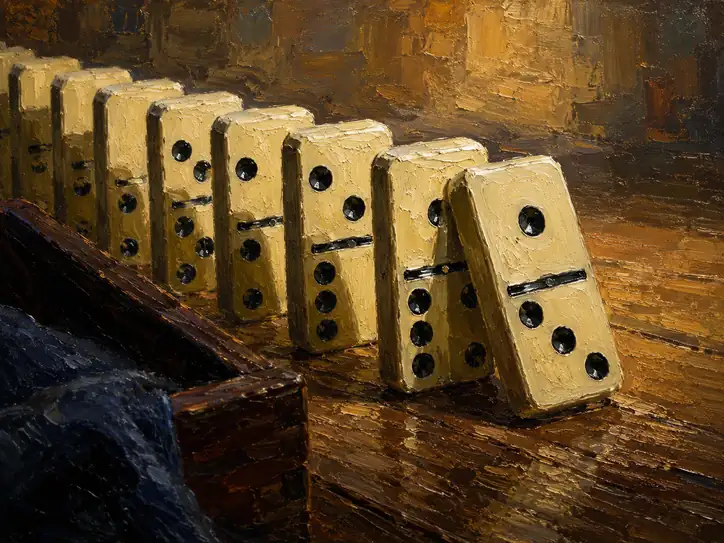 Suspended Causality
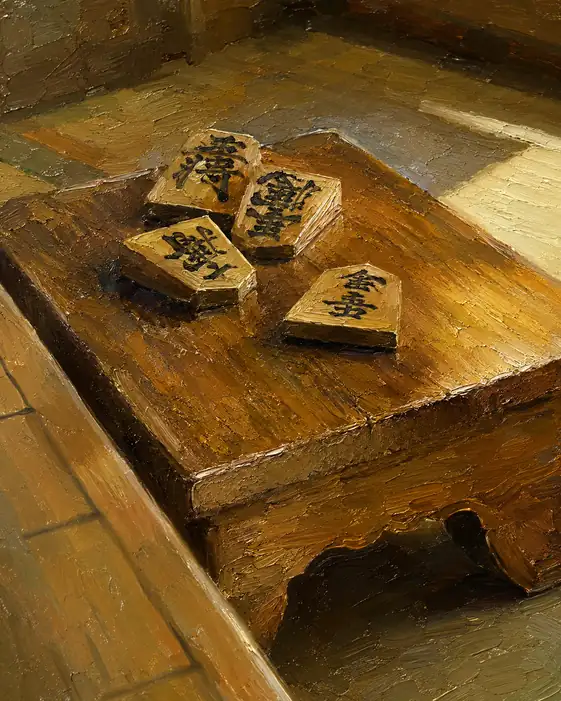 Echoes of a Silent Battle
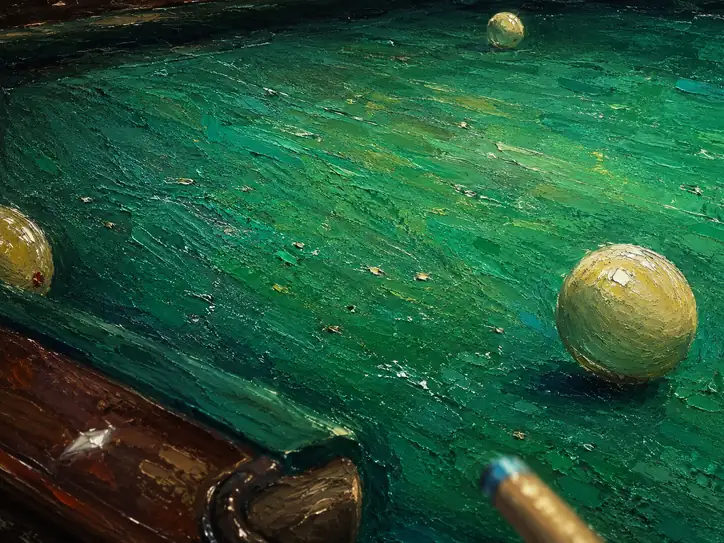 A Silent Impulse on the Green Felt
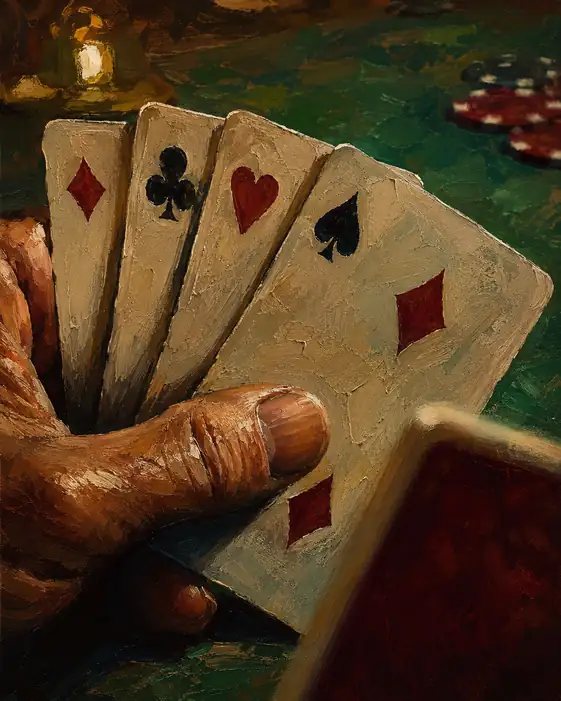 A Silent Bet Against the Dark