Echoes in the Dry Sand
Critique
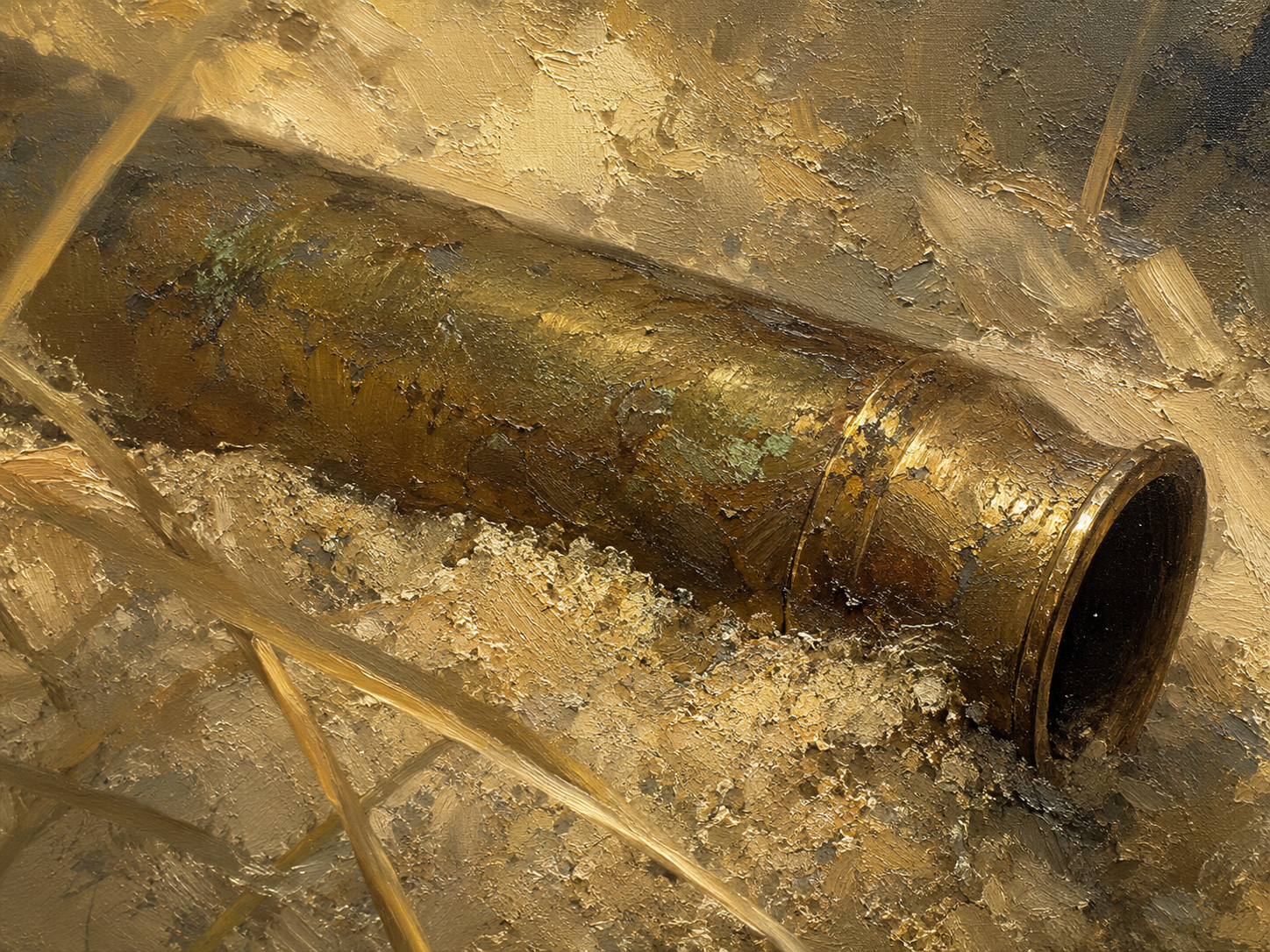
1. Introduction This oil painting shows a metal cylinder half-buried in dry sand and earth from an extremely close viewpoint. The corroded surface of the diagonal object and the rough surrounding soil create a heavy world of ocher and brown. With the background almost eliminated and the paint built thickly, the small remnant takes on the tension of a monument. 2. Description A weathered metal cylinder, resembling a brass pipe, lies diagonally across the composition. Its surface shows corrosion with small green spots of rust. The surrounding ground is filled with rough sand, forming crusted textures around the object. In the lower-left foreground, a few thin, dried grass stems stretch across the frame. 3. Analysis The artwork emphasizes tactile qualities using prominent impasto and energetic brushstrokes. The diagonal placement of the cylinder introduces dynamic movement, establishing tension within the frame. By focusing entirely on the object and eliminating background details, the composition amplifies the cylinder's presence. Light from the upper right highlights the curved metal surface. 4. Interpretation and Evaluation This piece reflects on themes of wind-worn relics and the passage of time. The artist convincingly contrasts the cold hardness of metal with the dry grain of sand. Limiting the palette to warm earth tones lends the composition a serious weight. The originality lies in transforming a simple object into a monument of beauty. 5. Conclusion An initial impression of abstract texture shifts to a clear understanding of the buried object through close inspection. In this process, the viewer appreciates the thick paint layers and subtle light reflections. By combining restricted colors with forceful application, the artist establishes a space of physical weight. The work demonstrates high technical execution.
 Relic of Peaceful Slumber
 Echoes of the Silent Guard
 Before the Forest Awakens
 The Iron Giant's Silent Dream
 Silent Echoes of the Spartan
 Prayer of Gold and Lacquer
 The Roar of Scarred Gold
 Silent Pride of the Crimson Shield
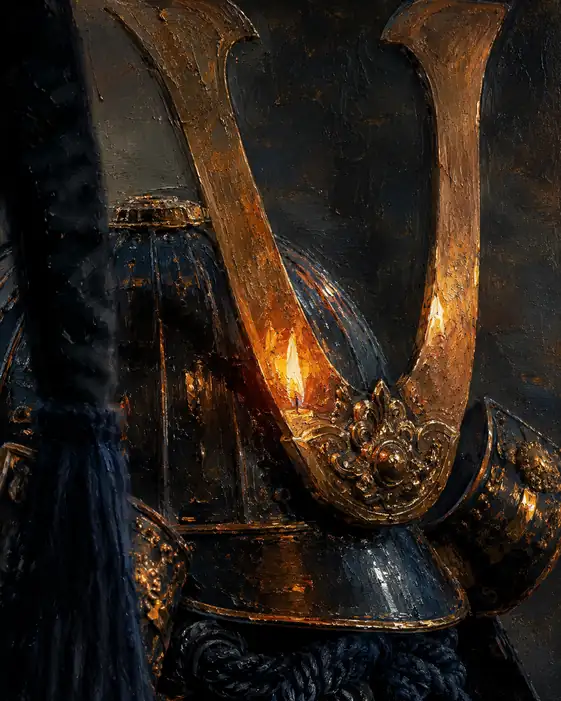 Determination Forged in the Dark Abyss
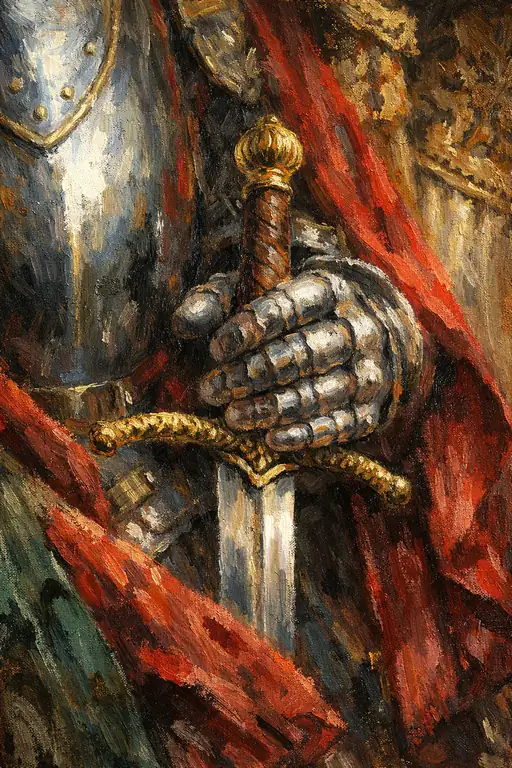 The Iron Resolve
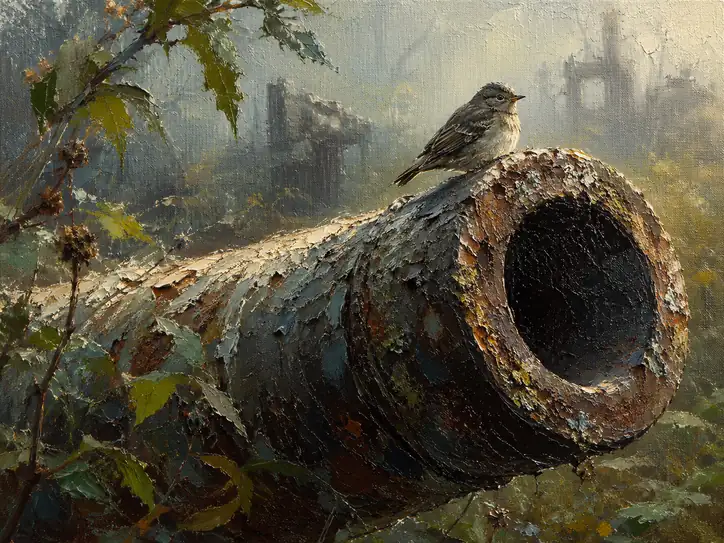 A Tiny Song on Rusted Iron
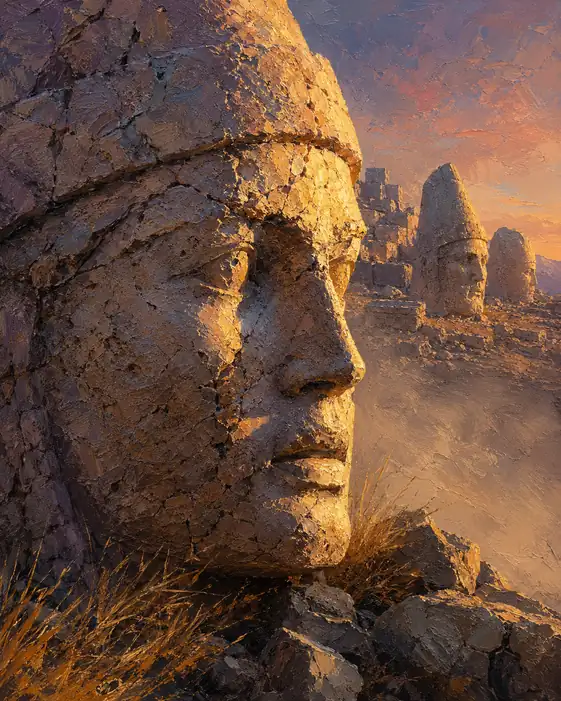 Gaze into the Golden Horizon