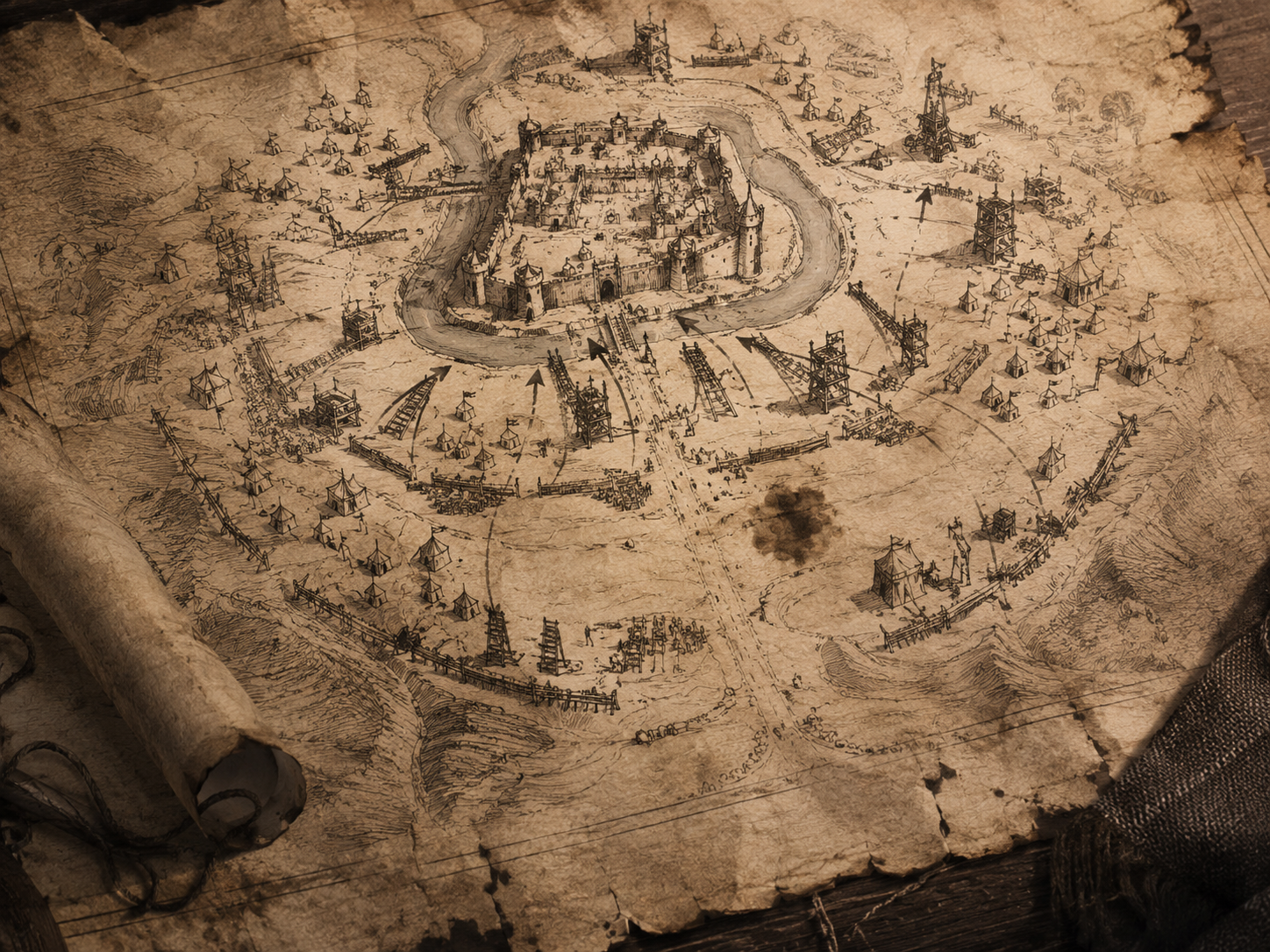
The Blueprint of Conquest
Critique
1. Introduction This ink drawing on aged parchment depicts a detailed medieval battle map illustrating a siege strategy against a fortress. The artwork captures the analytical nature of military planning and historical cartography through fine line work. It establishes a scholarly yet intriguing atmosphere, focusing on the tactical organization of space. 2. Description The composition features a centrally located castle surrounded by a river moat, acting as the primary target. Encircling the fortress are numerous military tents, siege engines, barricades, and black arrows indicating lines of attack. On the left side, a rolled-up parchment scroll sits on the table, framing the scene. The entire paper is rendered in warm sepia tones, complete with creases and burnt edges that suggest antique origin. 3. Analysis The artist employs a bird’s-eye perspective to display the comprehensive layout of the battlefield. A monochromatic color palette of brown and sepia creates a unified, historical feel that mimics ancient documents. The meticulous, fine-line ink drawing technique provides clarity to the complex arrangement of tiny structures and pathways. The curvilinear river and circular encirclement create a sense of focused containment around the castle. 4. Interpretation and Evaluation This work can be interpreted as a study of strategy, power, and the intellectualization of conflict. By presenting war as a graphical map, the artist distances the viewer from the violence of battle, emphasizing instead the cerebral logic of siege warfare. The drawing is highly successful in its stylistic authenticity, capturing the tactile quality of old maps with great precision. The detail in the cartographic symbols demonstrates exceptional patience and skill. 5. Conclusion Ultimately, the painting invites viewers to contemplate the historical intersection of art, cartography, and military strategy. The juxtaposition of technical planning and artistic rendering highlights the dual nature of historical mapmaking. The artwork leaves a lasting impression of historical depth and tactical complexity.
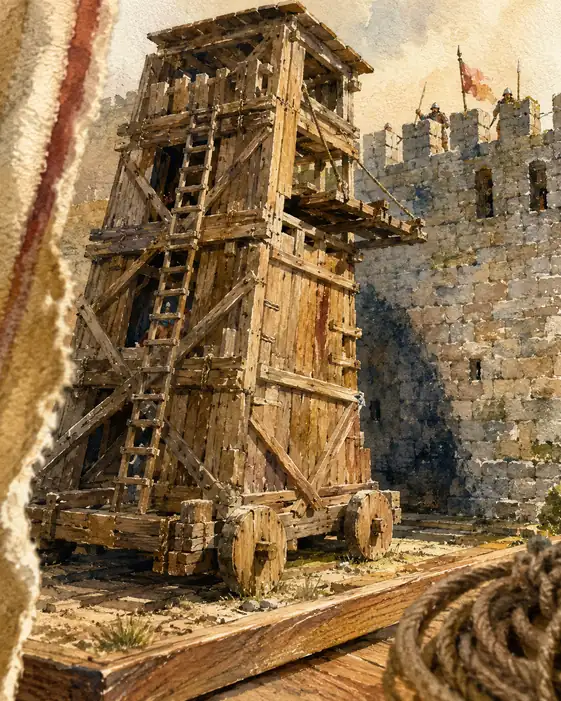 The Wooden Giant's Challenge
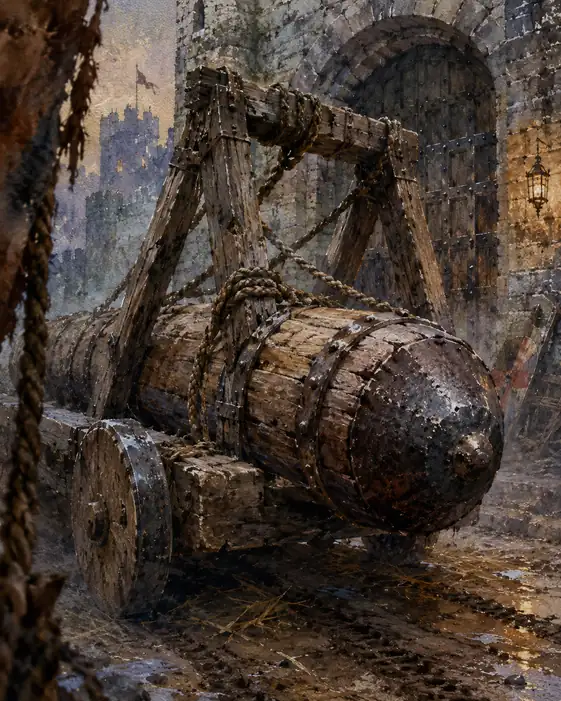 The Weight of Silence
 Before the First Arrow Falls
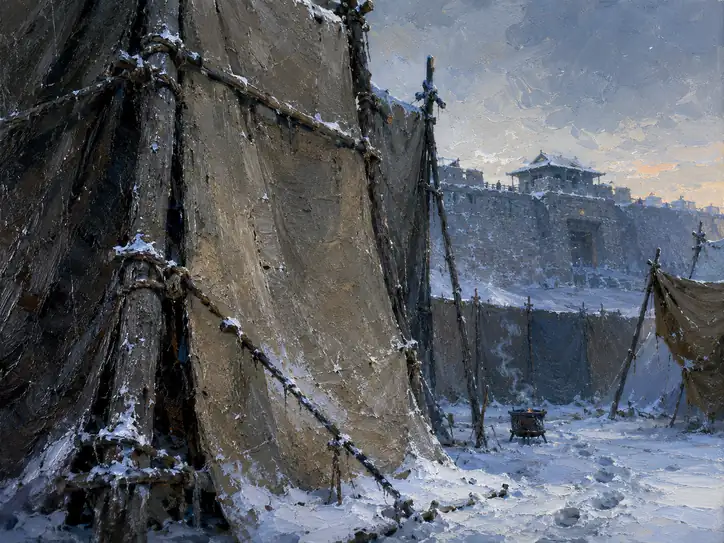 Embers of Resilience
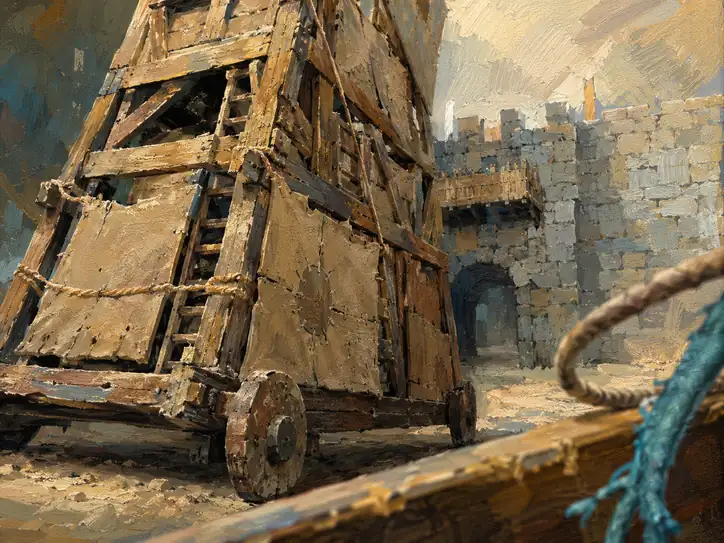 The Silence of Stone, the Cry of Timber
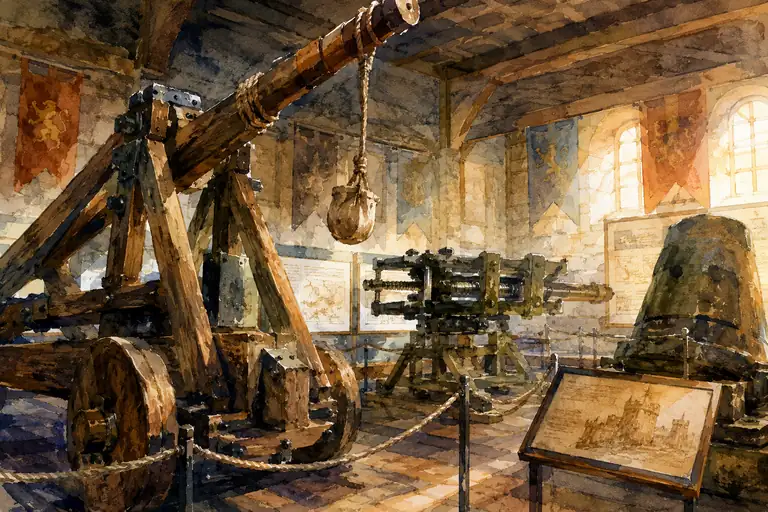 The Peaceful Repose of Iron Giants
 The Silent Oath of Crimson
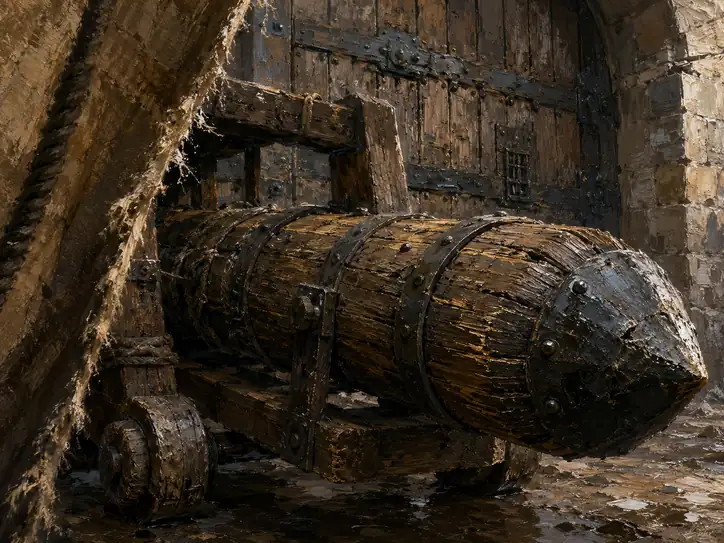 The Breath Before the Impact
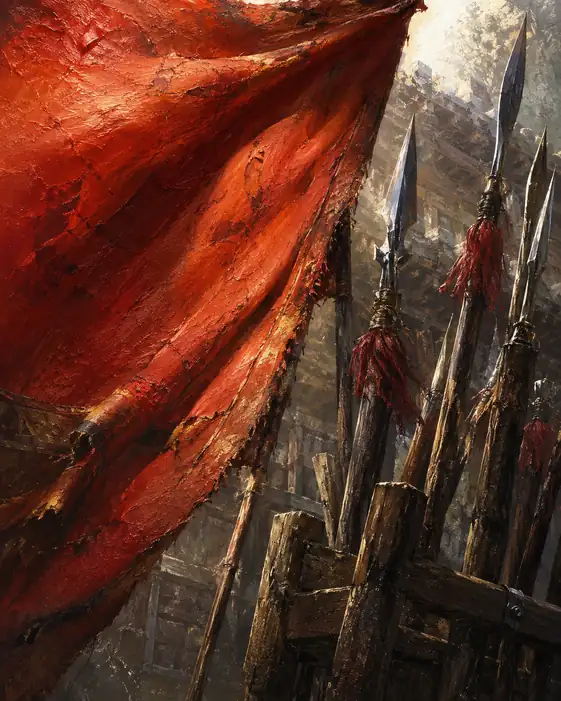 Storm of Crimson Resolve
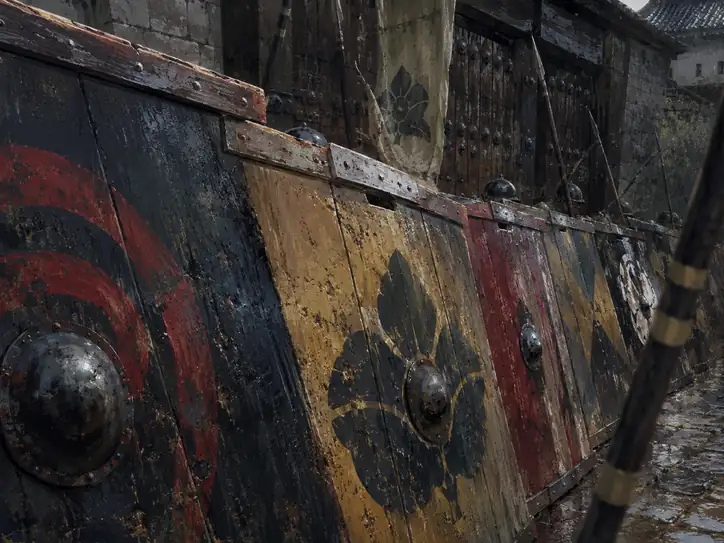 The Wall of Undying Wills