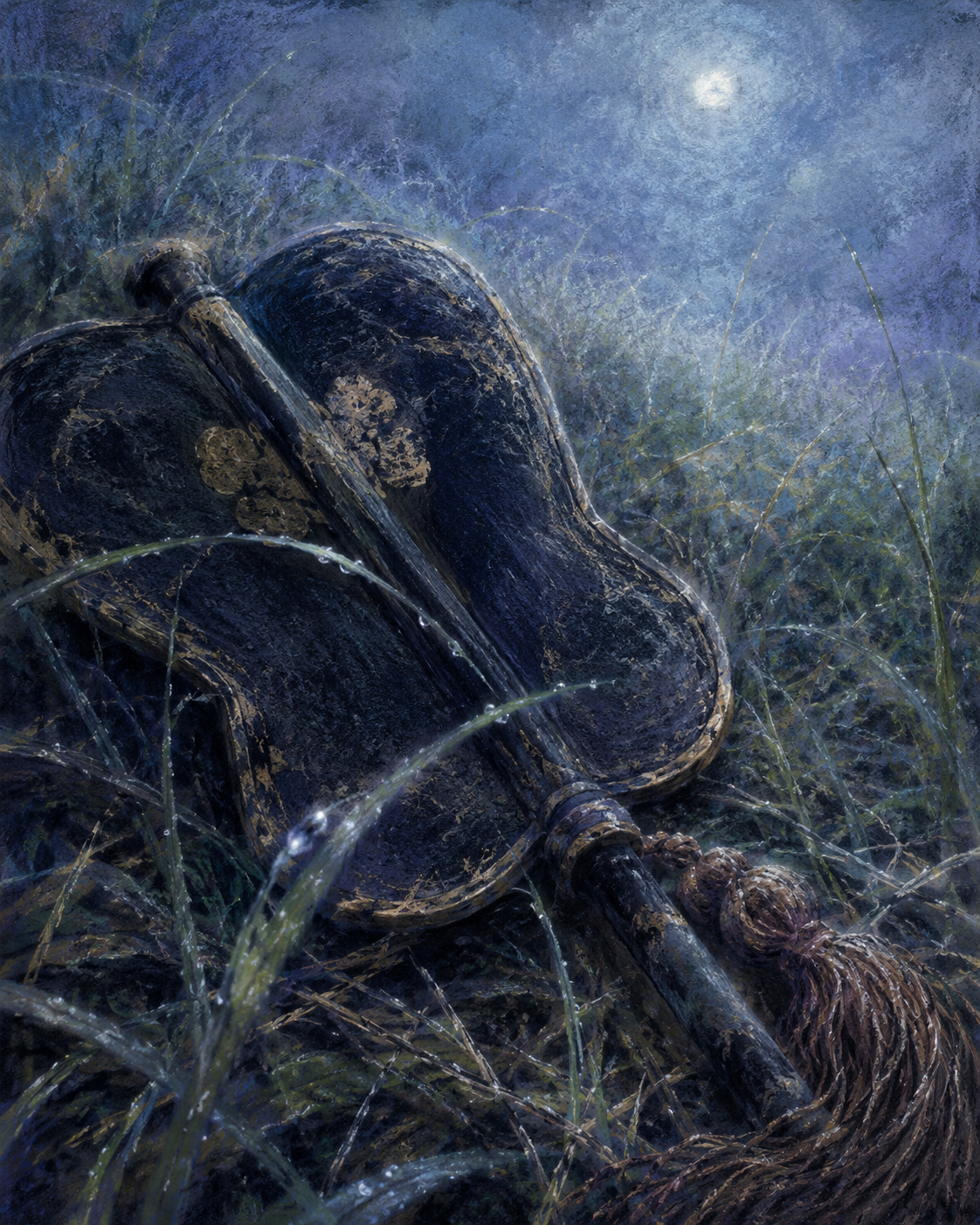
Echoes of the Silent Command
Critique
1. Introduction This dramatic night landscape painting depicts a traditional lacquer commander's fan, or gunbai, abandoned in a thick patch of grass under a cloudy moonlit sky. The composition creates a somber, reflective atmosphere filled with historical romance and silent sorrow. 2. Description In the center, a dark fan adorned with faint golden family crests lies diagonally across damp blades of grass. The handle extends toward the bottom right, finished with a heavy, woven silk tassel resting on the dark ground. The background shows dense foliage beneath a soft, glowing full moon partially veiled by thin clouds. 3. Analysis The artist uses a dark, rich color palette composed of deep indigos, Prussian blues, muted greens, and sharp highlights of gold and silver. The thick, textured brushwork mimics the rough surface of the earth and the stiffness of the grass, while delicate paint drops represent dew clinging to the foreground leaves. 4. Interpretation and Evaluation The placement of the military fan on the forest floor, rather than in a commander's hand, serves as a powerful symbol of defeat, peace, or the abandonment of authority. The contrast between the cold moonlight and the warm gold leaf on the fan draws the viewer's attention to the decaying object. The artwork demonstrates masterful execution in light distribution and symbolic storytelling. 5. Conclusion Initially, the painting presents a simple, close-up study of a traditional Japanese artifact dropped in nature. However, a deeper reading reveals a poignant meditation on the transition of power and the silence that follows human ambitions. The final image leaves a strong impression of quiet elegance and historical melancholy.
Same Subcategory
 Rust and Redemption
 Echoes of Sovereignty
Similar Artworks
 Determination Forged in the Dark Abyss
 Silhouettes of the Gothic Moon
 Moonlit Peony in Velvet Night
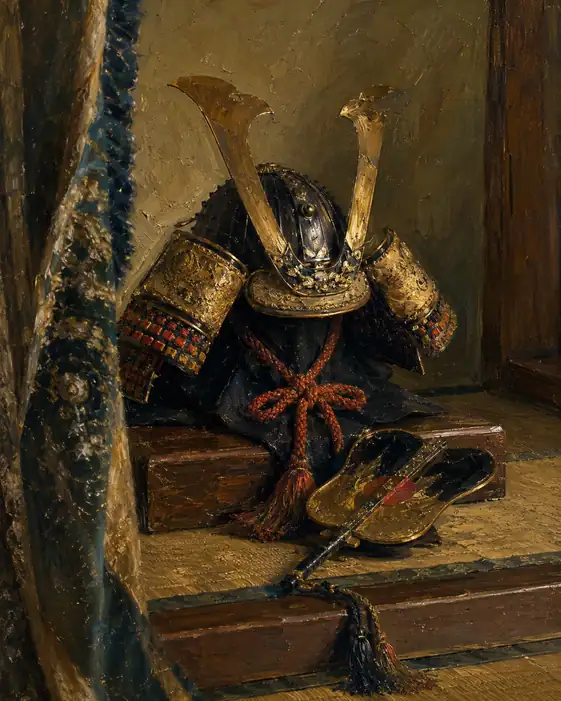 The Silent Pride of the Kabuto
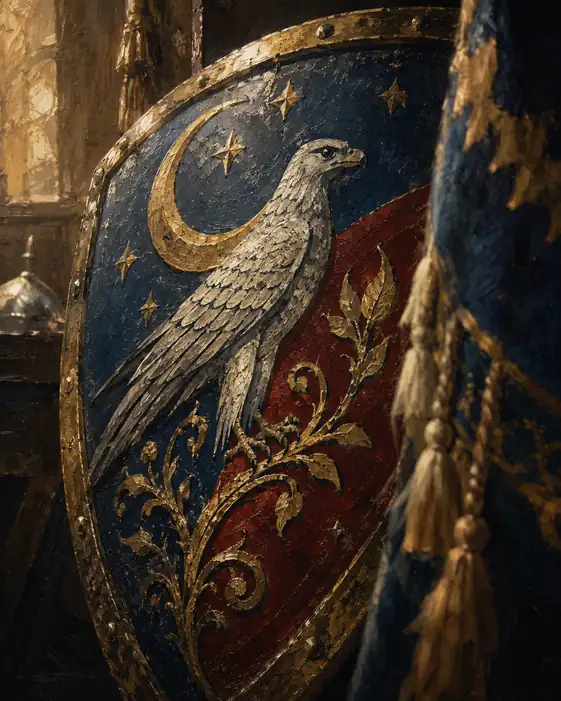 Shield of the Rising Crescent
 Peony and Crescent Moon Pendant
 Moonlit Petals Above the Dark Waters
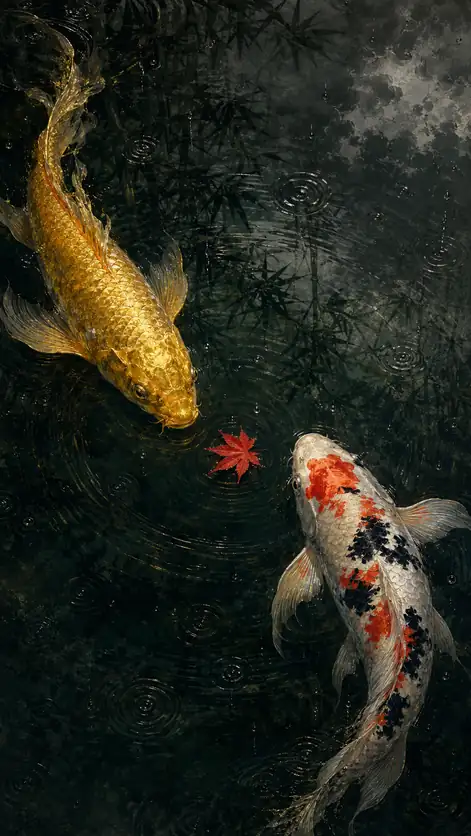 A Promise Unbroken by Night Rain
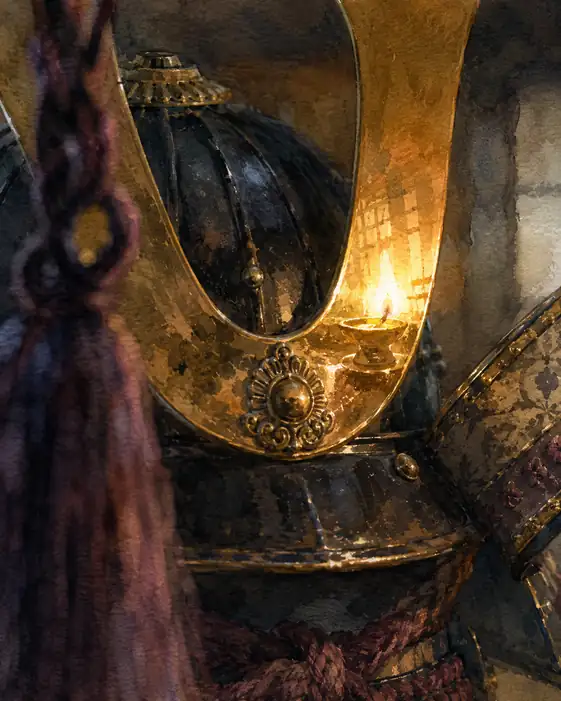 The Flame of Silent Honor
 The Weight of Ancient Silence