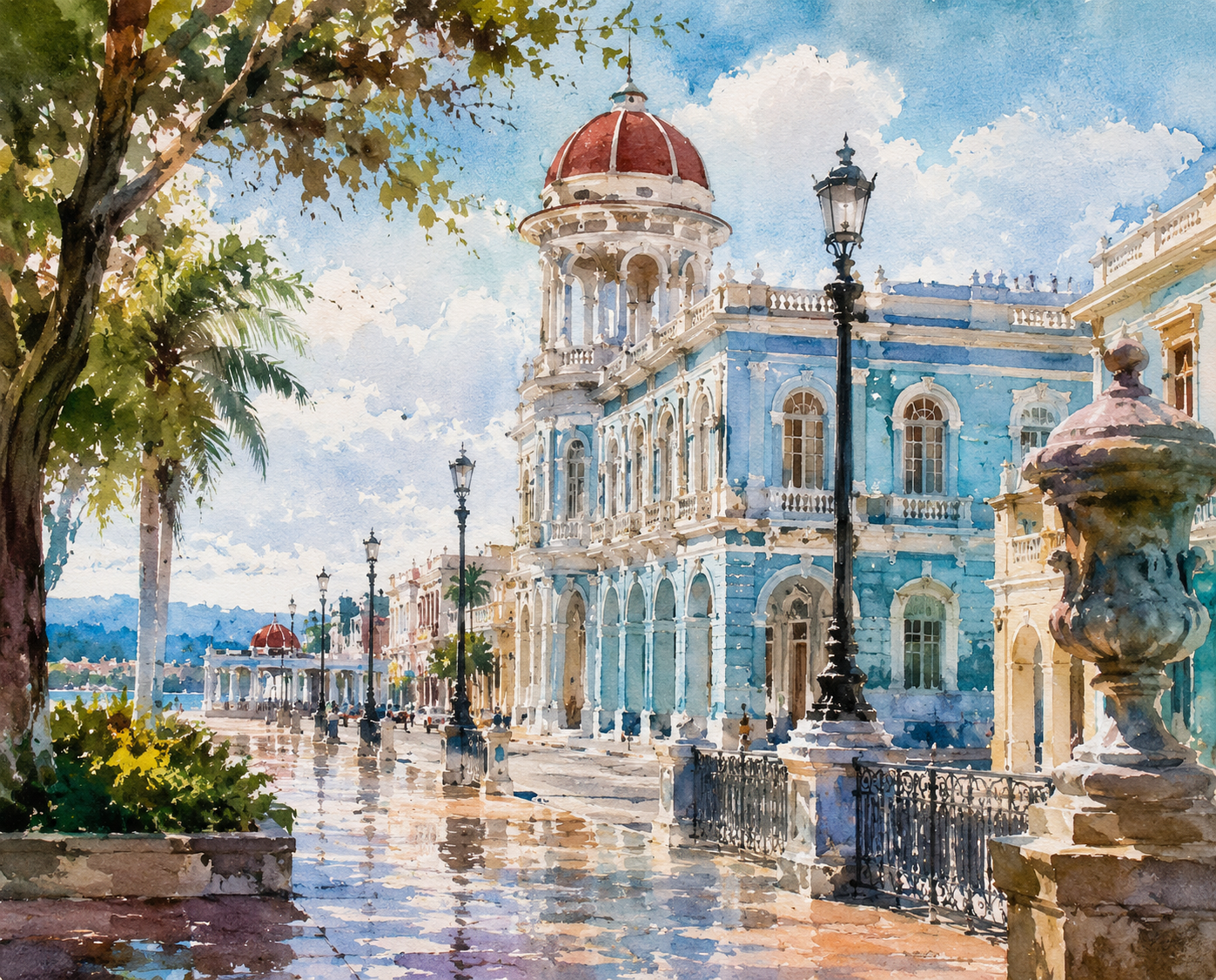
Melody of Light and Rain
Critique
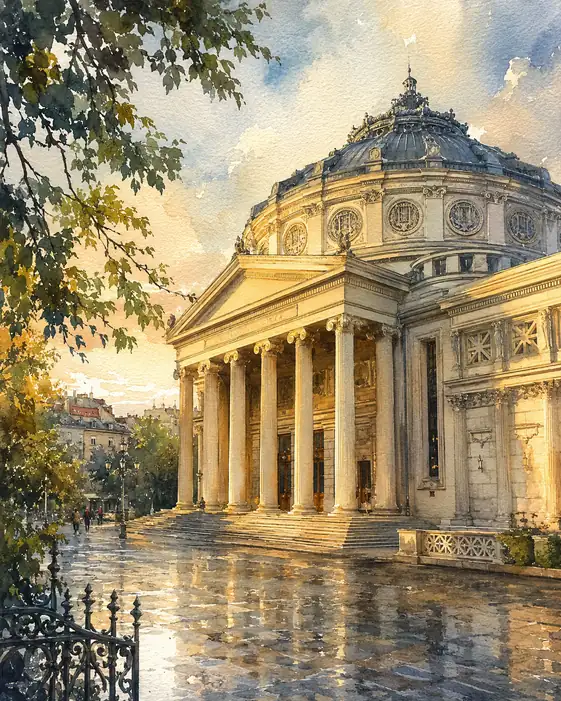
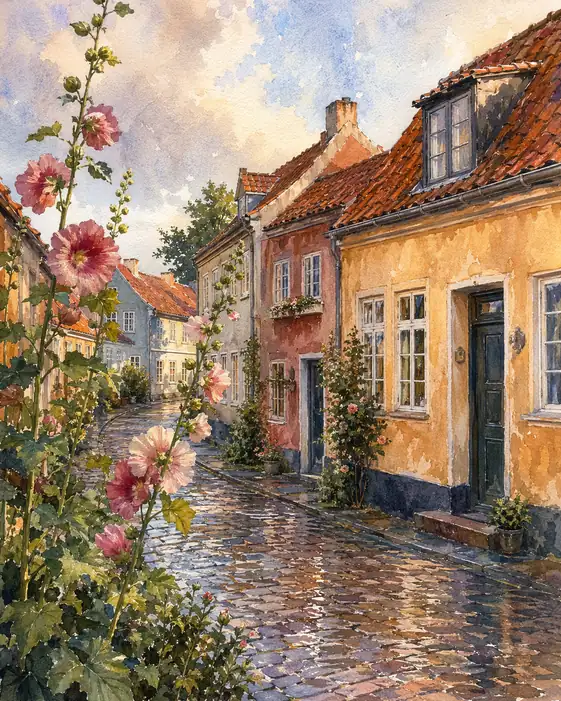
1. Introduction This painting depicts a magnificent light blue Western-style building with a red dome beside a wet cobblestone street. While specific details about its production date, dimensions, and medium are unknown, the delicate washes indicate it is a watercolor work. This analysis explores the visual features of this atmospheric urban scene. 2. Description On the right, a grand pastel blue building with a prominent rounded dome dominates the composition. In the foreground, a decorative stone urn stands on the right, next to a black iron fence and a classic lamppost. Green trees and palm trees line the left side, while the wet ground mirrors the colors of the architecture and sky. 3. Analysis The artwork creates a strong sense of perspective through the receding line of the building's facade. The trees on the left and the stone urn on the right act as framing elements, drawing focus down the street. Using the wet-on-wet watercolor technique, the painter masterfully captures the complex reflections on the damp cobblestones. 4. Interpretation and Evaluation The work successfully captures a romantic urban atmosphere where historical architecture meets the fresh light after rain. The artist exhibits outstanding draftsmanship and compositional control, effectively conveying the humidity and crisp air of the scene. The depiction of light reflecting off the wet pavement is highly original, showcasing exceptional color sensitivity. 5. Conclusion What initially appears to be a typical street scene reveals itself to be a sophisticated study of light, water, and reflection. The dynamic play of reflections brings vitality to the static architecture, transforming the quiet street into an evocative space. This watercolor landscape stands as a brilliant harmonization of architectural precision and fluid painterly expression.
Same Subcategory
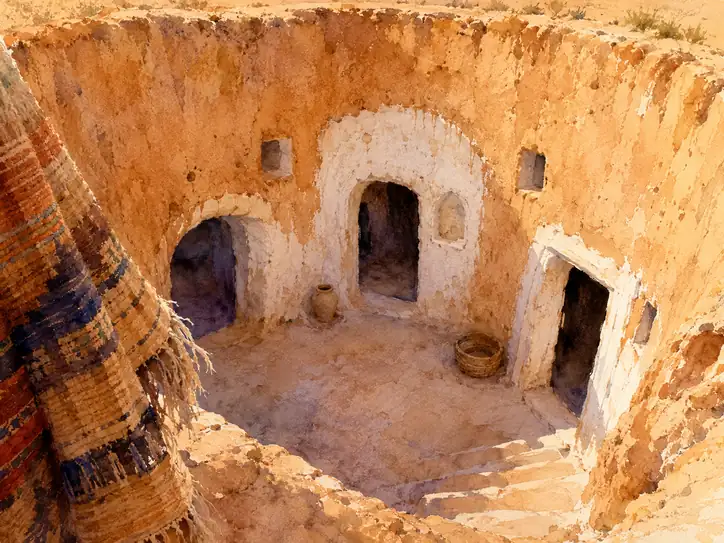 Sanctuary Carved in the Earth
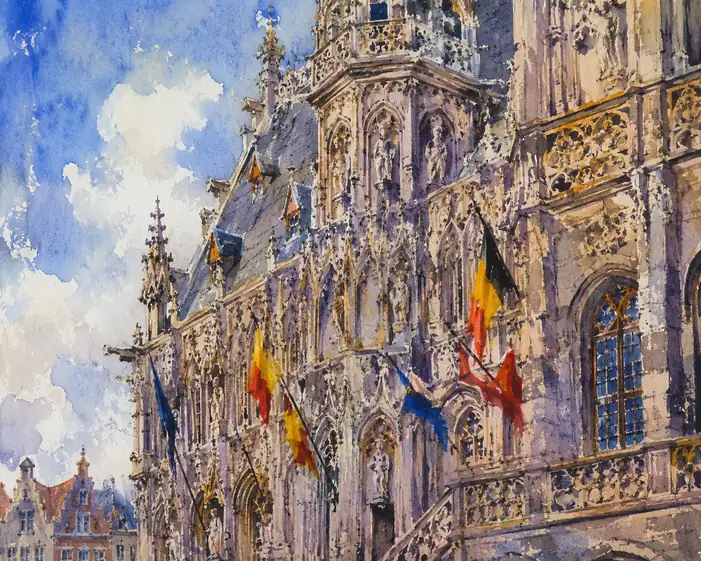 Colors Dancing on Ancient Stone
Similar Artworks
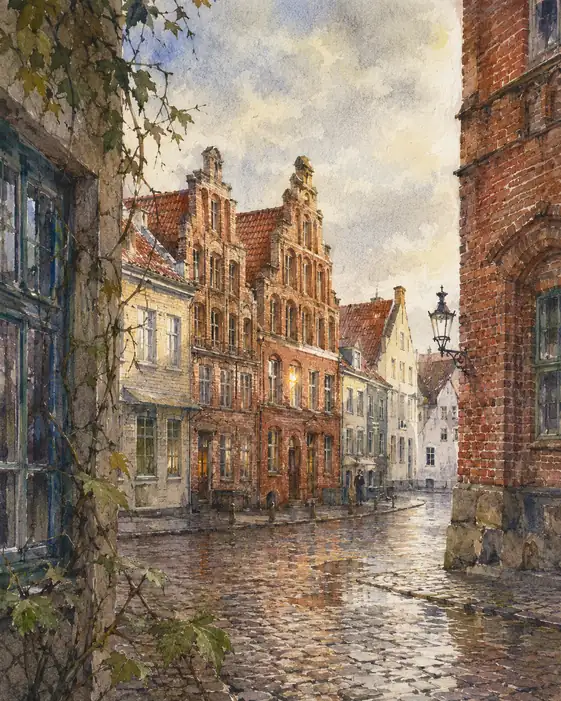 Silent Footsteps on Rain-Washed Stone
 Whispers of the Grand Dusk
 Reflections of a Timeless Rhythm
 After the Rain: A Colonial Reverie
 Path to the Golden Twilight
 Whispers of the Sun after Rain
 Sanctuary of the Rain-Slicked Stone
 Golden Reverie of the Athenaeum
 Reflections of the White Swan after the Rain
 After the Rain, A Pastel Melody