Where the Earth Breathes Gold
Critique
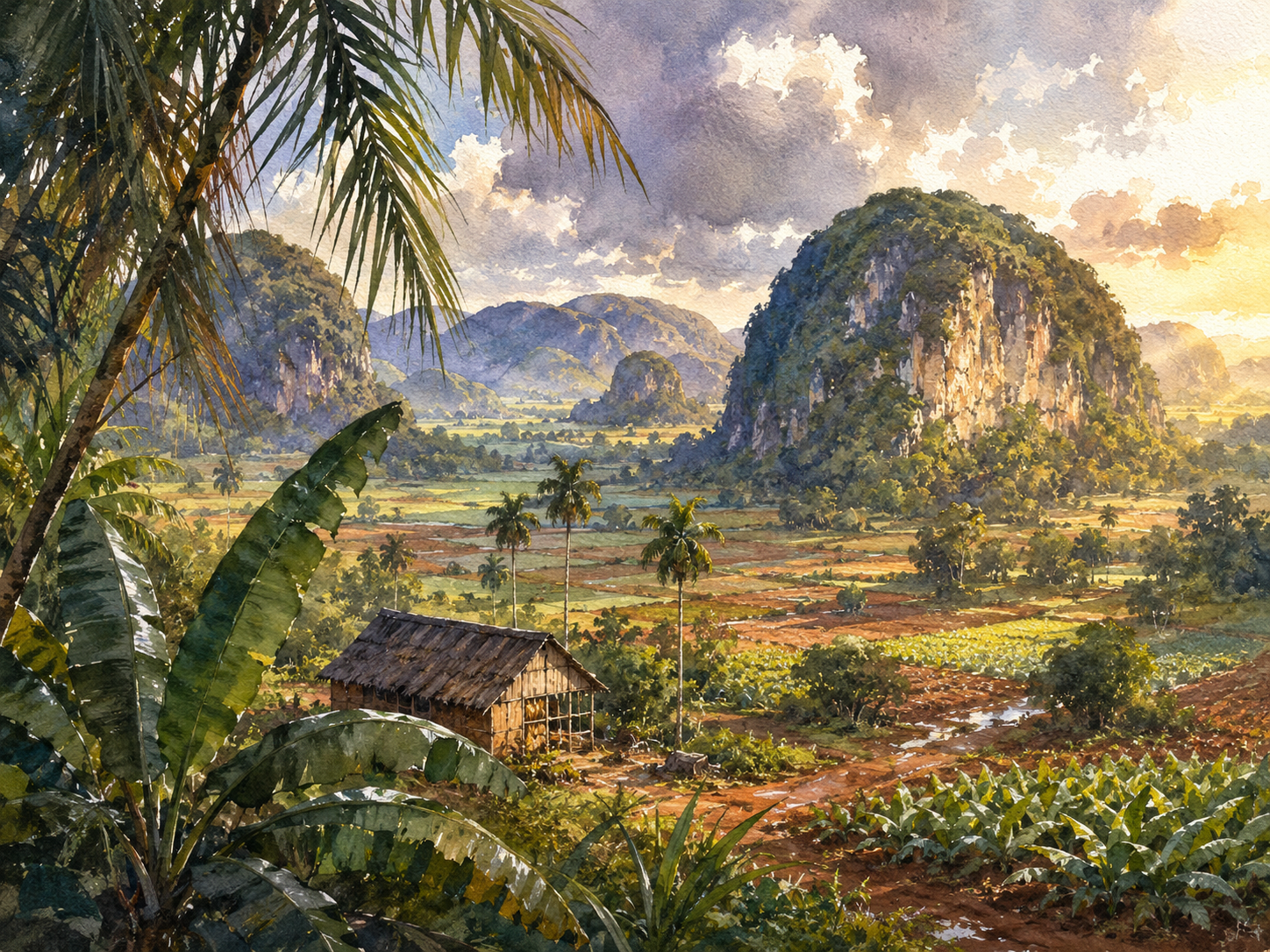
1. Introduction This painting depicts a vast valley characterized by unique dome-shaped mountains and rustic agricultural fields. Details regarding the creation date, dimensions, and medium are unknown, though the delicate washes suggest a watercolor technique. This analysis examines the visual components of this rich natural landscape. 2. Description In the left foreground, large banana and palm leaves frame the view of a simple thatched-roof hut. Beyond the hut, cultivated fields extend toward majestic karstic mountains in the background. Warm light enters from the upper right, illuminating the rocky cliffs and coloring the cloudy sky with orange hues. 3. Analysis The artwork utilizes a three-tiered spatial structure, guiding the viewer's eye from the foreground foliage to the distant peaks. A strong sense of depth is established through this layout and the contrast of values. The watercolor bleeding and soft gradients convincingly capture the humid atmosphere and the texture of the stone cliffs. 4. Interpretation and Evaluation This work beautifully conveys the harmony between dramatic natural formations and simple human cultivation. The artist demonstrates superb draftsmanship and a delicate handling of light, evoking a vivid sense of temperature and air. The composition and the warm, glowing palette create a highly original, poetic representation of rural life. 5. Conclusion Upon initial viewing, the scene appears to be a simple tropical vista, but closer study reveals a complex rendering of light and atmosphere. The contrast between rugged mountains and peaceful fields highlights the enduring connection between humanity and the earth. This masterfully executed watercolor landscape remains memorable for its serene and captivating beauty.
Same Subcategory
 Wildflowers of the Silent Peaks
Similar Artworks
 Echoes of the Golden Chasm
 Whispers of the Waking Valley
 The Earth's Gentle Breath
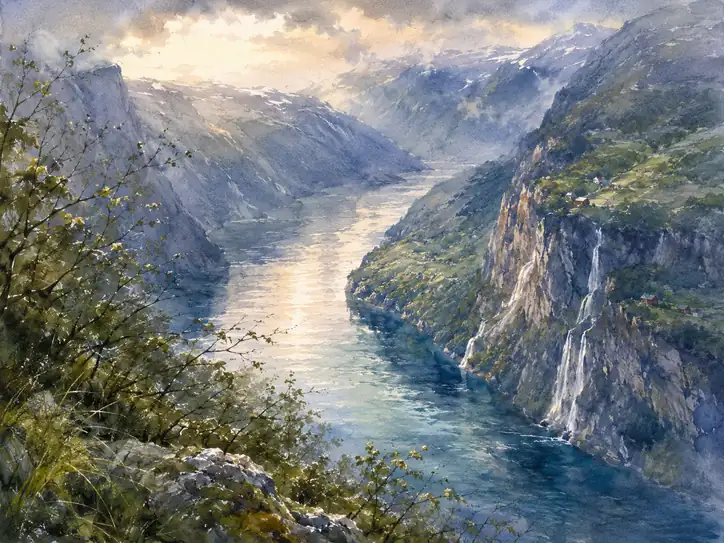 Echoes of the Silent Valley
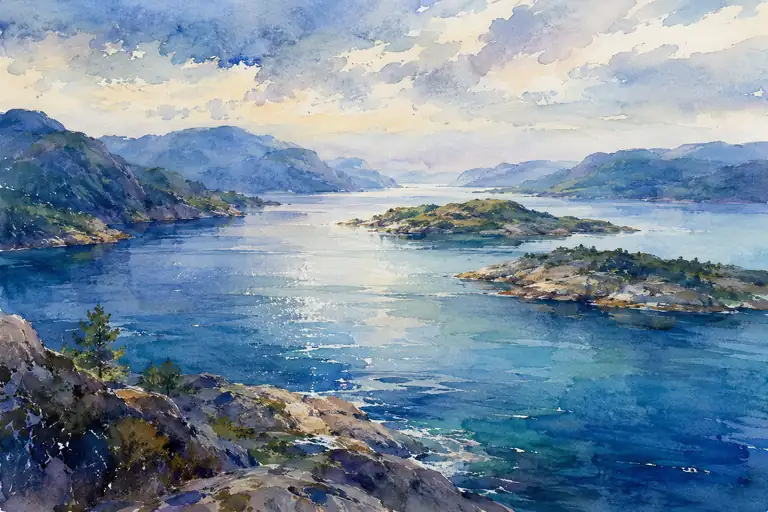 Where the Earth Breathes in Silence
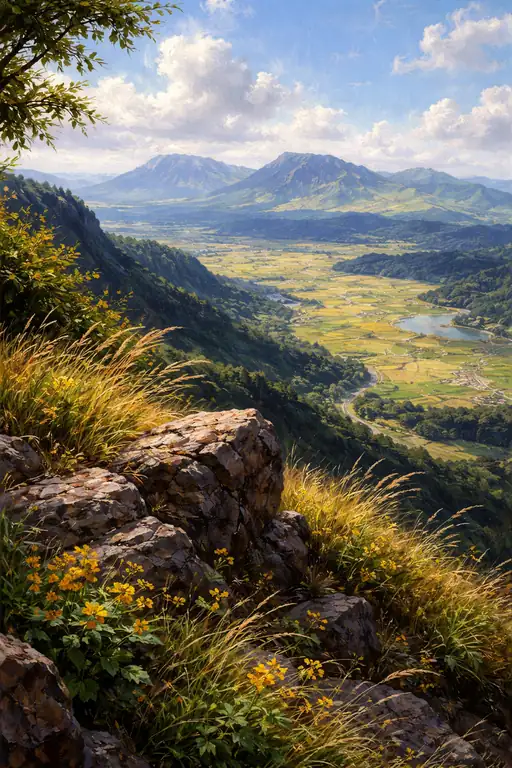 Symphony of the Golden Plain
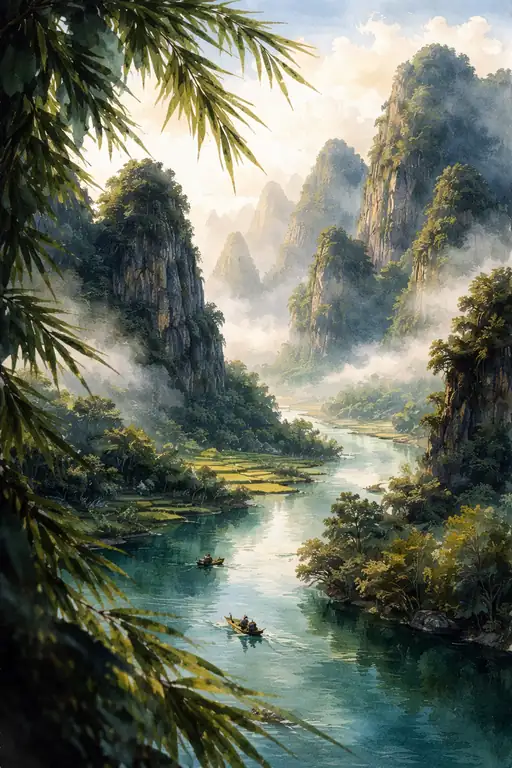 Emerald River Among Karst Peaks
 Majesty of the Deep Abyss
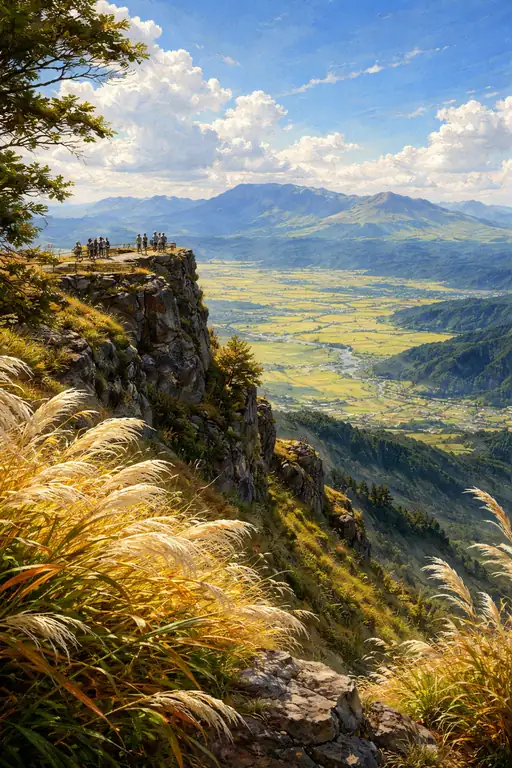 Infinite Horizon: Whispering Pampas and the Grand Valley
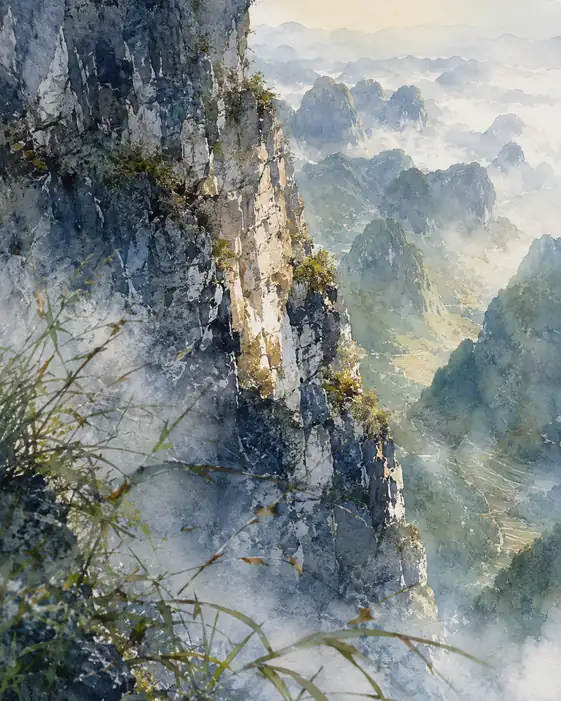 Beyond the Misty Veil