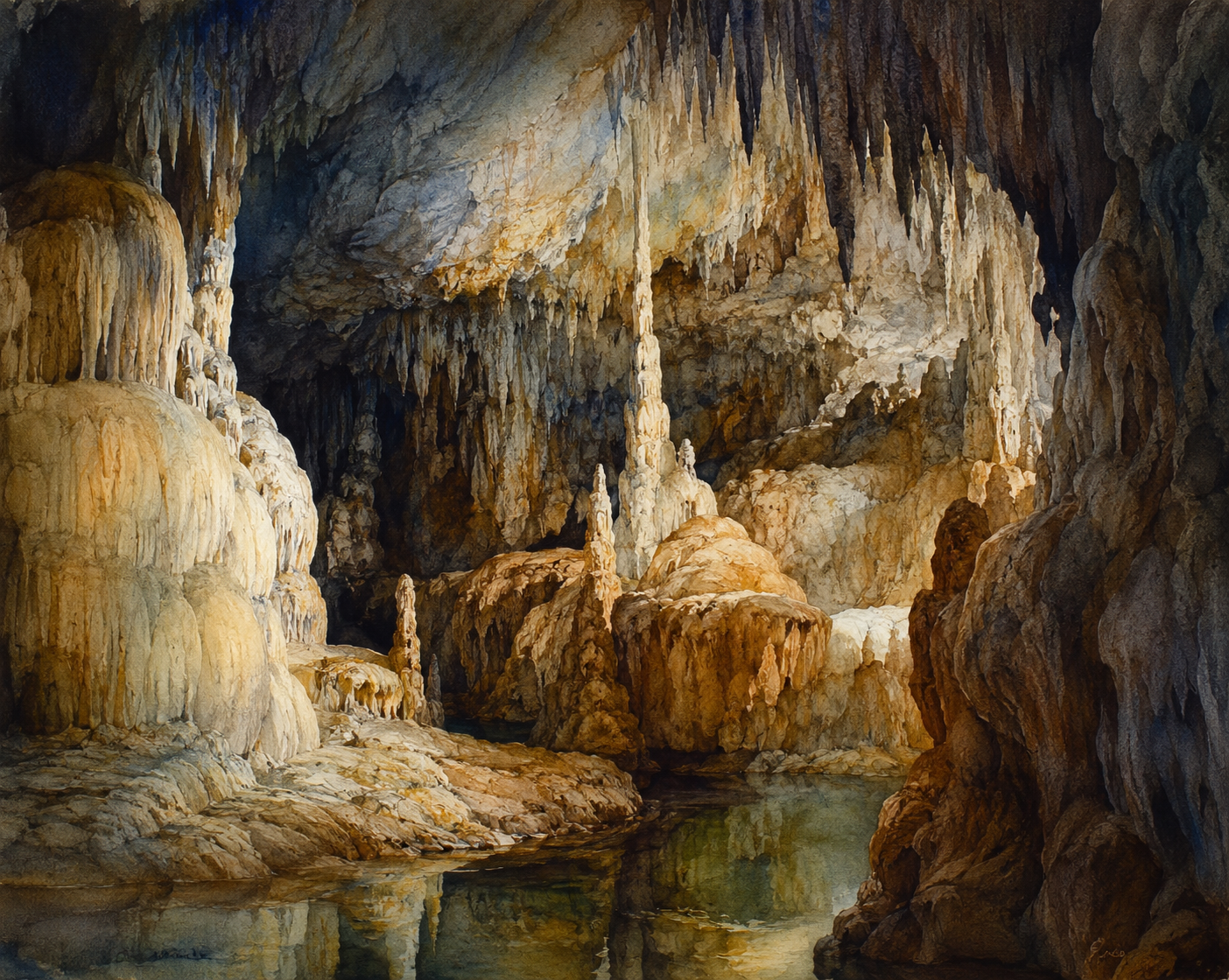
The Cathedral of Stone
Critique
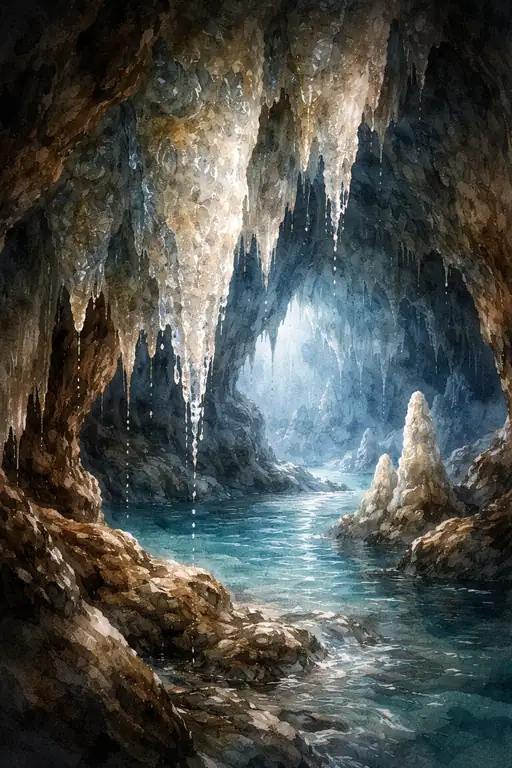
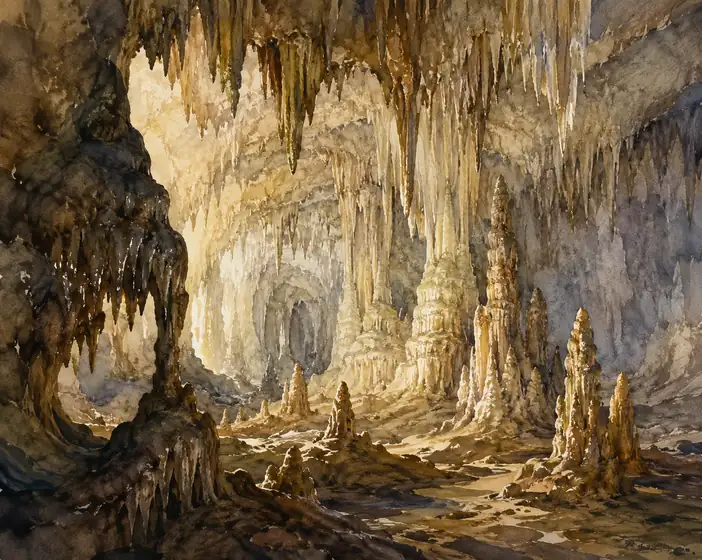
1. Introduction This watercolor painting depicts the mysterious interior of a cave filled with stalactites. The silent atmosphere of the subterranean world and complex natural sculptures create a profound impression. While the creation date and background remain unknown, the work demonstrates exceptional skill in texturing formations. This critique explores its composition and style. 2. Description In the center, numerous sharp stalactites hang from the ceiling, with one prominent pillar connecting floor and ceiling. Rounded flowstones glow in warm ochre on the left, while a dark rugged rock face projects from the right. A subterranean pool at the bottom reflects these intricate details in its greenish water. 3. Analysis The composition balances sharp vertical stalactites with the organic curves of flowstones, creating visual tension. Contrast between dark foreground shadows and illuminated background formations, enhanced by the pool's reflection, establishes deep perspective. Delicate linework defines the cave details, while soft watercolor washes convey wet textures and damp atmosphere. 4. Interpretation and Evaluation The artwork celebrates the geological time required to build this natural sanctuary. The light transforms the dark cave into a sacred space, suggesting nature's eternal processes. The artist exhibits advanced watercolor control and meticulous draftsmanship. The detailed lines, harmonious ochre and blue palette, and organized composition are highly successful. 5. Conclusion Initially perceived as a simple cave study, the work reveals its rich detailing and the meditative beauty of the pool reflection. It successfully translates the grandeur of a closed space into a visual poem. Capturing a quiet world where ancient stone and water coexist, this painting offers viewers deep wonder and high artistic value.
Same Subcategory
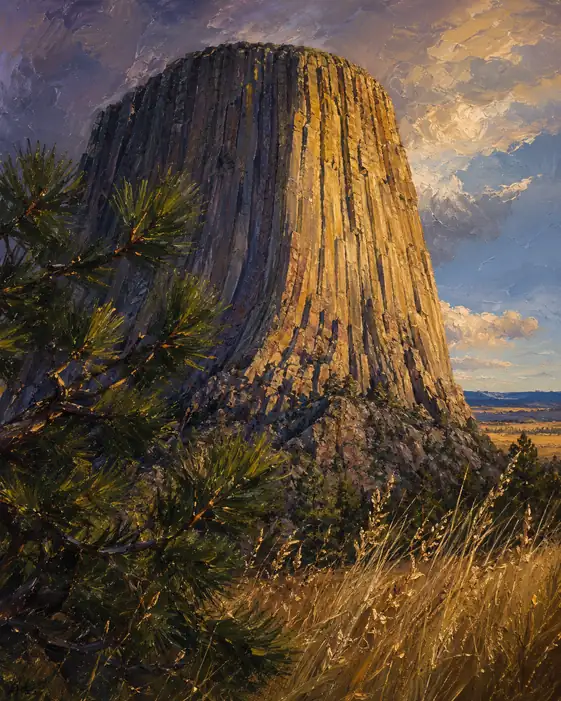 Monolith of the Eternal Light
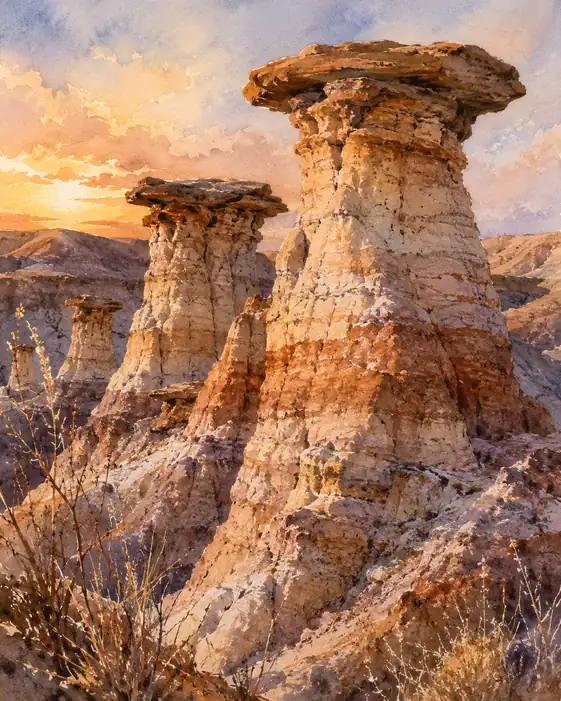 The Silent Spires of Time
Similar Artworks
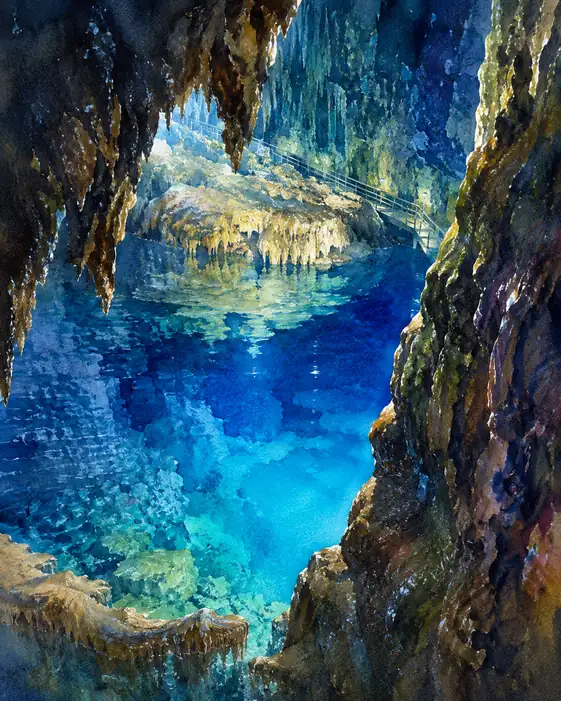 Luminous Depths: The Azure Sanctuary
 The Silent Descent of Millennia
 Cathedral of the Deep Earth
 Mystical Glow of an Ancient Underground Cavern
 Tears of the Earth
 Pillars of the Eternal Depths
 Subterranean Cathedral of Golden Light
 Luminous Labyrinth: The Azure Grotto
 Cathedral of Sleeping Time
 The Sanctuary of Subterranean Light