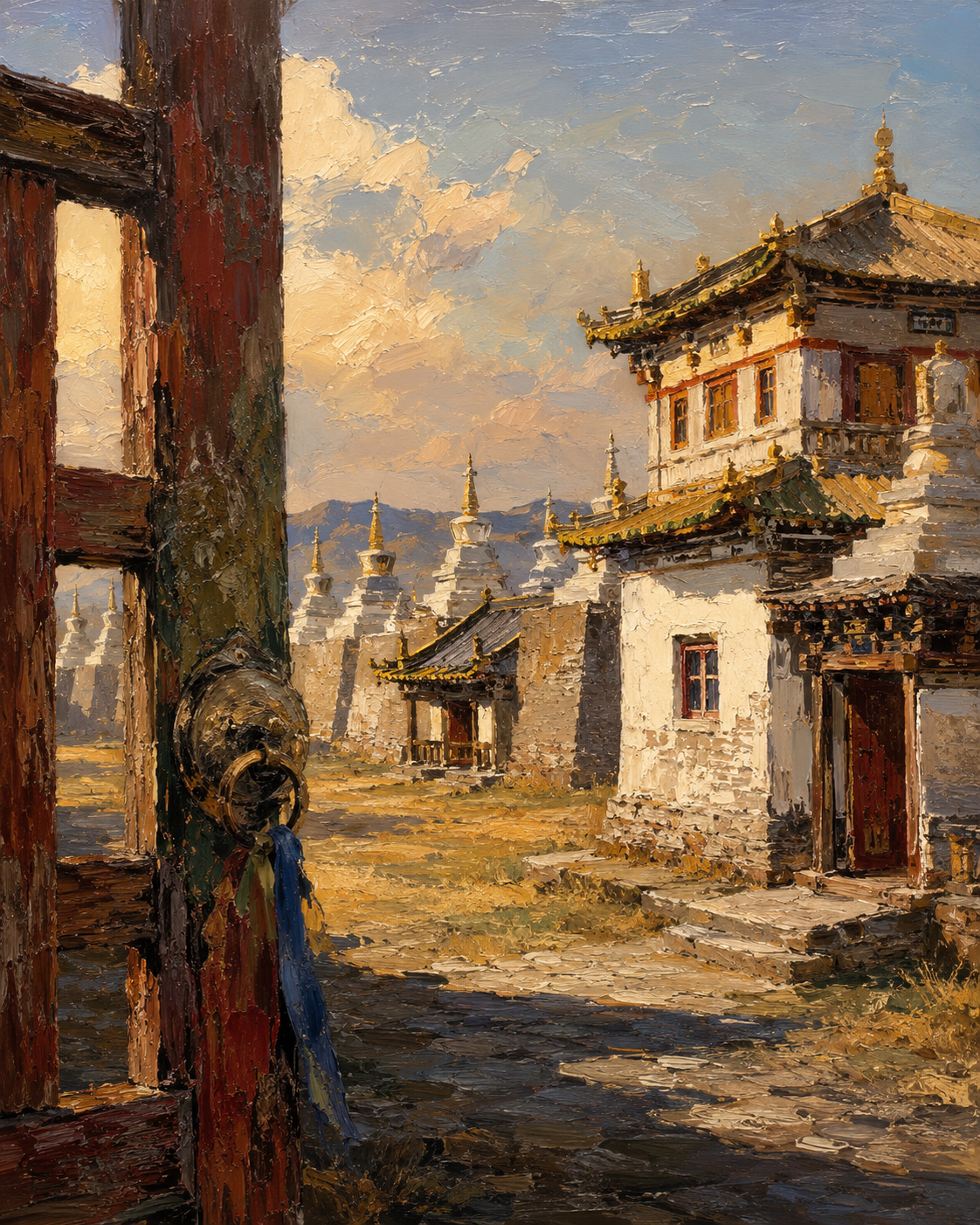
Faith Standing in the Wilderness
Critique
1. Introduction This oil painting depicts a sacred group of historical temple buildings and Buddhist pagodas. Details regarding its creation date and exact geographic location remain unconfirmed. An impasto technique is employed to give the surface a strong material texture. Warm light fills the scene, establishing a quiet, mystical atmosphere. 2. Description In the left foreground, a weathered wooden gate pillar is captured in a close-up. A metallic door knocker and a blue cloth are attached to this post. On the right, a traditional temple stands with white walls and golden decorations. Stupas line a stone wall against barren mountains and clouds. 3. Analysis The contrast between the foreground pillar and the distant temple structures creates deep perspective. Thick paint applied with a knife captures the tactile roughness of wood and stone. Amid dominant warm tones, the blue cloth serves as a strong accent. Light and shadow define the three-dimensional volumes. 4. Interpretation and Evaluation The artwork interprets the solemnity of a place of worship enduring in a harsh environment. This composition guides the eye from front to back, offering an immersive experience. The impasto technique is highly commendable, effectively rendering the strength of buildings that have withstood time. 5. Conclusion At first, one is drawn to the rough details of the foreground pillar. As the eye moves inward, a sense of serenity from the sunset-lit temples emerges. The powerful technique and delicate lighting transform a transient moment into a lasting memory. This painting successfully blends physical architecture with spiritual themes.
Same Subcategory
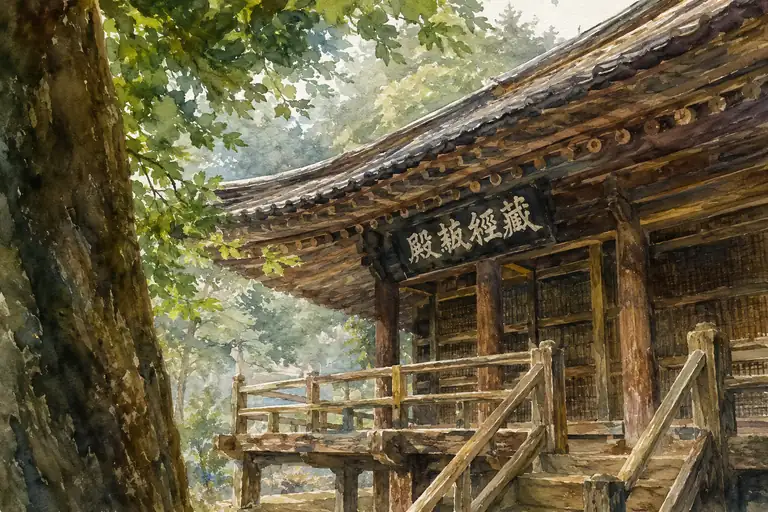 Wisdom Sheltered by the Forest
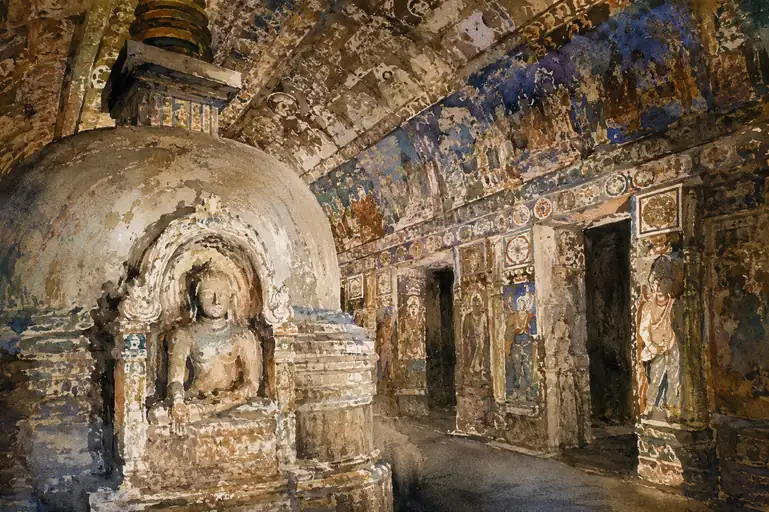 Silent Devotion in the Stone
Similar Artworks
 Prayers Carried by the Wind
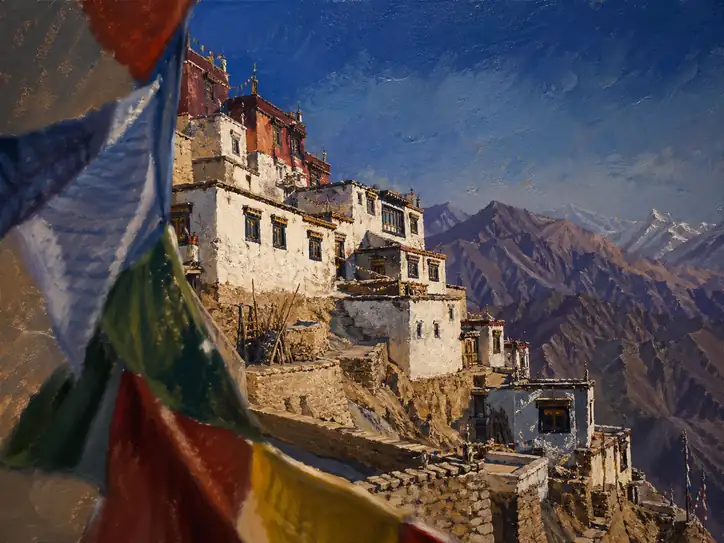 Winds of Prayer on the Silent Ridge
 Breath of the Winds: The Golden Stupa's Radiant Prayer
 Where the Rain Leaves Gold
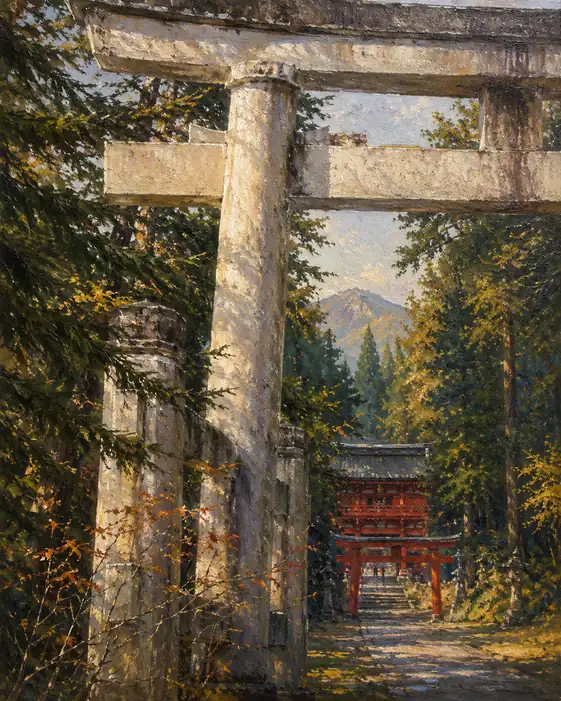 Passage Through the Sacred Shadows
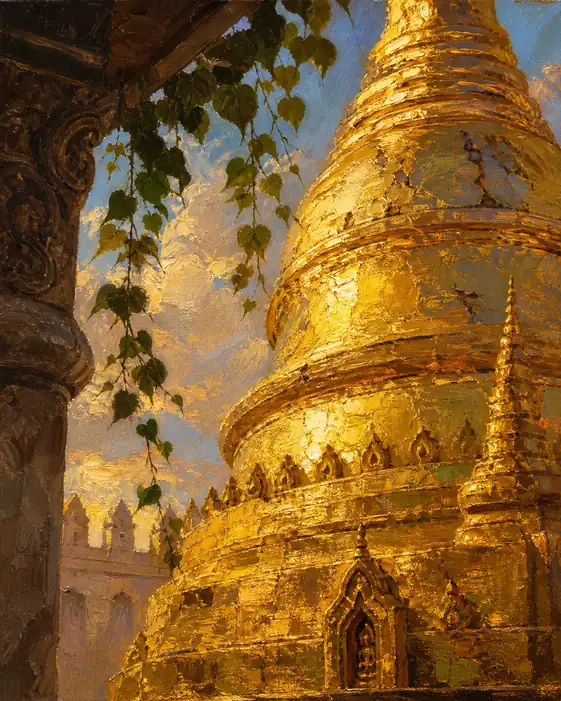 Golden Echoes of Devotion
 Silence of the Thousand Pagodas in the Golden Mist
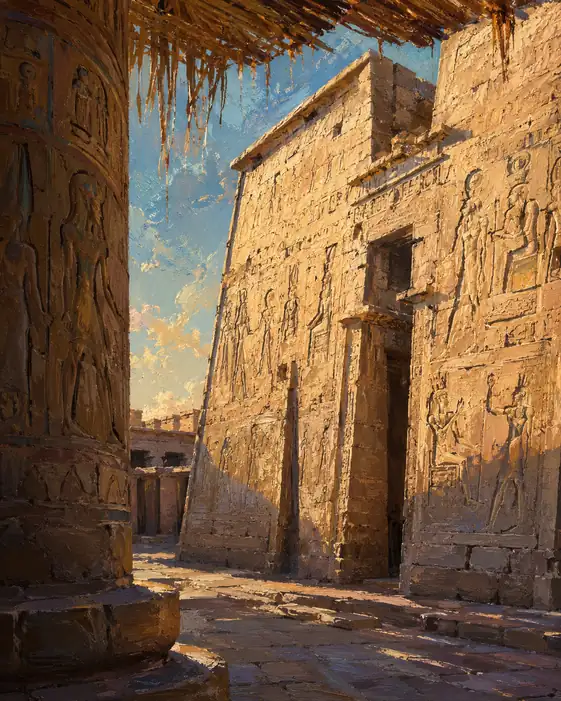 Under the Straw Canopy of Time
 Where Prayers Dance with the Wind
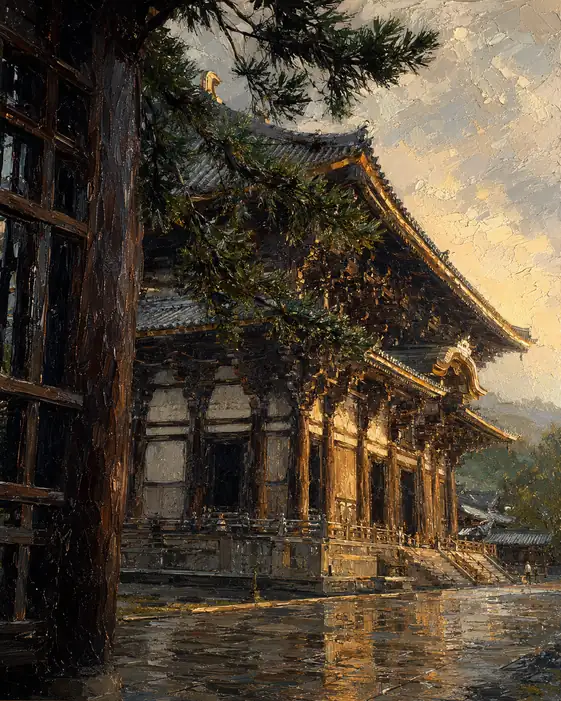 Sanctuary of Shimmering Gold