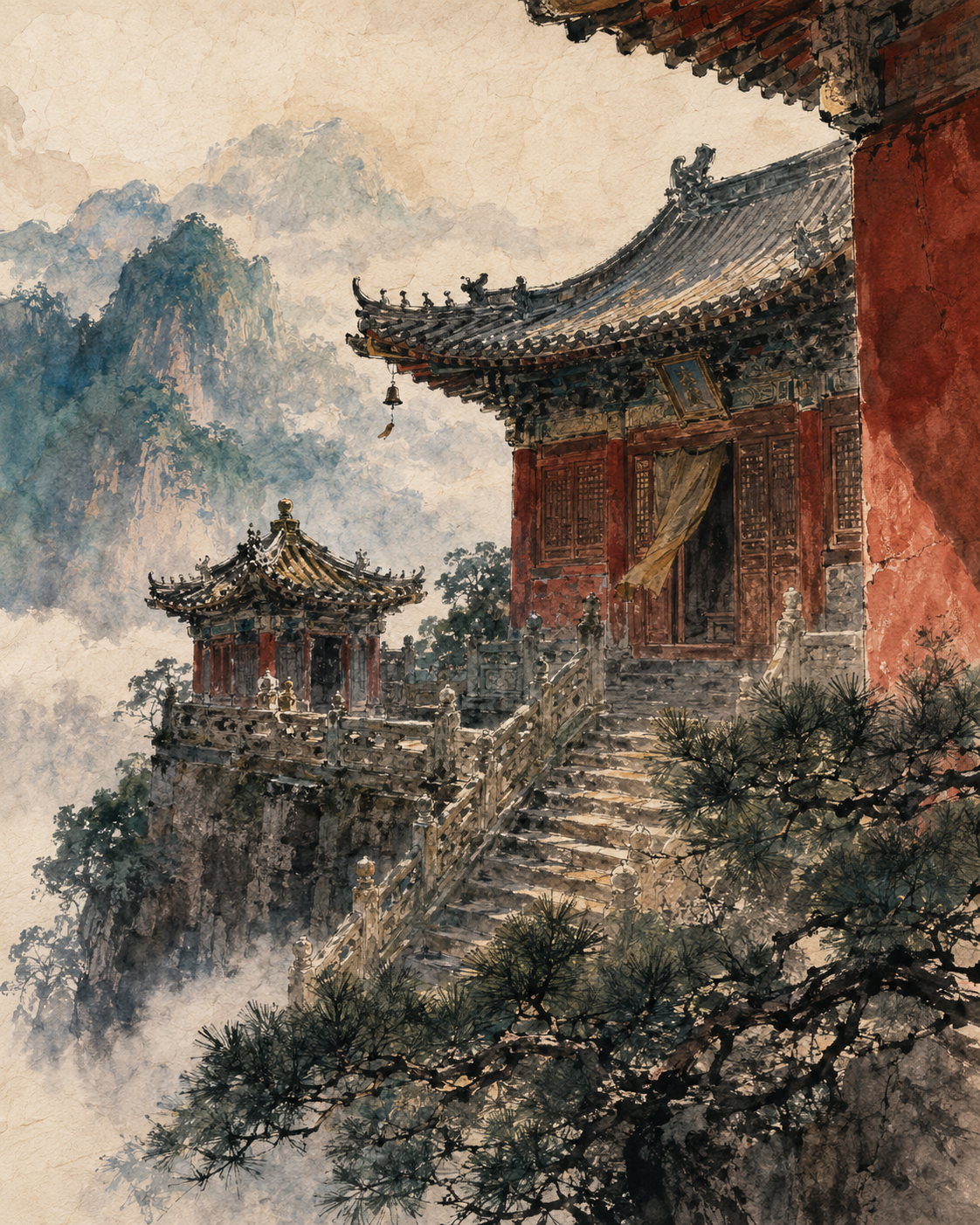
Silent Sanctuary Above the Clouds
Critique
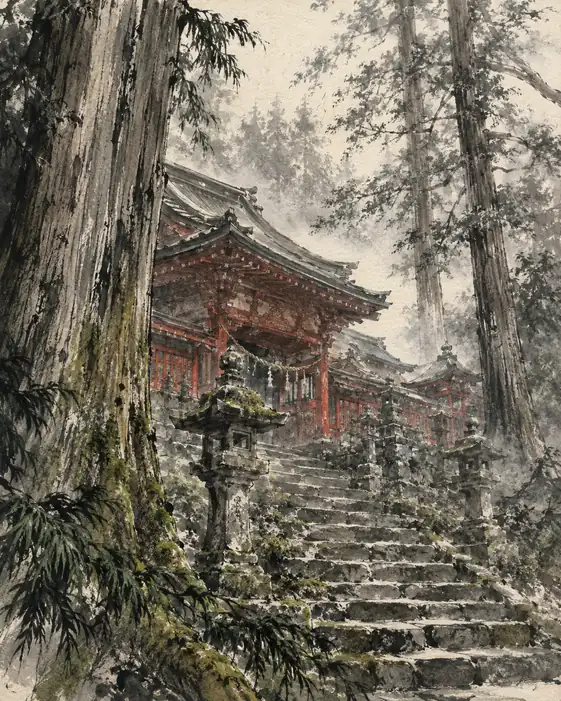
1. Introduction This painting depicts a grand traditional temple nestled in deep, misty mountains. Basic details regarding the artist, date, and dimensions are currently unknown. The artwork exhibits an exquisite technique that recalls traditional East Asian mountain landscapes. It successfully creates a highly contemplative space filled with serene gravity. 2. Description The right side features the main hall with vermilion walls and an intricate roof. Carved stone steps descend toward a small pavilion situated on a steep cliff. In the foreground, detailed pine branches frame the view, while misty mountains rise in the distant background. The palette harmonizes vermilion red, grey, and quiet greens. 3. Analysis The composition guides the viewer diagonally from the foreground pine, up the steps, and toward the main hall. This diagonal line enhances the steepness of the cliff and the depth of the space. Fine lines of the buildings contrast with the organic shapes of nature. The red and green accents provide a balanced visual contrast. 4. Interpretation and Evaluation The work symbolizes the harmony between human spirituality and the vastness of nature. This temple, isolated among high peaks, represents a sanctuary for quiet reflection. The piece showcases outstanding draftsmanship, excellent control of depth, and a sophisticated color scheme. It successfully captures physical grandeur and deep, meditative silence. 5. Conclusion The painting prompts a quiet appreciation of architecture as a bridge to nature. It constructs a visual sanctuary that brings a sense of inner peace. The initial appreciation of structural details eventually shifts to a profound awe of the landscape. It stands as a highly refined and successful artistic achievement.
Same Subcategory
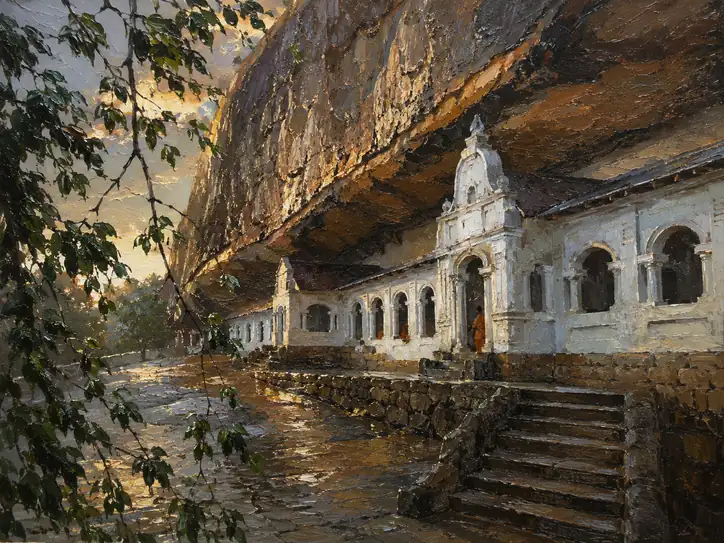 Sanctuary Under the Eternal Cliff
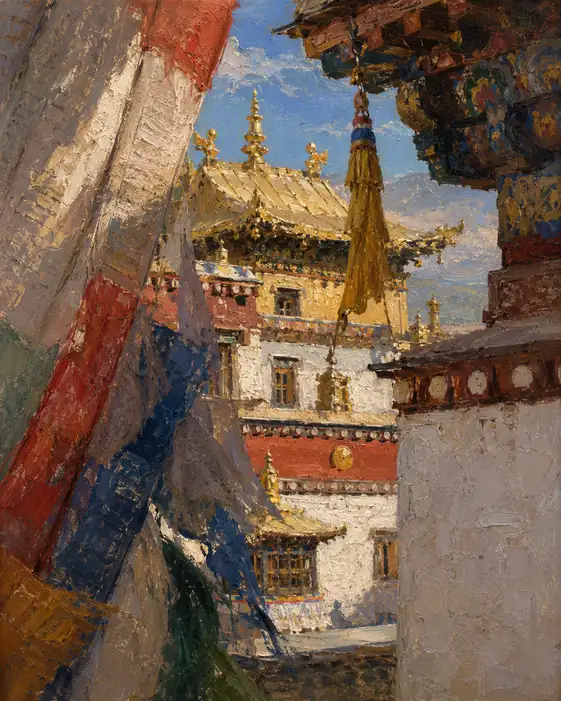 The Wind that Carries Our Prayers
Similar Artworks
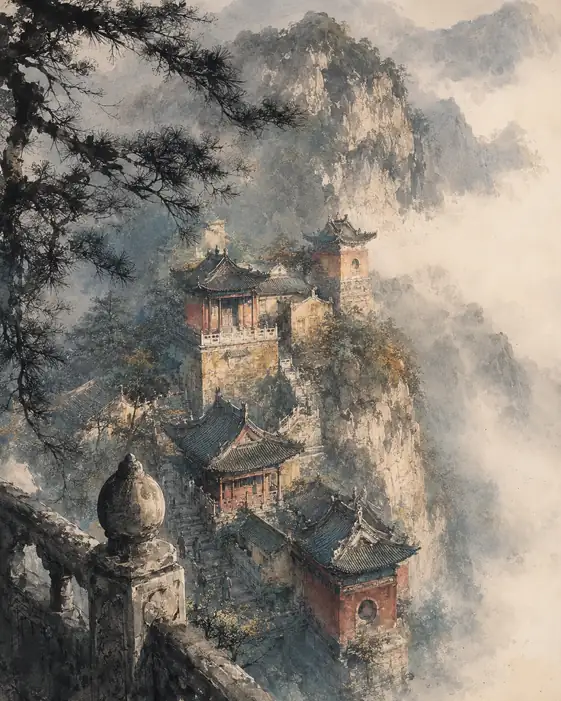 Steps Toward the Eternal Silence
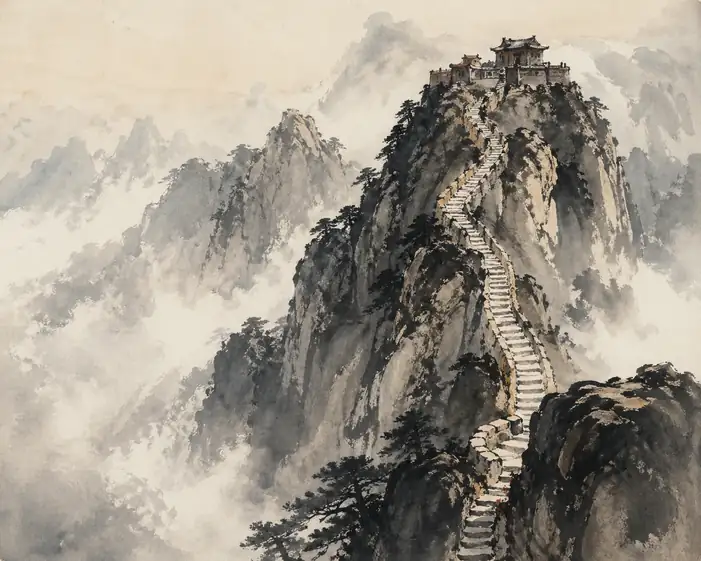 Stairway to the Sacred Sky
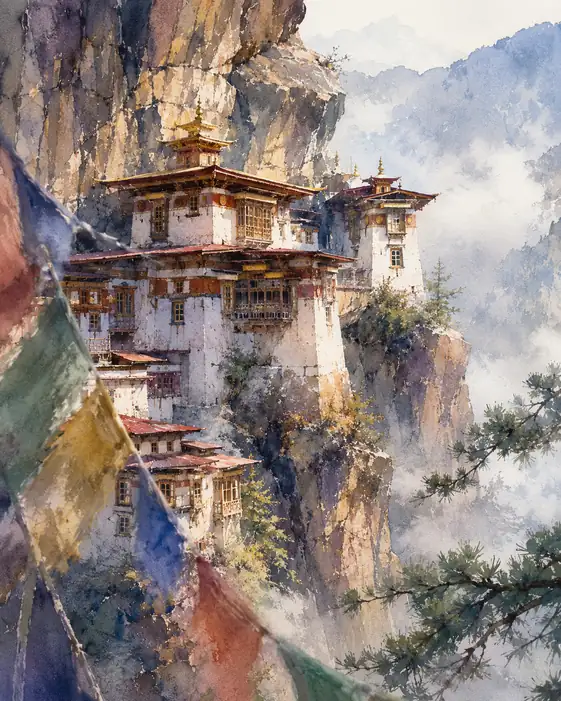 Sanctuary Clinging to the Clouds
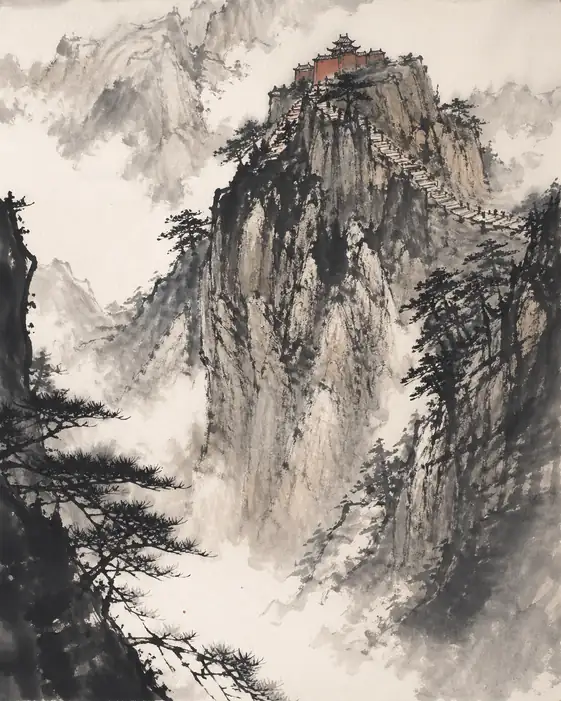 Stairway to the Divine Silence
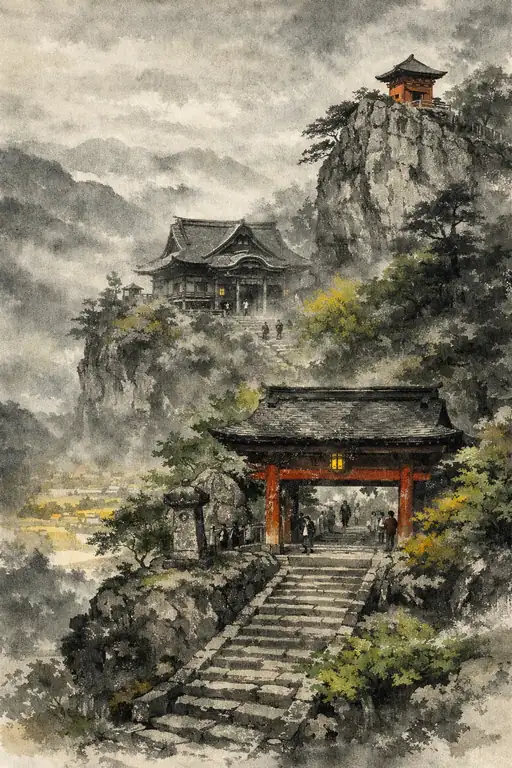 Where Earth Touches the Heavens
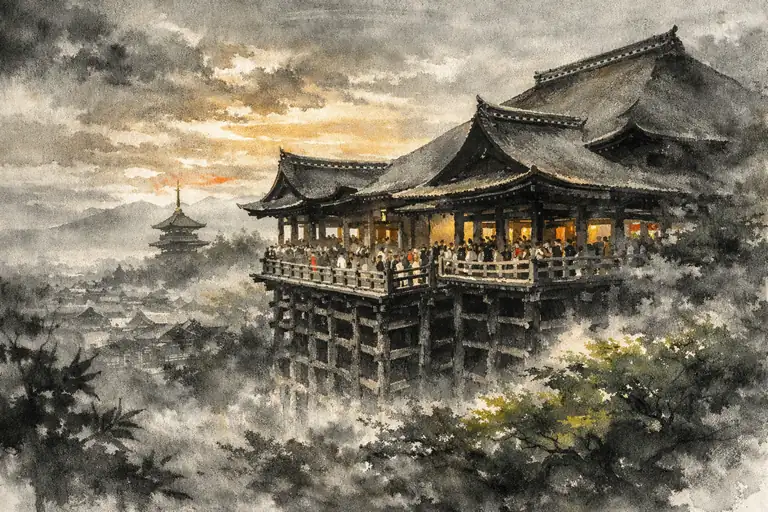 Where Prayers Meet the Golden Dusk
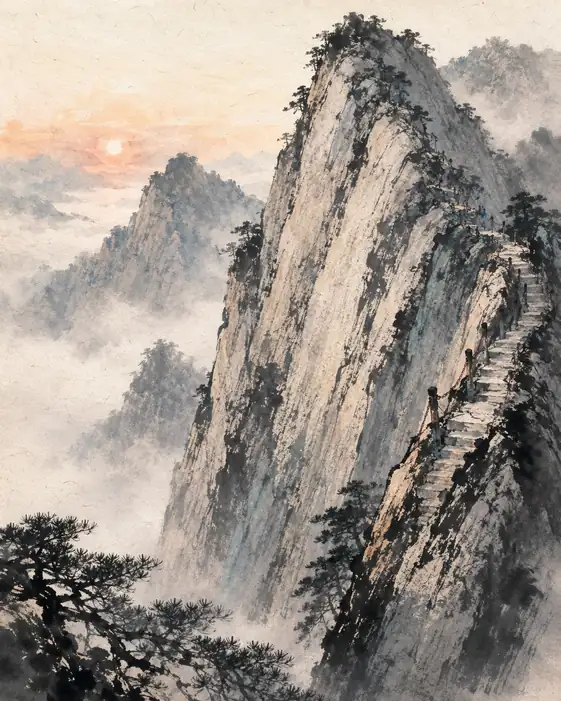 The Courage to Reach the Sky
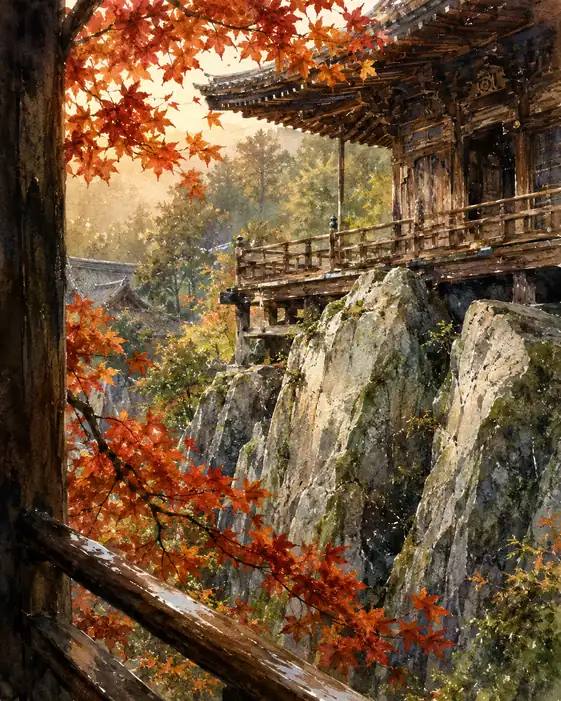 Crimson Reverie on the Temple Veranda
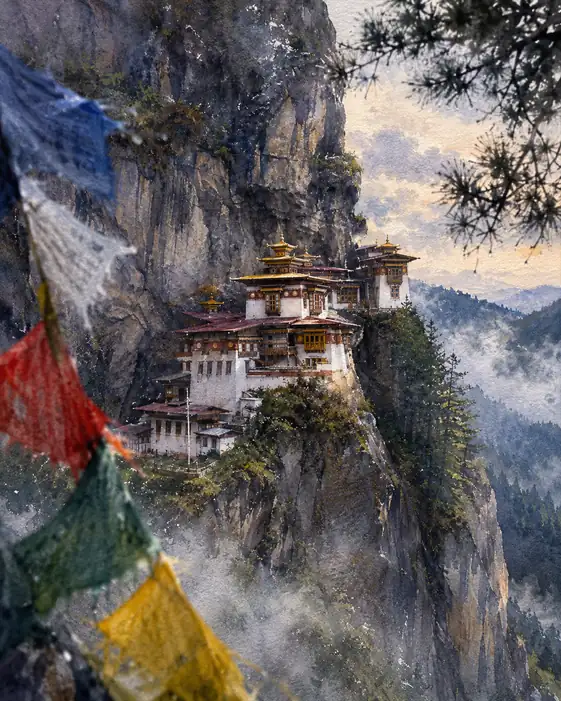 Sanctuary in the Sky
 Threshold of the Ancient Silence