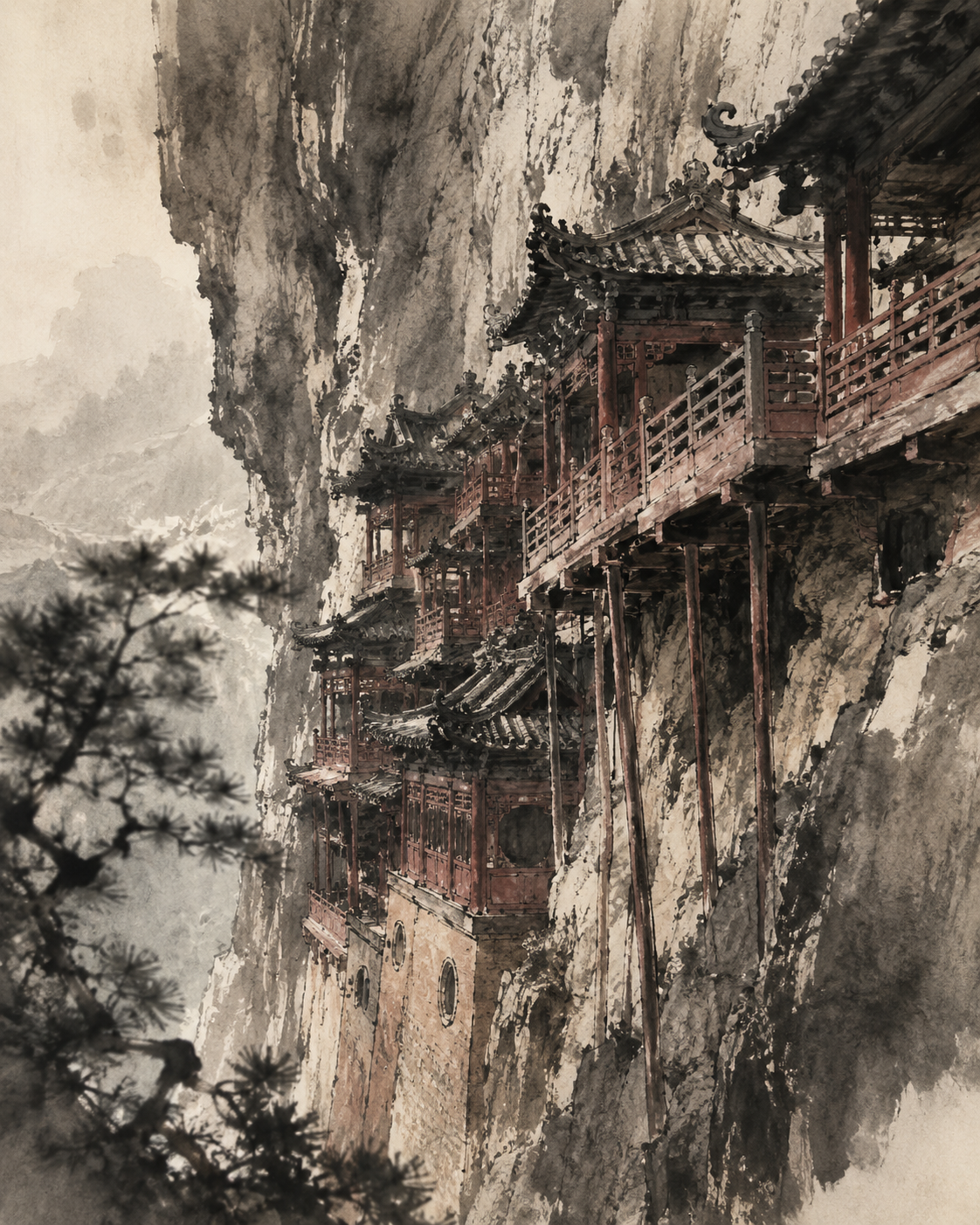
Silence Breathing on the Cliff
Critique
1. Introduction This painting depicts traditional wooden buildings on a steep, vertical cliff. Basic details about the artist, date, and dimensions are unavailable. The piece strongly evokes traditional East Asian ink wash painting styles. It establishes a serene yet overwhelming atmosphere that engages the viewer. 2. Description The right side features a massive rock face with intricate pavilions attached to the cliff. These structures are supported by thin wooden stilts, showing detailed corridors and curved roofs. In the background, misty mountains recede, while blurred pine branches occupy the foreground. The palette consists of quiet brown, black, and grey tones. 3. Analysis The composition relies on three depths: foreground pine, midground architecture, and distant misty peaks. The diagonal arrangement of the buildings emphasizes the steepness and dynamic balance. Fine architectural lines contrast effectively with the rough texture of the cliff. Subtle ink gradations create a clear sense of depth and atmospheric moisture. 4. Interpretation and Evaluation The work symbolizes human resilience in harmony with a harsh natural environment. The pavilions built on the cliff suggest respect for nature rather than conquest. The piece demonstrates excellent draftsmanship, composition, and traditional brushwork techniques. It successfully balances a traditional style with quiet tension and spiritual depth. 5. Conclusion The painting invites reflection on the relationship between humanity and the natural world. It goes beyond representation to capture a quiet, meditative space. The initial impression of danger on the cliff eventually shifts toward peaceful contemplation. It stands as a highly refined artistic achievement.
Same Subcategory
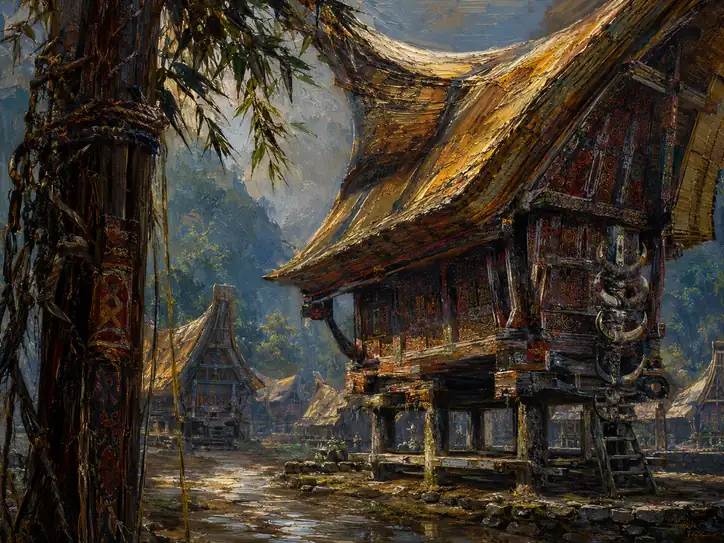 Where Ancestors Watch the Mist
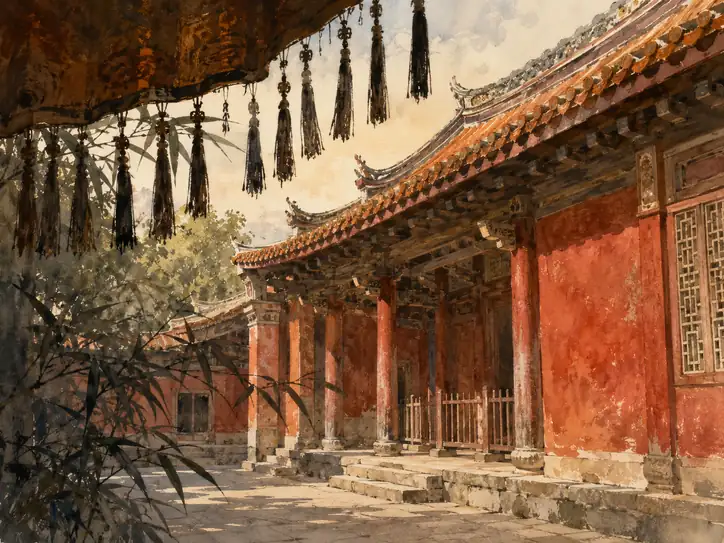 Where Sunlight Whispers to Vermilion
Similar Artworks
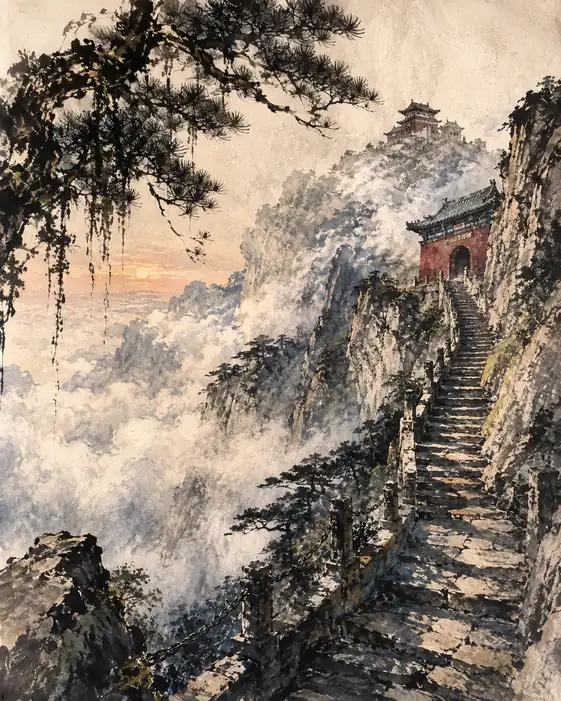 A Quiet Prayer in the Clouds
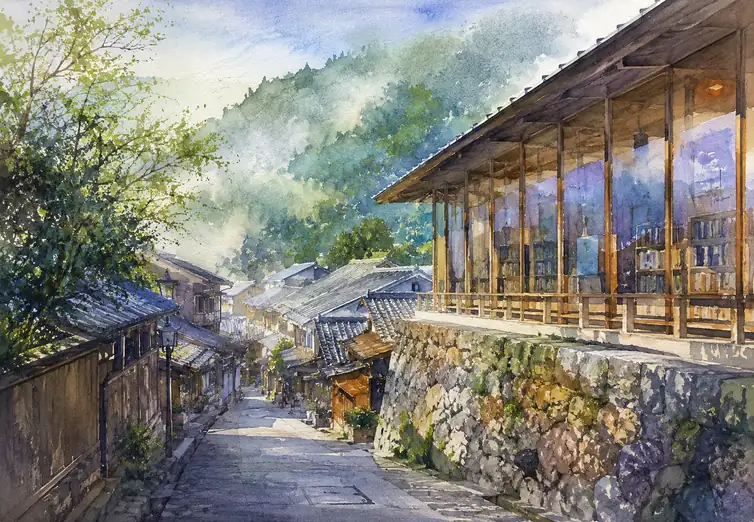 A Dialogue Between Stone and Glass
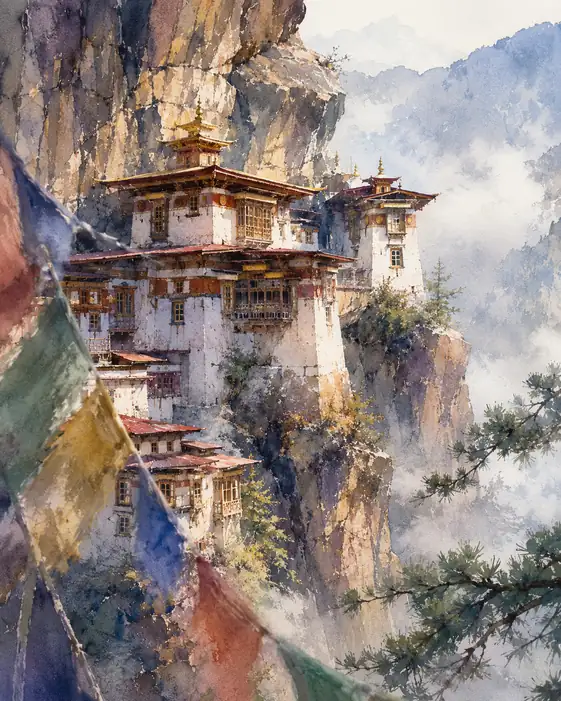 Sanctuary Clinging to the Clouds
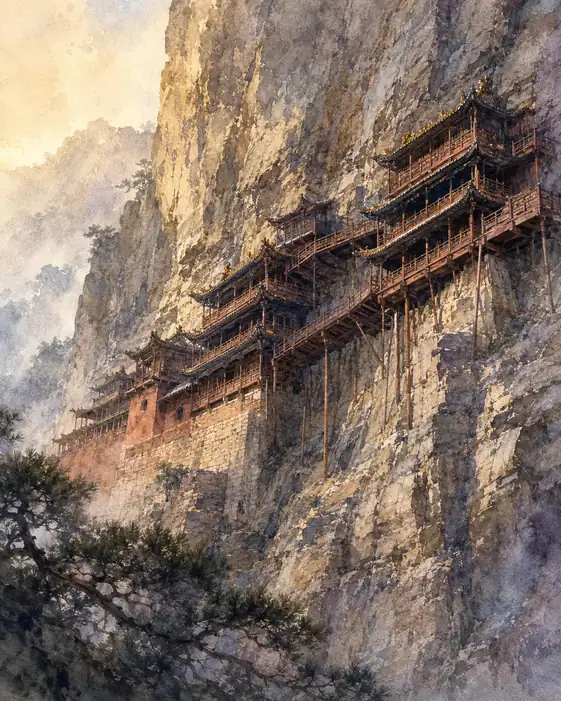 Sanctuary Suspended in the Golden Mist
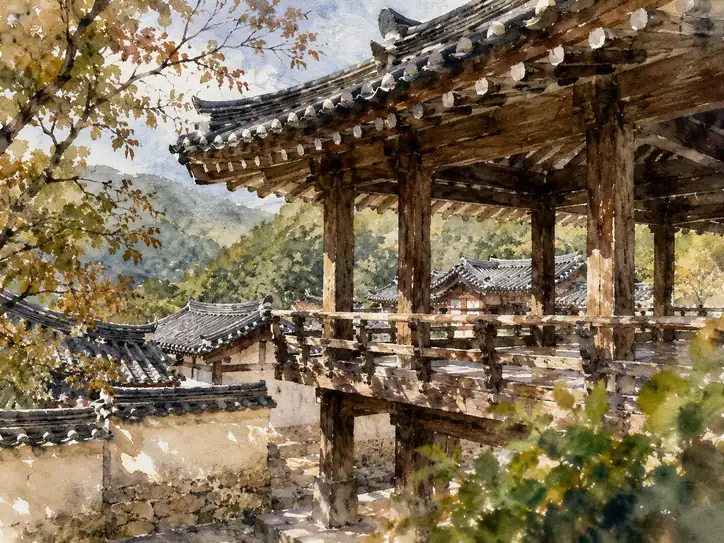 Serene Sanctuary of Autumn
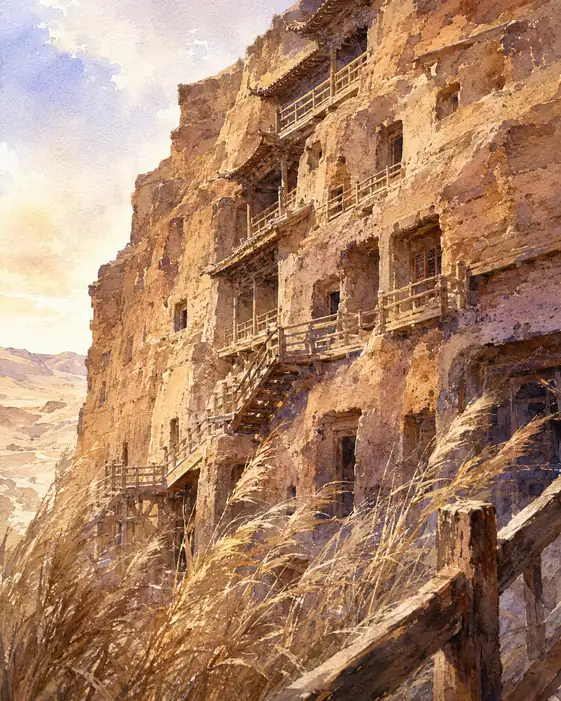 Prayers Swaying in the Winds of Time
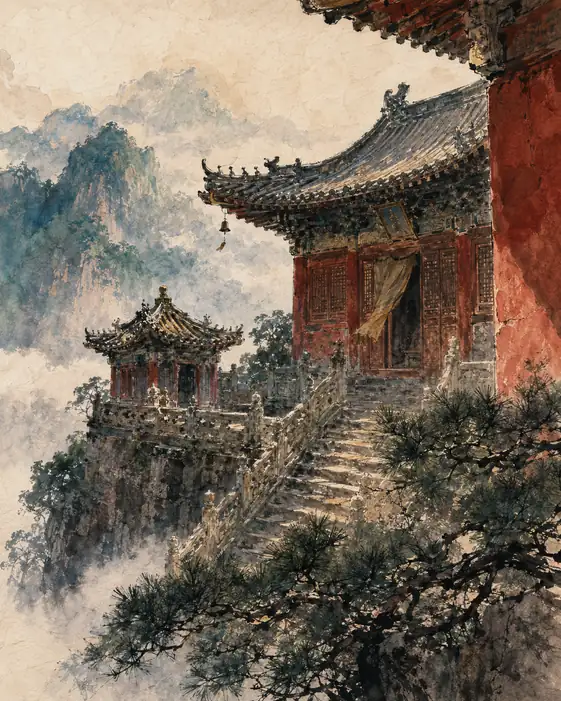 Silent Sanctuary Above the Clouds
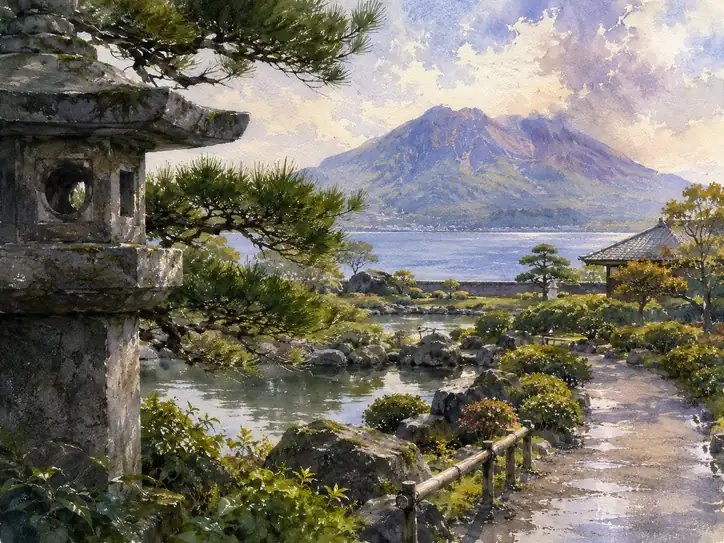 The Sleeping Giant across the Garden
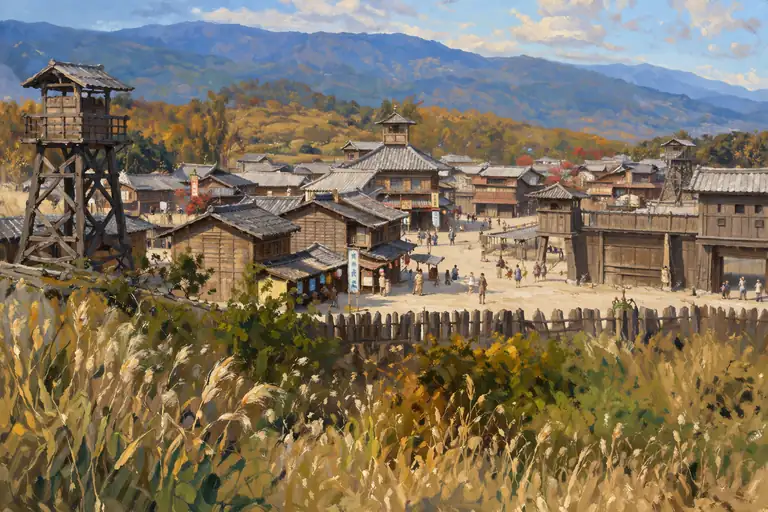 Golden Echoes of a Forgotten Village
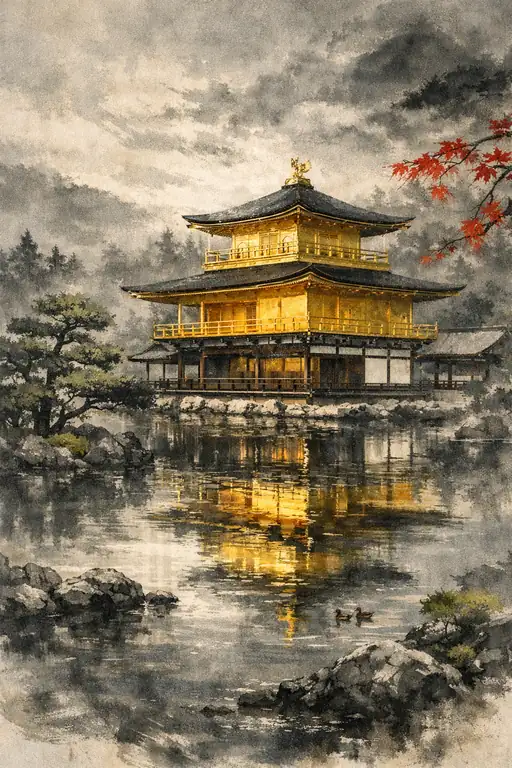 Echoes of the Golden Sanctuary