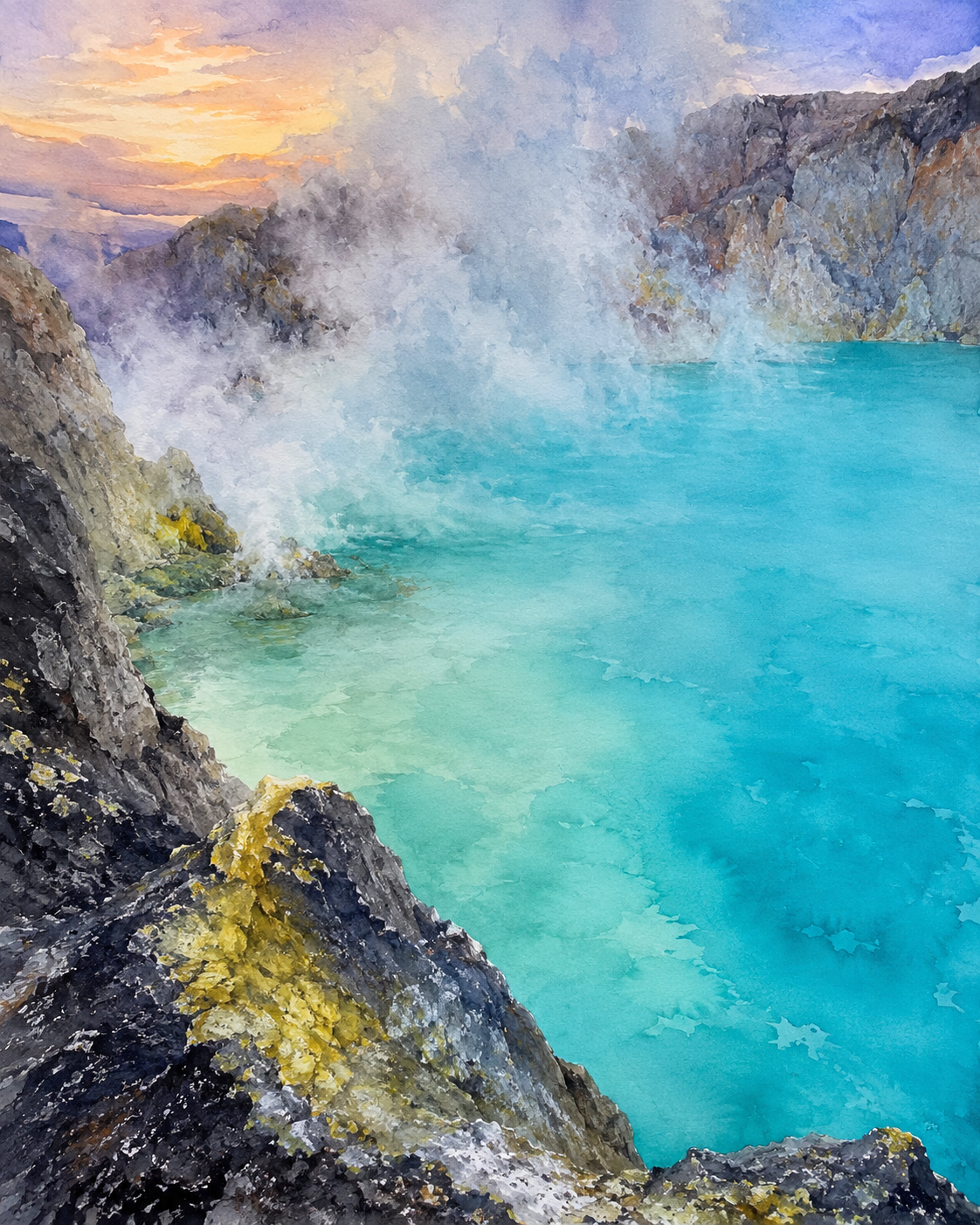
Breath of the Primordial Earth
Critique
1. Introduction This watercolor painting captures the dynamic power and mysterious beauty of a volcanic landscape. The scene features a vivid blue caldera lake surrounded by steep, rugged cliffs. White steam rises from the water's edge, conveying the powerful breath of the earth. It is a superb work that depicts a sublime moment of natural grandeur. 2. Description In the foreground, dark, craggy volcanic rocks with bright yellow sulfur deposits frame the water. The central lake shifts from emerald green near the shore to deep cobalt blue. White gases erupt from crevices on the left, dispersing into the air. In the background, grey cliffs rise against a sky touched with sunset light. 3. Analysis The artist uses watercolor blending to render the ethereal quality of the rising steam. Color-wise, the vivid blue water contrasts sharply with the dark, monochromatic rocks. The diagonal slope of the left cliff creates dynamic movement and depth. Soft sunset light filters through the vapor, uniting the harsh environment. 4. Interpretation and Evaluation This artwork symbolizes the earth's raw energy and constant natural transformation. Technically, the painting successfully uses fluid watercolors to represent both the water and shifting steam. The contrast between solid rocks and formless vapor highlights the artist's ability to balance textures. It demonstrates a profound respect for nature. 5. Conclusion Initially drawn to the lake's vivid color, the viewer eventually feels the intense energy of the land. The artist has successfully captured the dramatic relationship between thermal steam and water. Ultimately, this landscape reminds us of the planet's primordial forces. It remains a masterpiece that balances power with serene harmony.
Same Subcategory
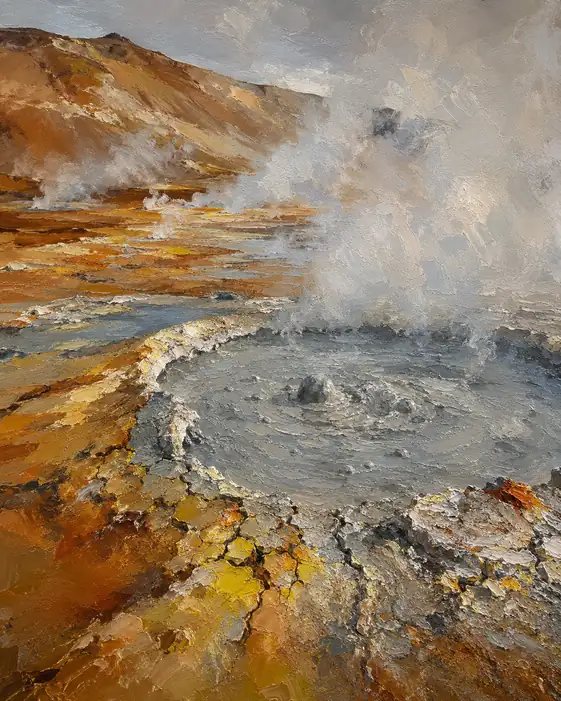 Pulse of the Boiling Earth
Similar Artworks
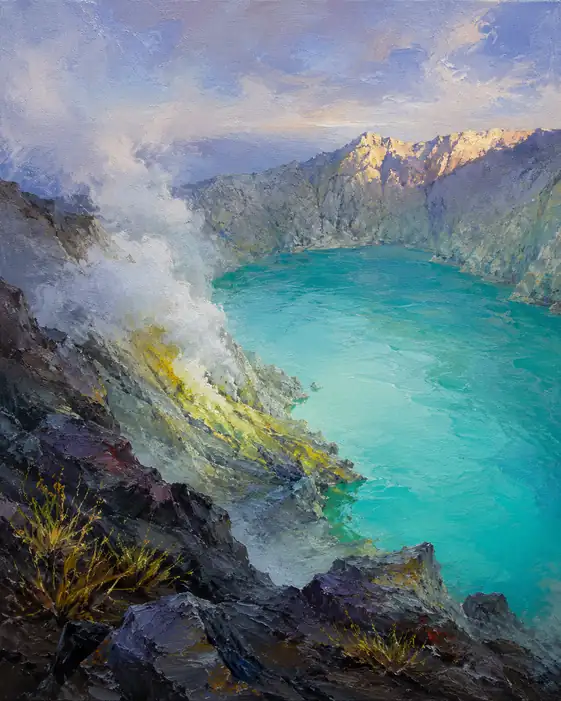 The Earth's Restless Dream
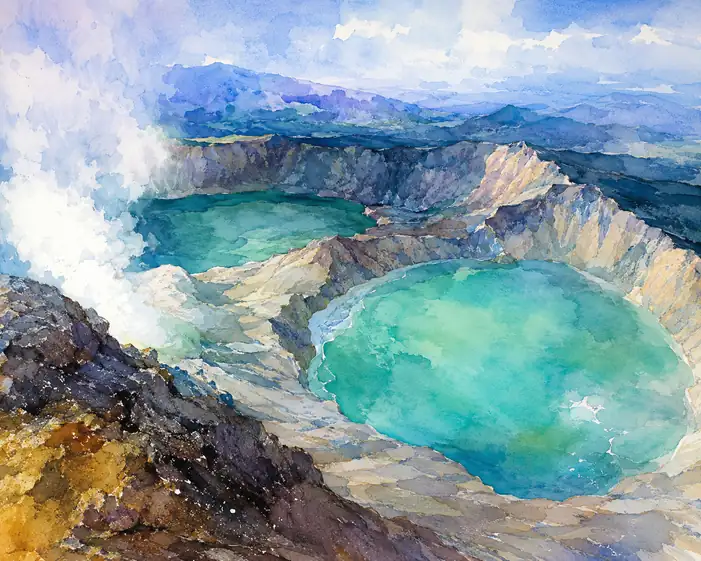 The Earth's Emerald Breath
 Sapphire of the Abyss
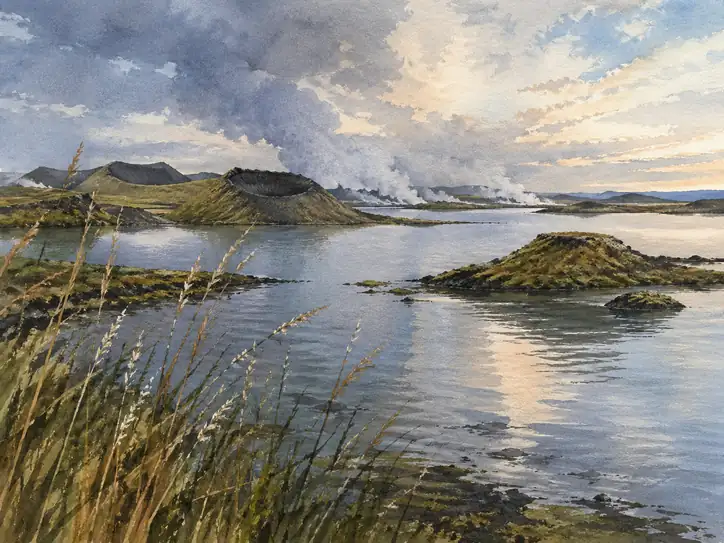 Breath of the Sleeping Earth
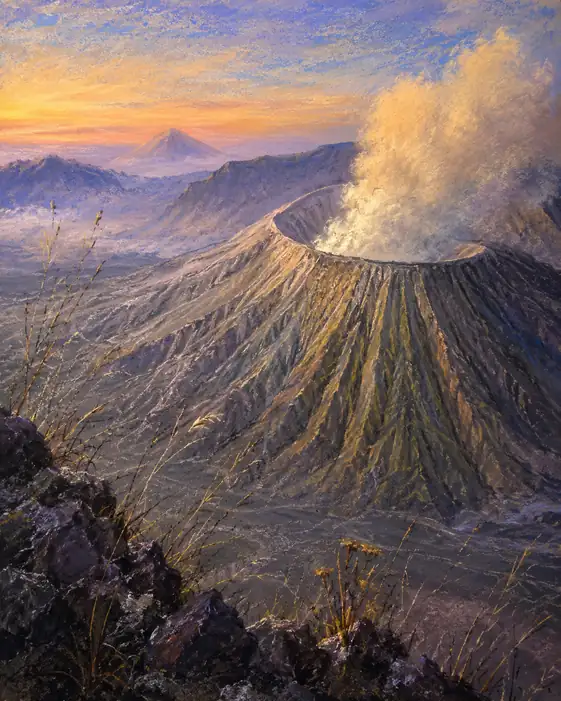 Where Dawn Embraces the Earth's Breath
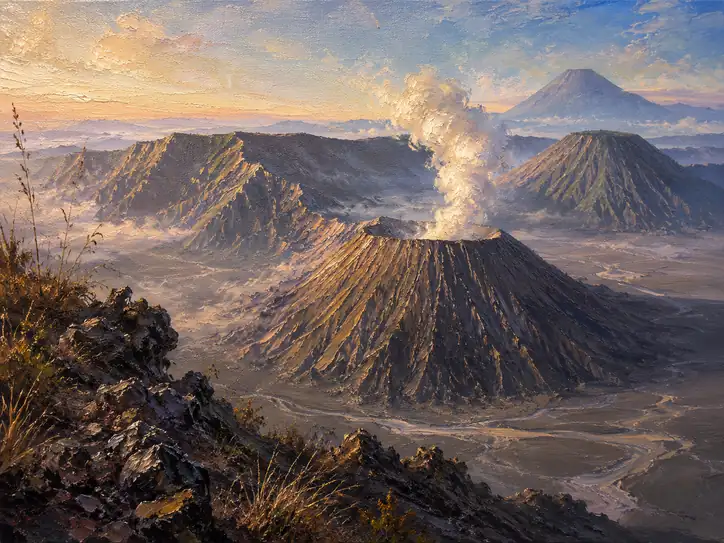 Eternity Encased in the Caldera
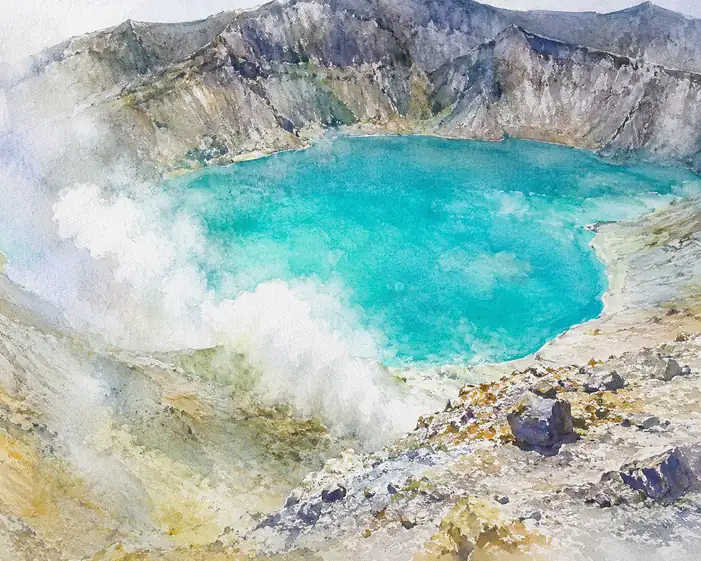 The Emerald Breath of the Deep Caldera
 Emerald Gaze of the Volcanic Heart
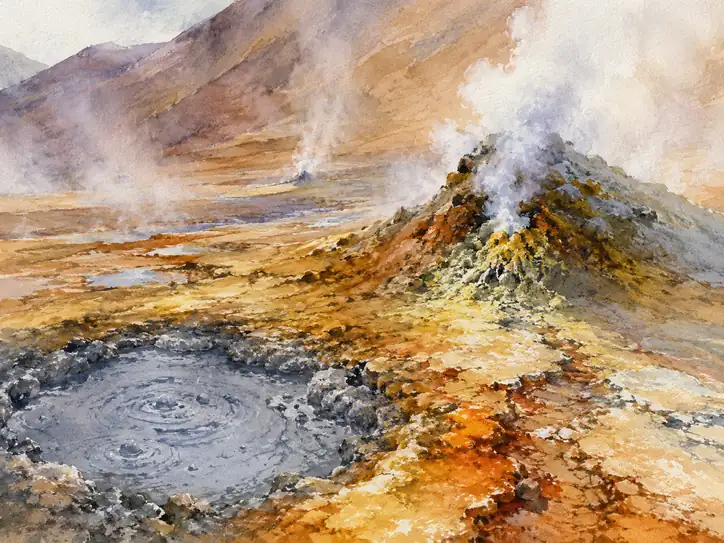 Breath of the Living Earth
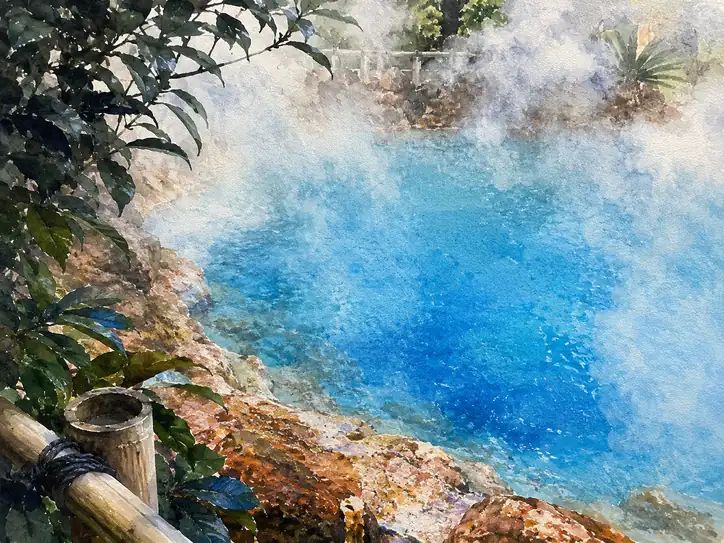 Luminous Depths of the Cobalt Spring