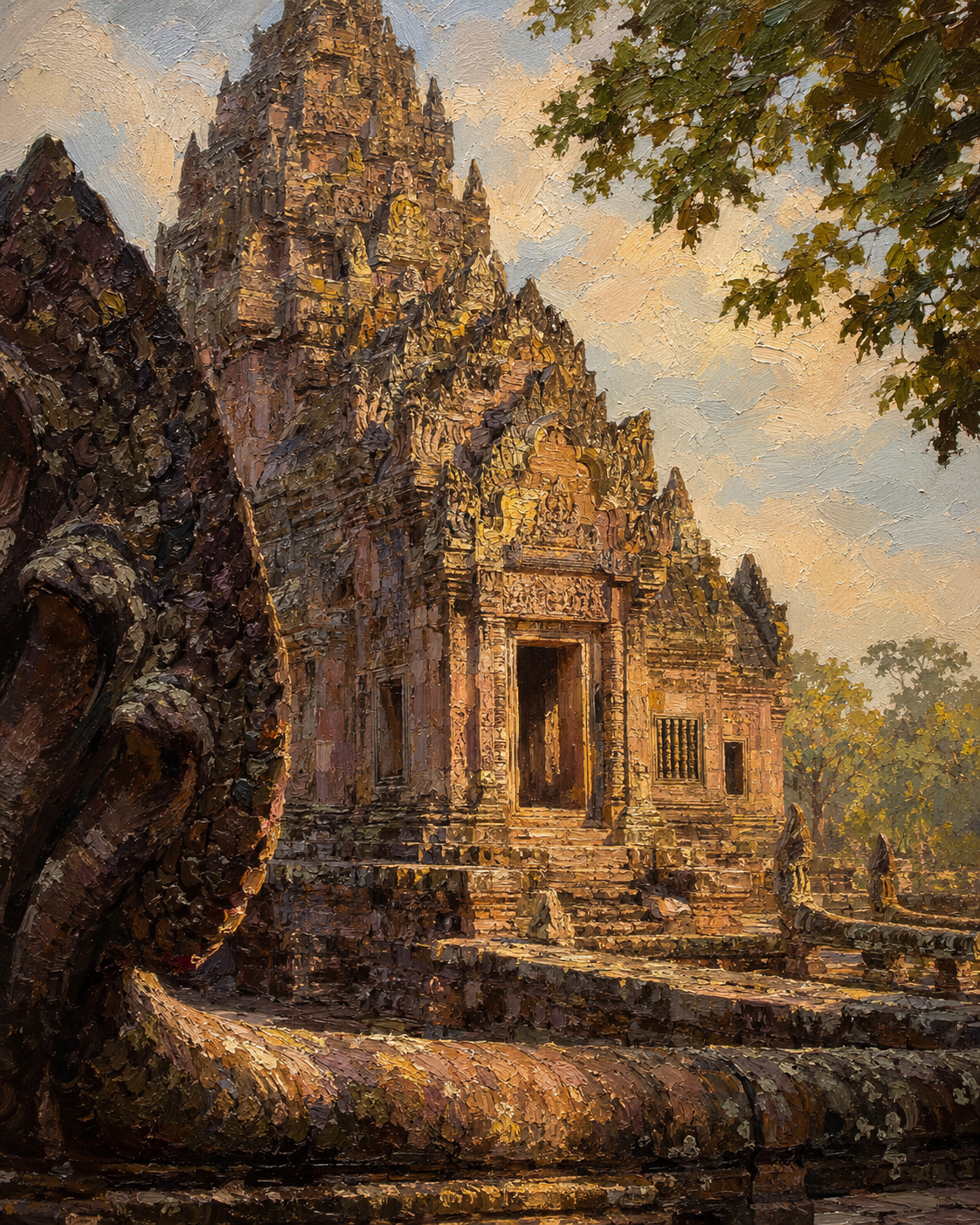
Gateway to the Ancient Light
Critique
1. Introduction This oil painting evocatively depicts ancient temple ruins in Southeast Asia using heavy impasto techniques. The stone structures stand solemnly amidst lush nature, projecting a powerful sense of historical depth. The dramatic contrast between warm sunlight and deep shadows creates a mysterious, spiritual atmosphere. 2. Description A grand stone sanctuary adorned with intricate carvings rises prominently in the center of the canvas. In the foreground on the left, a large stone sculpture of a guardian Naga is depicted in close-up. Warm foliage projects into the upper right corner, while deep shadows conceal the temple entrance and distant forest. 3. Analysis The color palette features earthy browns of sandstone, golden sunlight, and dark greens of the forest. Strong light from the side accentuates the three-dimensional reliefs of the temple facade. The thick impasto application of paint realistically renders the rough, weathered texture of the ancient stone. 4. Interpretation and Evaluation The work symbolizes the eternal harmony between human creation and the surrounding natural world. The prominent Naga sculpture serves as both a guardian and a portal inviting viewers into history. This contrast between lit walls and dark doorways effectively represents dualities like life and death. 5. Conclusion This masterpiece excels in rendering tactile textures and dramatic lighting on the ancient sandstone structures. The composition evokes deep reflection on the passage of time and the preservation of heritage. It is a highly valuable educational work that connects viewers to the beauty of cultural monuments.
Same Subcategory
Similar Artworks
 The Gateway to Forgotten Devotion
 Reflections of Ancient Solitude
 Where Empires Fade into Gold
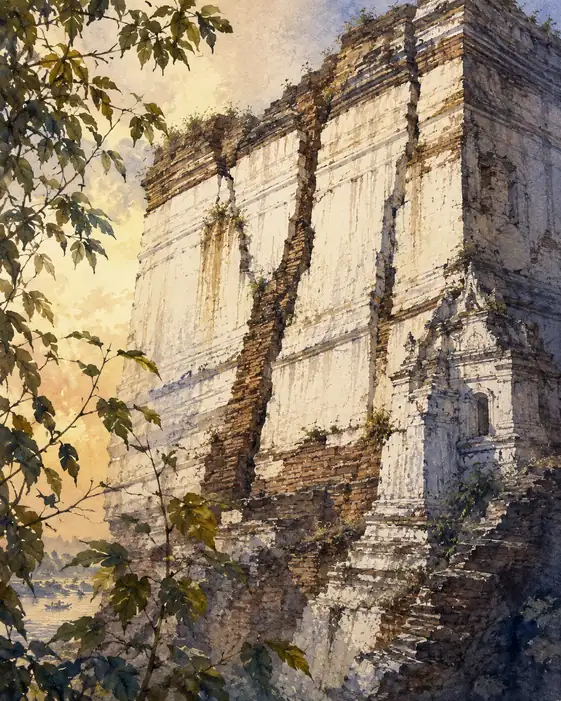 Where Time Splits the Stone
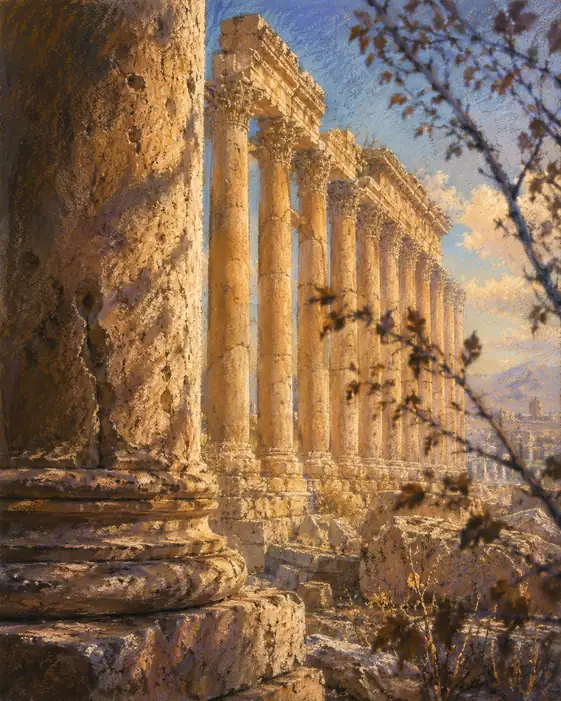 Whispers of the Eternal Sun
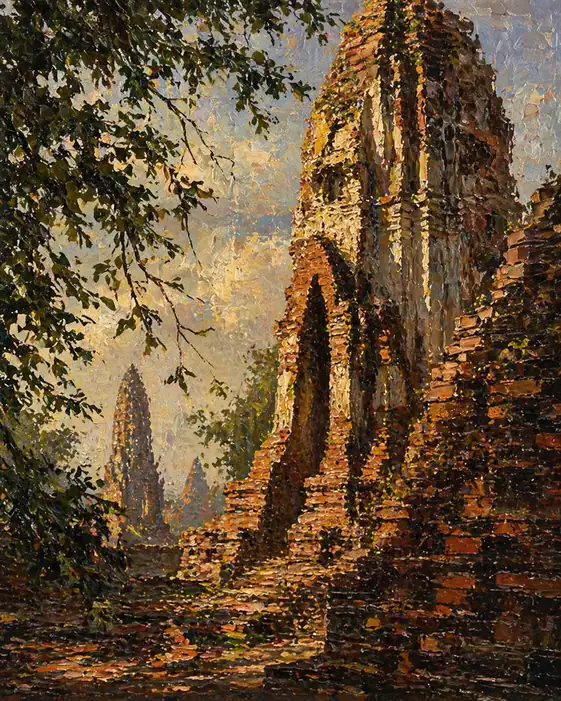 Echoes of a Forgotten Kingdom
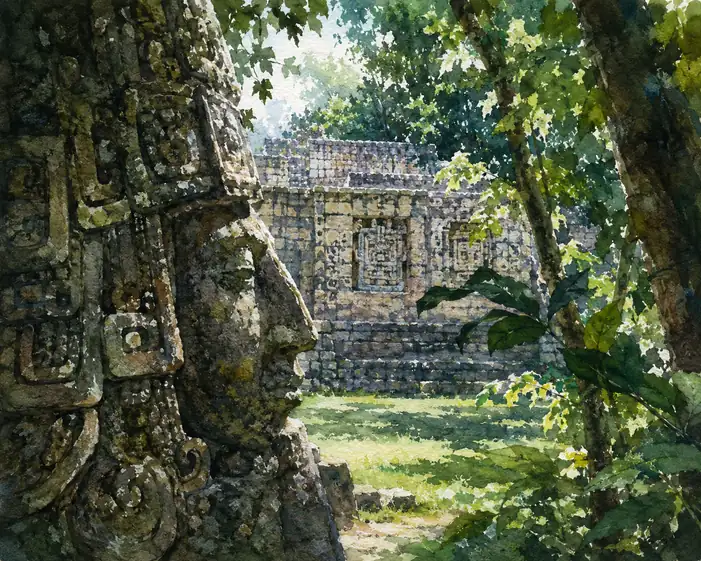 The Silent Profile Dreaming of Eternity
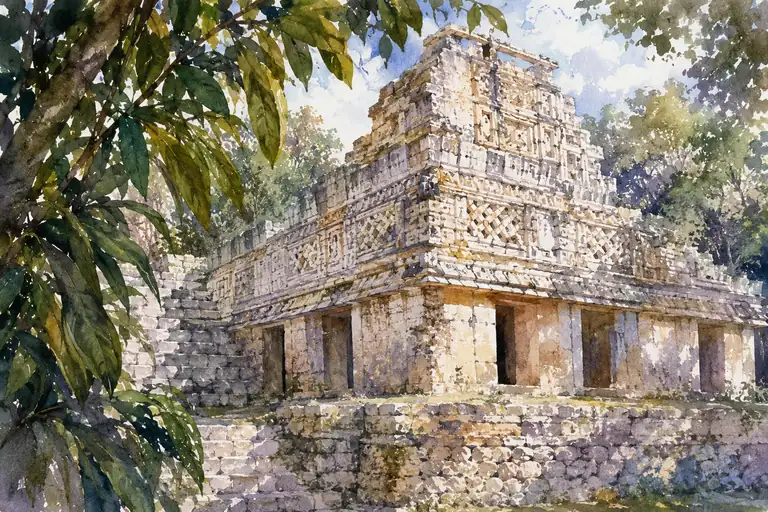 Echoes of the Green Sanctuary
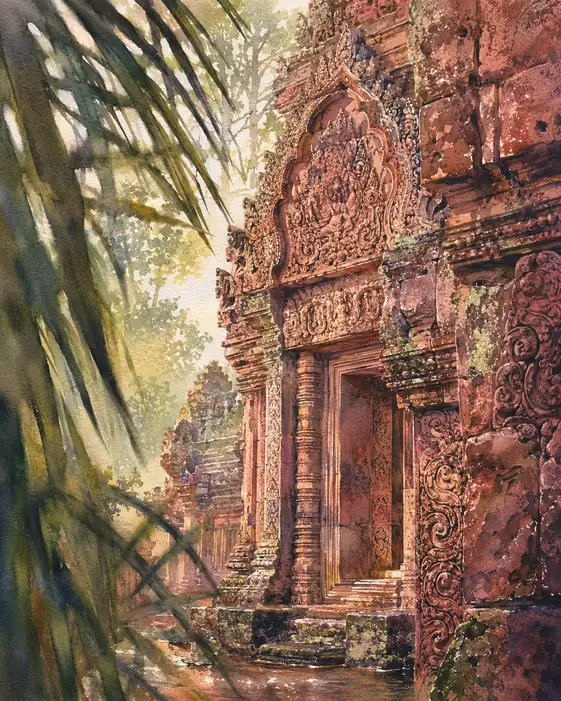 The Red Portal of the Jungle Depth
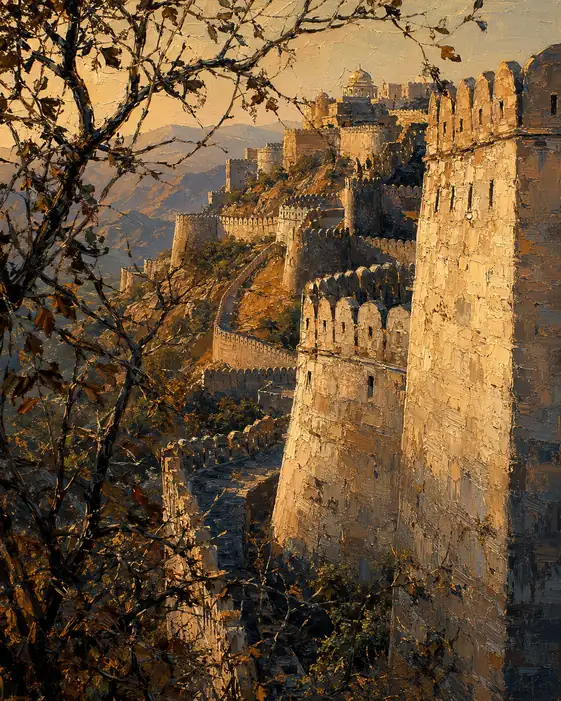 Ramparts of the Golden Ridge