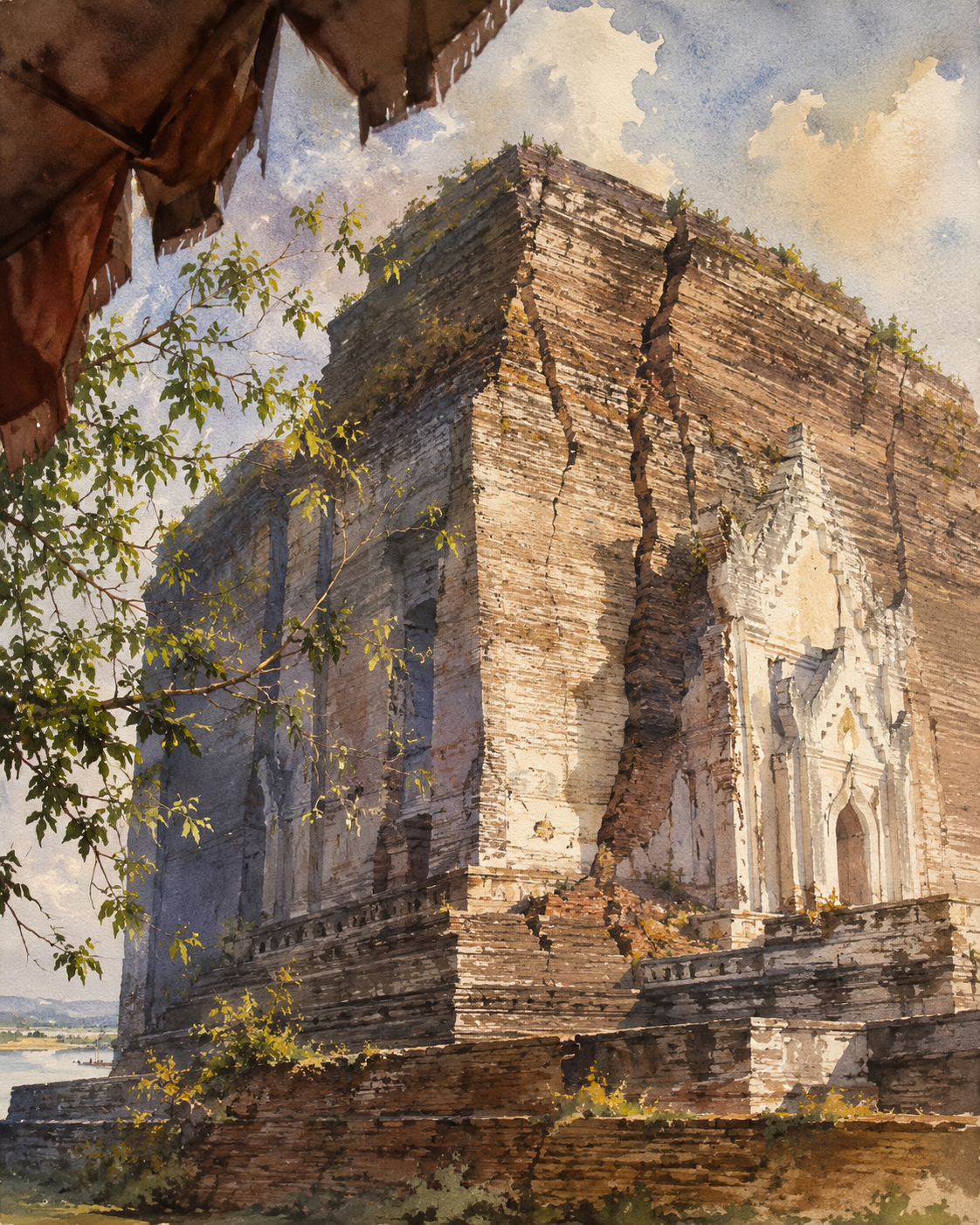
The Silent Fissure of Time
Critique
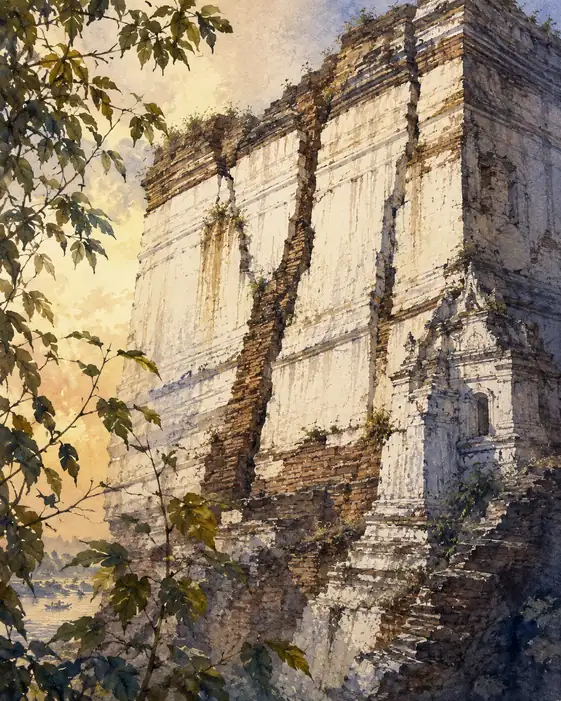
1. Introduction This watercolor painting presents a detailed study of massive ancient ruins. The composition centers on a colossal brick stupa showing severe cracks and weathering over time. Although the exact location and creation date of the site are unknown, this work successfully captures the quiet grandeur of historical decay. 2. Description In the foreground, crumbling brick foundations are visible, partially covered by small weeds. To the right, an arched entrance decorated with intricate white plaster carvings catches the bright sunlight. A deep vertical fissure runs down the side of the main structure, while a distant river and mountains stretch under the blue sky in the background. 3. Analysis The artwork is rendered with fine pencil lines and delicate layers of watercolor wash. The color palette relies on warm earth tones for the bricks, contrasting with cool purples in the shadowed areas. The light highlights the rough textures of the brickwork, while a diagonal arrangement of elements guides the viewer's eye across the scene. 4. Interpretation and Evaluation This piece symbolizes the transient nature of human achievement when contrasted with the forces of time and nature. Technically, the artist demonstrates superb control of the watercolor medium to render both hard stone textures and soft atmospheric details. The juxtaposition of the weathered cracks and the delicate white arch creates a strong emotional impact. 5. Conclusion While the sheer scale of the ruin initially dominates the view, closer inspection reveals the intricate craftsmanship of the architectural details. The artist has preserved the silent dignity of the forgotten structure, translating historical passing into a visual memory. Ultimately, this painting succeeds in evoking a sense of nostalgic longing for a lost civilization.
Same Subcategory
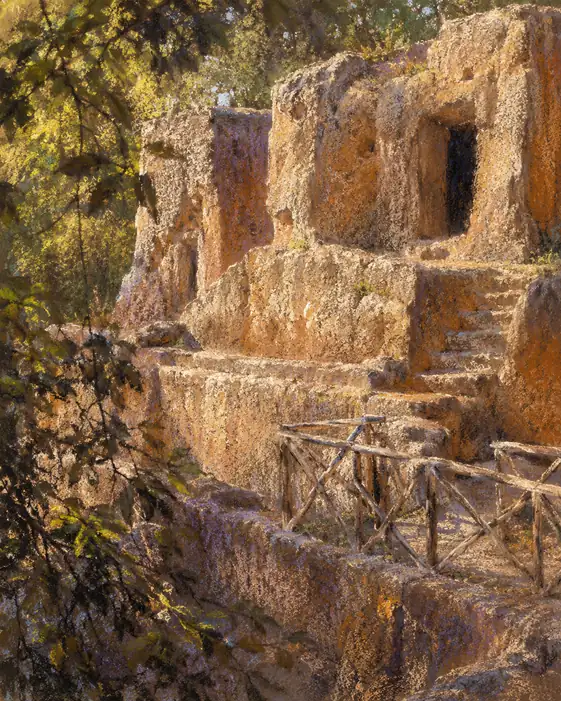 Where History Sleeps in Dappled Light
Similar Artworks
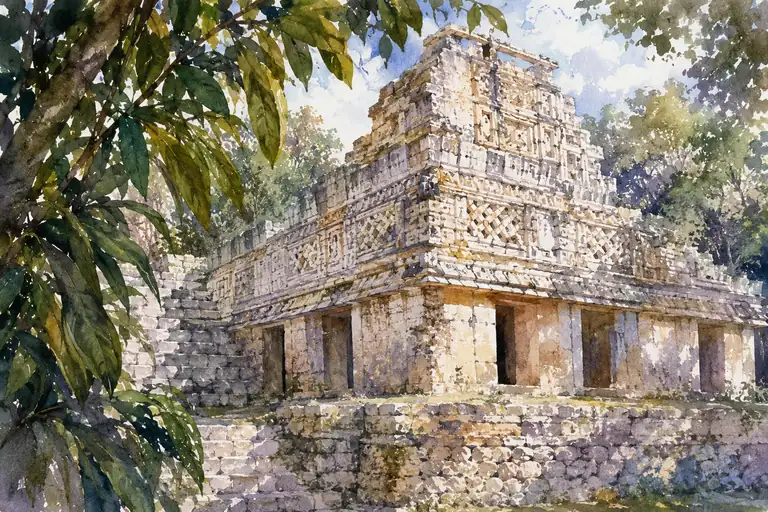 Echoes of the Green Sanctuary
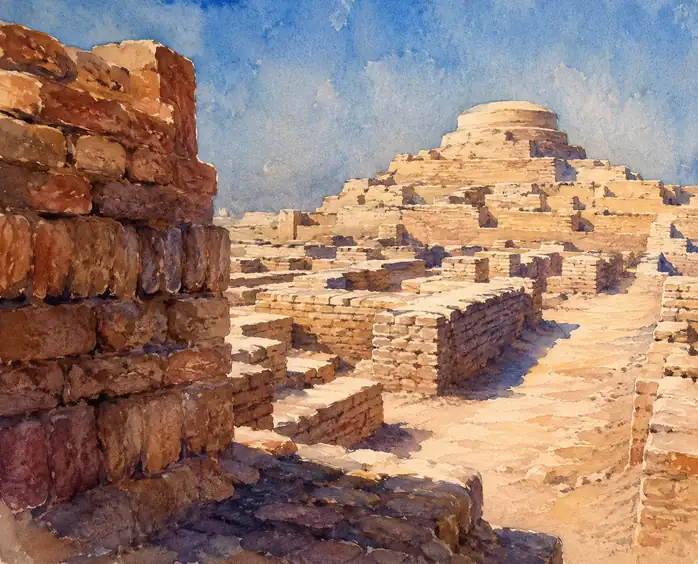 The Silent Stupa under the Azure
 Where Time Splits the Stone
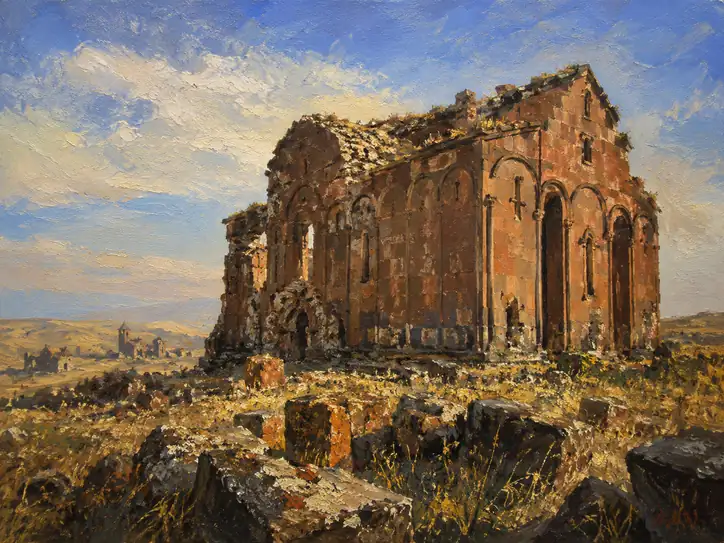 Where the Stone Remembers
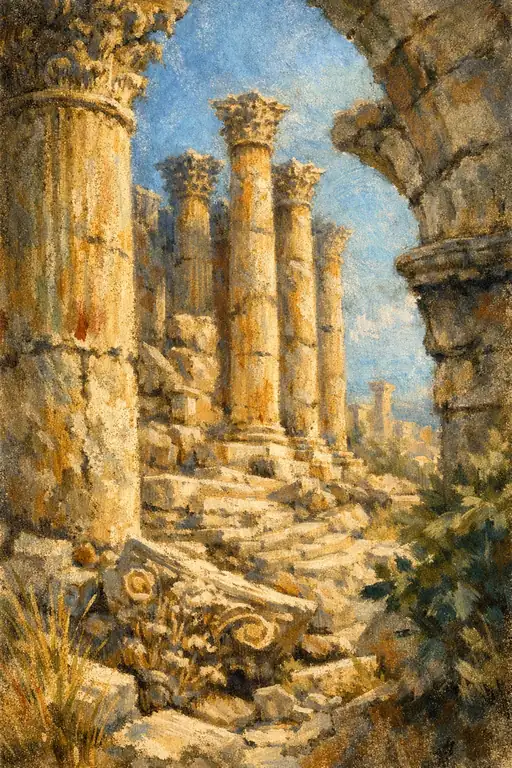 Timeless Grandeur: Weathered Corinthian Columns
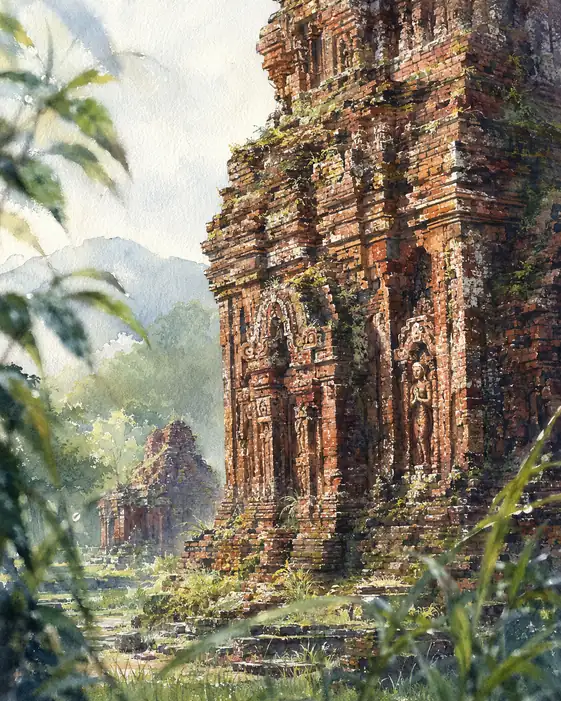 Memory in the Forest's Embrace
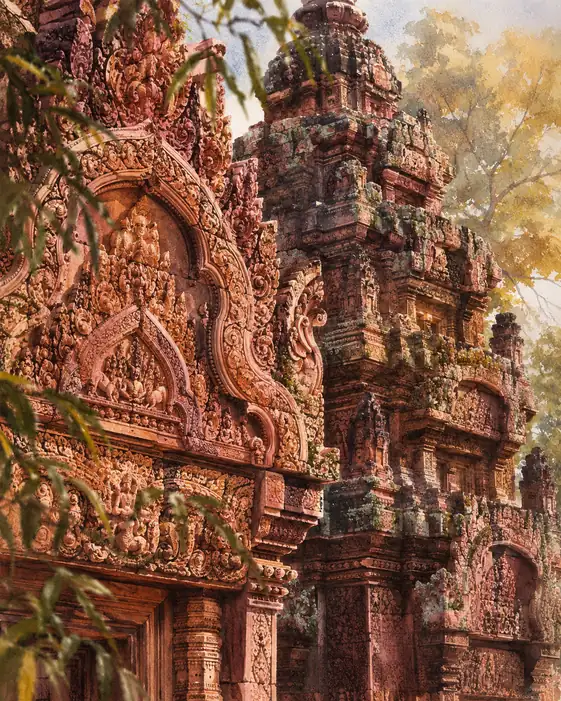 The Gateway to Forgotten Devotion
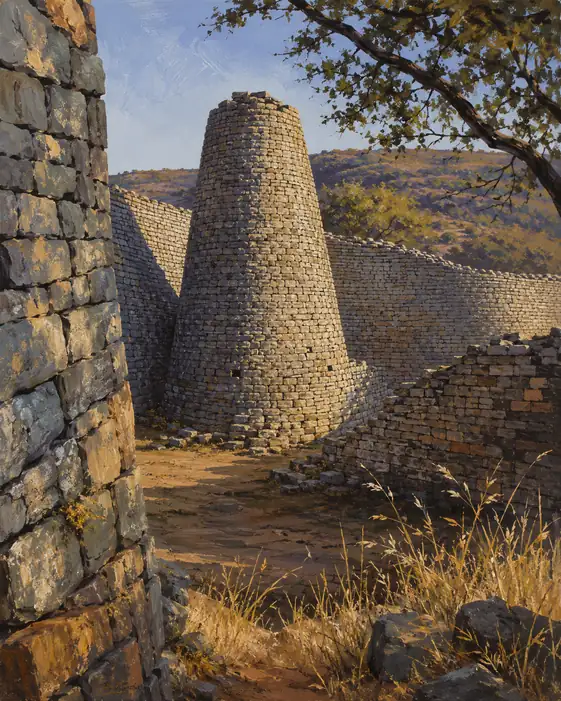 Where Time Stands in Stone
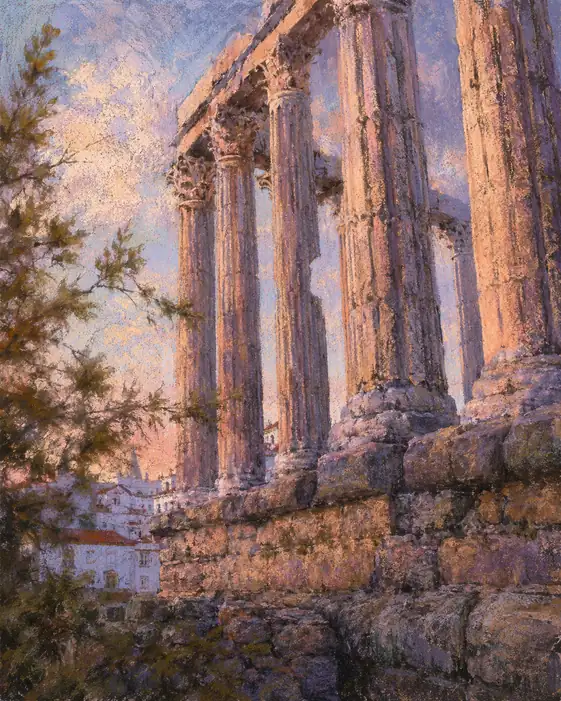 Sentinels of the Eternal Sunset
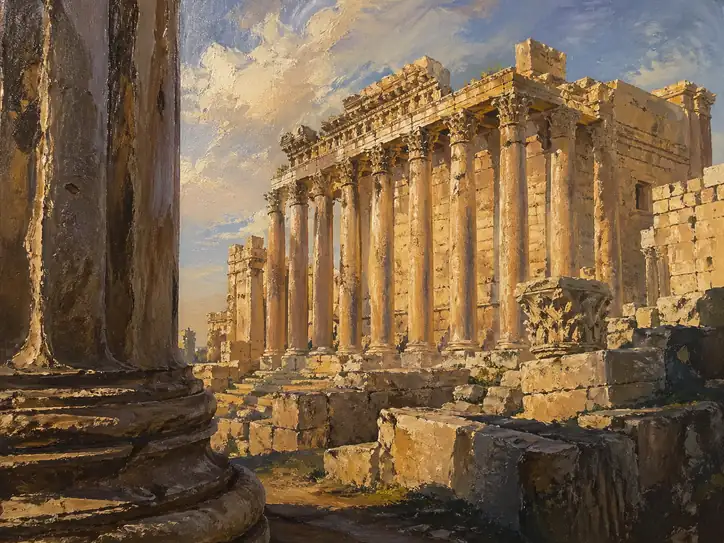 The Golden Echo of Antiquity