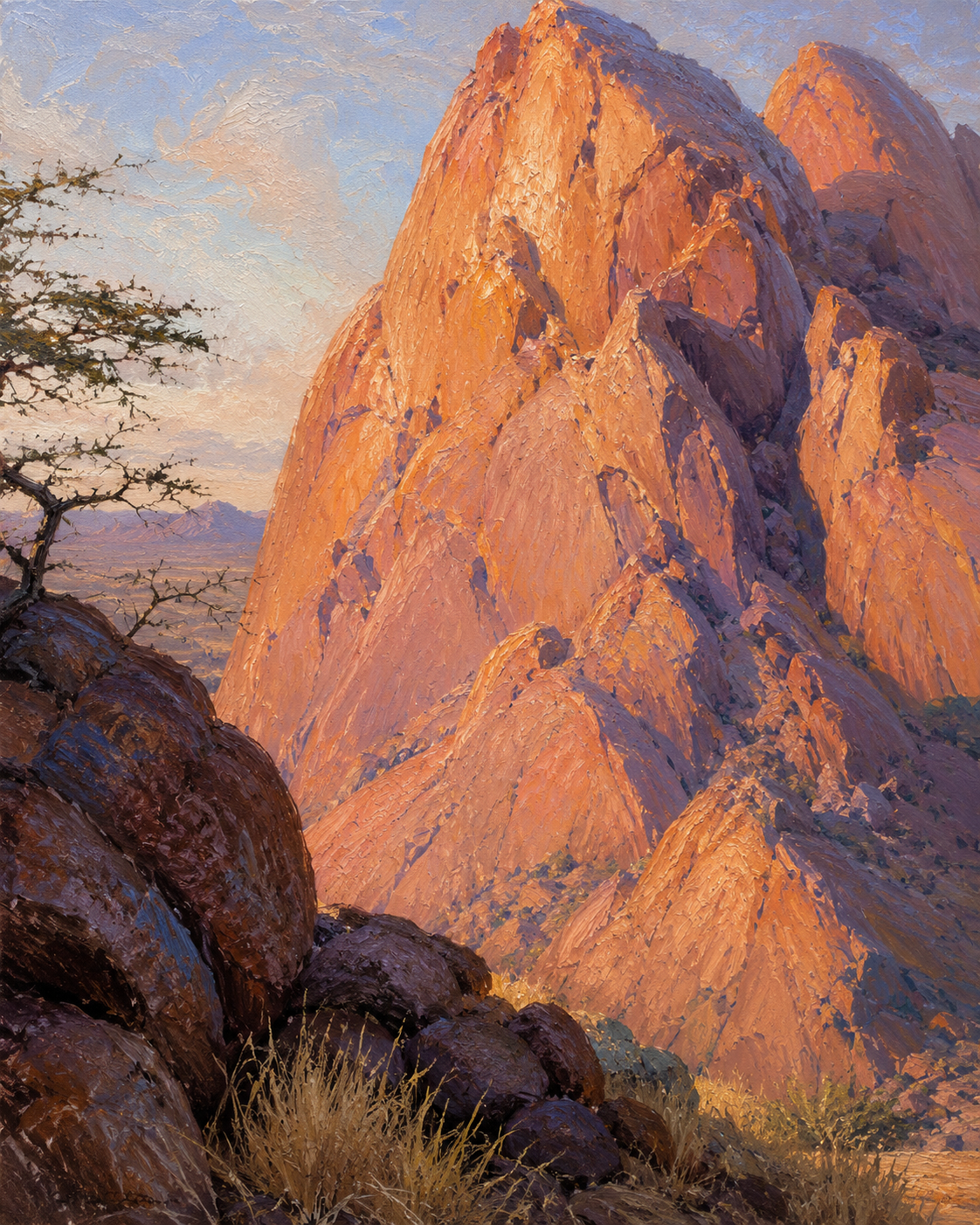
Eternal Flame of the Red Earth
Critique
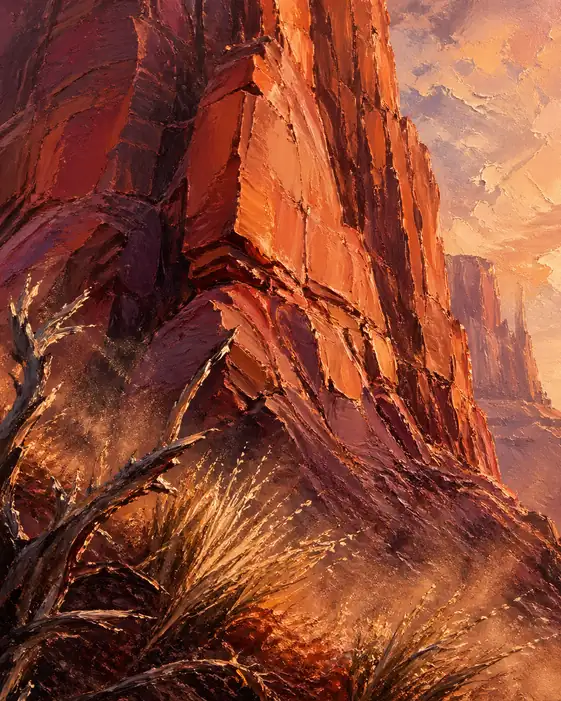
1. Introduction This oil painting depicts a gigantic mountain glowing under sunset or sunrise light. Specific historical details, its creation date, or the exact location of this rugged landscape remain unconfirmed. However, the arid environment evokes regions like the Australian outback. The work is notable for its monumental scale and dramatic natural contrast. 2. Description In the center and right, a massive orange-pink mountain rises like a steep wall. In the lower left foreground, dark boulders sit in shadow with dry grass between them. A single twisted tree stands atop these rocks, reaching toward the plain. In the background, a distant valley and pale blue mountains fade into the horizon. 3. Analysis Color-wise, the contrast between the warm orange peak and the cool dark foreground rocks is dramatic. The artist uses a thick impasto technique, where visible brushstrokes replicate the rough texture of the mountain. The vertical peak and horizontal plains create a balanced tension. Low light from the left casts deep shadows across the surface. 4. Interpretation and Evaluation The primary appeal of this piece lies in its powerful depiction of light and texture. The colossal mountain and lone tree symbolize the sublime power and resilience of nature. The dramatic interplay of light and shadow captures a fleeting moment of beauty. The harmonious composition inspires a sense of awe toward the natural world. 5. Conclusion This painting successfully utilizes the qualities of oil paint to express natural grandeur. The contrast between the illuminated peak and dark foreground addresses themes of permanence and change. The initial impression of a barren landscape shifts to a deeper appreciation of the spiritual light within. It is a highly accomplished landscape work.
Same Subcategory
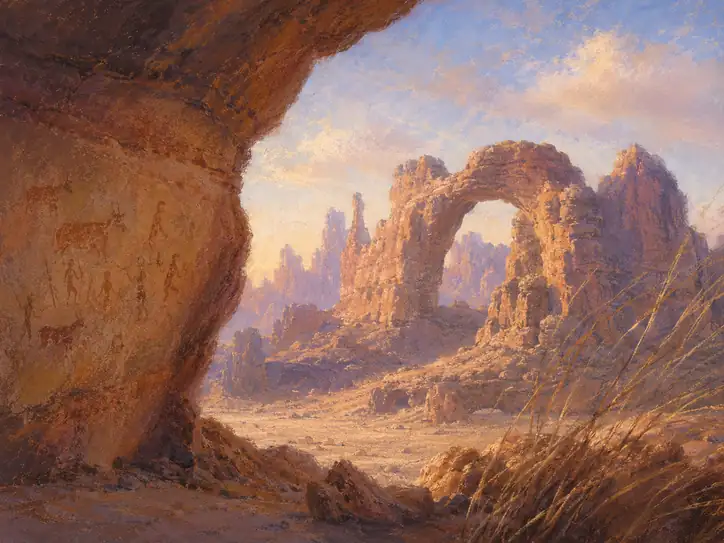 Breath of the Ancient Earth
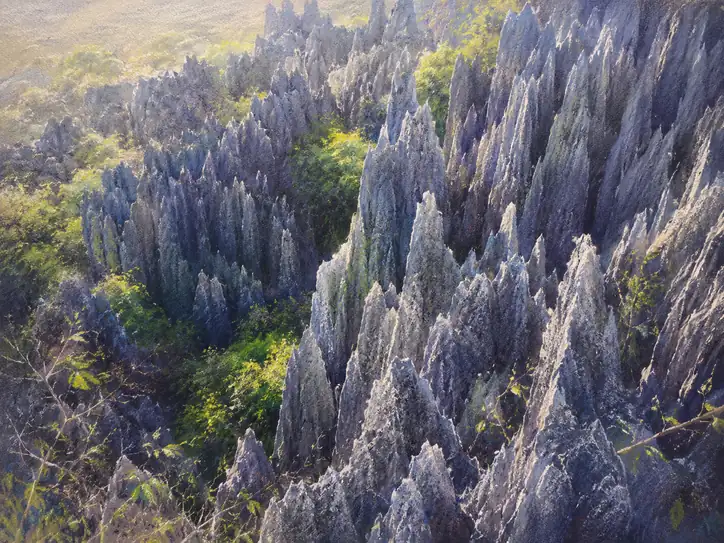 Sanctuary of the Stone Spires
Similar Artworks
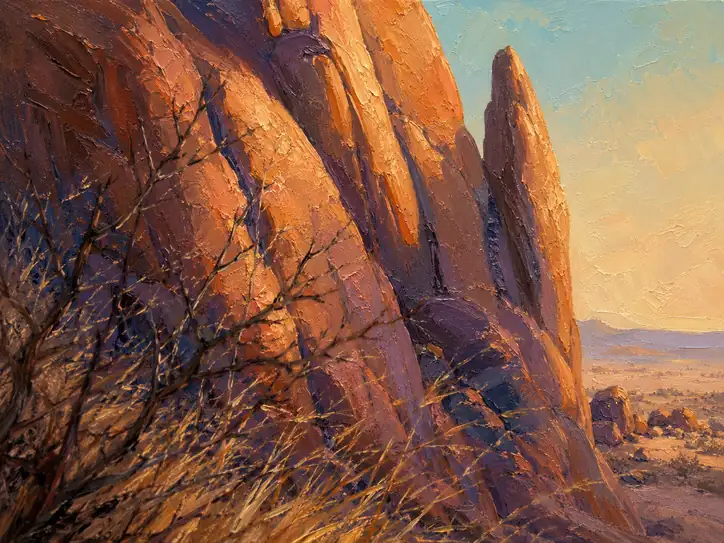 Monolith of the Crimson Waste
 The Tower of Shifting Light
 Monolith of the Eternal Light
 The Golden Sentinels: An Ode to Eternity
 The Weight of Thousand Sunsets
 Dawn's Fiery Crown
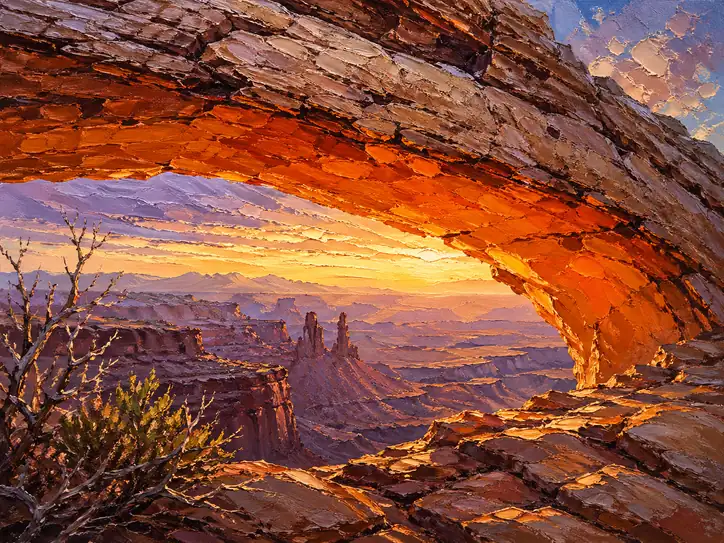 Echoes of the Burning Horizon
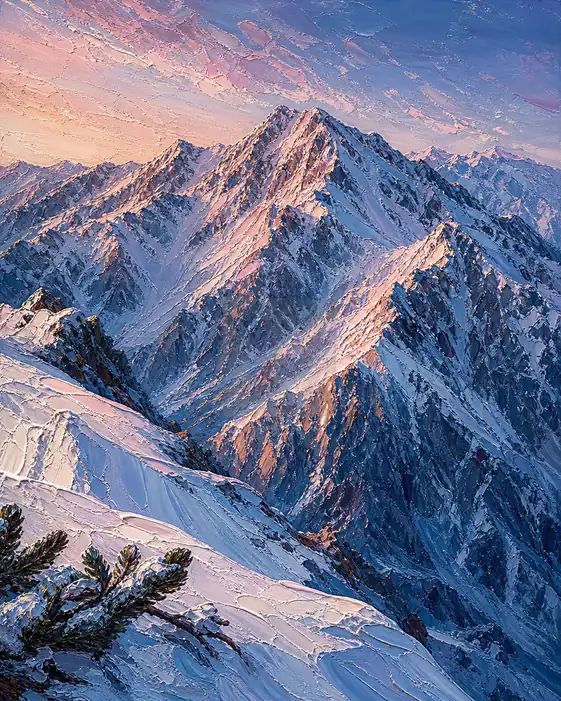 The Chiseled Summit of Rosy Dawn
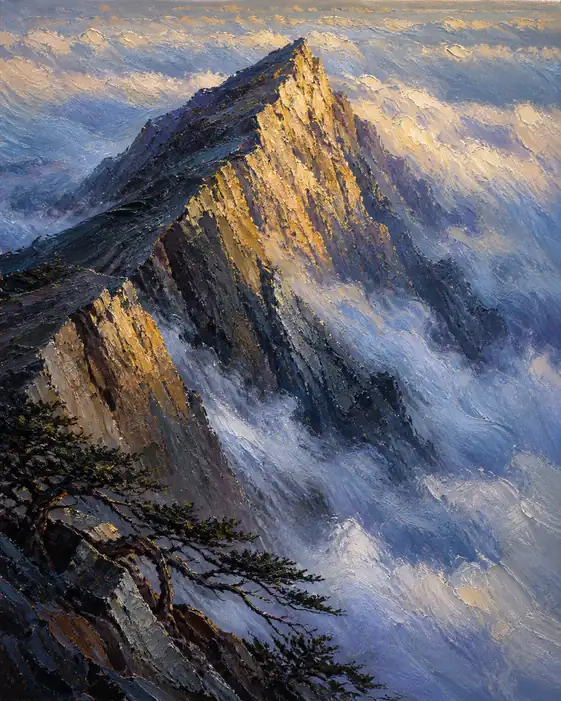 Sovereign of the Sea of Clouds
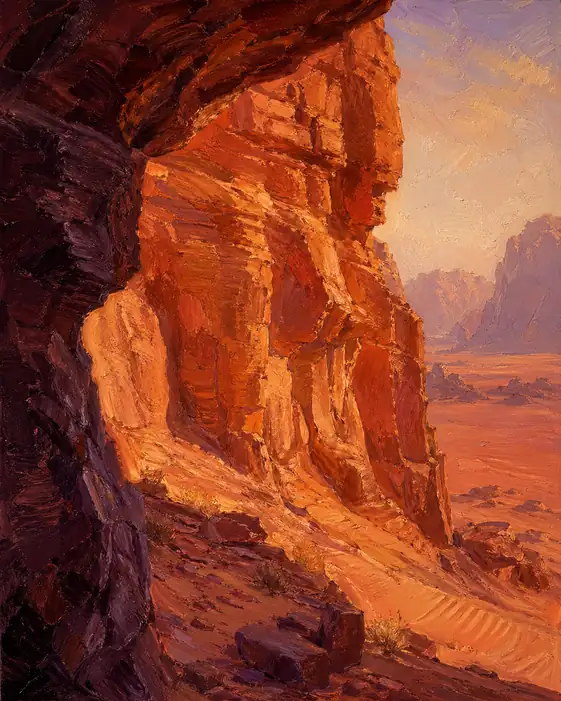 Soliloquy of the Desert: A Dialogue in Light and Shadow