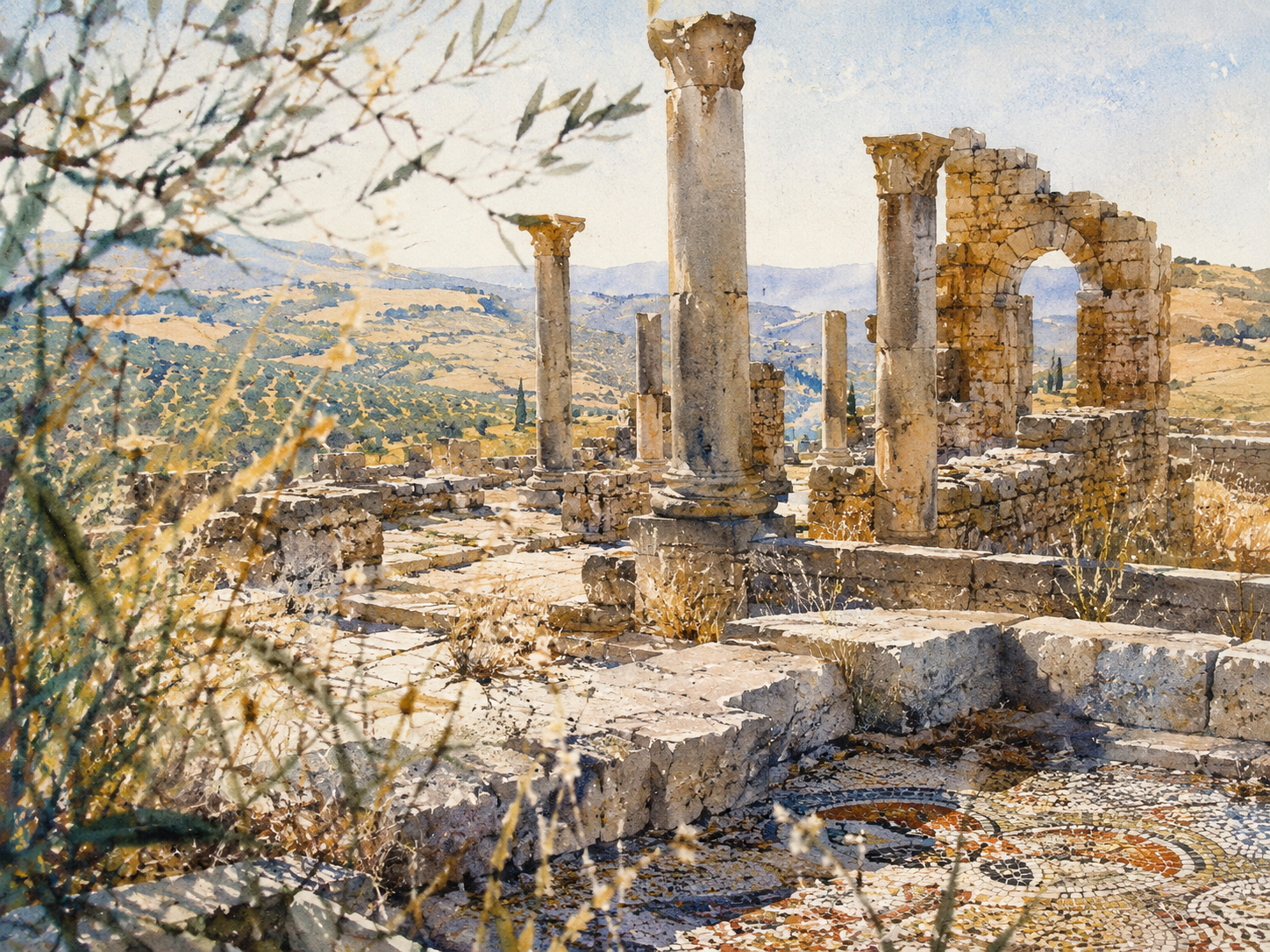
Echoes of the Sunlit Mosaic
Critique
1. Introduction This watercolor painting depicts the ruins of an ancient temple on a hill overlooking a vast landscape. Its location and creation date remain unknown. The canvas features fluted columns, a ruined stone archway, and a detailed mosaic floor, capturing past grandeur and present silence. 2. Description In the foreground, a colorful mosaic floor with geometric patterns is visible. Behind it, several fluted columns and a crumbling wall with an arched entrance are positioned. On the left, delicate plant branches extend into the frame, while the background shows rolling hills and distant mountains. 3. Analysis The color palette relies on warm ochres and stone grays, harmonizing with distant blues. The mosaic displays red, white, and dark blue stones, adding contrast. Thin foreground branches enhance spatial depth, while delicate light and shadow portray the three-dimensional volume of the columns. 4. Interpretation and Evaluation The artwork highlights the beauty of the ruins through a balanced composition and skilled draftsmanship. The contrast between detailed mosaic and rough stone textures demonstrates a unique technique. Translucent washes for the hills and firm details for the stone evoke a deep sense of nostalgia. 5. Conclusion Although the scene initially feels simple, close observation reveals its artistic depth. Analyzing the mosaic patterns and structural shadows brings the memory of an ancient civilization to life. Ultimately, this watercolor is a refined masterpiece demonstrating great harmony between the natural landscape and human architecture.
Same Subcategory
Similar Artworks
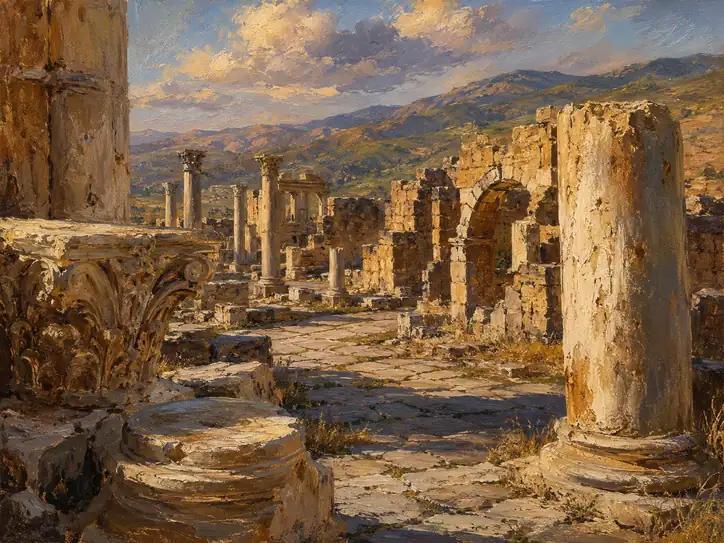 Where Glory Rests in Gold
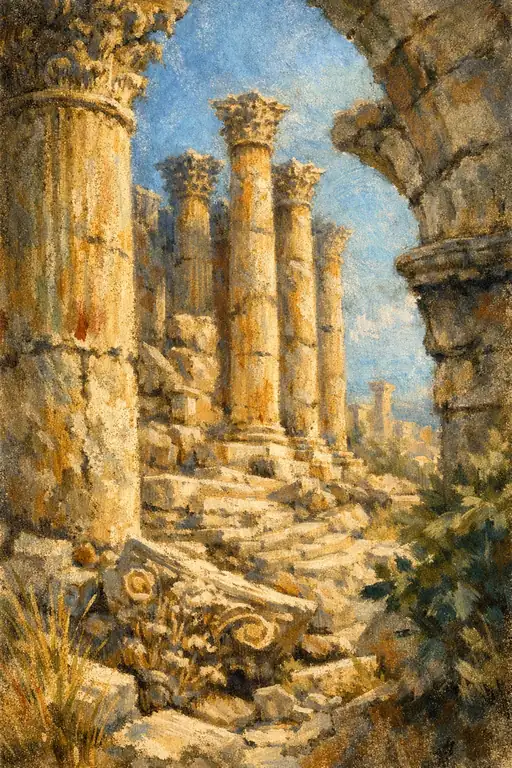 Timeless Grandeur: Weathered Corinthian Columns
 Sentinels of the Eternal Sunset
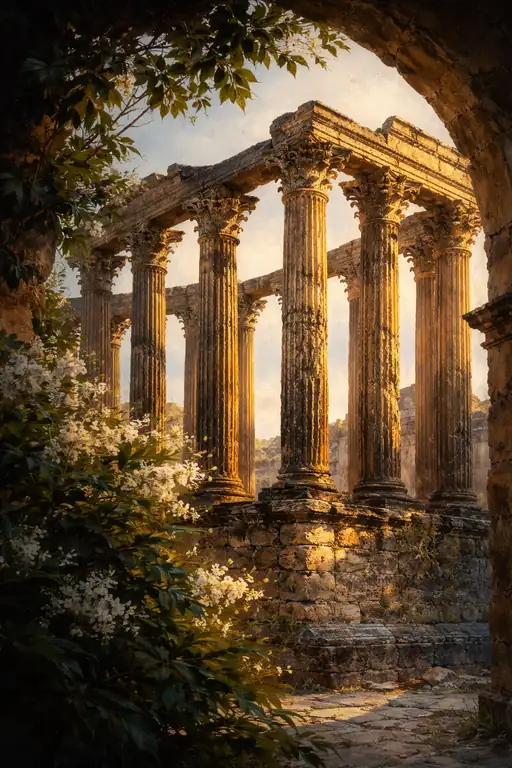 Echoes of Antiquity
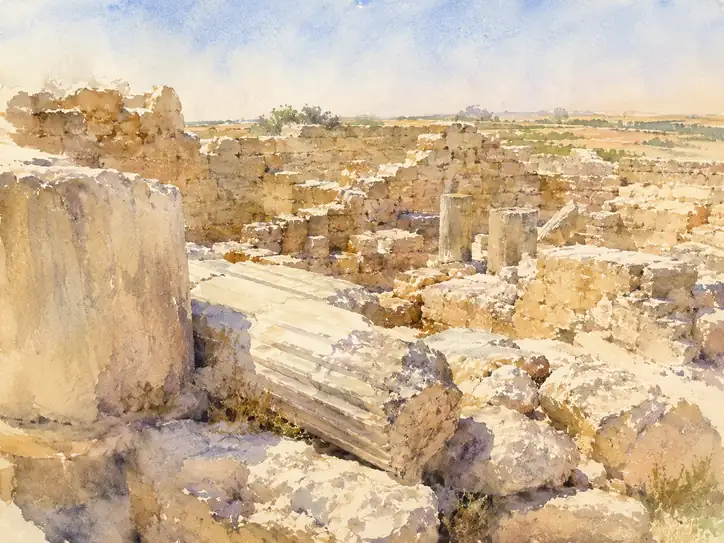 Silent Sleep of the Fallen Pillar
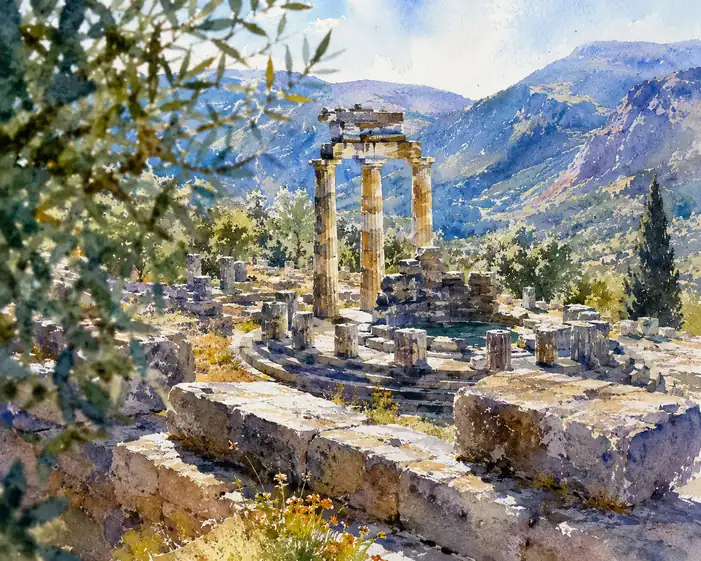 Eternity Within a Sacred Circle
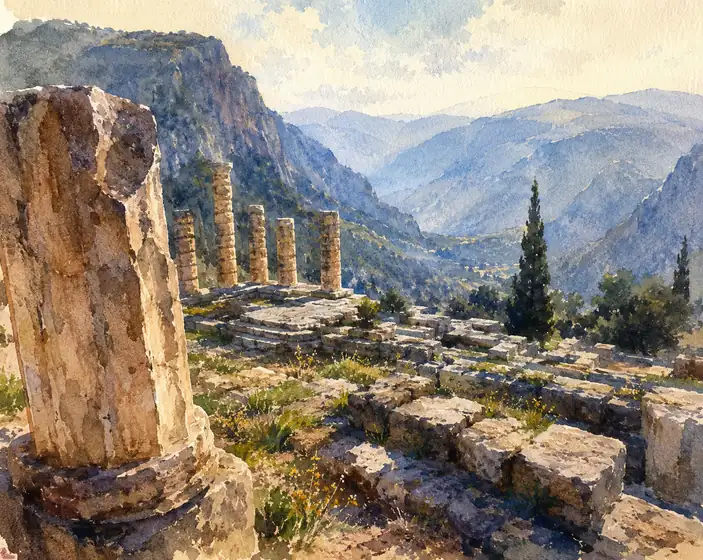 Where the Oracle Still Whispers
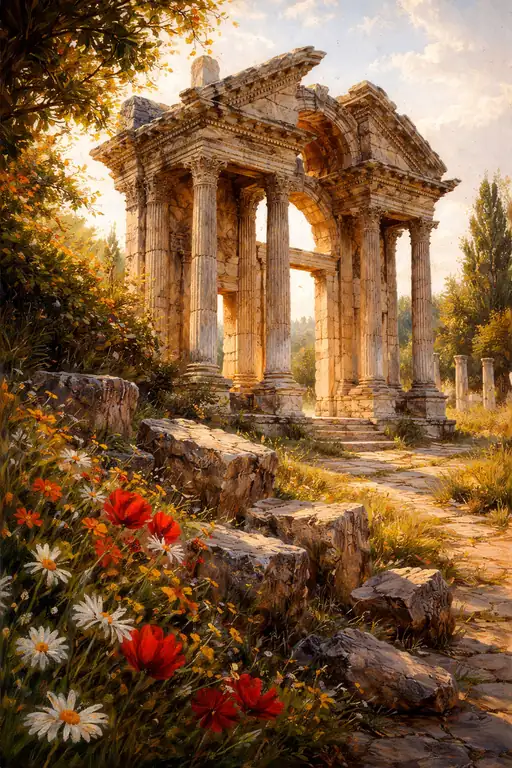 Timeless Pillars Among the Poppies
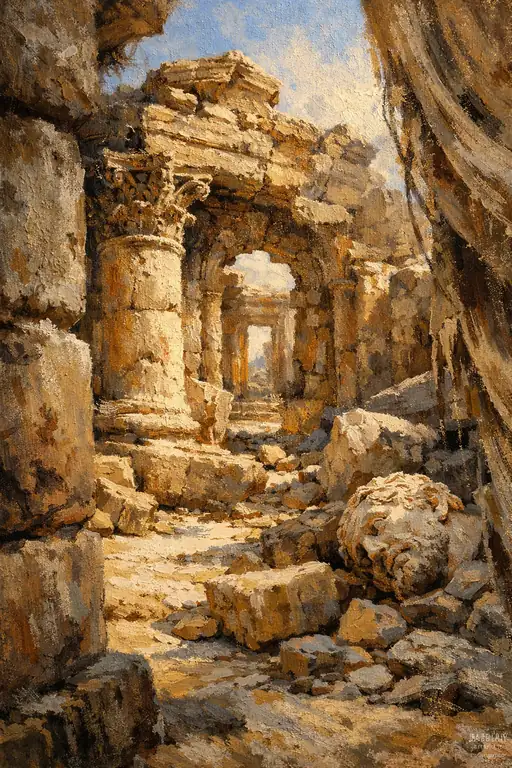 Echoes in Stone: The Sunlit Majesty of Forgotten Arches
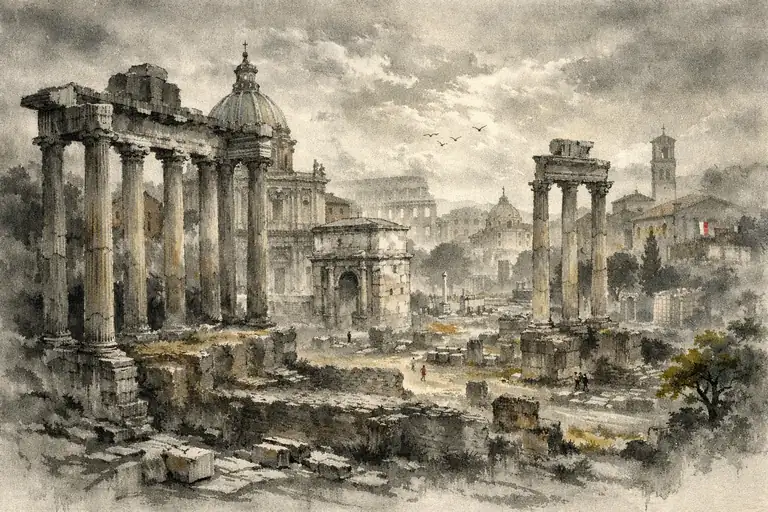 The Silence of Shattered Grandeur