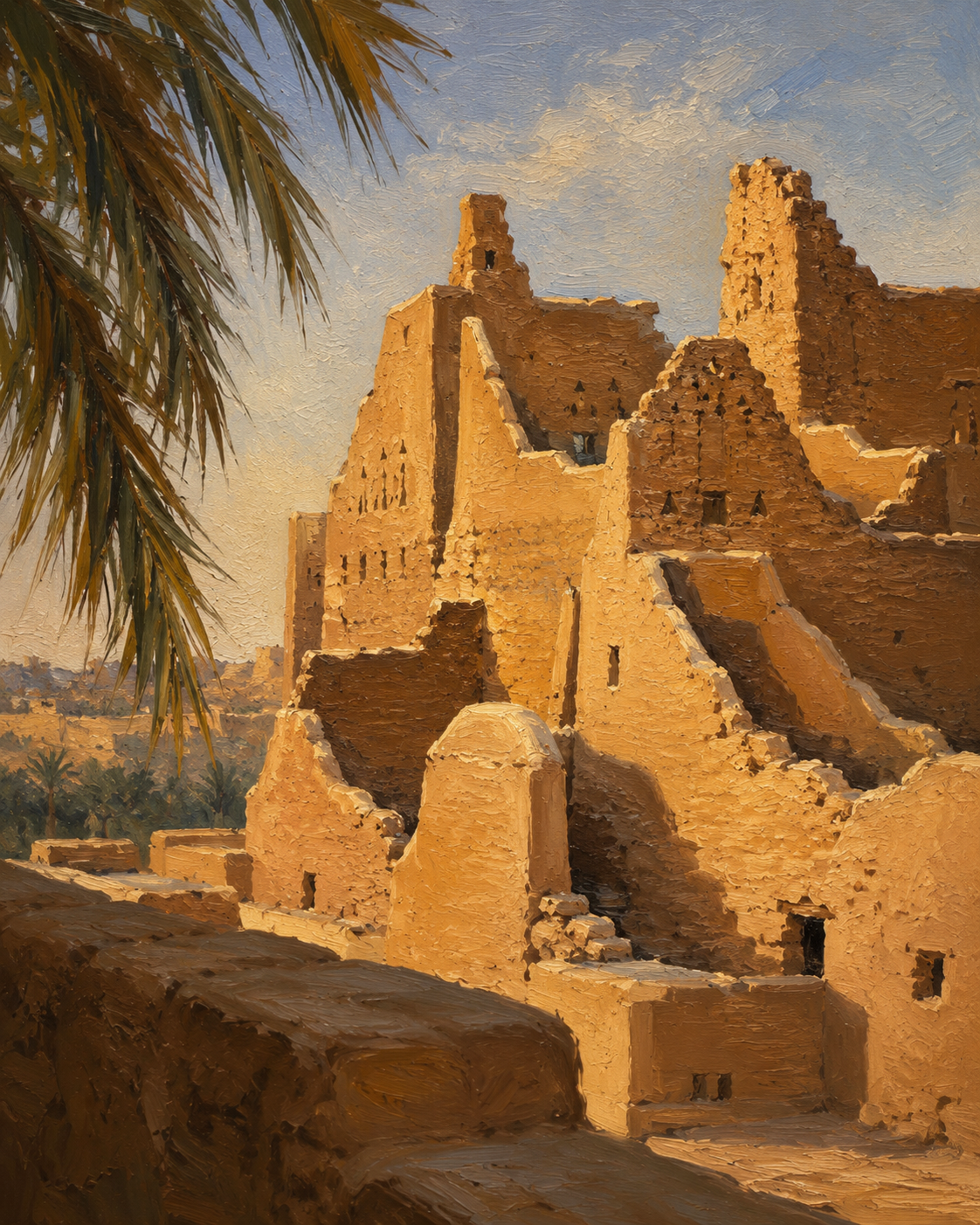
Return to the Earth
Critique
1. Introduction This warm oil painting depicts mud-brick fortress ruins standing in a dry landscape. The crumbling adobe structures convey a silent sense of history and time. The artist captures simple earth architecture under soft evening sunlight with a rich touch. This work evokes a peaceful mood where nature and ruins merge. 2. Description In the foreground, a dark earthen wall in shadow provides a sense of solid structure. On the upper left, large palm fronds suggest an oasis environment. In the middle ground, the fortress features triangular Najdi-style windows, glowing golden in the sunset. In the background, a distant palm grove stands under a calm sky. 3. Analysis The composition utilizes light and shadow, guiding the eye from the dark foreground to the illuminated ruins to create depth. The palette is dominated by warm yellow ochres and browns, emphasizing the dry soil. The low sun casts long shadows, defining the textured walls. Thick brushstrokes highlight the organic mud-brick materials. 4. Interpretation and Evaluation This artwork celebrates human resilience and traditional heritage developed in a desert environment. Technically, the artist excels in rendering simple earth tones with diverse nuances, adding warmth. The contrast between decaying walls and living green palms creates a quiet vitality. It is a poetic portrayal that records the flow of silent time. 5. Conclusion The powerful presence of the ruins captures initial interest, but closer viewing reveals a deep tranquility. The artist successfully illustrates how human creations eventually return to nature. Ultimately, the painting conveys the rustic beauty and peace of desert history. This sunset-lit scene is a masterpiece offering lasting calmness to the viewer.
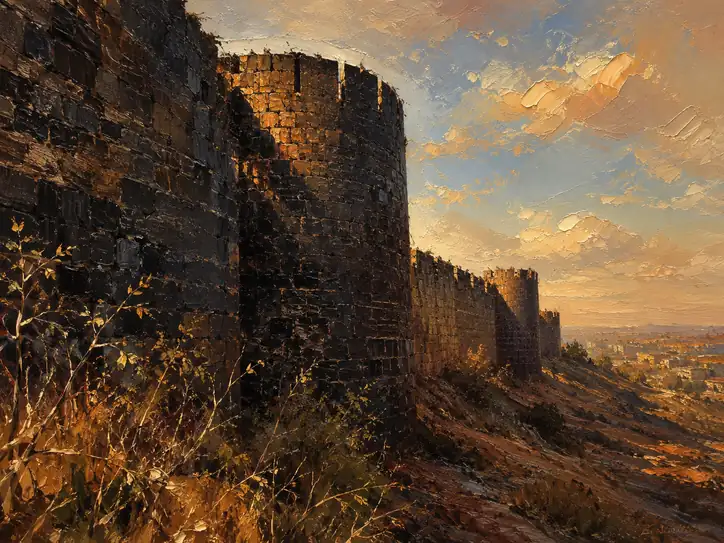 The Last Vigil at Dusk
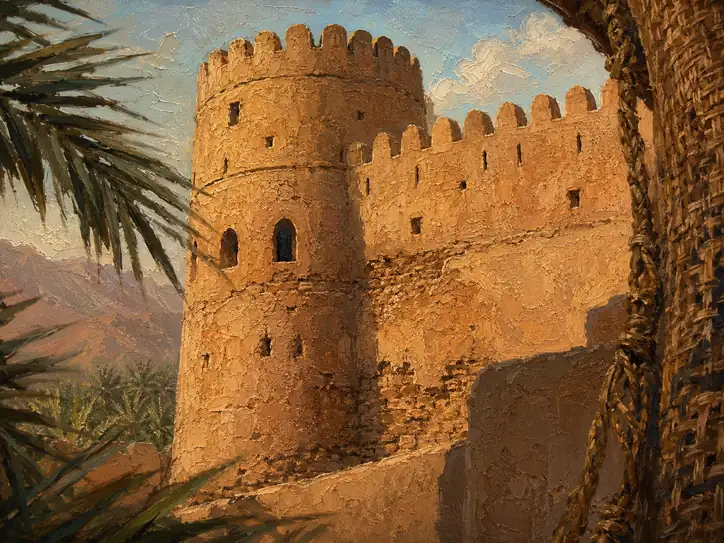 The Unyielding Guardian
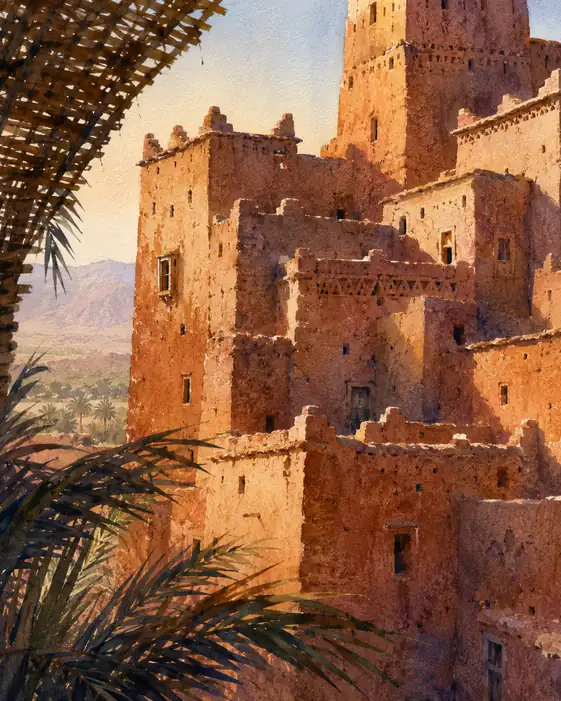 Fortress of the Earthborn Dream
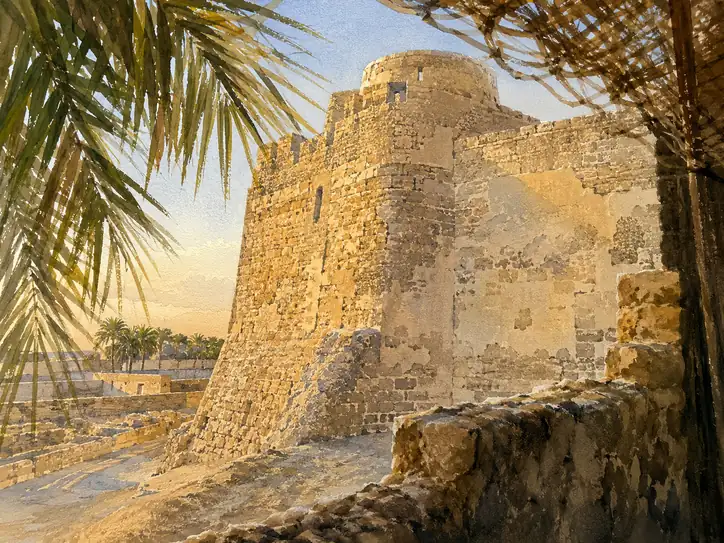 Guardian of the Sunlit Sands
 An Earthen Hymn to the Sky
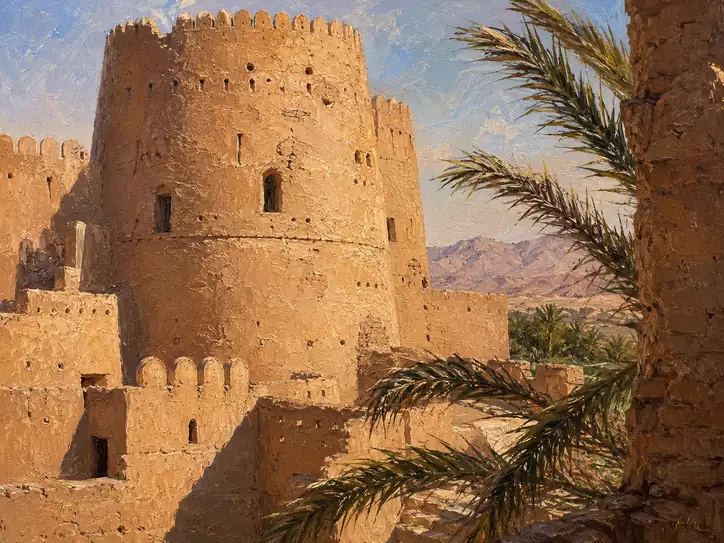 Citadel of Sun and Stone
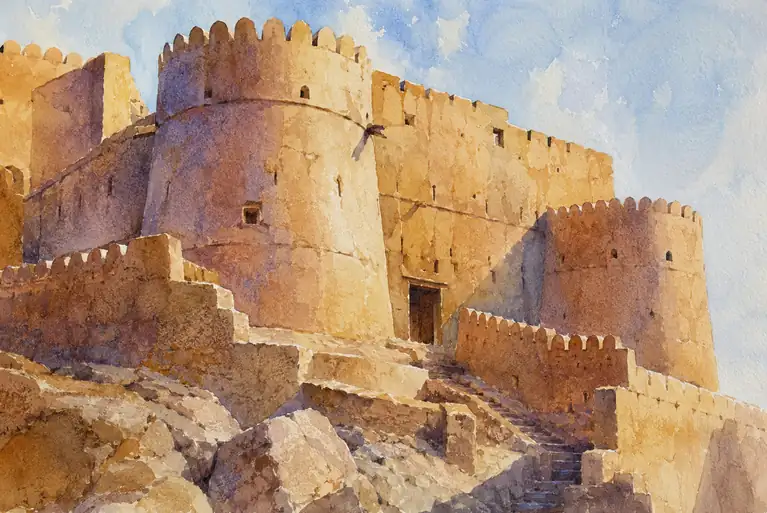 Fortress of Whispering Lights
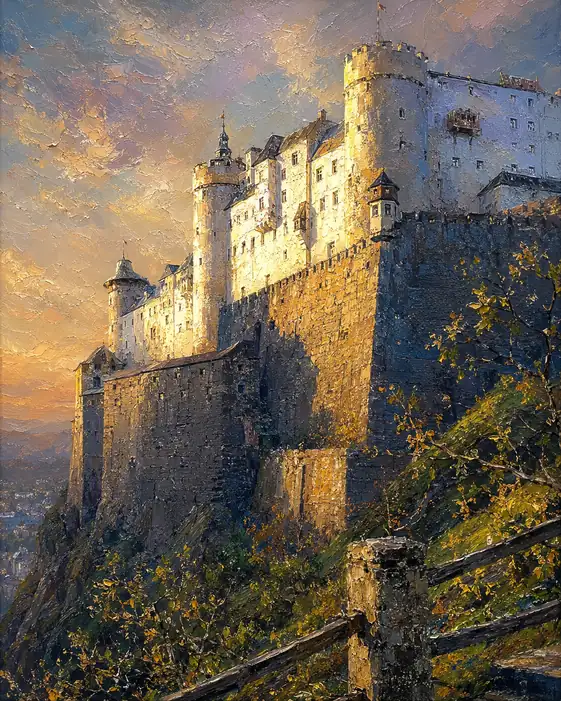 Sentinel of the Setting Sun
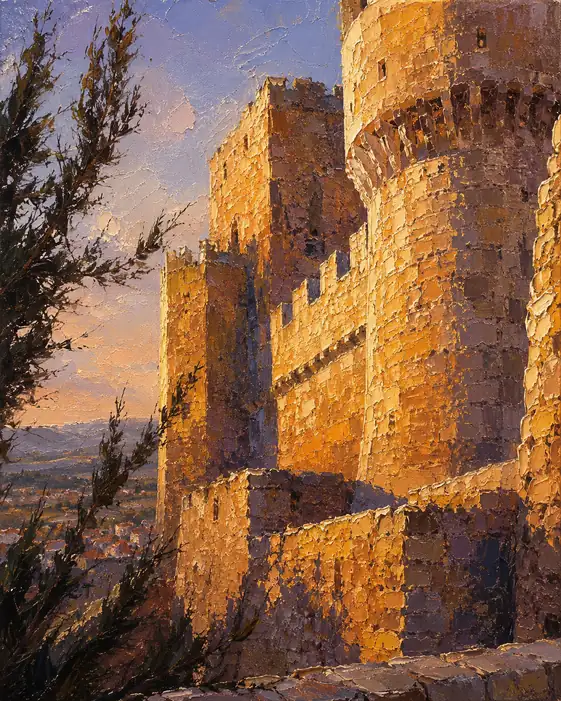 Sentinel of the Golden Hour
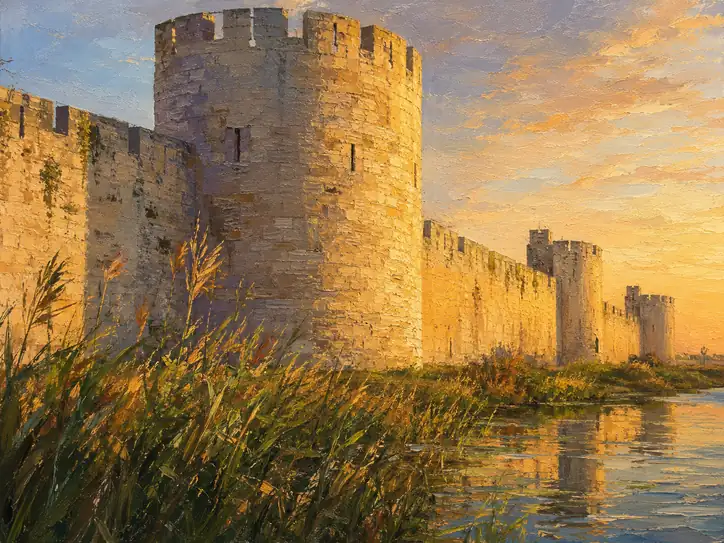 The Silent Sentinel at Dusk