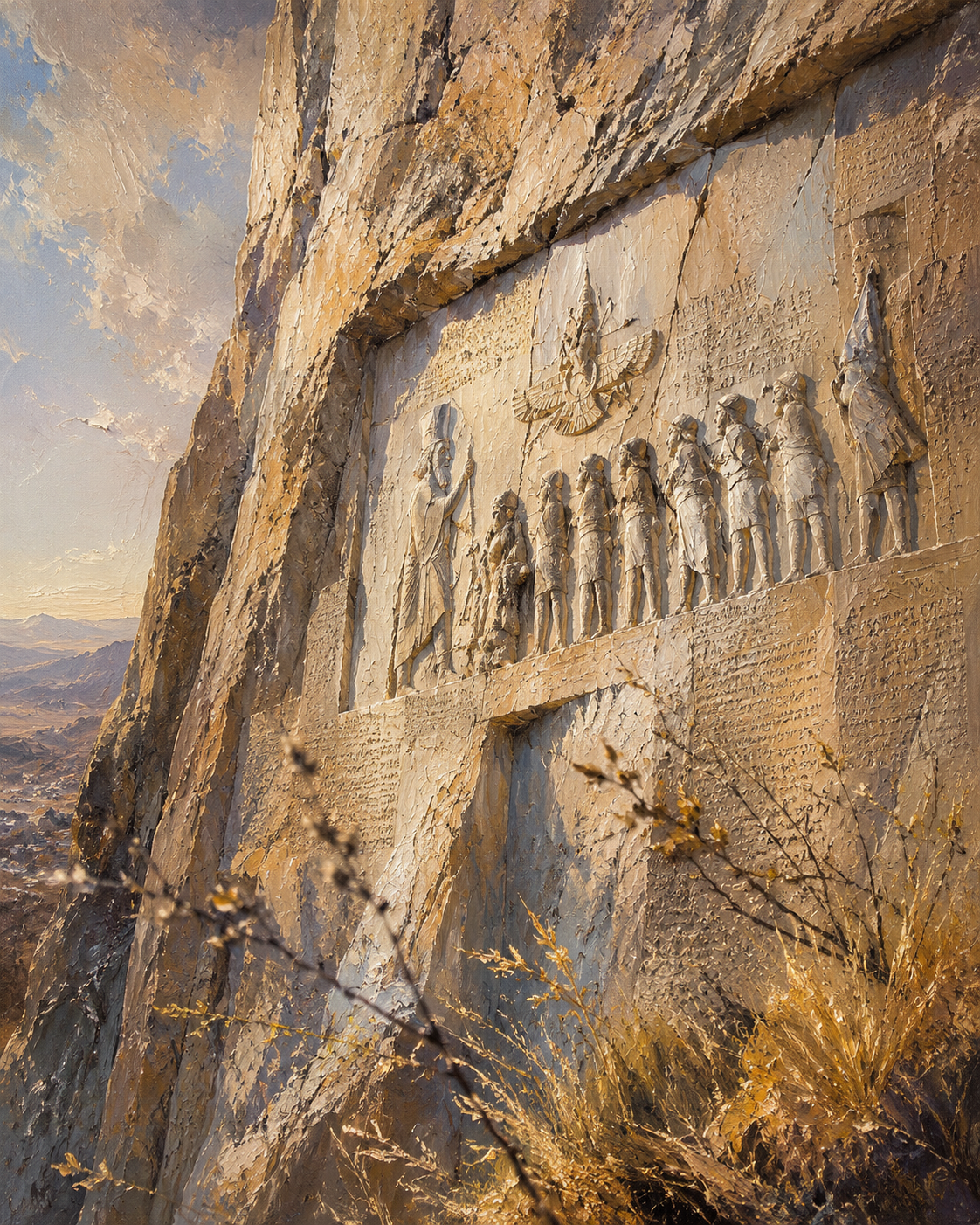
Written in the Silence of Stone
Critique
1. Introduction This oil painting depicts an ancient relief carving engraved on a steep and rugged cliffside. The relief, positioned centrally, projects historical mystery and a powerful sense of presence. Standing amidst the dry desert light, the massive rock face functions as a medium that transmits memories of a lost civilization. 2. Description On a flat section of the nearly vertical cliff, several human figures and a winged deity symbol are carved. A ruler-like figure holding a staff stands on the left, while a line of presumed captives is depicted on the right. Below the carving, detailed inscriptions resembling ancient cuneiform characters cover the wall surface. 3. Analysis The perspective looking up at the massive cliff creates a sense of scale and immediacy. The diagonal line of the rock face introduces a dynamic direction to the static monument. The warm sand-beige of the sunlight contrasts beautifully with the cool gray of the shadowed areas. Thick impasto strokes realistically render the weathered texture of the stone. 4. Interpretation and Evaluation While the illuminated ruler symbolizes past power, the shadowed inscriptions suggest the passage of time and quiet oblivion. The harmony of strong rendering skills and sculptural paint texture gives rich dimensionality to the flat canvas. This combination of a diagonal composition and dry colors captures the solemnity of the desert, showing remarkable originality. 5. Conclusion Through the dramatic use of light and thick textures, this work successfully visualizes the weight of history within the ancient monument. Initially appearing as a simple representation of a ruins site, the detailed lighting reveals the transcendence of time. Supported by exceptional technique, this artistic expression evokes endless contemplation of the ancient past.
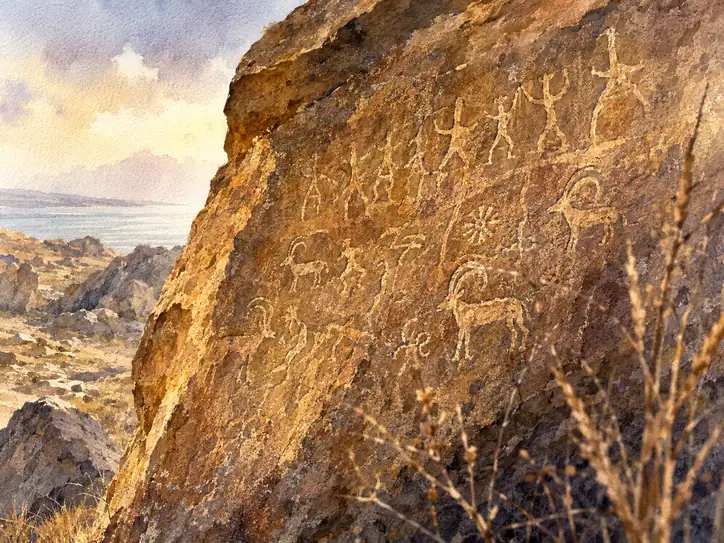 Ancient Prayers Echoing over the Silent Sea
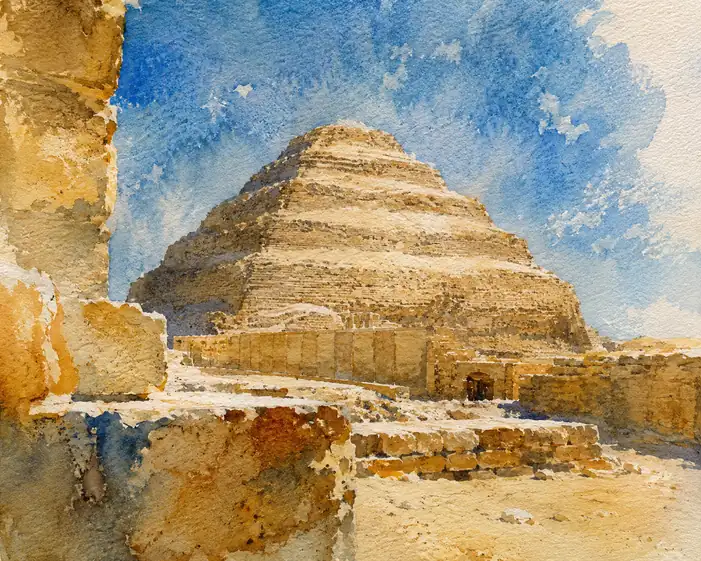 Steps to the Azure Sky
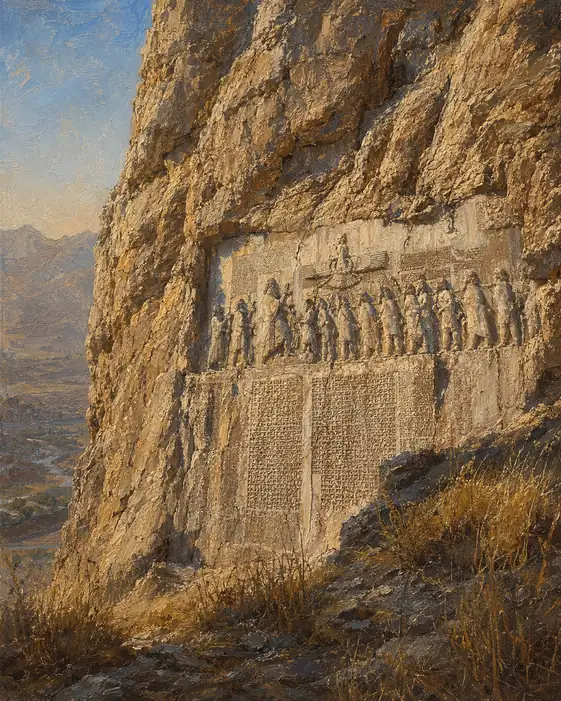 Silent Voices in the Stone
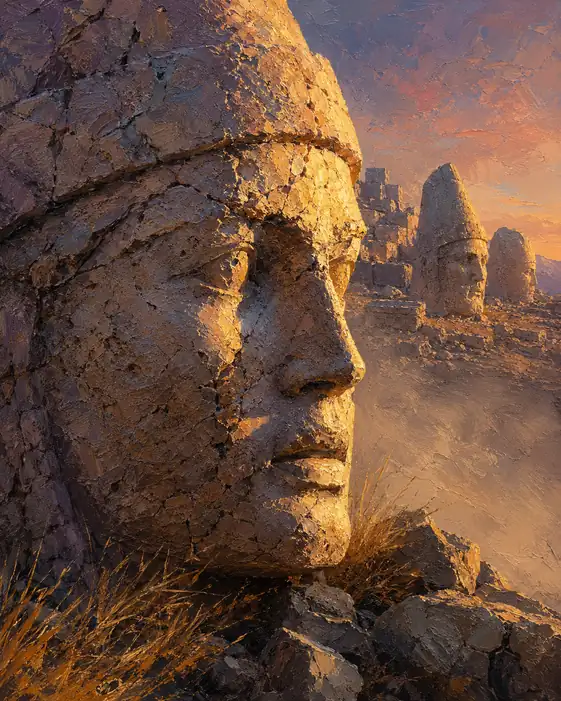 Gaze into the Golden Horizon
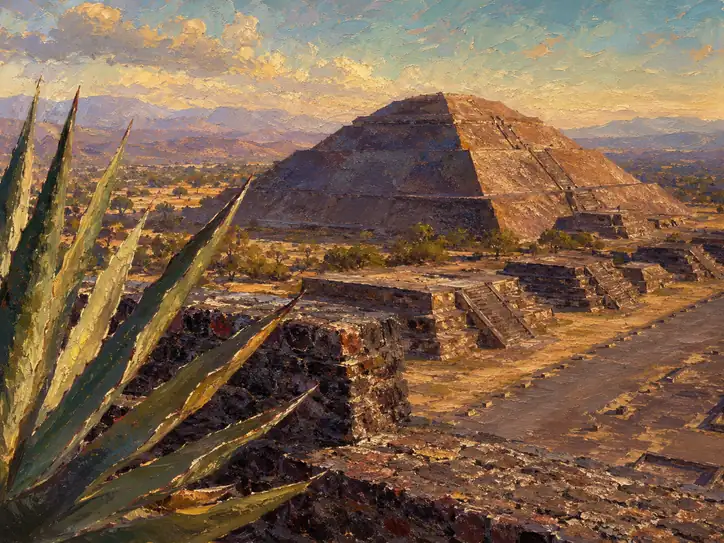 Altar of the Eternal Sun
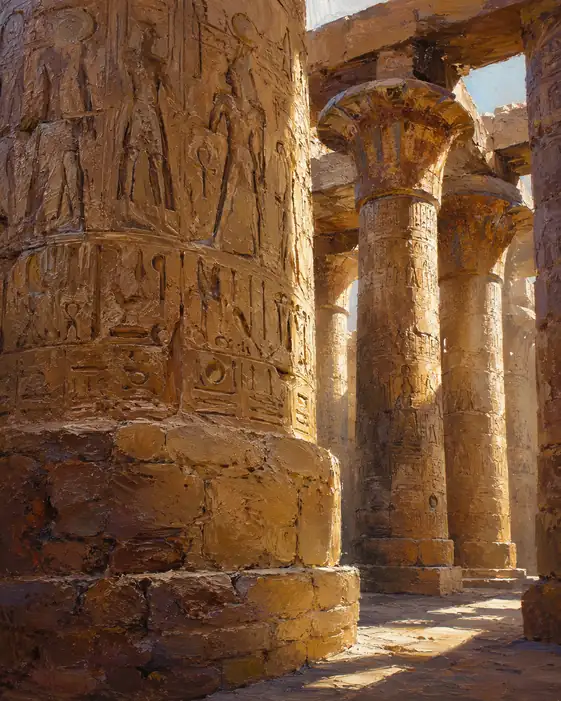 Sunlight Spun in Stone
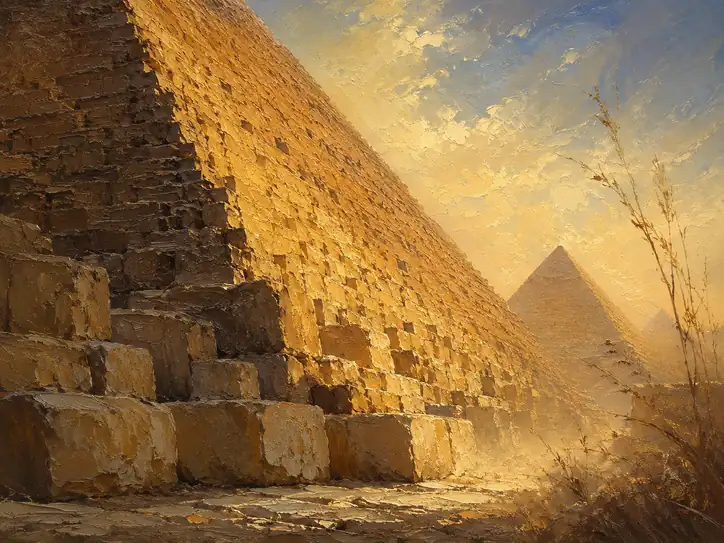 Eternity in Golden Dust
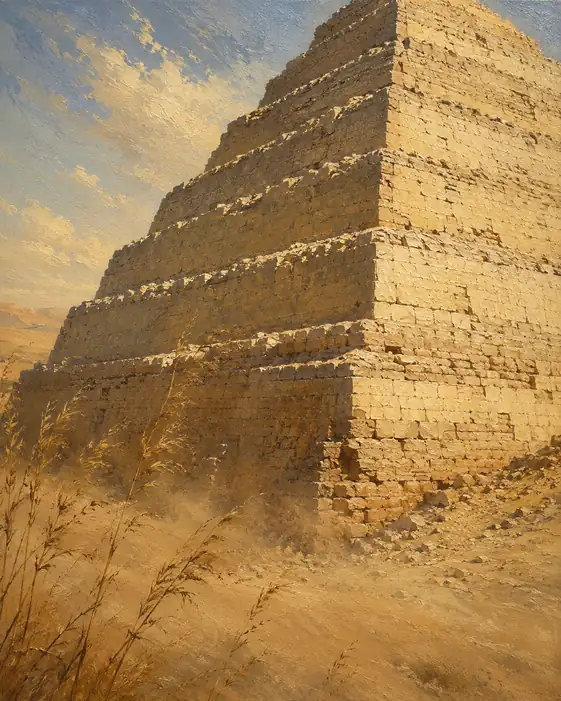 Steps in the Howling Sand
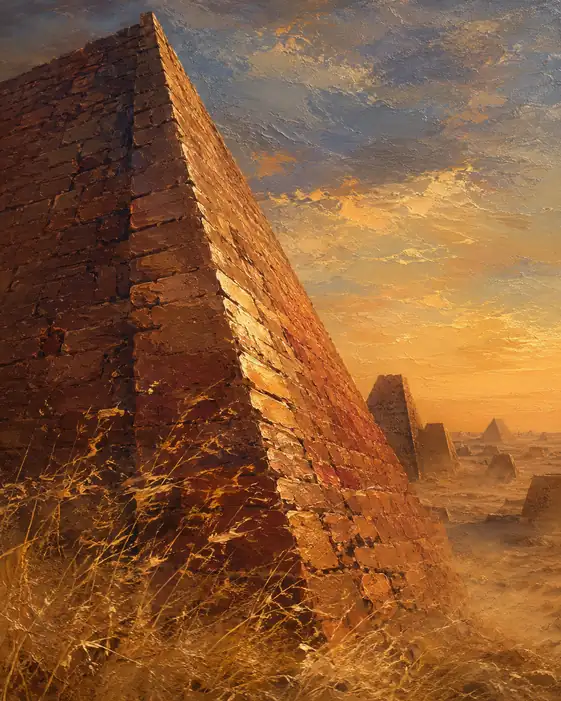 Eternity in Golden Silence
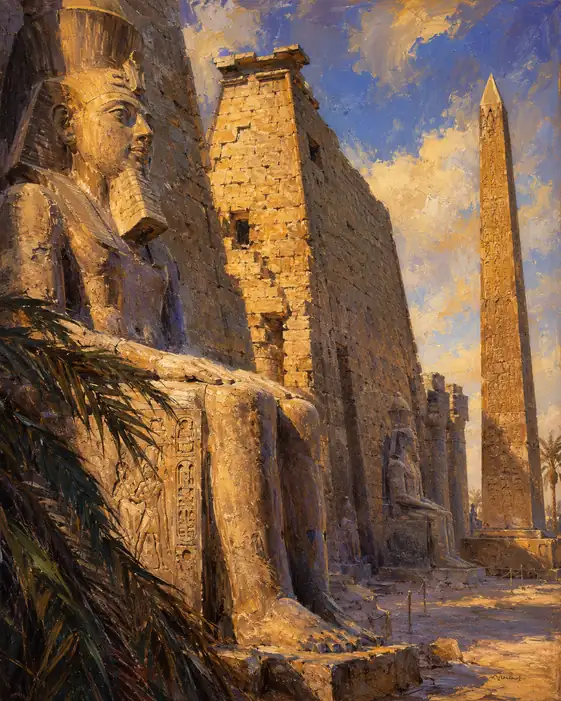 Under the Eternal Sky
 The Weight of Ancient Silence
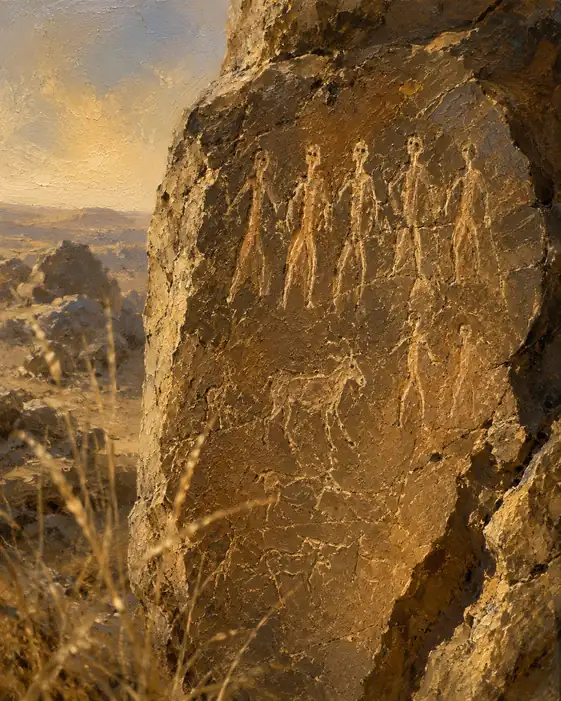 Whispers of the Eternal Silhouette