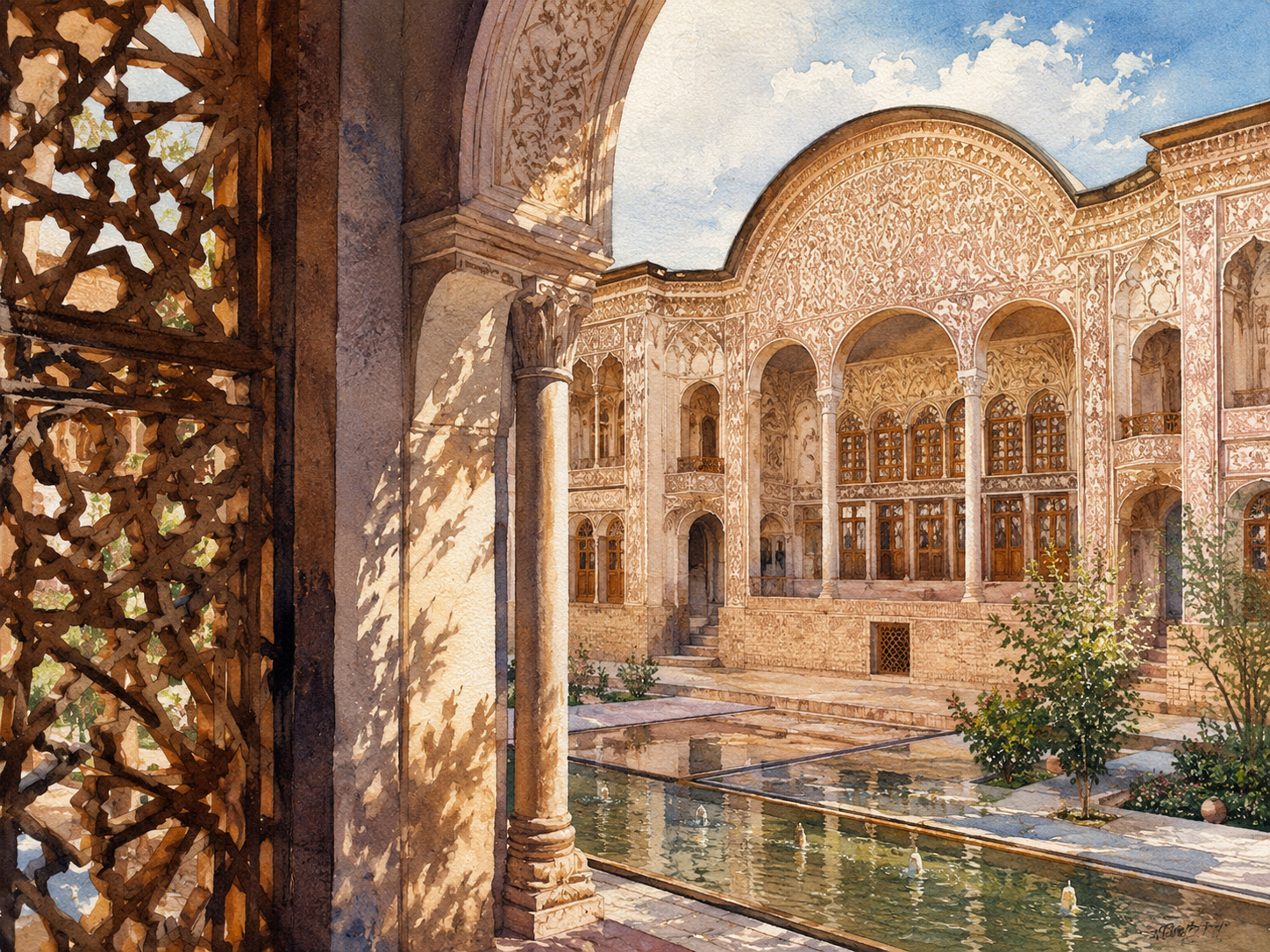
Where Light Dances in the Shadows
Critique
1. Introduction This watercolor painting depicts a courtyard within a palace featuring exquisite islamic architecture. Intricate decorations and reflections on the water create a serene atmosphere. Through the skilled use of light and shadow, the artwork presents the grandeur of traditional structures. It serves as a tribute to historic architecture enduring today. 2. Description In the left foreground, a geometric screen projects complex shadows onto a stone column. The central courtyard features a rectangular pool reflecting the blue sky, surrounded by trees. In the background, the palace facade is decorated with fine arabesque reliefs and elegant arched windows. The overall beige palette contrasts with the blue water. 3. Analysis The strength of this work lies in the texture created by screen shadows and detailed carvings. The column and arch in the foreground act as a frame enclosing the courtyard. Horizontal lines of the pool and vertical structures establish geometric stability. Watercolor washes capture the hard stone surfaces alongside the soft atmosphere. 4. Interpretation and Evaluation This piece encapsulates the passage of time and the quiet life of the historic palace. Sunlight filtering through the screen suggests a special space, offering a quiet moment. The representation of light and the detailed depiction show outstanding technical quality. The sophisticated silence reflects the universal value of historic design. 5. Conclusion While appearing as a simple landscape, the layers of light and shadow reveal a deep architectural space. The artwork blends solid textures with changing natural light. Ultimately, it conveys the unique presence of this monument as it connects the past with the present.
Same Subcategory
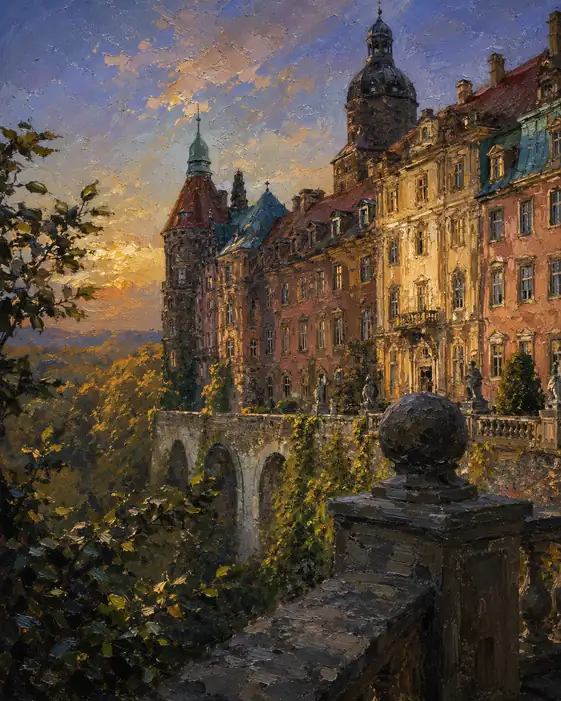 Palace at the Edge of Twilight
Similar Artworks
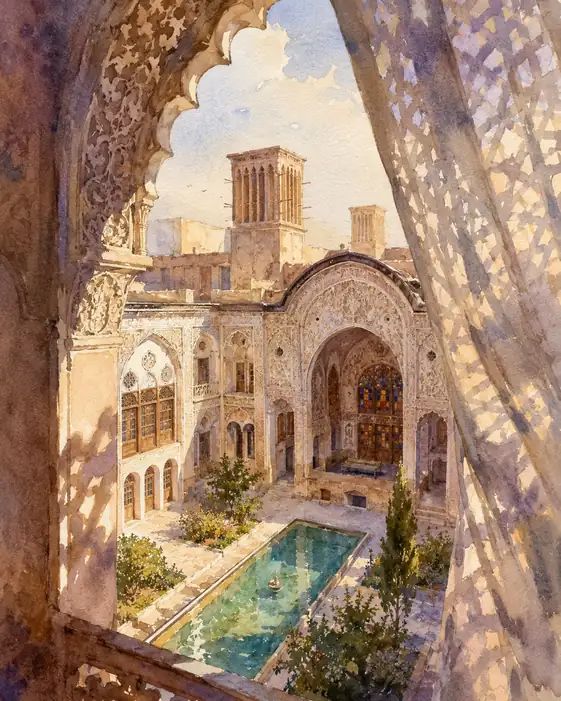 The Hidden Sanctuary
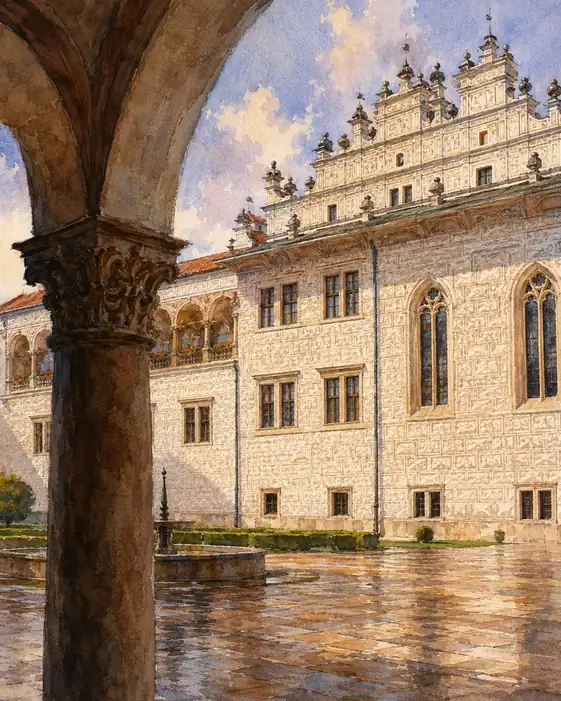 Where Shadow Frames the Light
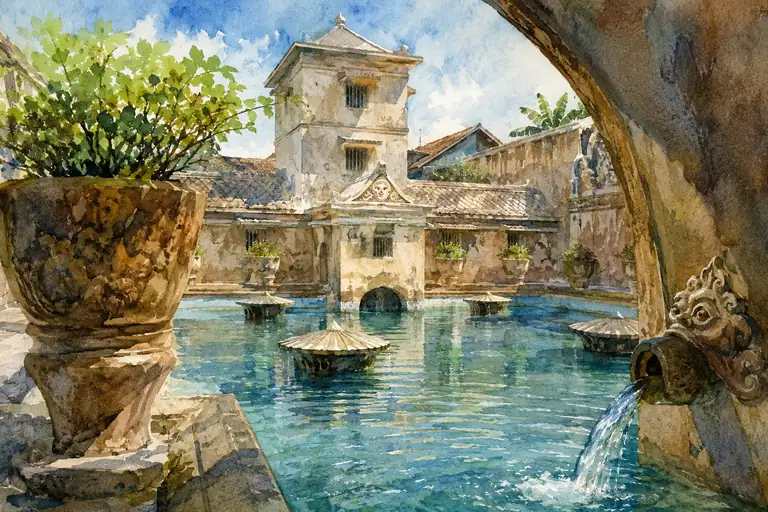 Where Stone Remembers the Ripples
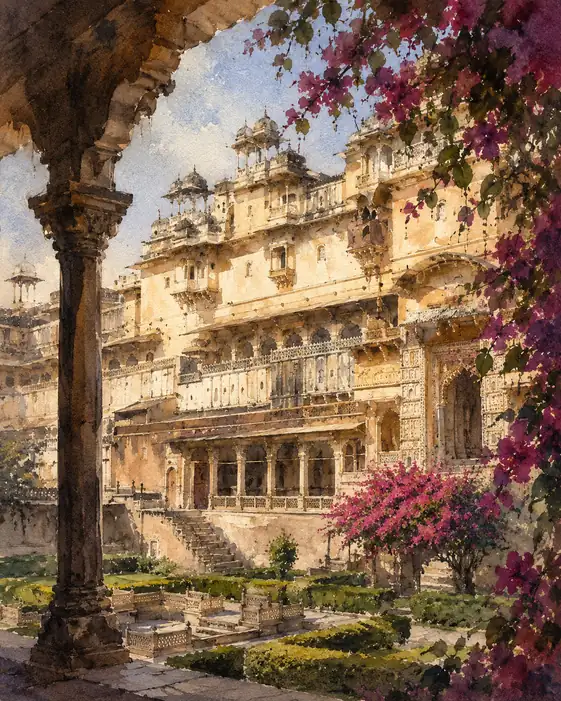 Echoes of a Royal Spring
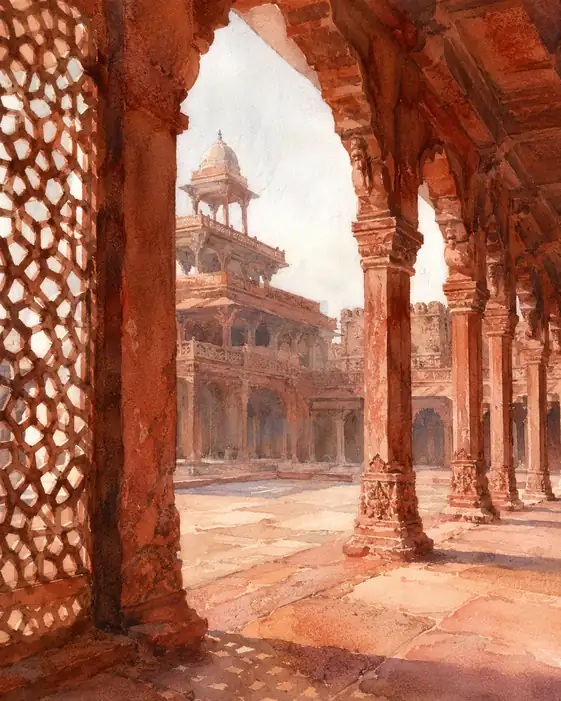 The Courtyard of Whispering Shadows
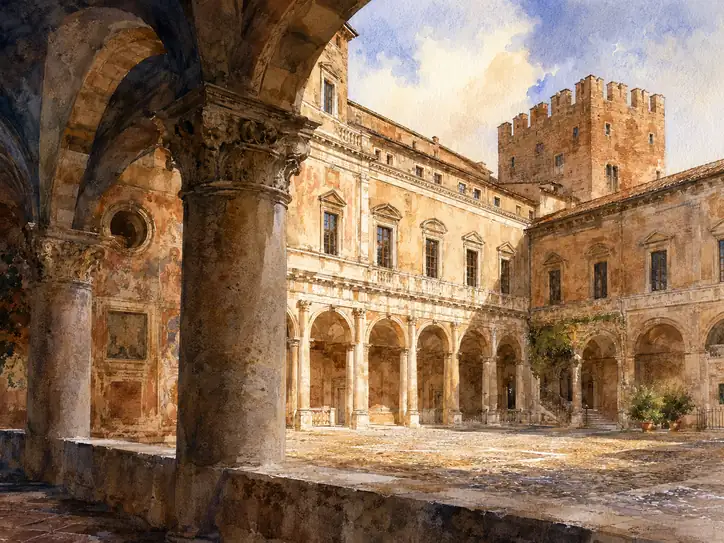 Sunlight on Faded Memories
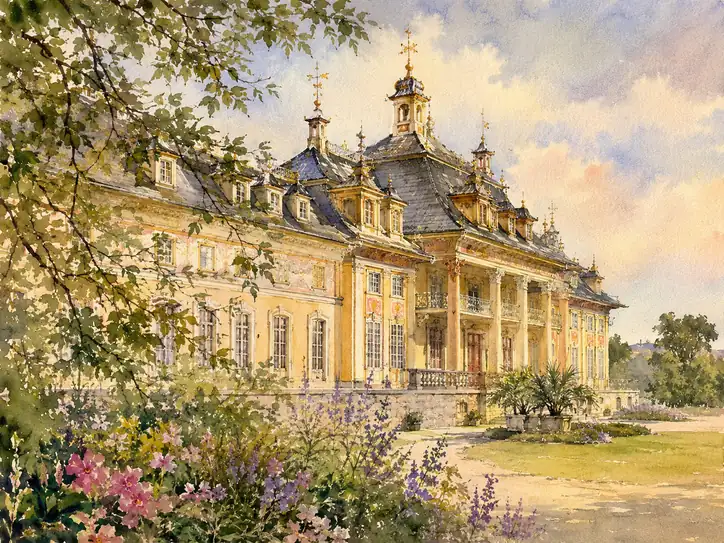 The Palace Dressed in Summer Light
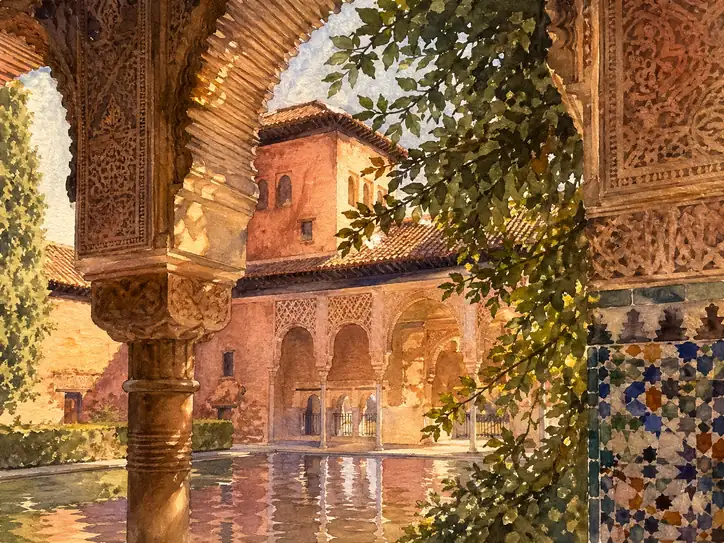 Whispers of the Alhambra Pool
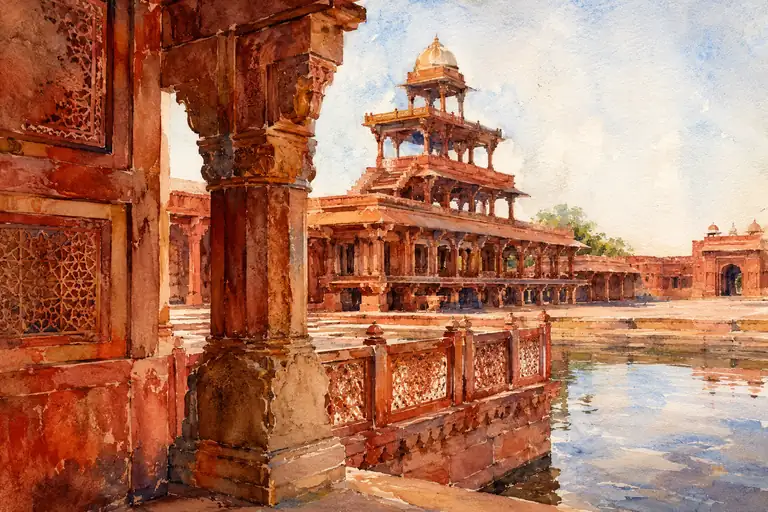 The Palace of Liquid Mirrors
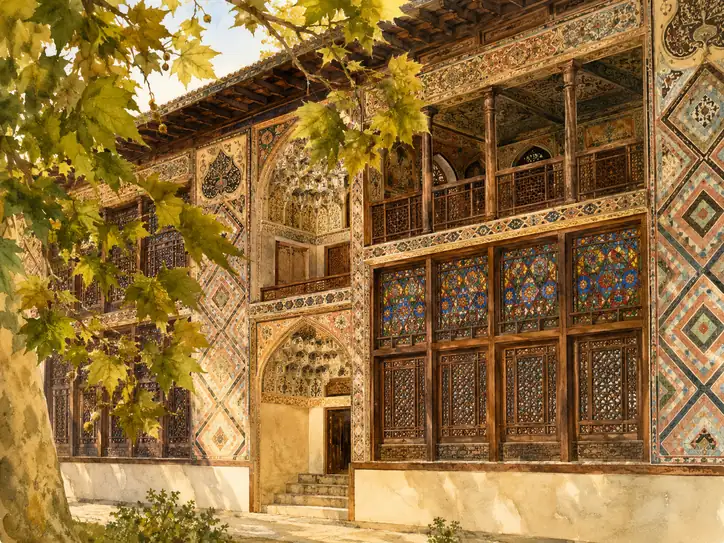 Where Stained Glass Whispers to the Leaves