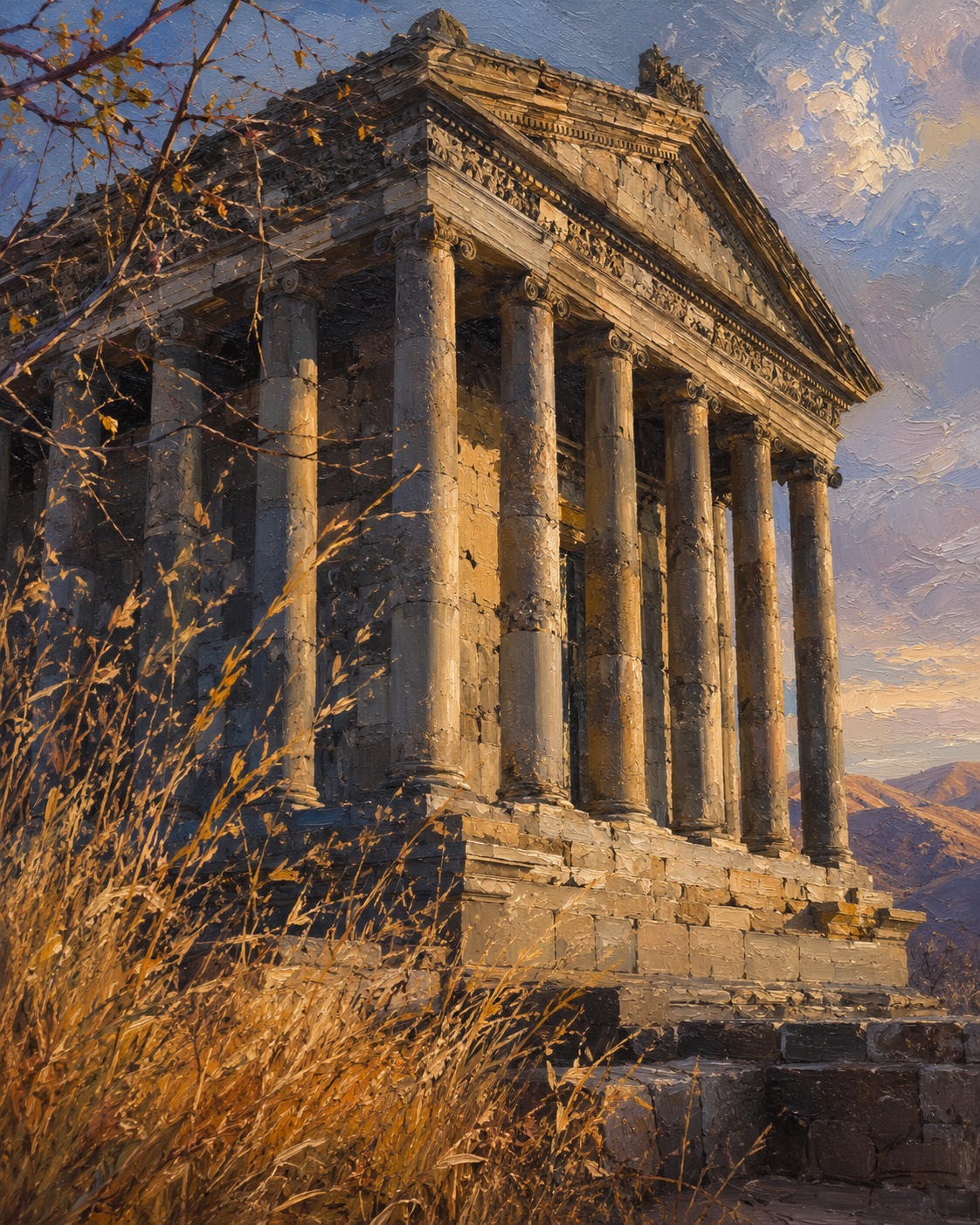
Symphony of Stone and Fading Light
Critique
1. Introduction This painting depicts a classical temple standing in a vast wilderness at dusk. While the creation date and specific identity of the ruins remain undocumented, the structure showcases majestic columns. The contrast between human architecture and surrounding nature evokes historical awe. This analysis examines the spatial dynamics and techniques within the artwork. 2. Description The composition features a perspective looking up at towering stone pillars. Warm golden sunlight illuminates the left side, casting shadows to the right. In the distant background, rolling mountains fade under pastel-colored clouds. In the left foreground, tall dried wild grasses partially frame the temple. 3. Analysis The artist utilizes a low-angle perspective to emphasize monumentality. Through an impasto technique, rough textures of weathered stone are physically rendered. The color scheme balances warm highlights of sunset with cool tones in shadows. This contrast of values effectively defines the three-dimensional form. 4. Interpretation and Evaluation The artwork represents a reflection on the passage of time and past civilizations. The exceptional rendering of light showcases refined draftsmanship and a clear vision. Furthermore, placing grasses in the foreground introduces a dialogue between order and growth. The painting achieves a high aesthetic standard through its balanced execution. 5. Conclusion Although the painting initially presents a simple ruin, closer observation reveals vibrant brushstrokes. The juxtaposition of geometric architecture and organic vegetation creates a profound harmony. Through its masterful technique, the work leaves an impression of quiet grandeur.
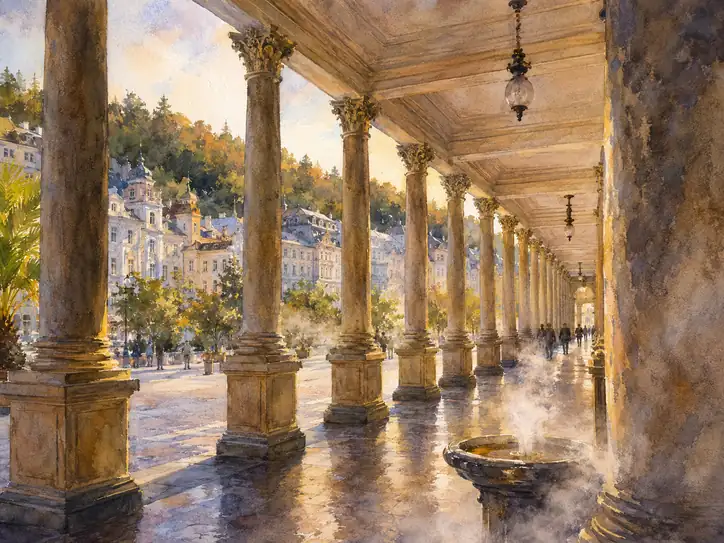 The Pathway of Warm Whispers
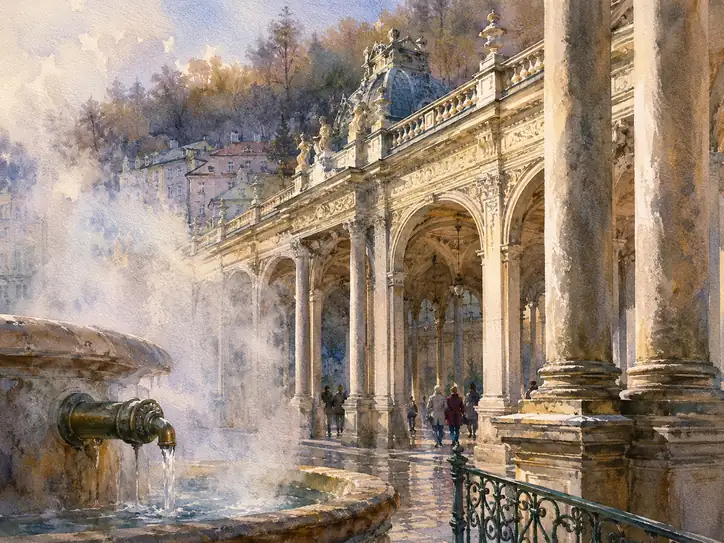 The Sanctuary of Warm Mist
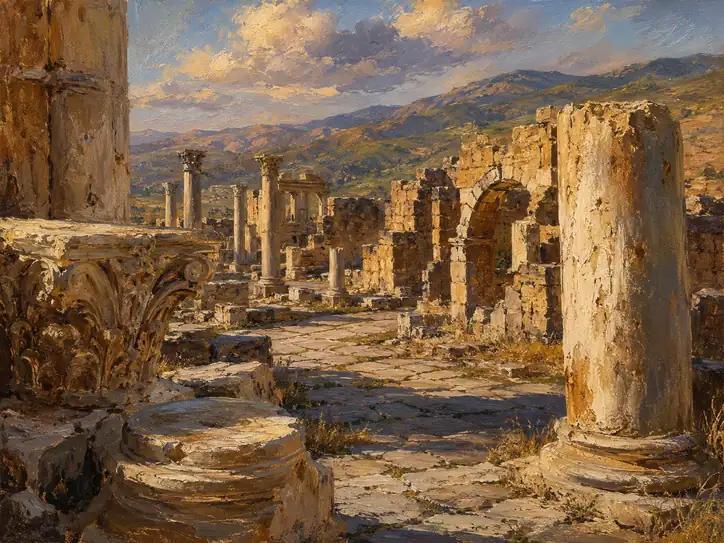 Where Glory Rests in Gold
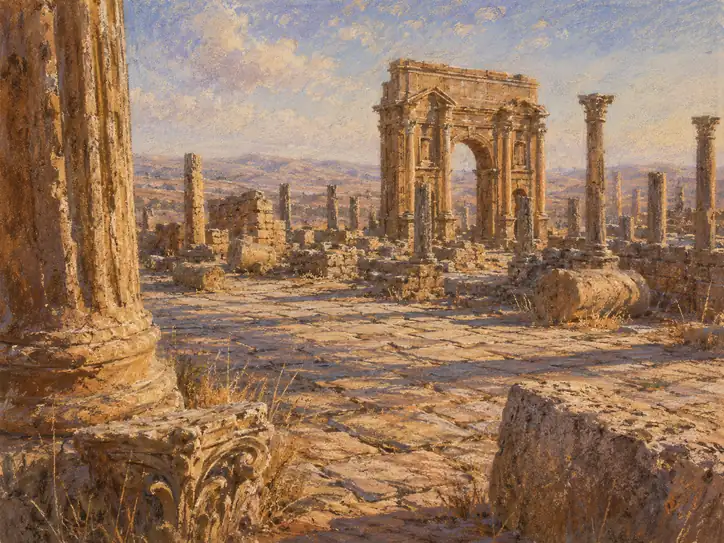 The Silent Dignity of Time
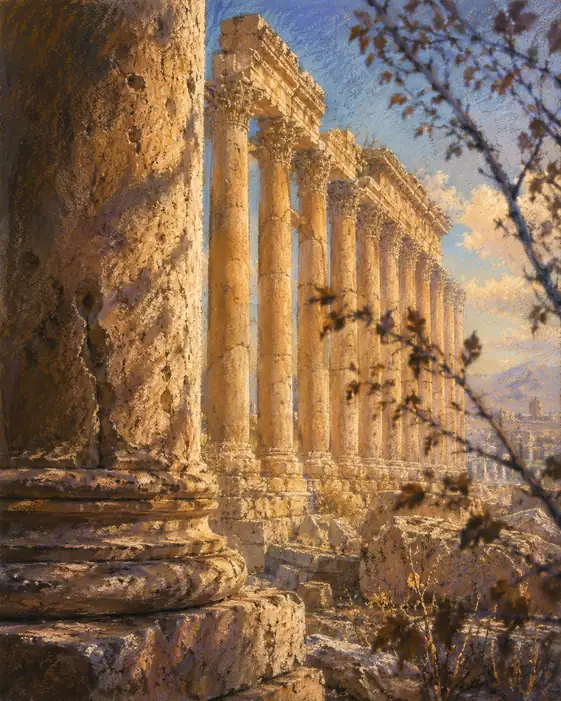 Whispers of the Eternal Sun
 The Golden Silence of the Parthenon
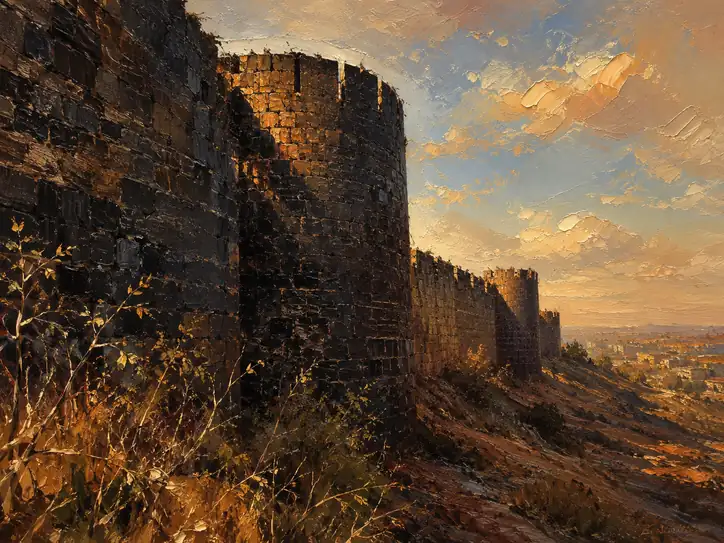 The Last Vigil at Dusk
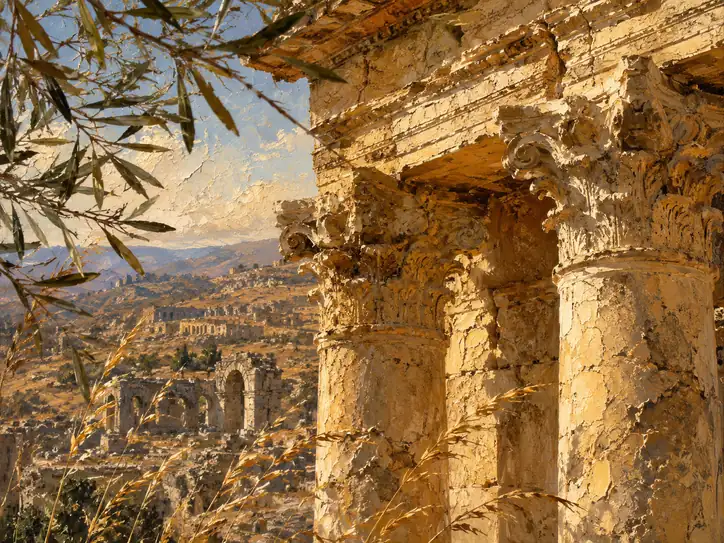 Majesty in the Dust of Time
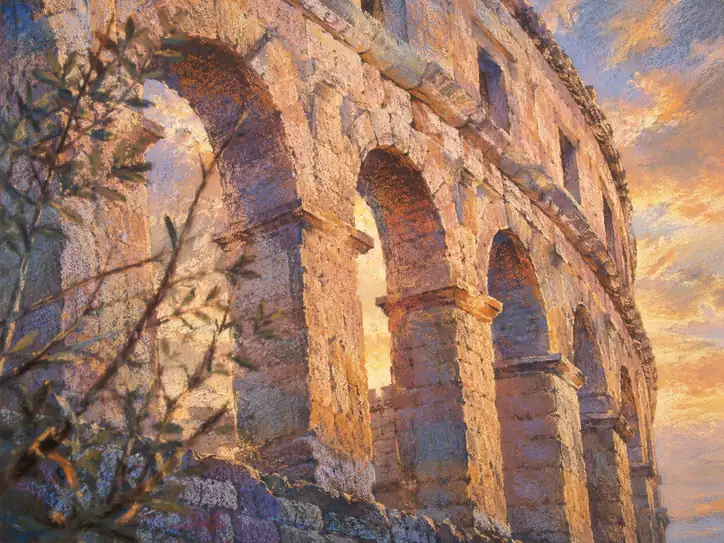 Gold Spilled on Ancient Stone
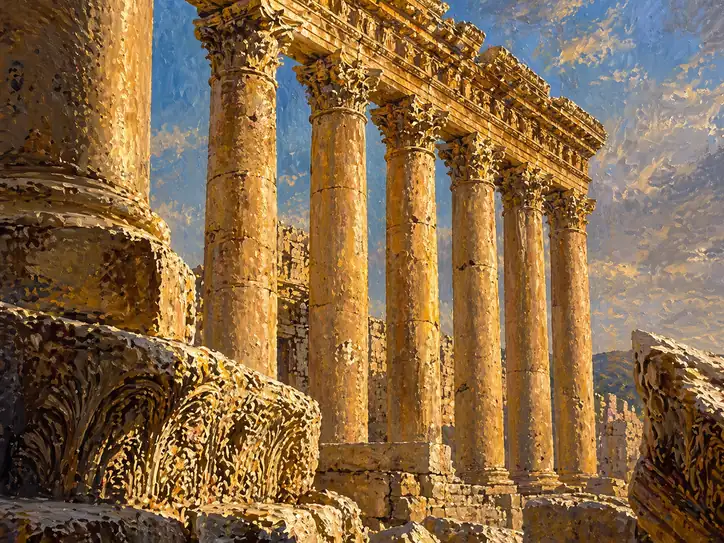 The Enduring Pillars of Time
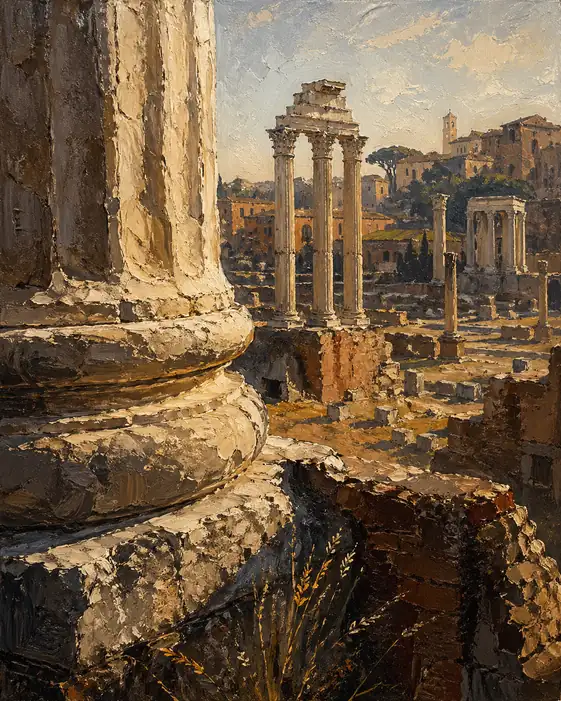 Whispers of the Gilded Forum
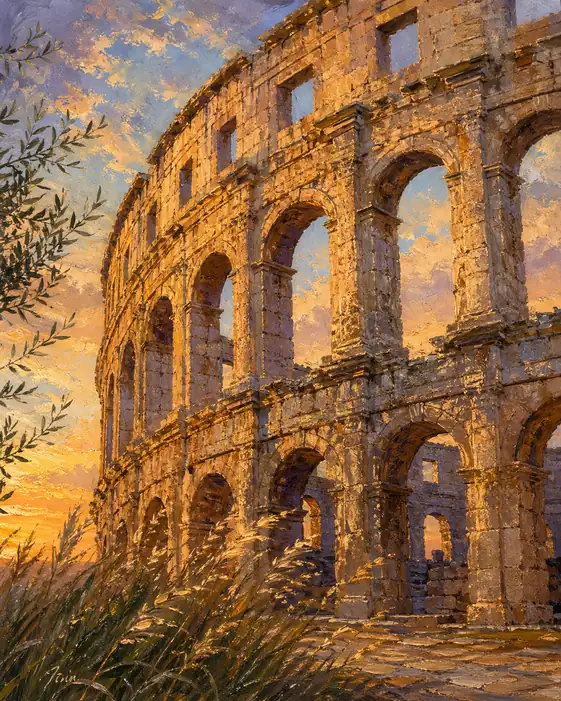 Echoes of Empire in the Golden Hour