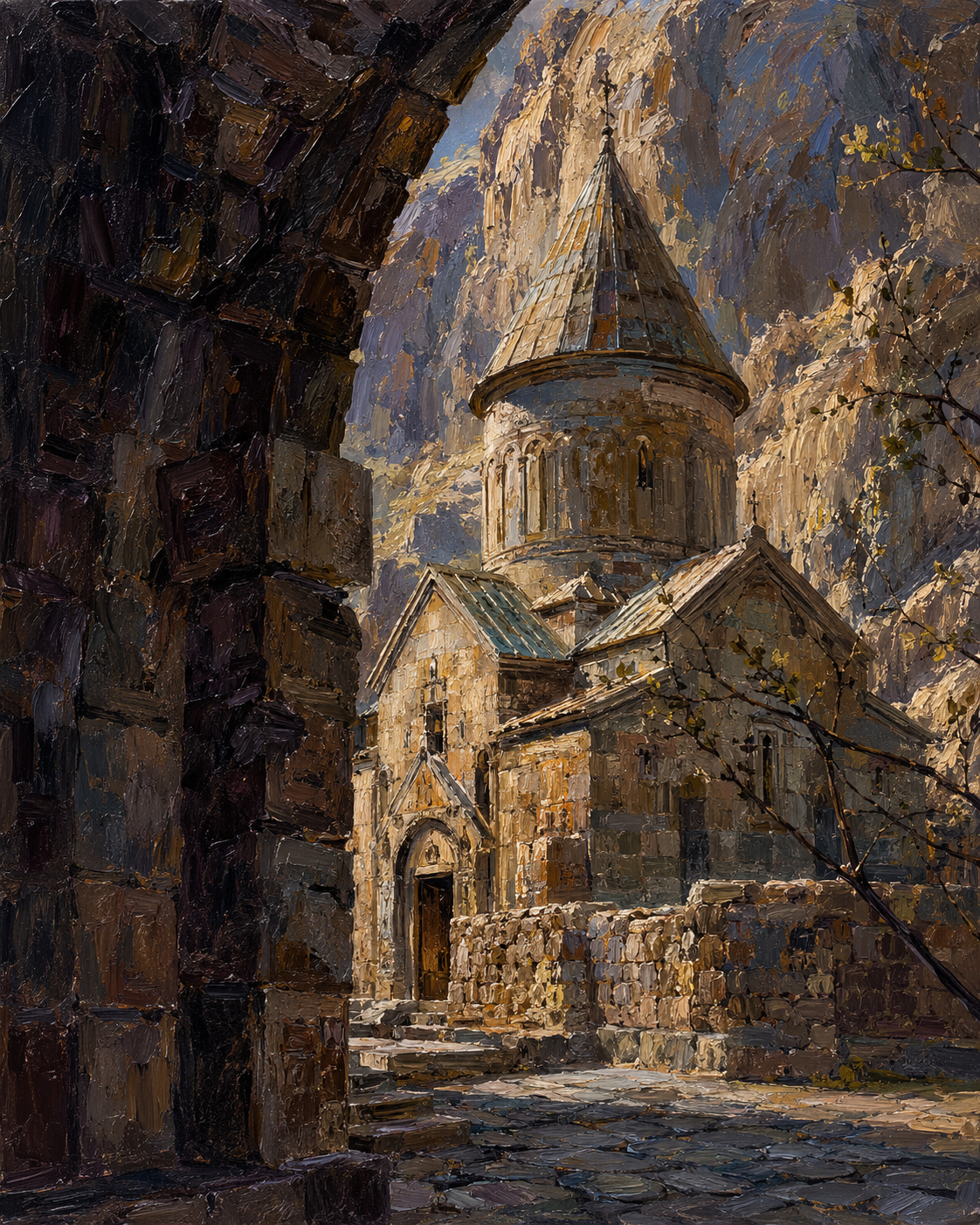
Sanctuary Cradled in Stone and Shadow
Critique
1. Introduction This painting depicts a stone cathedral cradled by rugged, towering cliffs. Although the creation date and specific location remain unknown, the architecture suggests medieval origins. The interplay of shadow and light highlights the spiritual solemnity of the sanctuary. This analysis explores the dramatic composition and textural rendering of the work. 2. Description The left side and top of the frame are occupied by a dark stone archway. Through this opening, the cathedral is visible, bathed in brilliant sunlight. Behind the chapel, jagged rock faces rise steeply, filling the background. A stone-paved courtyard leads to the entrance of the cathedral. 3. Analysis The artist utilizes a strong contrast of light and shadow to create tension. The shaded foreground arch serves to frame the luminous cathedral in the middle ground. In terms of technique, the impasto method is evident in the thick paint. The palette relies on deep browns for shadows, contrasting with golden tones. 4. Interpretation and Evaluation This artwork represents human devotion enduring within a harsh natural environment. The handling of light and textures showcases the artist's draftsmanship and creative vision. Furthermore, the framing archway offers the viewer an immersive window into a sacred space. The piece achieves a high level of aesthetic quality through its powerful rendering. 5. Conclusion While the viewer is initially drawn to the shadows, closer examination reveals complex brushwork. The integration of the cathedral and cliffs represents a timeless, quiet dignity. This painting stands as a distinguished example of landscape art executed with mastery.
Same Subcategory
Similar Artworks
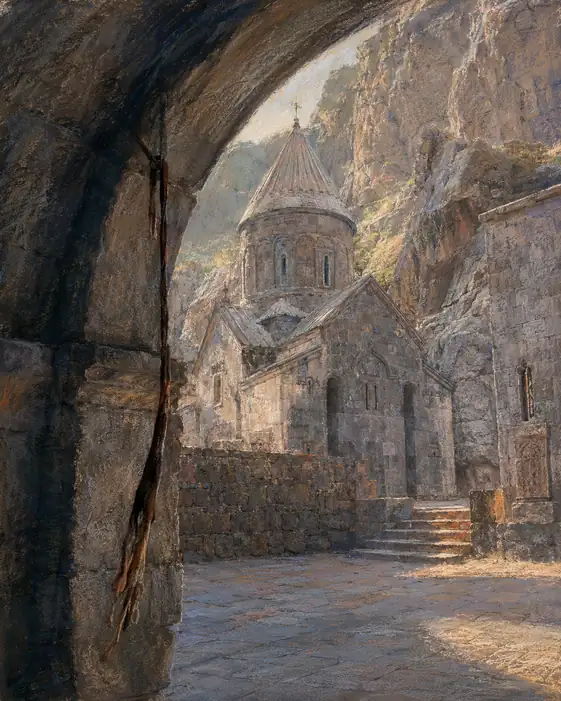 Whispers of the Stone Sanctuary
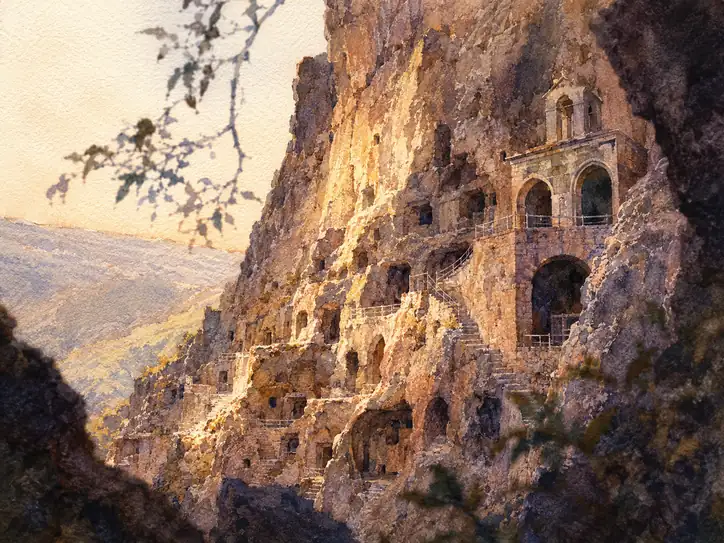 Gilded Passages of the Cliffside Temple
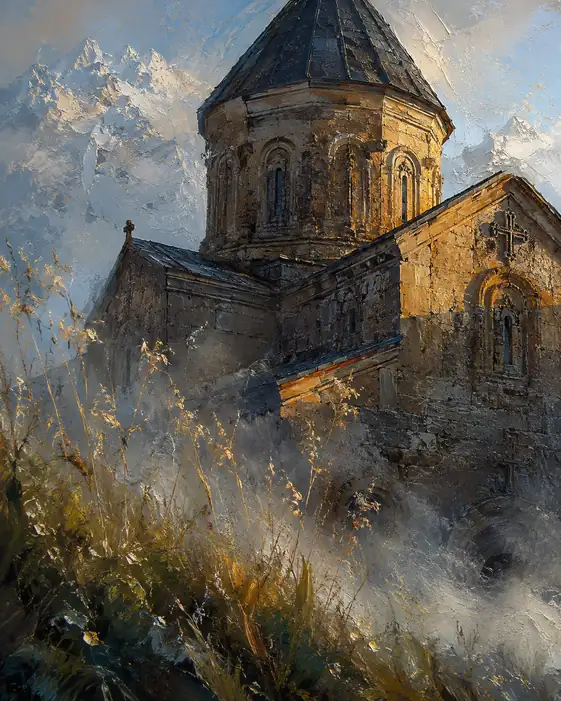 The Cathedral of Mist and Snowy Peaks
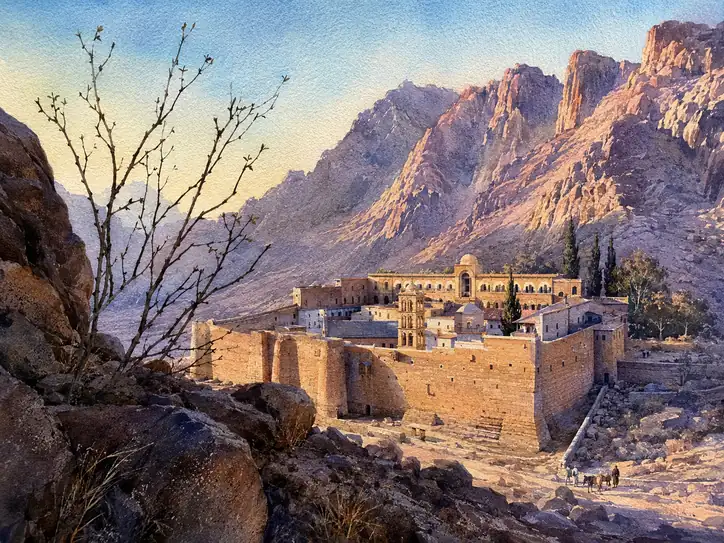 Sanctuary in the Sinai Valley
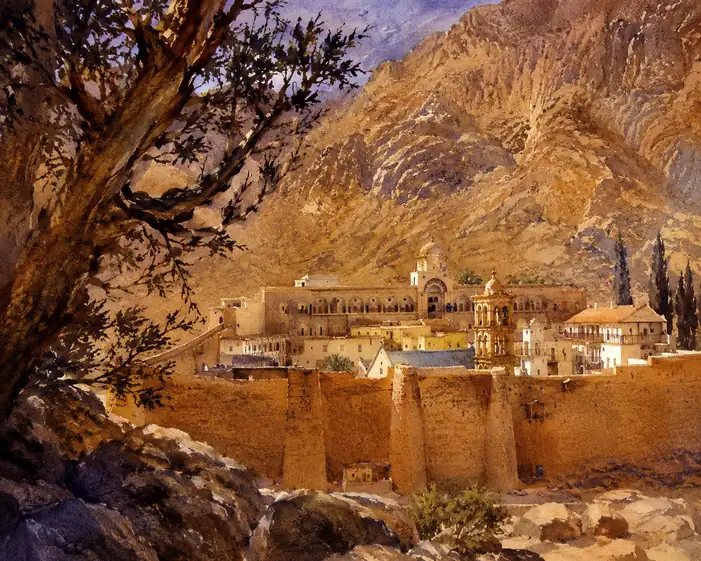 Fortress of Silent Devotion
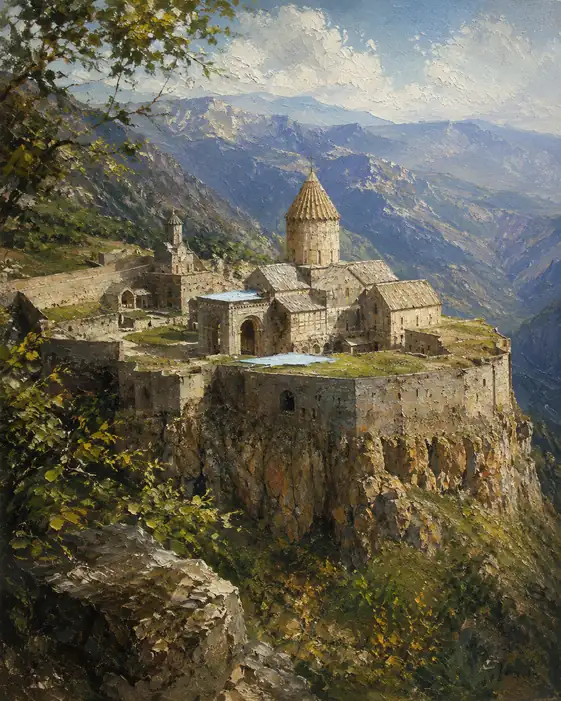 Fortress of Faith in the Azure Sky
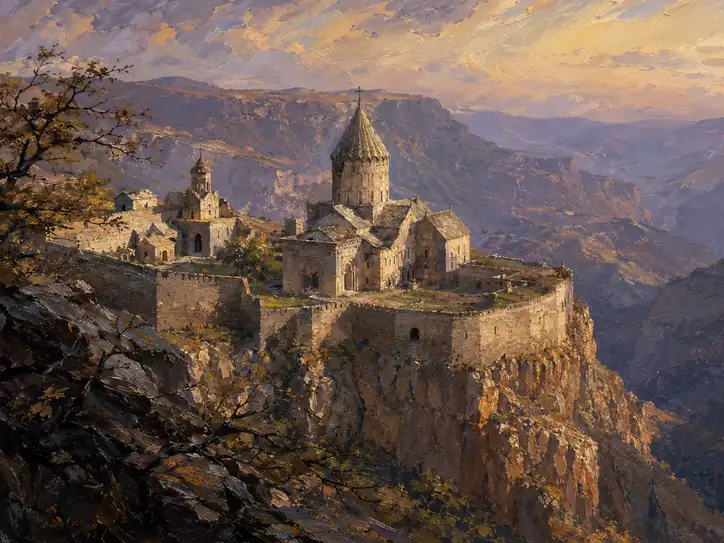 The Fortress of Silent Faith
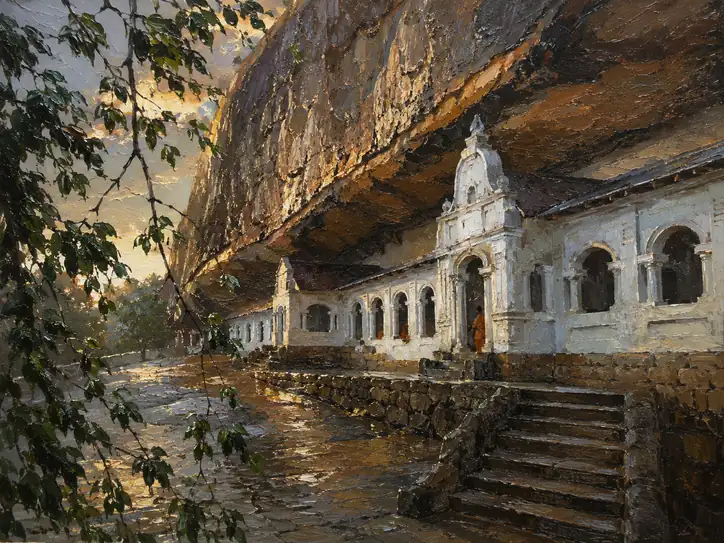 Sanctuary Under the Eternal Cliff
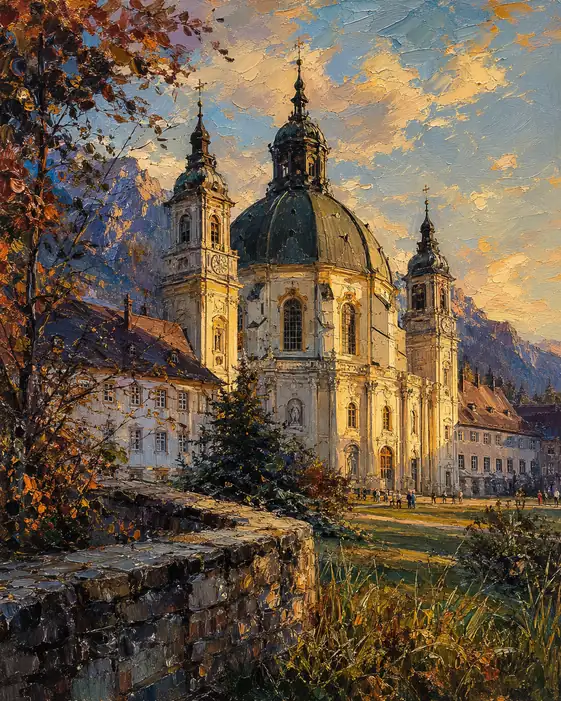 Prayer Bathed in Autumn Light
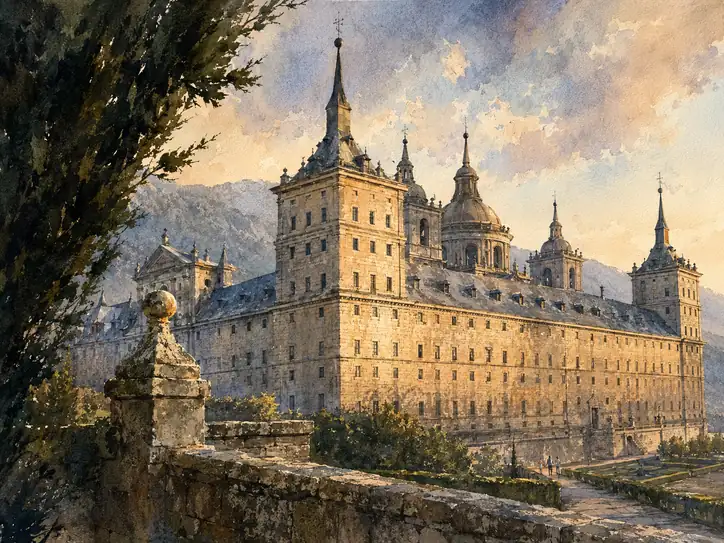 Chronicle in Stone: The Golden Palace at Dusk