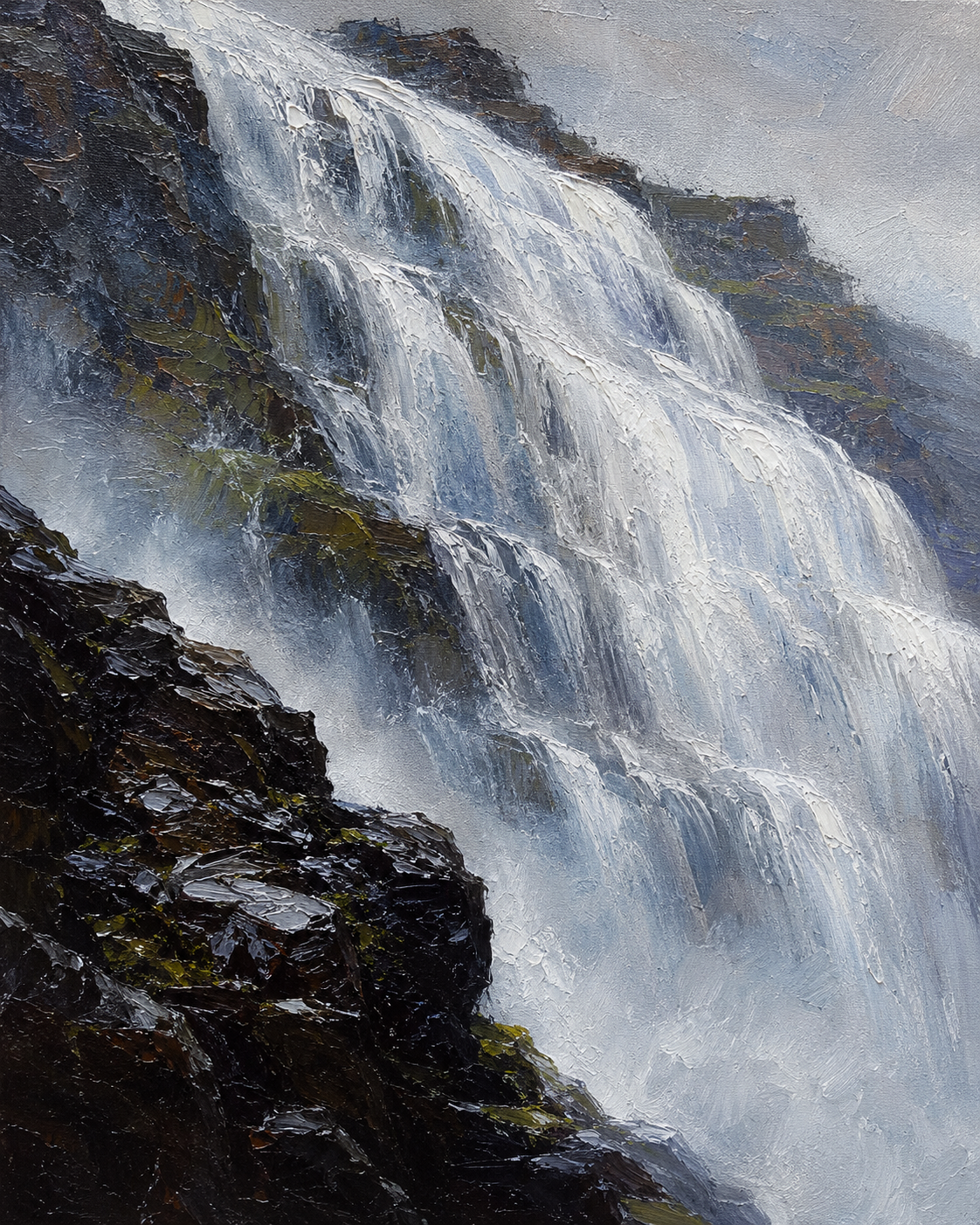
Breath of the Wet Stone
Critique
1. Introduction This oil-style painting depicts a magnificent waterfall cascading down a steep cliff. The movement of the water dominates the composition, offering a powerful visual impact. The specific title, creation date, and artist of this artwork are unknown. A strong sense of presence fills the scene, evoking the sound of rushing water. 2. Description In the lower-left, a dark, rugged rock face covered with a wet glaze is prominent. To the right, a torrent of water falls diagonally, splashing white foam. The background shows a grey cliff shrouded in mist under a pale sky. Subtle hints of green and ochre moss appear on the wet rock. 3. Analysis The composition relies on a strong contrast between the dark rocks and the white water. A heavy impasto technique builds up paint, highlighting the rocky textures. The palette is restricted to white, black, and grey, unifying the canvas. Dynamic palette knife strokes create a sense of movement. 4. Interpretation and Evaluation The cascading water symbolizes the raw energy of the natural world. Through the thick paint application, the sublime beauty of nature is successfully expressed. The draftsmanship in capturing the wet texture of the rocks represents a high level of skill. The limited color scheme effectively emphasizes the play of light. 5. Conclusion While it initially appears traditional, closer observation reveals the modern appeal of the abstract texture. This piece enhances its completeness by maximizing the material qualities of the impasto technique. It possesses a unique artistic value that stimulates tactile sensations. The painting beautifully elevates natural vitality into a harmonious masterpiece.
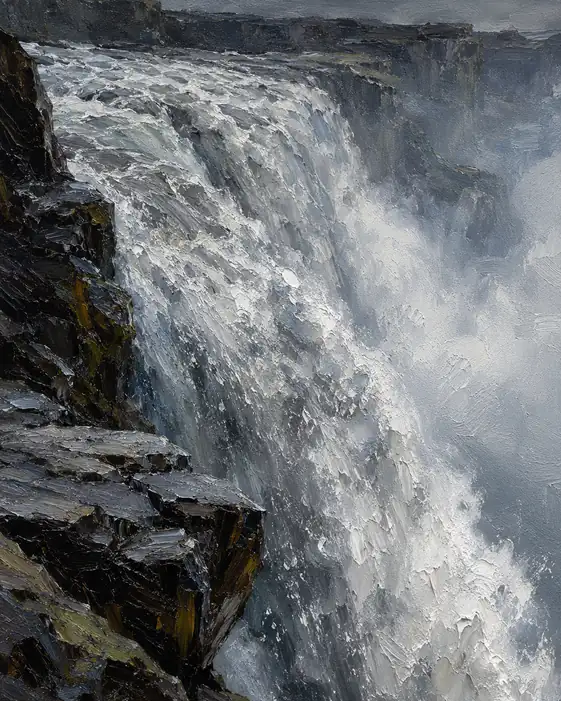 Primal Roar
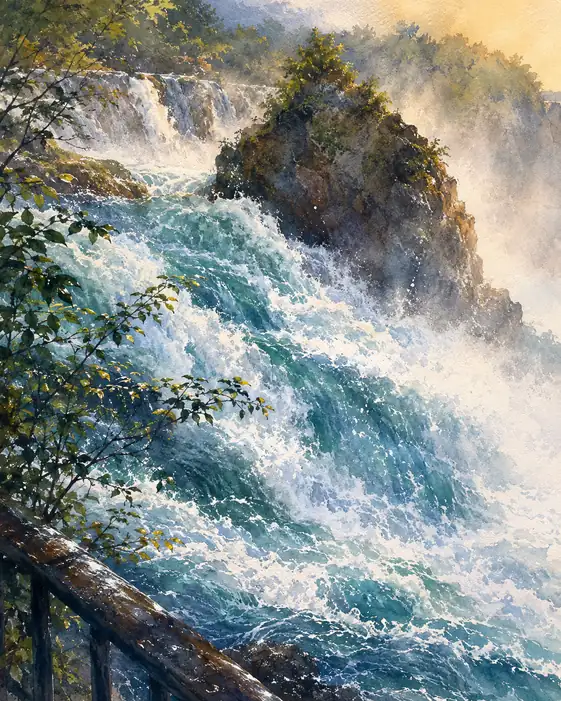 Roar of the Golden Mist
 The Eternal Dance of Stone and Spray
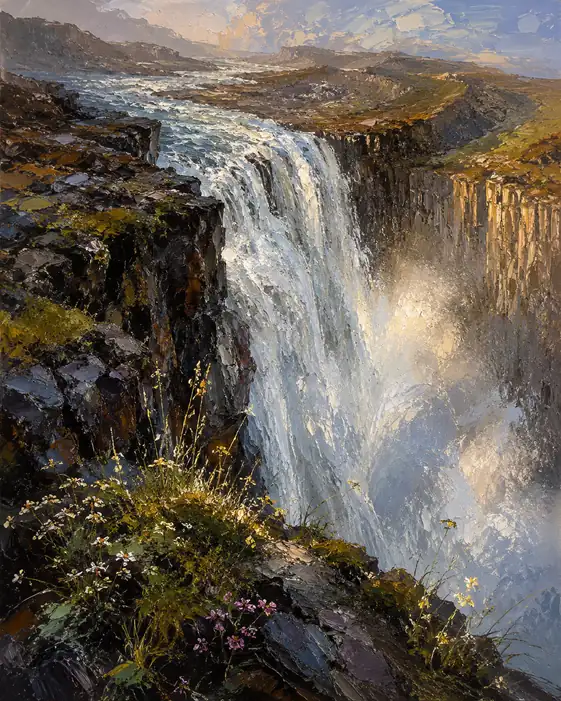 Wildflowers by the Thundering Abyss
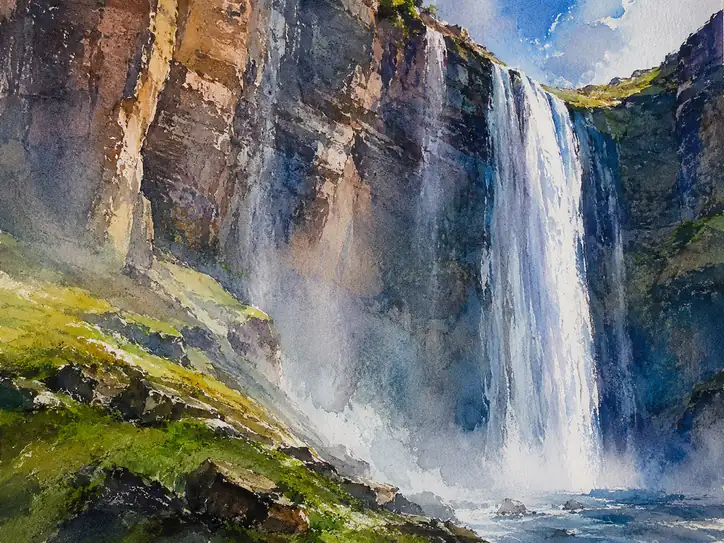 Stillness in the Roar
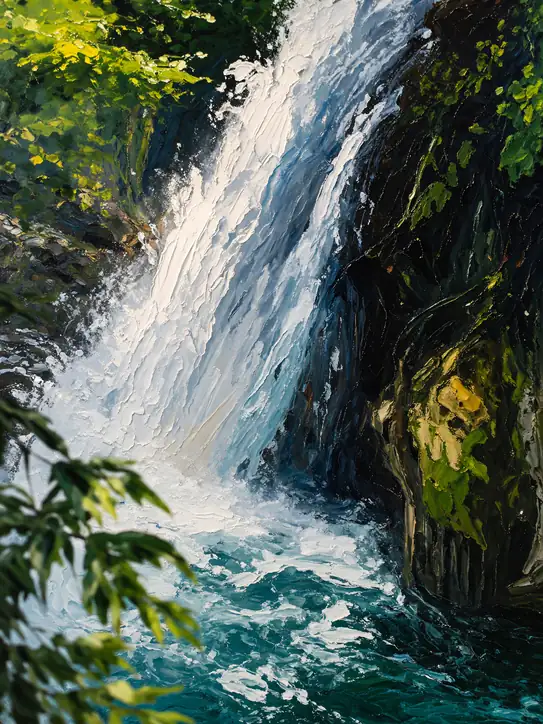 The Eternal Song of the Basin
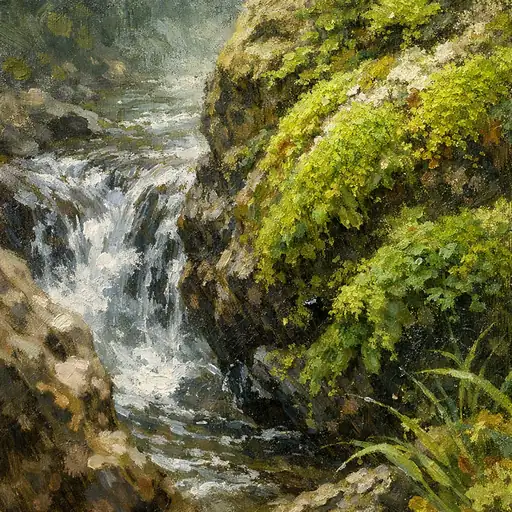 Veil of the Wild Waters
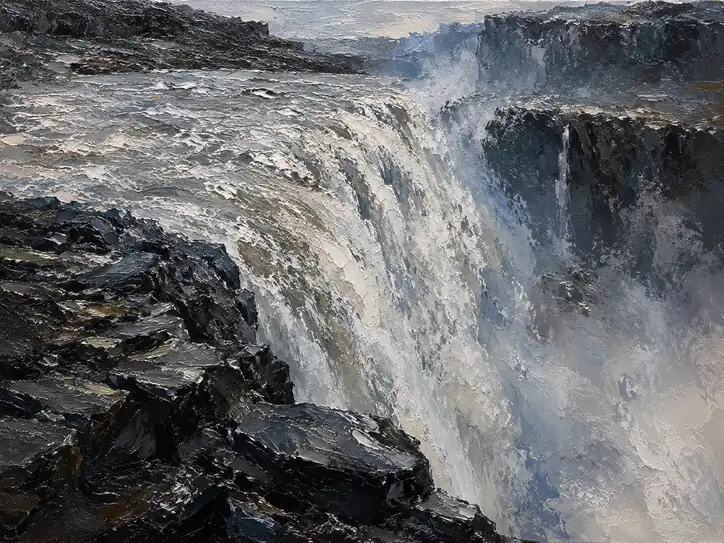 The Roar of the Abyss
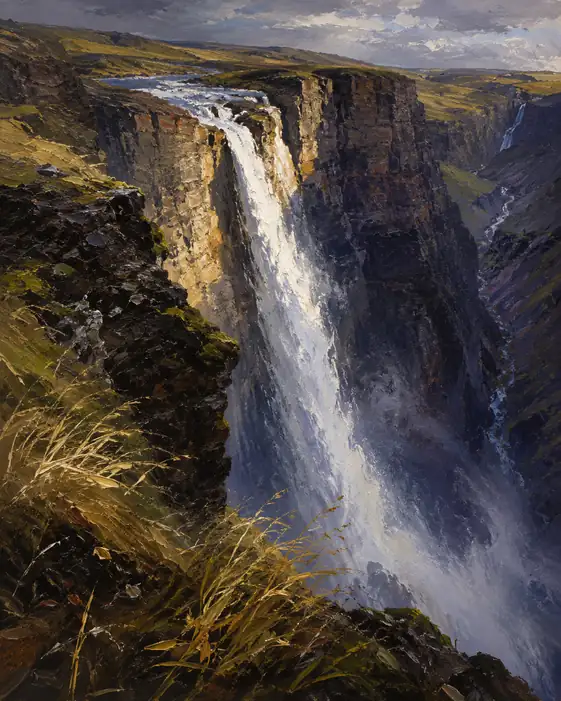 Thunder of the Ancient Gorge
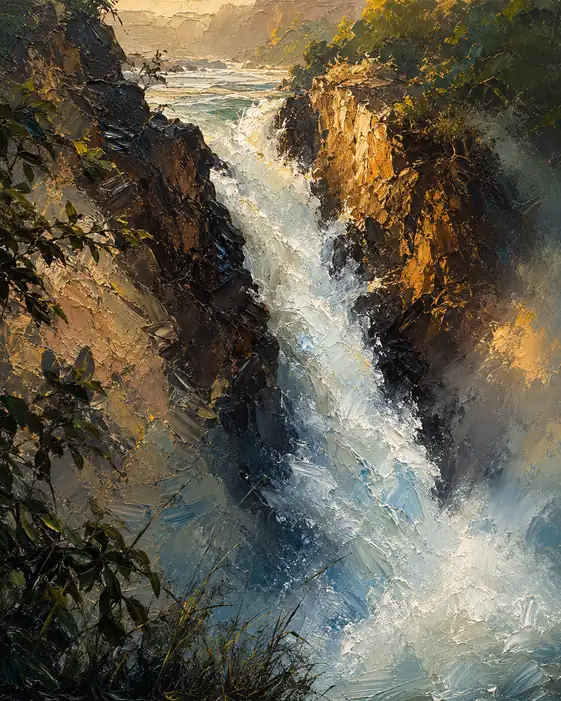 Torrent of Golden Shadows
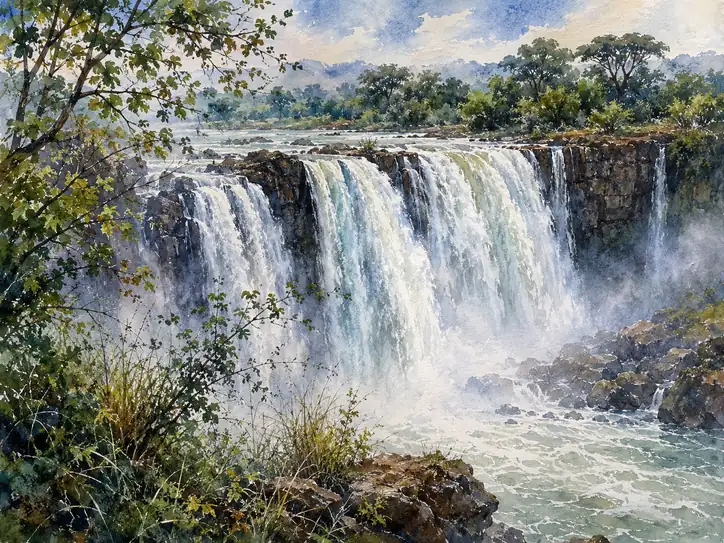 Echoes of the Living Torrent