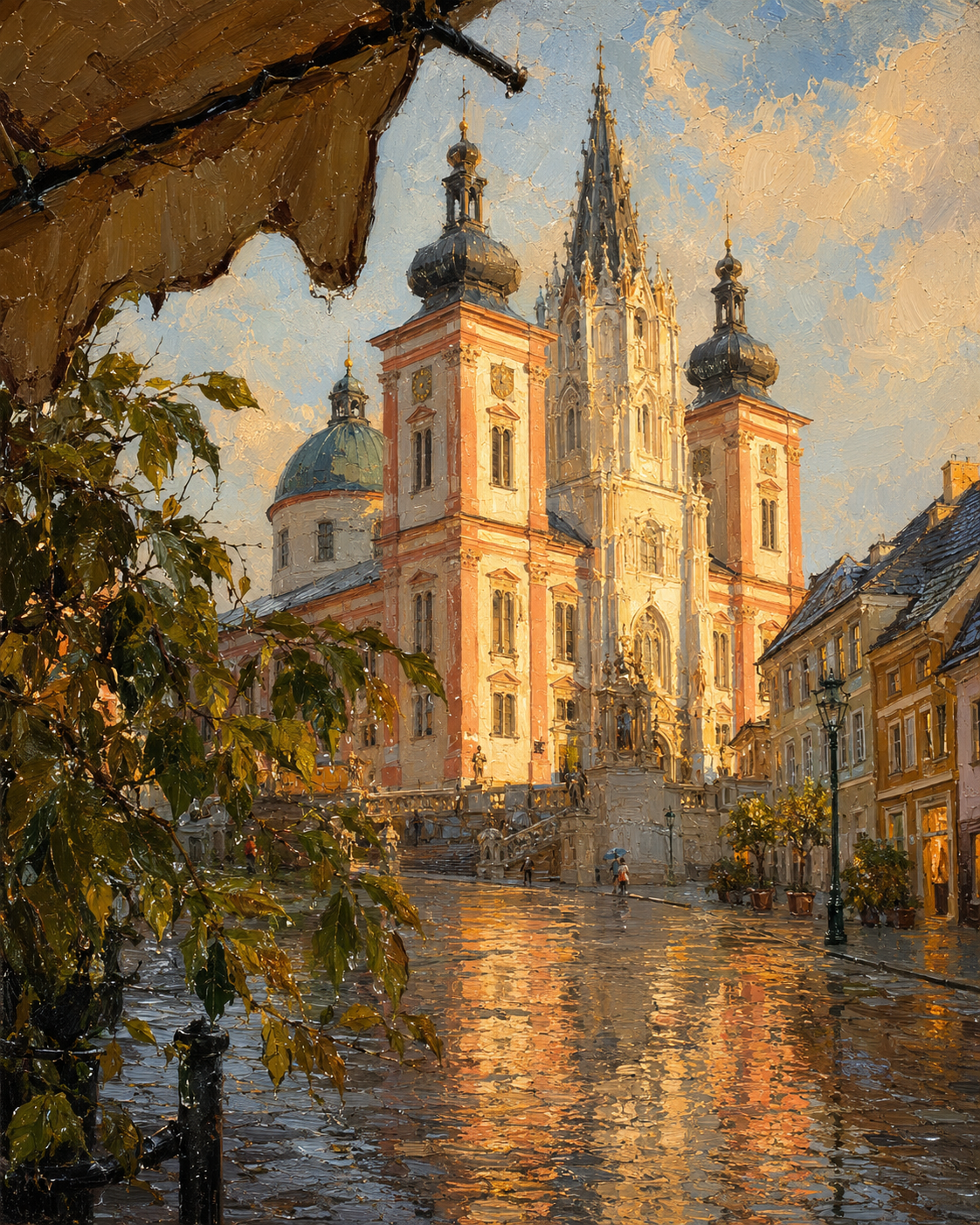
Amber Symphony after the Storm
Critique
1. Introduction This oil painting presents a breathtaking view of a grand European cathedral standing majestically after a rain shower. Captured from a unique perspective under a wet awning, the scene immediately draws the viewer into a vivid and atmosphere-rich urban landscape. 2. Description In the center stands a monumental cathedral with twin orange-hued towers topped with dark domes, flanked by a soaring white Gothic spire. The foreground is dominated by wet green leaves clinging to a branch on the left, while the right side features classical townhouses and a vintage streetlamp. The cobblestone street in the lower half is drenched, acting as a mirror that reflects the warm golden light of the late afternoon sky. 3. Analysis The artist employs a dynamic composition, using the foreground foliage and overhead canopy to frame the architectural marvel in the center. The color palette is dominated by warm yellows, ochres, and oranges, contrasted subtly by the cool blues and greys of the sky and shadows. Thick impasto strokes create a rich tactile quality, enhancing the reflective surface of the wet pavement and the weathered stone textures of the cathedral. 4. Interpretation and Evaluation This work beautifully captures a transient moment where nature and human architecture harmonize through light and moisture. The contrast between the dark framing elements and the illuminated cathedral evokes a sense of discovery and sanctuary. The execution of the wet pavement reflections demonstrates exceptional painterly skill, transforming a common street scene into a poetic exploration of light and atmosphere. 5. Conclusion Through its brilliant use of color and textured brushwork, the painting evokes a powerful sensory experience of a fresh, rain-washed evening. The viewer is left with a lasting impression of warmth, peace, and architectural grandeur. This piece succeeds in elevating a fleeting atmospheric condition into a timeless monument of light.
Same Subcategory
 Where the Earth Touches the Heavens
Similar Artworks
 Golden Footsteps toward the Clock Tower
 Stone and Golden Shadows
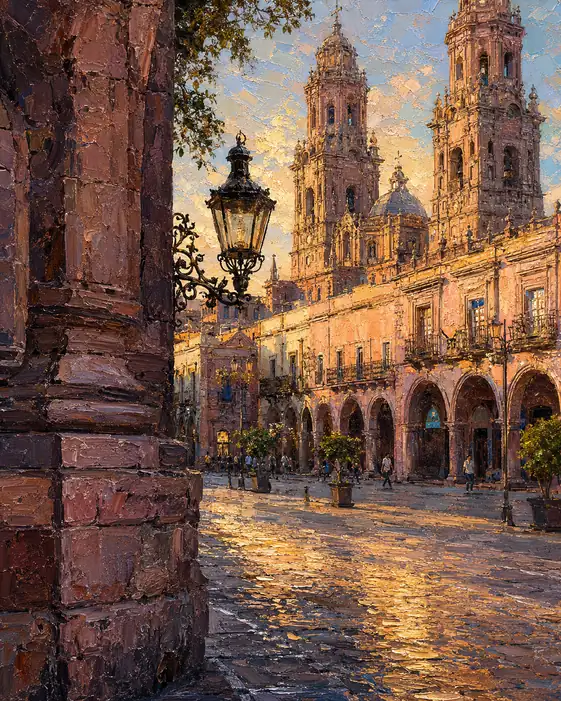 Where the Light Lingers
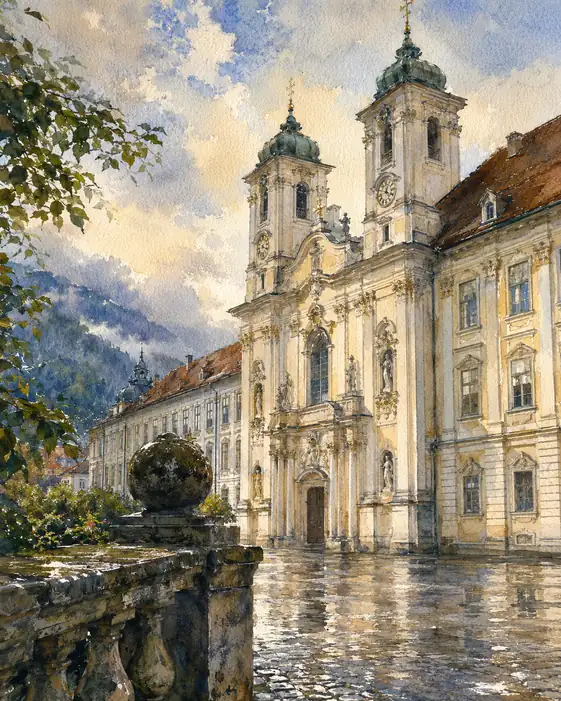 Mirror of the Sacred Twin Domes
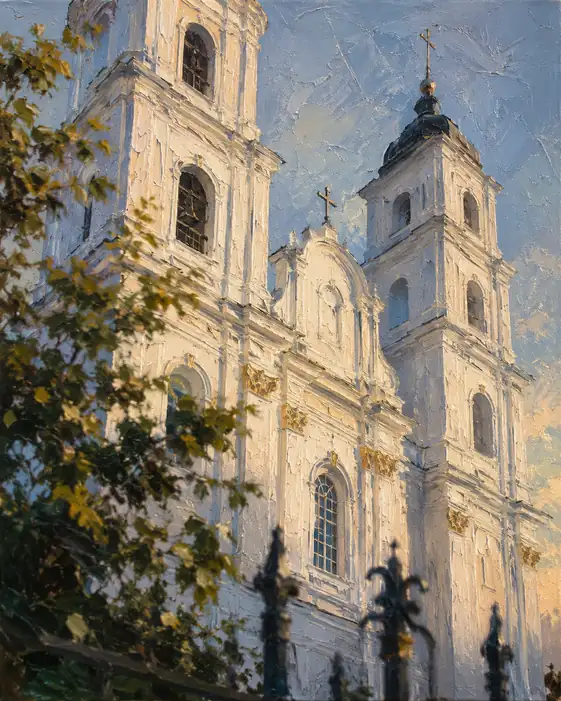 Sanctuary Ablaze in Evening Light
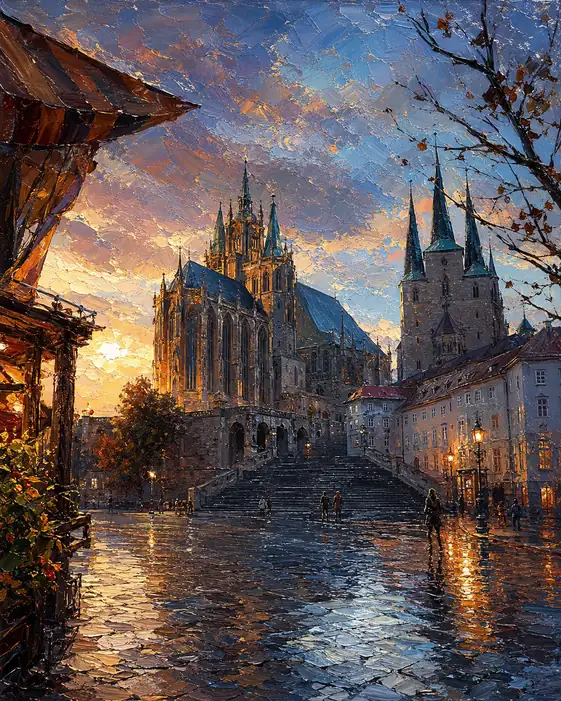 Reflections of a Golden Twilight
 Path to the Golden Twilight
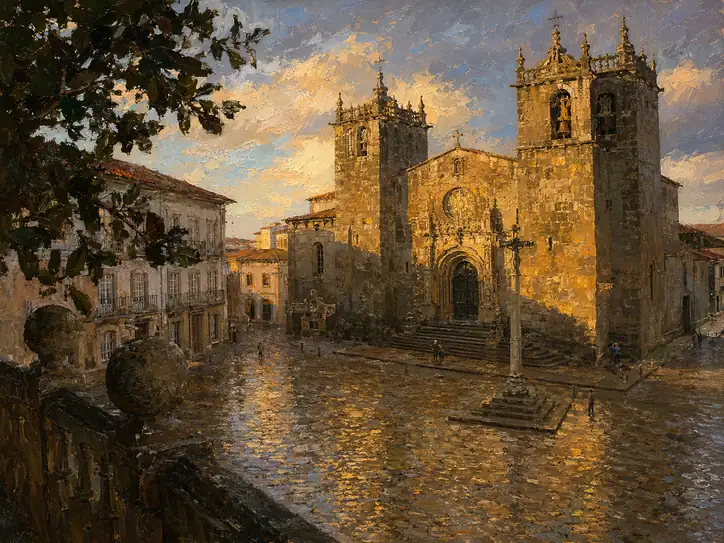 Reflecting the Rain-Washed Gold
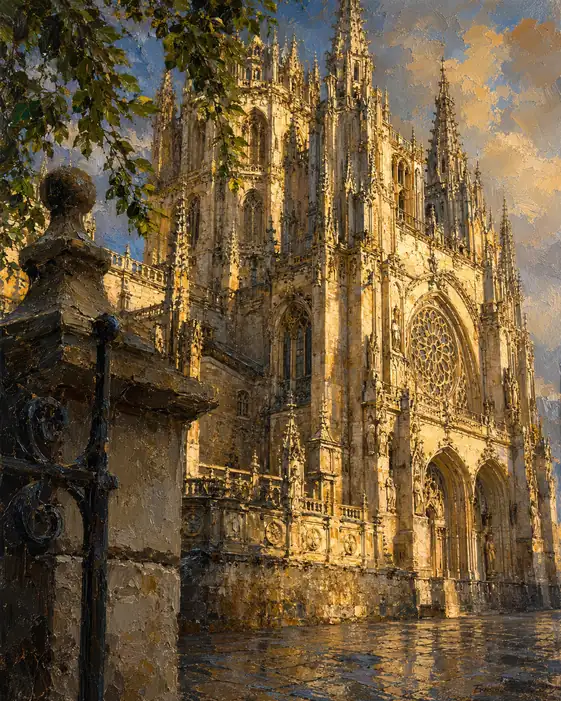 Symphony of Stone and Sunset
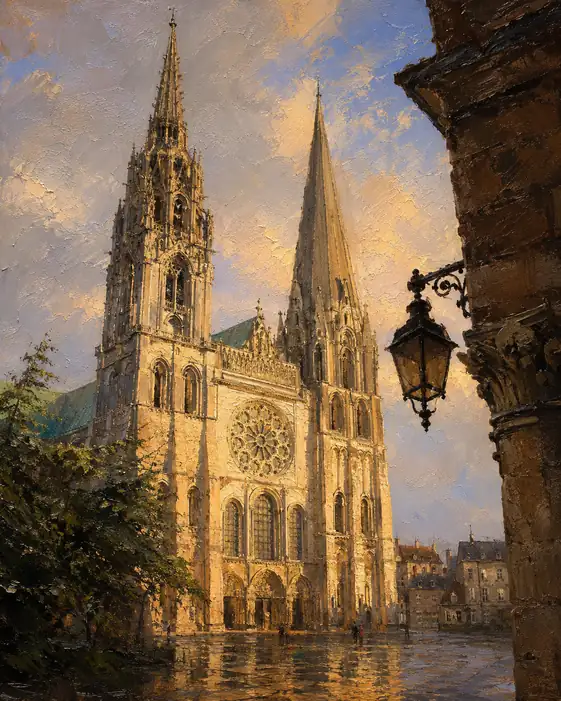 A Prayer in Stone and Light