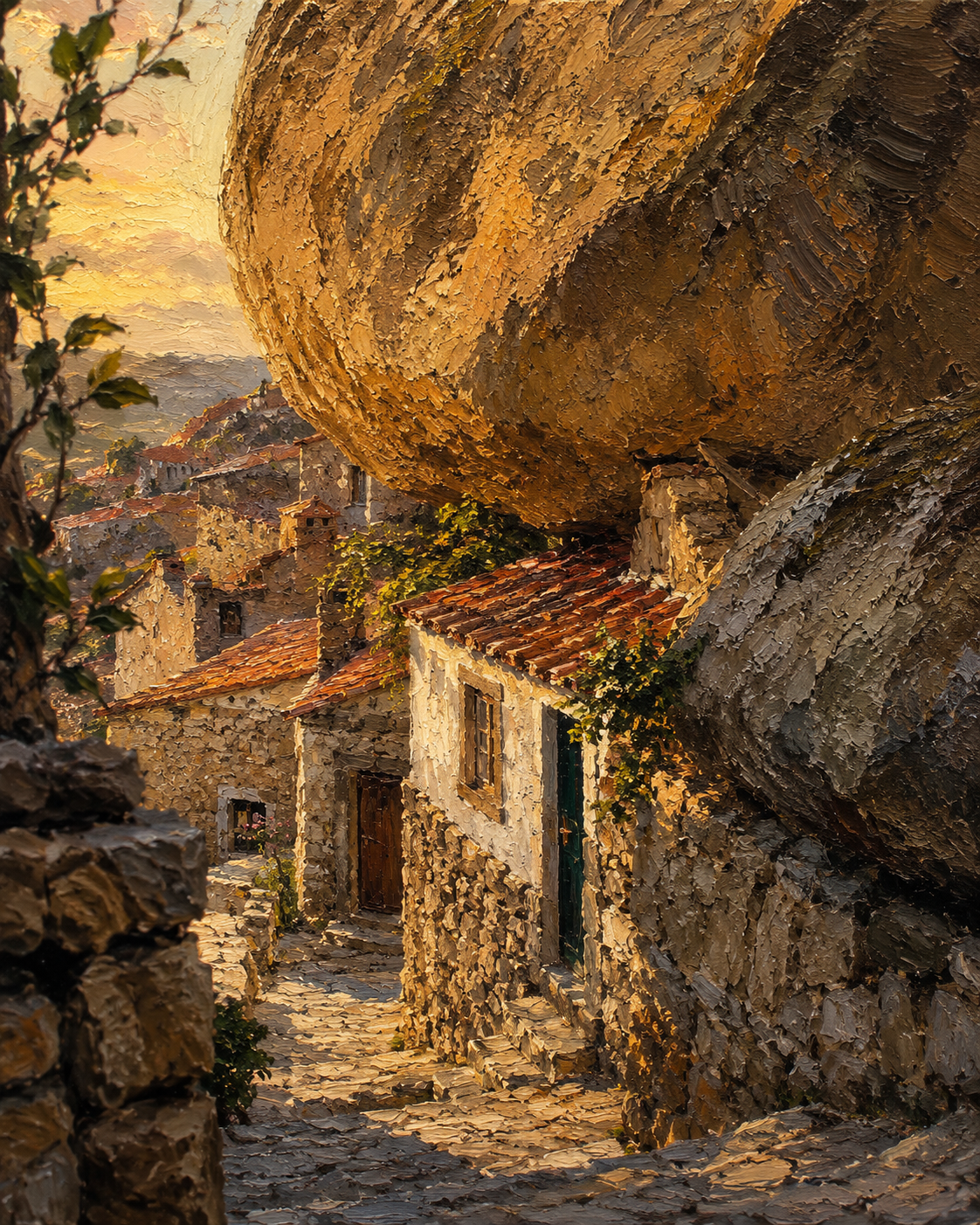
A Village in the Stone's Embrace
Critique
1. Introduction This oil painting presents a picturesque view of a traditional stone village built directly beneath a colossal boulder. The landscape showcases a striking geological feature where architecture and nature merge in an unusual arrangement. The scene is illuminated by the warm, golden glow of a late afternoon sun, casting soft light across the stony path. 2. Description The stone houses feature rustic red-tiled roofs and dark wooden doorways, nestled snugly against the hillside. A massive, rounded rock looms ominously directly above the central dwelling, seemingly supported by the structure itself. The cobblestone pathway winds downward through the narrow street, bordered by rugged rock formations on the right. 3. Analysis The artist employs a dynamic impasto technique, using heavy strokes of the palette knife to convey the coarse texture of the stone surfaces. A warm color palette of orange, yellow, and brown dominates the sunlit portions of the giant boulder, contrasting with the cool gray and violet shadows. The vertical composition emphasizes the overwhelming scale of the rocks relative to the houses. 4. Interpretation and Evaluation The precarious placement of the massive boulder represents the tenuous yet resilient relationship between humanity and the environment. Despite the visual weight of the rock, the village evokes a sense of shelter and enduring stability. The painting successfully captures the tactile quality of the ancient stone, making the physical weight of the scene palpable. 5. Conclusion Initially, the looming presence of the giant boulder creates a feeling of dramatic tension. Upon closer inspection, however, a sense of cozy integration and architectural ingenuity becomes apparent. This evocative depiction stands as a powerful celebration of unique heritage and the rustic beauty of stone architecture.
Same Subcategory
Similar Artworks
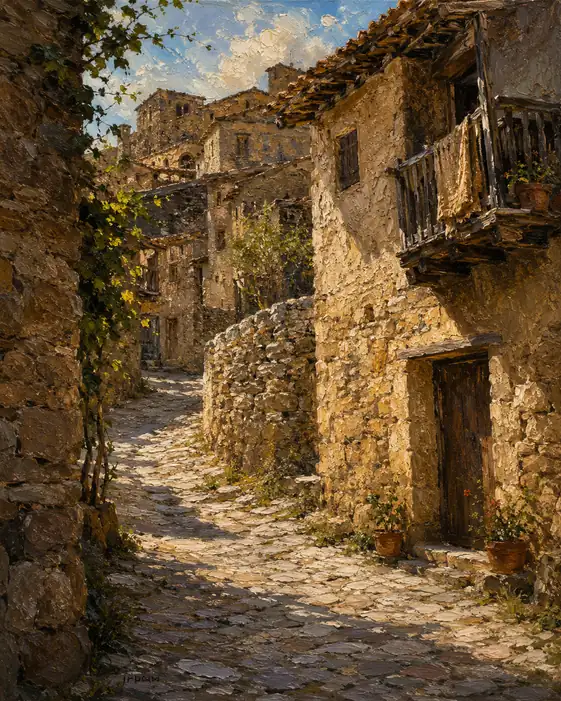 Where the Cobblestone Dreams
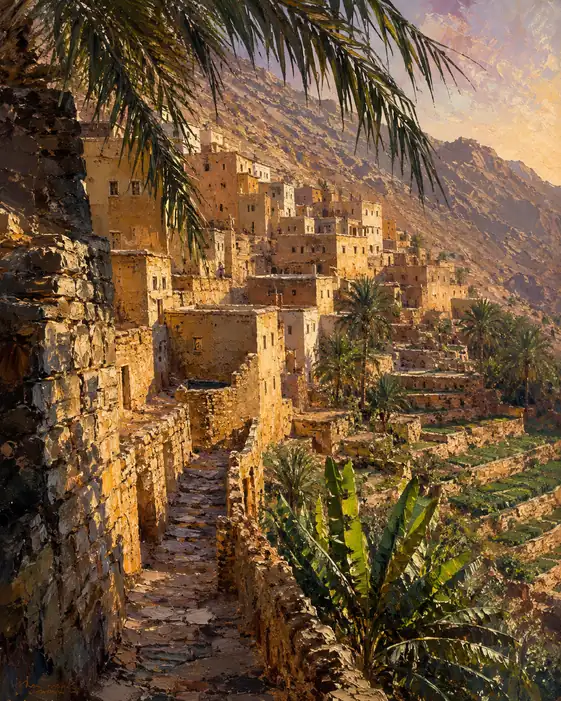 Cradled by the Golden Slopes
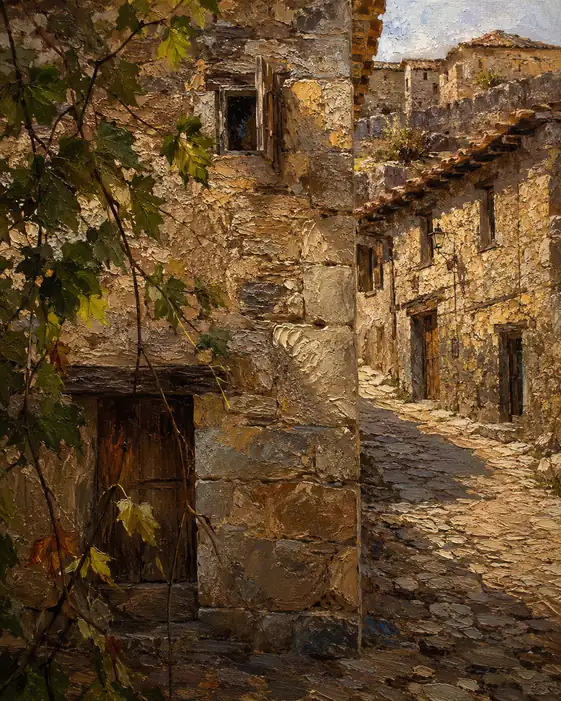 Whispering Stones along the Cobblestone Lane
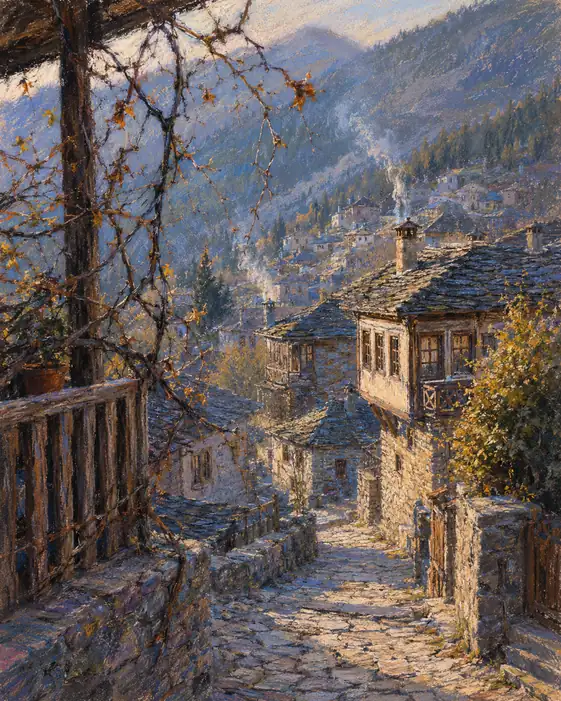 Whispers of the Chimney Smoke
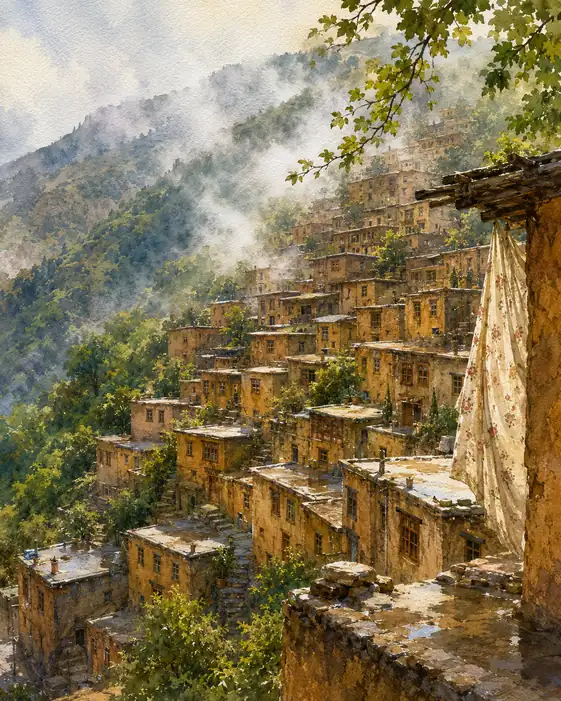 Where the Mountains Breathe
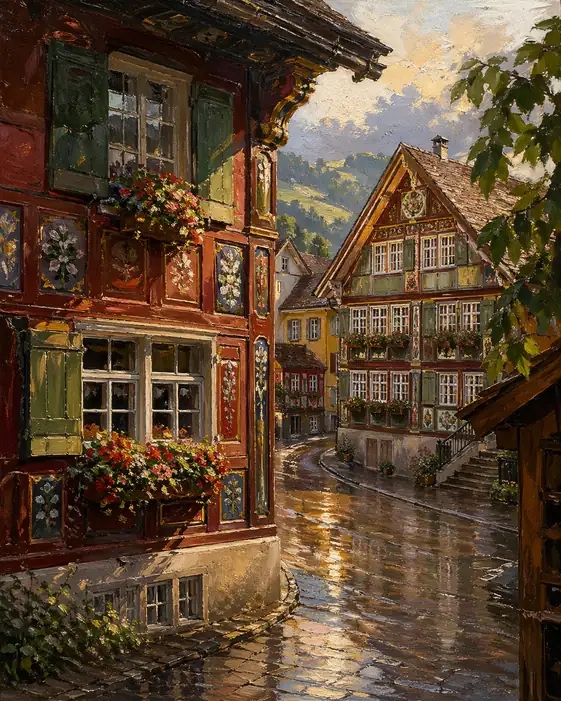 Fence Line to the Snow-capped Majestic Peaks
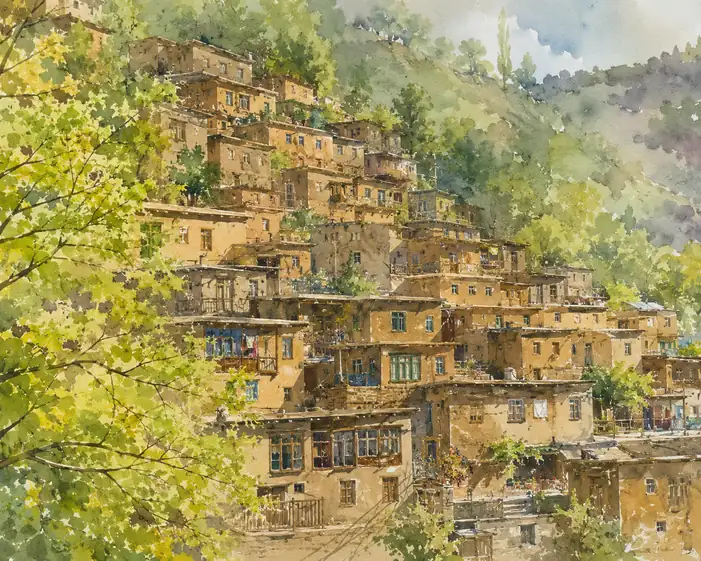 Where Roofs Become Paths
 The Blue Door in the Mist
 Echoes of the Golden Hour
 Timeless Echoes of the Sunlit Village