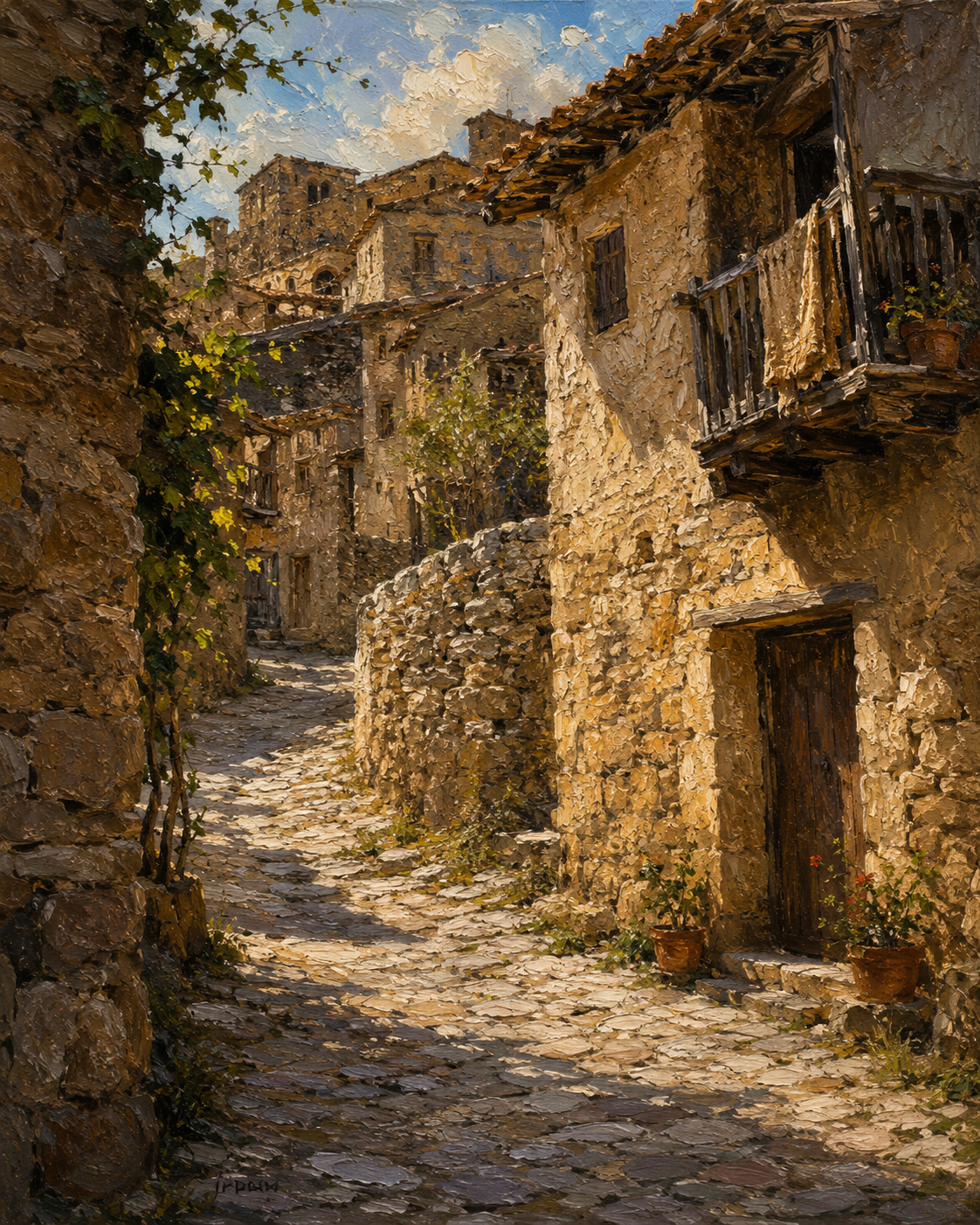
Where the Cobblestone Dreams
Critique
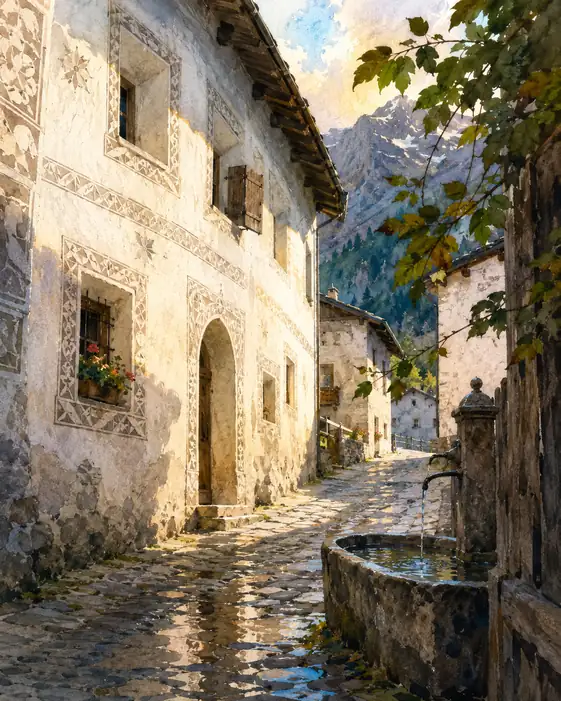
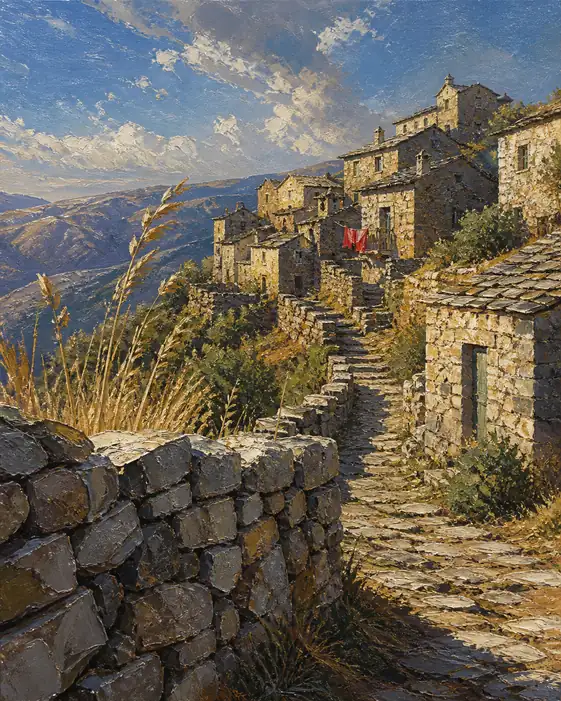
1. Introduction This oil painting captures a sloping street in an old stone village built closely on a hillside. Bathed in bright daylight, the entire scene conveys a peaceful and idyllic atmosphere. It presents a quiet harmony between the rustic stone structures and the local plants. Viewers experience the accumulation of history. 2. Description A curving cobblestone path runs through the center, lined with aged stone houses on both sides. The house on the right features a wooden balcony and door, with small potted plants nearby. Green ivy climbs the left wall, adding color to the stone. In the background, buildings stand against the sky. 3. Analysis The composition uses the curving path to create a sense of elevation and depth in the village. The buildings on both sides act as a frame, leading the eye into the background. Bold impasto brushstrokes applied with a knife emphasize the rough textures of the stones. The palette contrasts warm ochre and cool shadows. 4. Interpretation and Evaluation The painting symbolizes the relationship between human habitation and the earth, reflected in the stone architecture. The enduring qualities of the village express a connection to the past. The artist’s exceptional rendering of texture and light successfully communicates the warmth of the masonry. This technique raises the work’s artistic value. 5. Conclusion At first glance, the work appears to be a simple rustic landscape, but closer observation reveals a powerful sense of materiality. It beautifully integrates traditional structures with natural light. The strong execution leaves a lasting impression, showcasing a superb artistic expression of the harmony between human life and nature.
Same Subcategory
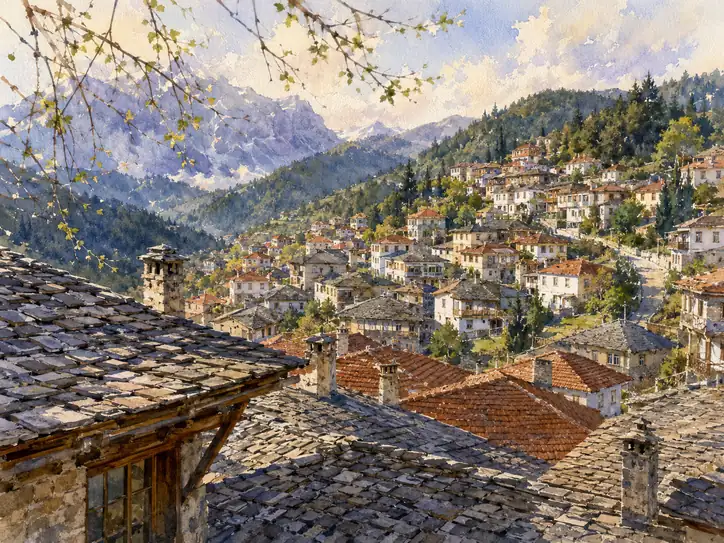 Warmth Beneath the Silent Peaks
Similar Artworks
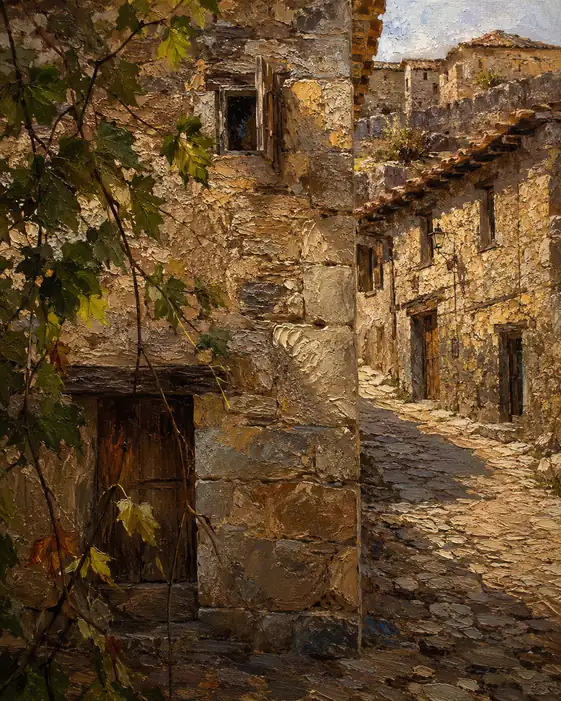 Whispering Stones along the Cobblestone Lane
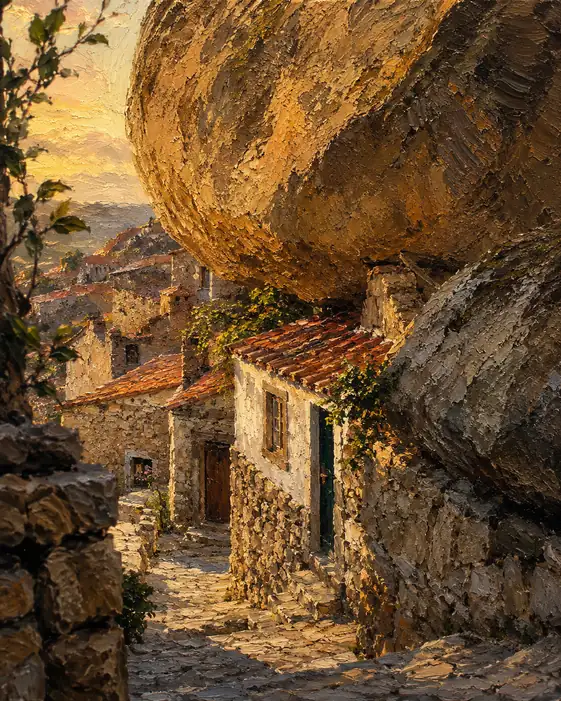 A Village in the Stone's Embrace
 The Memory of Cobblestones
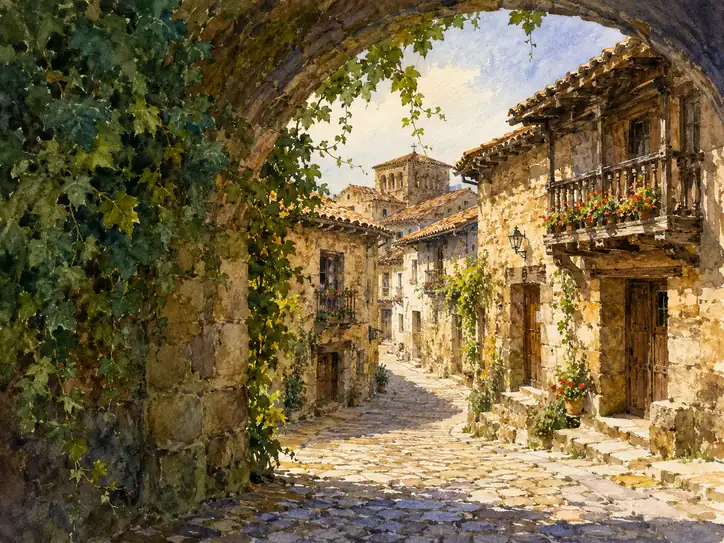 Invitation of Light: Stepping through the Ivy Arch
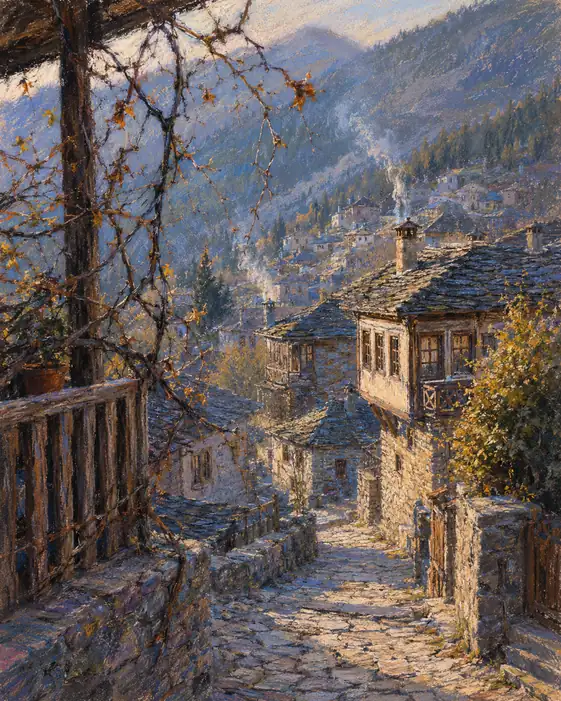 Whispers of the Chimney Smoke
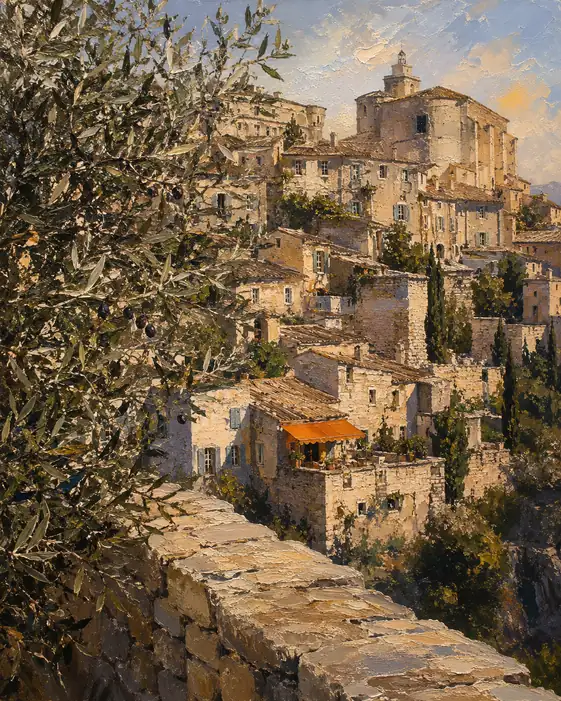 Timeless Echoes of the Sunlit Village
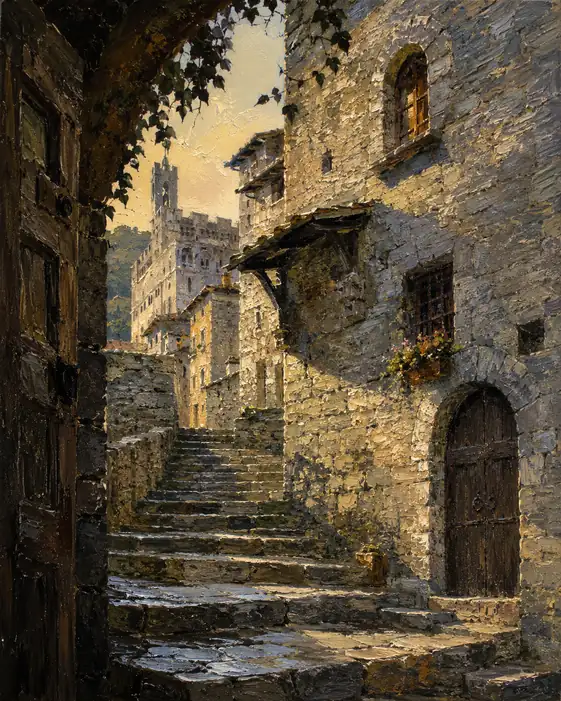 An Invitation to the Golden Past
 The Slow Flow of Mountain Time
 The Ascent of Sunlit Stone
 Golden Echoes of the Peak