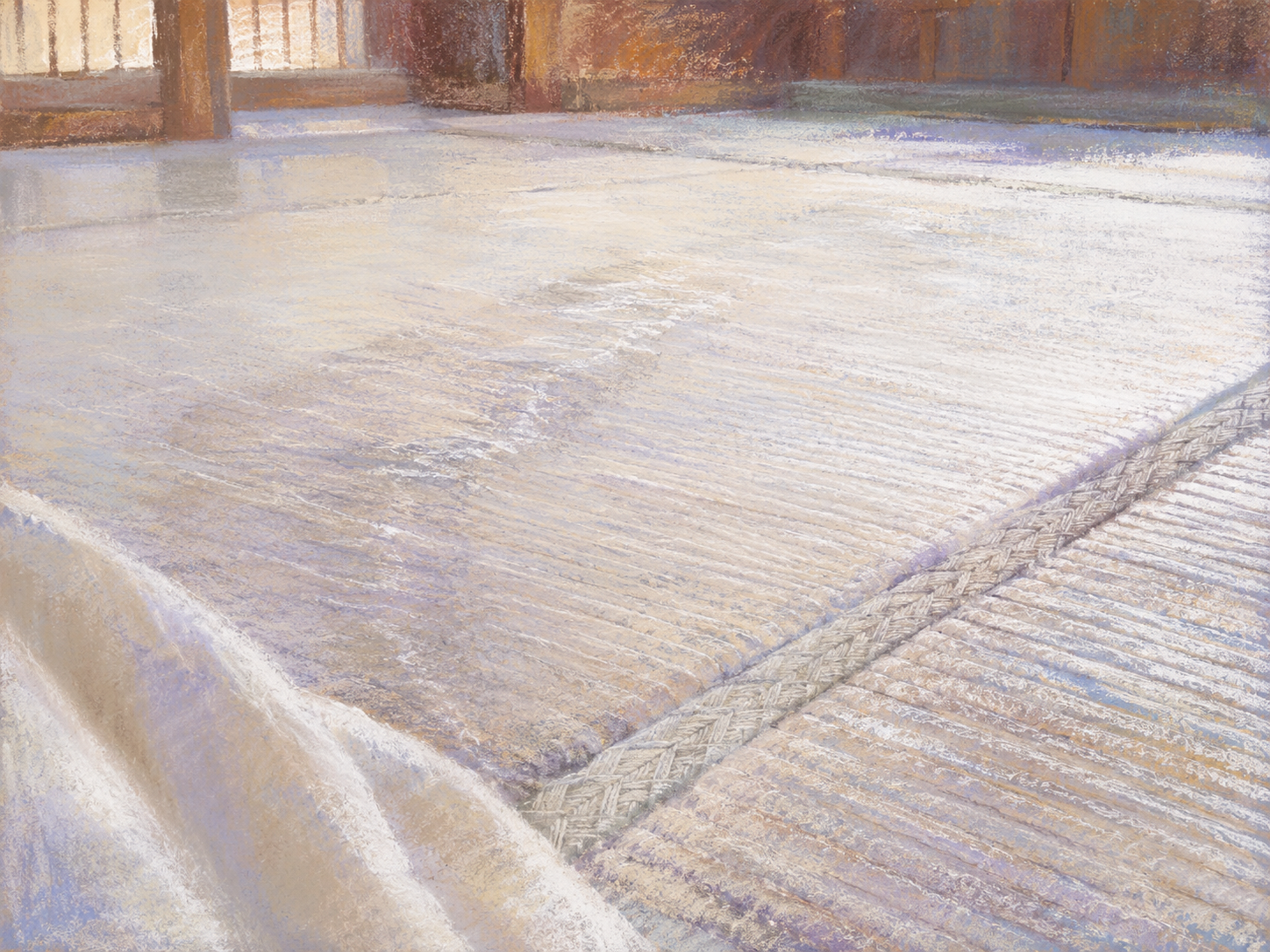
Echoes of Silence
Critique
1. Introduction This serene painting portrays a tranquil view of a traditional tatami-matted dojo floor bathed in soft sunlight. Specific details regarding its creation remain completely unknown. The contrast between the detailed straw weave and the smooth white cloth in the foreground creates a highly peaceful, contemplative atmosphere. 2. Description Tatami mats in pale beige and gray tones dominate the scene. A beautifully patterned tatami border (heri) runs diagonally from the bottom right toward the center. Warm sunlight filters through shoji windows on the far left, while a soft, white uniform cloth lies in the foreground. 3. Analysis The diagonal lines of the tatami border guide the eye, creating a strong sense of depth and geometric stability. A rich tactile contrast exists between the rough, textured straw weave and the soft folds of the white uniform. The muted palette of ochres and grays is accented by subtle lavender reflections. 4. Interpretation and Evaluation The artwork represents the essence of Japanese minimalism and spiritual calmness through an empty training space. The careful rendering of the tatami pattern showcases excellent technical precision and dedication. The white cloth hints at human presence, adding a poetic sense of transition and quiet discipline. 5. Conclusion This painting beautifully visualizes the sacred quietness and poetic light inherent in traditional spaces. While the spacious brightness initially comforts the mind, the textured detail invites deeper introspection. It stands as a brilliant masterpiece celebrating the beauty of stillness.
 Whispers of the Light-Dappled Path
 Before the First Strike
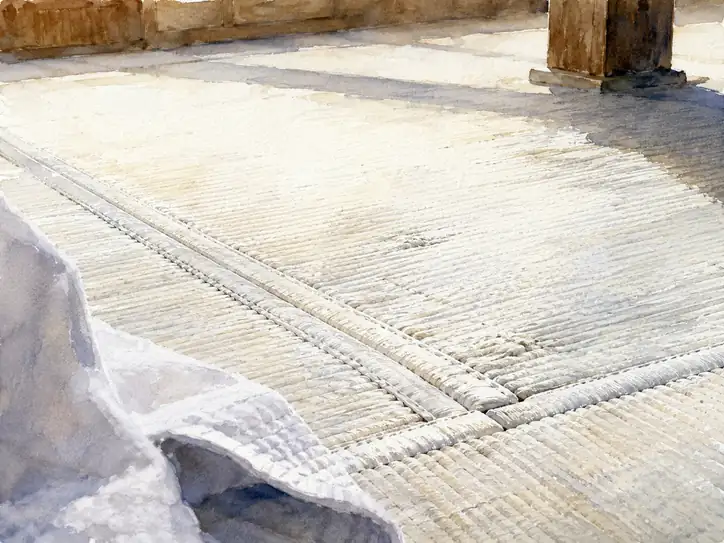 Where the Light Comes to Rest
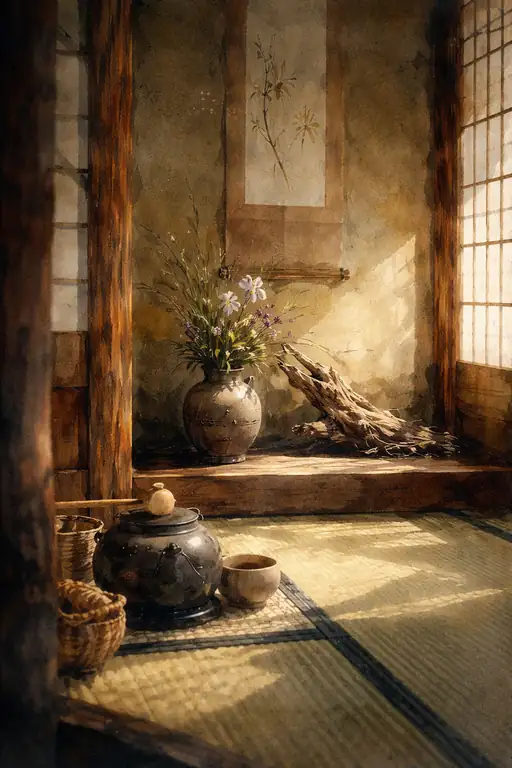 Stillness of the Tea Room
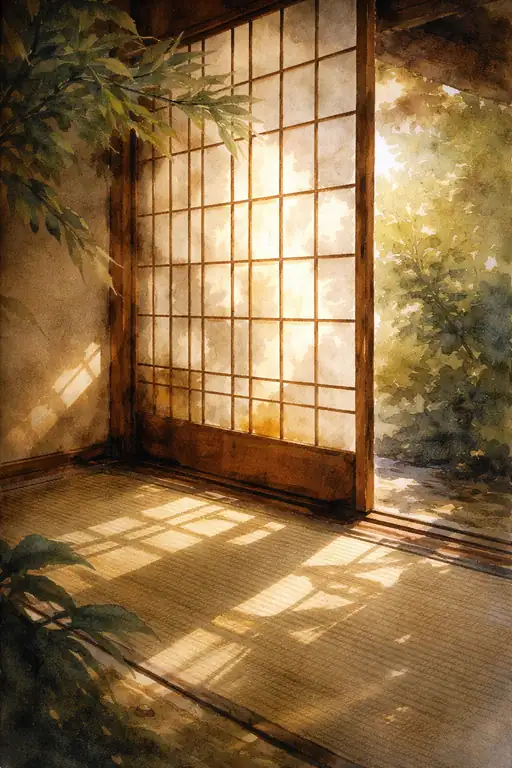 Sunlight Spilling Through Time
 Morning Light Through Shoji
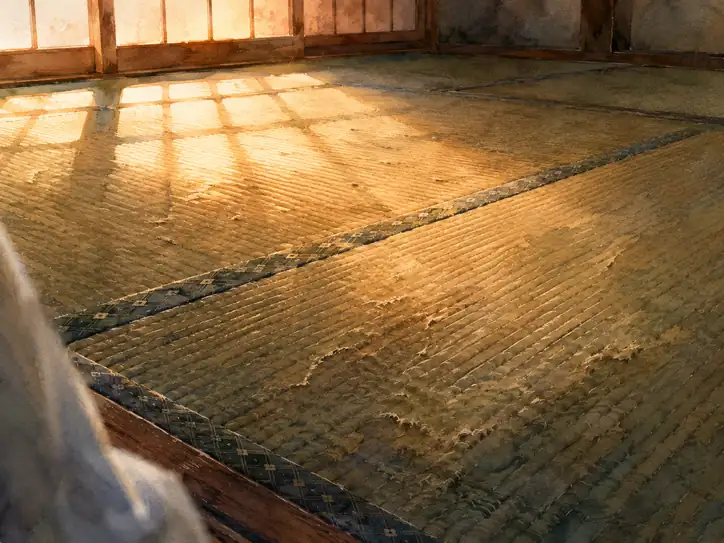 Traces of Time
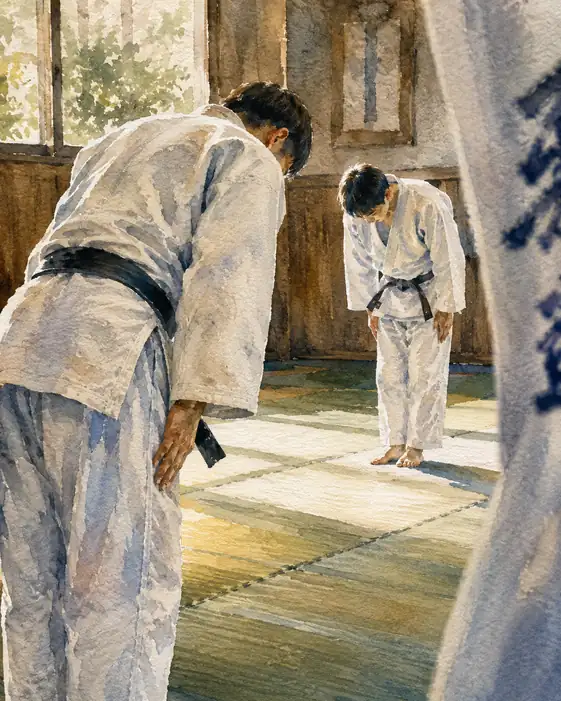 Before the Storm: A Silent Promise
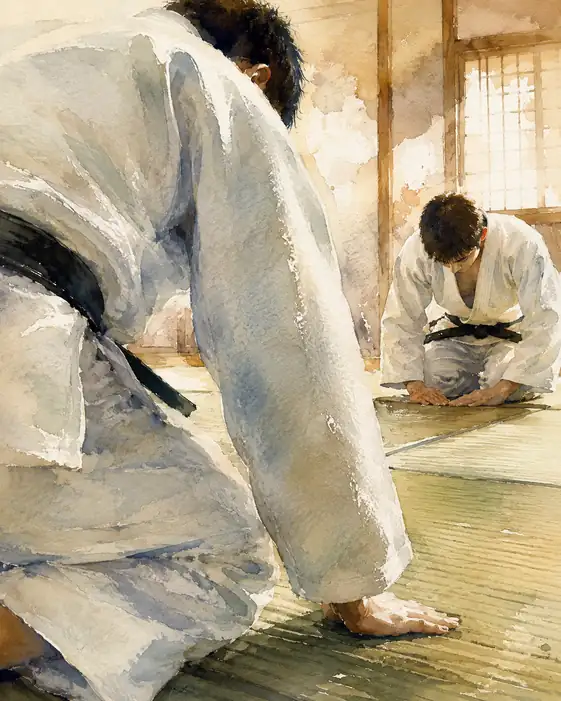 The Path of Respect
 The Mirror of Summer Stillness
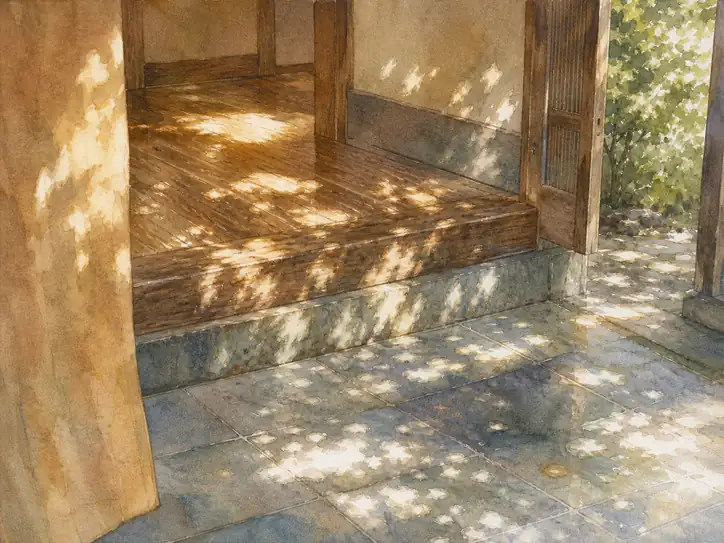 The Starry Threshold of Sunlit Memories
 Afternoon Tea by the Garden