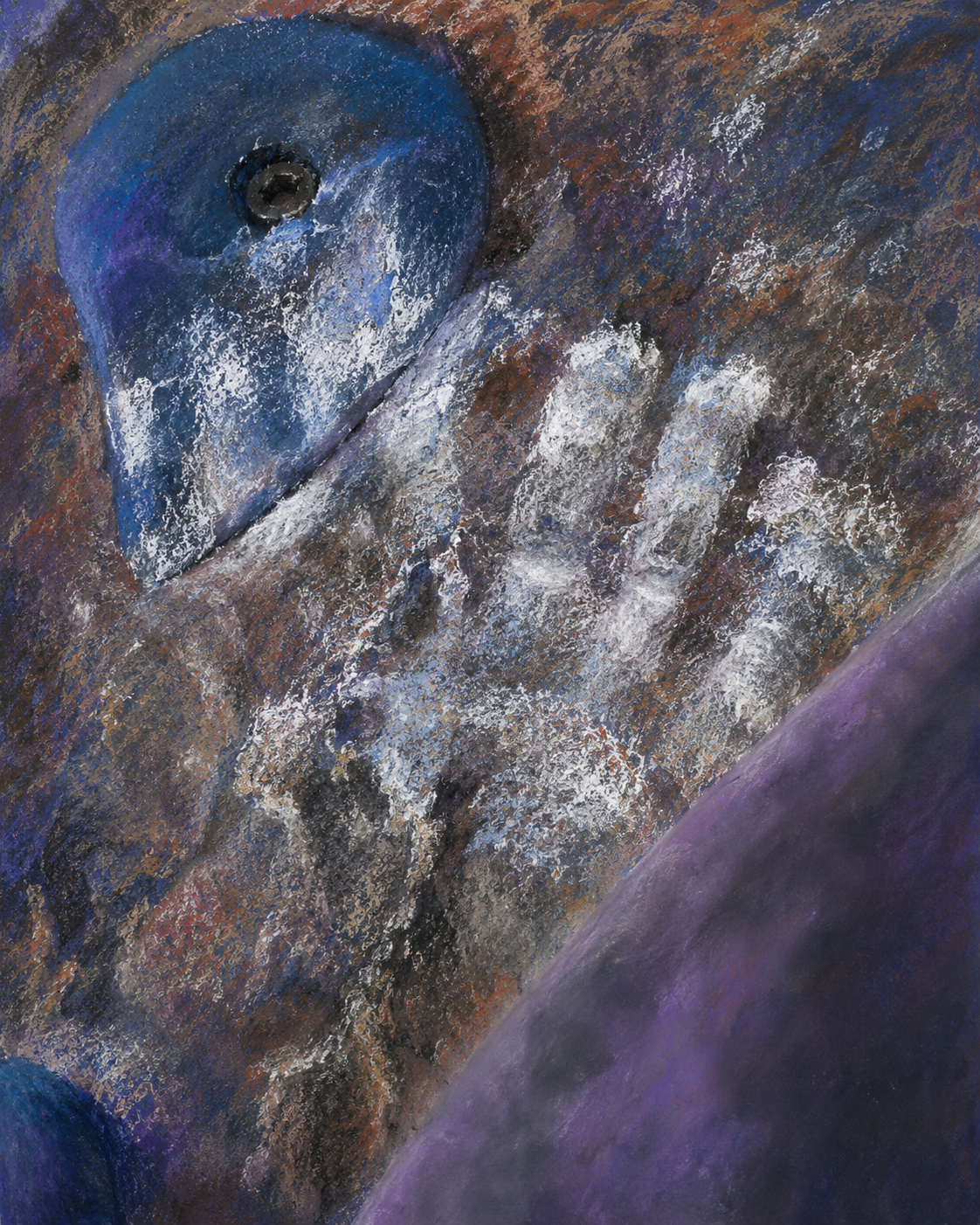
Primal Trace
Critique
1. Introduction This painting depicts a unique subject that evokes the experience of modern rock climbing. The juxtaposition of a contemporary climbing hold and a primitive handprint creates a compelling visual statement. It captures the dynamic relationship between human physicality and structured space. This essay examines its composition and symbolic meaning. 2. Description In the upper-left corner, a blue climbing hold is secured with a dark bolt. The central area features a textured background marked with a white handprint that resembles chalk dust. A smooth purple slope cuts diagonally across the bottom-right portion of the frame. The entire surface is rendered with a dry texture, suggesting a chalky pastel medium. 3. Analysis The color palette establishes a clear contrast between cool blue tones and warm background browns. The defined curve of the hold interacts dynamically with the sharp diagonal line on the right. The white handprint serves as a focal point against the heterogeneous surface textures. This deliberate arrangement produces a sense of suspended motion and quiet tension. 4. Interpretation and Evaluation The work successfully expresses the dialogue between direct physical contact and modern artificial support systems. The rough texture of the handprint evokes ancient cave paintings, symbolizing a primal desire to leave a mark. In contrast, the modern climbing hold introduces a contemporary context of athletic challenge. This highlights the work's remarkable originality and technique. 5. Conclusion The painting is a powerful exploration of how human bodies interact with challenging environmental surfaces. The interplay between the structured blue form and the organic white imprint invites a strong tactile response. The vivid colors gradually deepen into a profound reflection on human presence. This balanced composition leaves a lasting impact on the viewer's imagination.
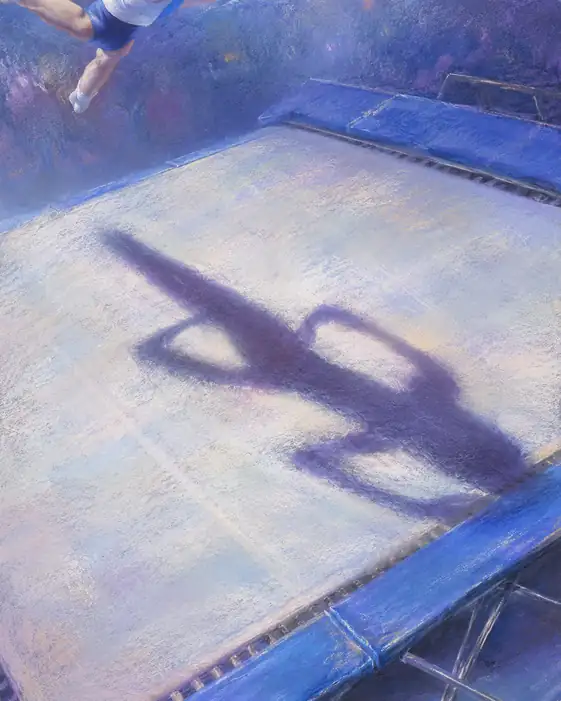 Projection of Freedom
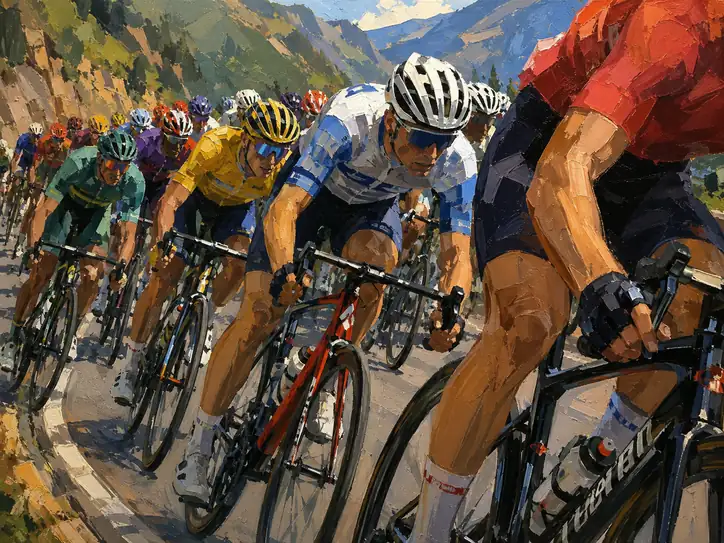 The Colorful Wind
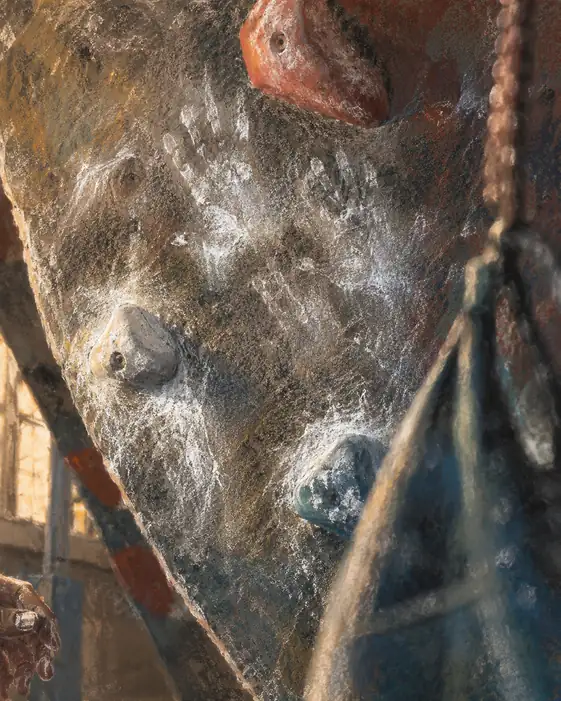 Traces of the Ascent
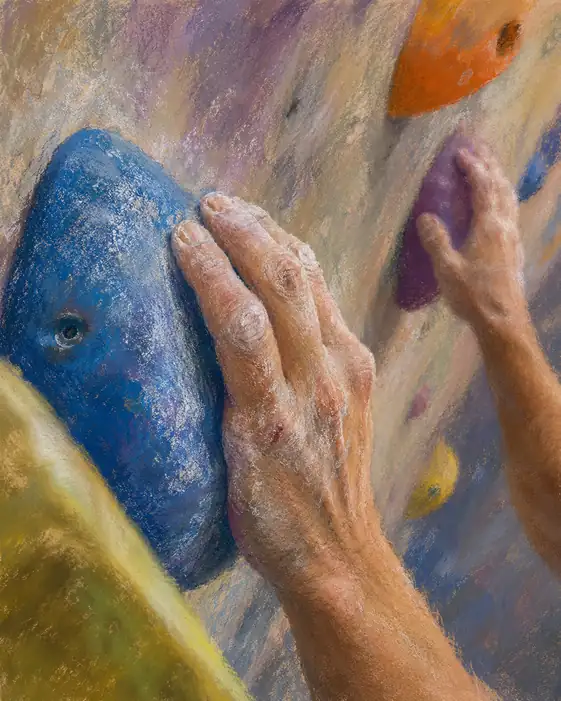 The Will in the Fingertips
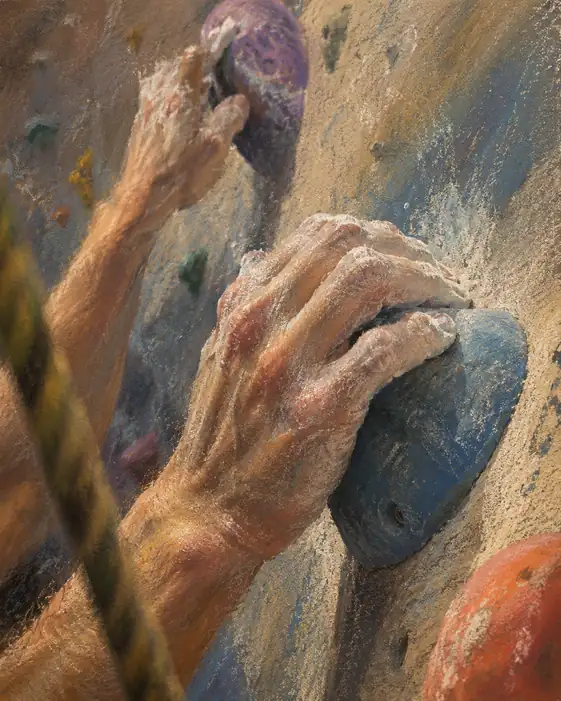 The Unyielding Grip on Tomorrow
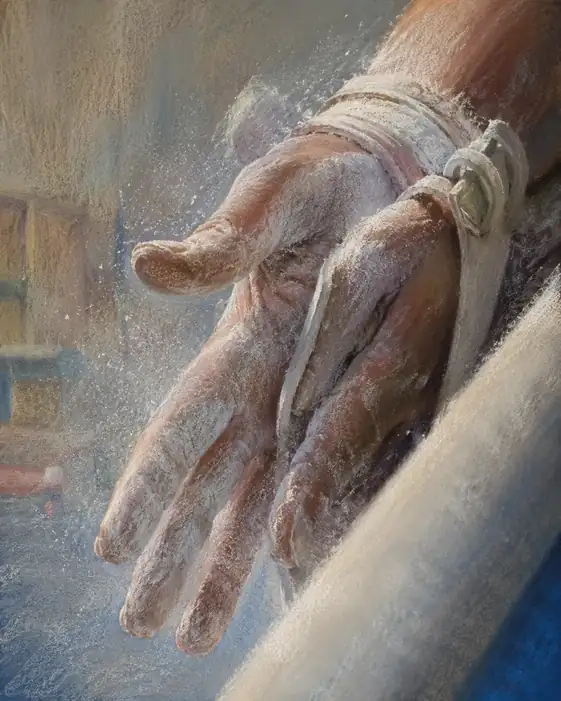 Prelude to Flight
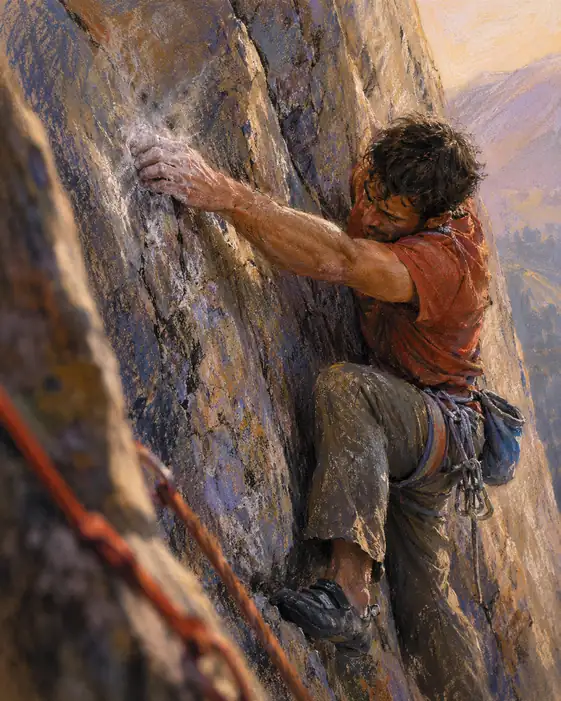 Ascending into the Golden Silence
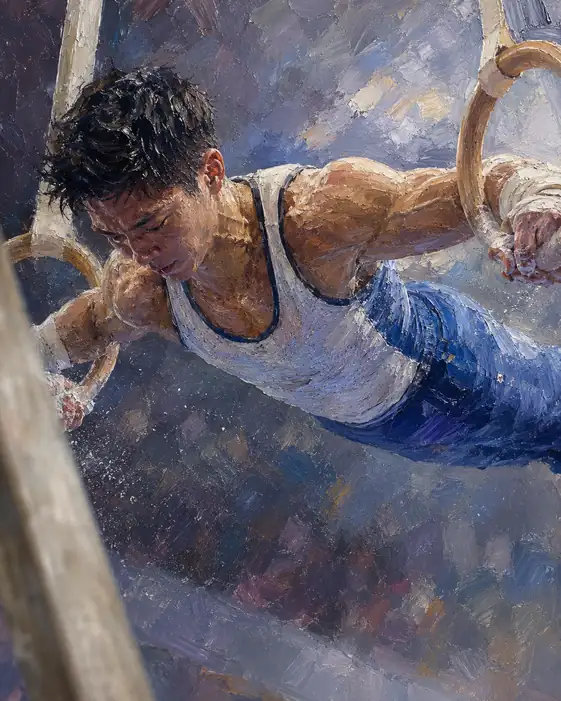 Horizontal Will
 Sweeping the Ice Line
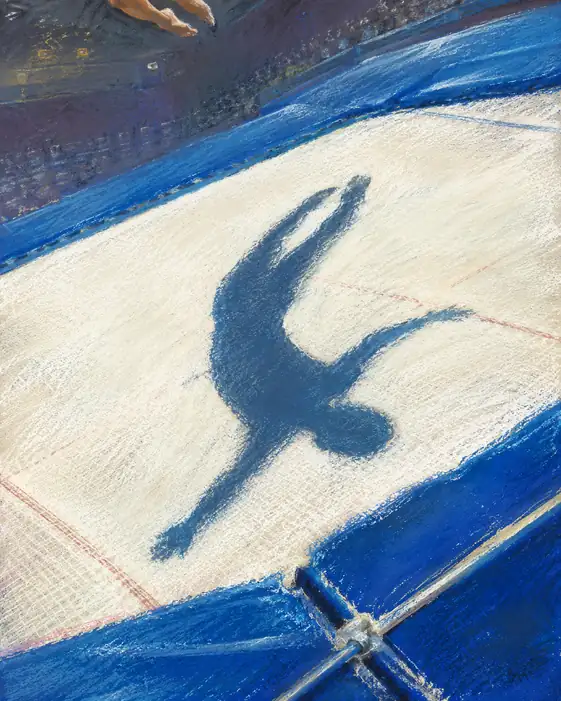 Gravity's Shadow
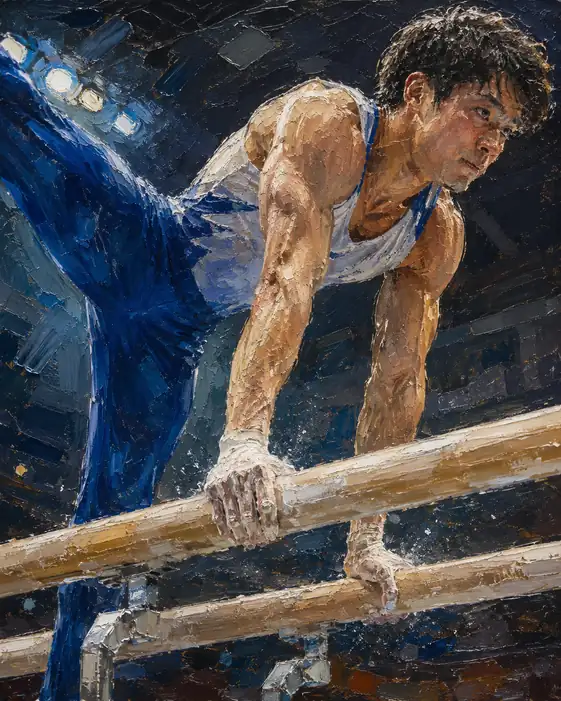 Upward Flight
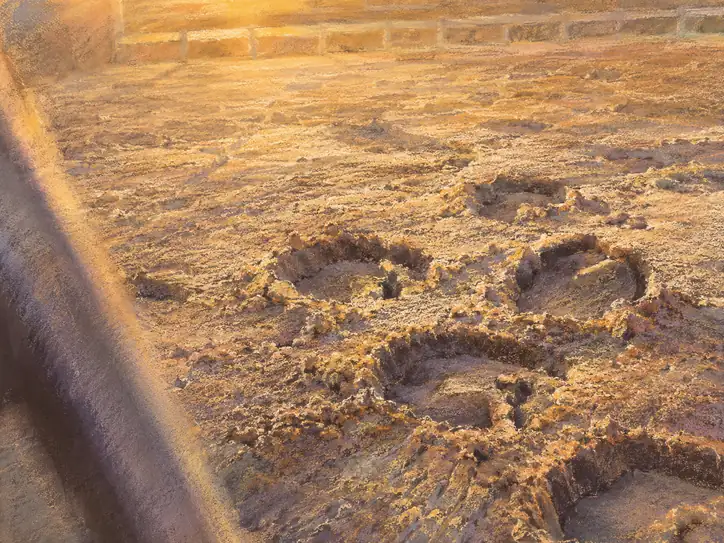 Echoes of Life