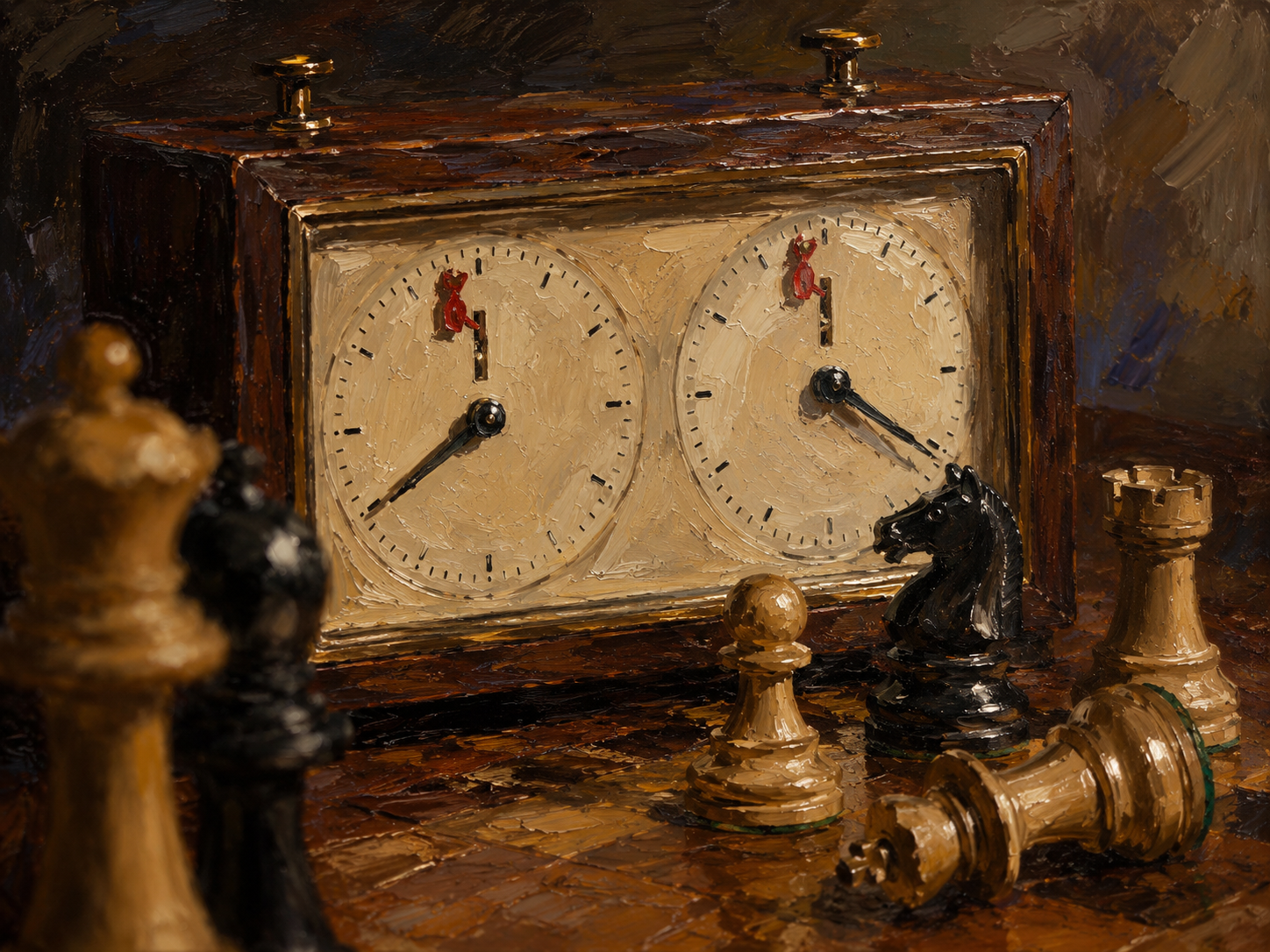
The Silent Resignation
Critique
1. Introduction This oil painting presents a dramatic scene centered on a vintage chess clock and scattered chess pieces. The work captures a quiet moment, suggesting the aftermath of a significant intellectual contest. Through rich textures and focused composition, the painting invites the viewer to contemplate the passage of time. 2. Description A dual-dial wooden chess clock stands prominently against a dark background. Its cream-colored faces feature black markings and hands, topped by small red flags. Scattered in the foreground are several chess pieces, including a white queen, a black knight, and a fallen king lying on its side. The table surface is rendered with dense brushstrokes. 3. Analysis The artist utilizes a heavy impasto technique, where thick layers of paint create a tactile, three-dimensional surface. This texture effectively defines the wooden clock and the sculpted forms of the chess pieces. The warm palette is dominated by deep browns and creams, contrasted by black pieces. Light from the left casts dramatic shadows. 4. Interpretation and Evaluation The composition successfully communicates a narrative of conflict, symbolized by the fallen king. The dual faces of the clock suggest a tension between different experiences of time. Technically, the work is successful in its balance of observation and expressive paint application. The thick brushwork lends a physical presence, transforming the still life. 5. Conclusion Ultimately, the painting transcends a simple depiction of game pieces to become a meditation on struggle. What initially appears as a quiet still life reveals itself as a stage filled with tension. The frozen clock hands serve as a reminder of the progress of time. This work stands as a compelling testament to oil painting.
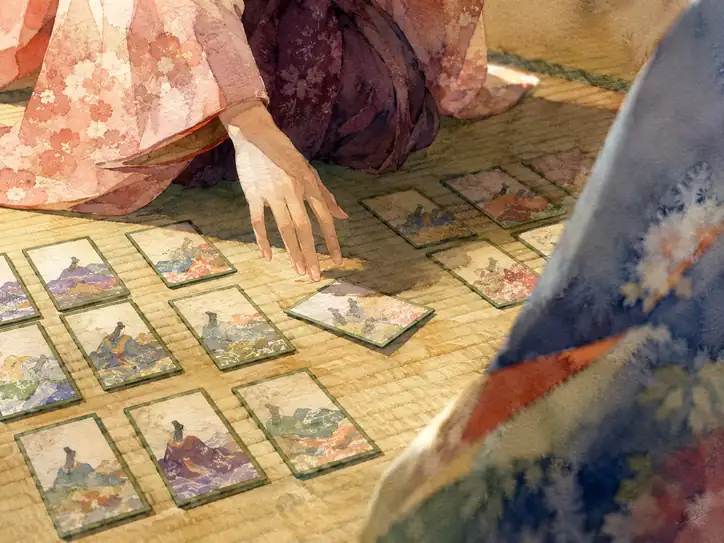 Fingertips Piercing the Silence
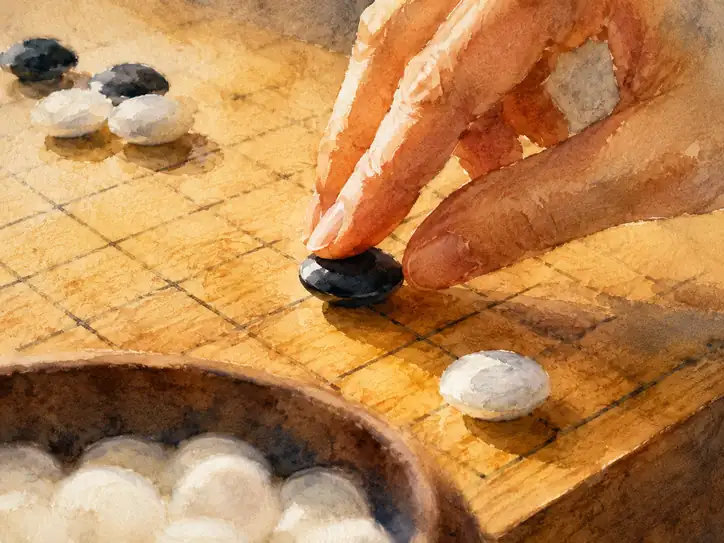 A Silent Breath
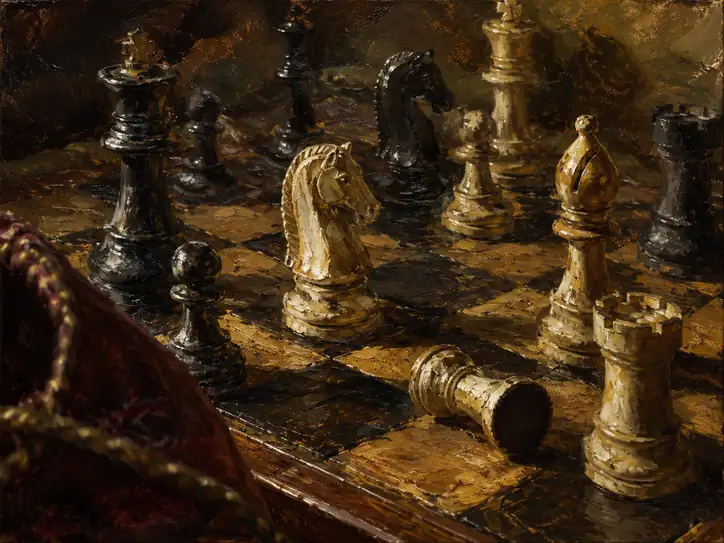 Fate Decided in Silence
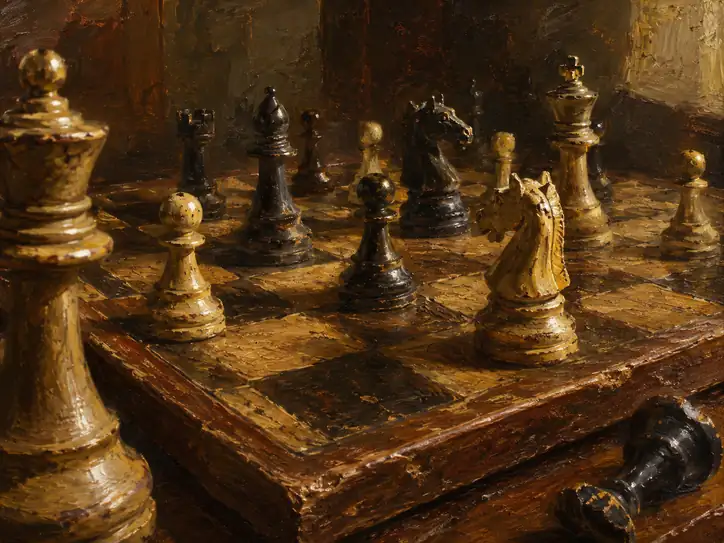 The Silent Duel of Fate
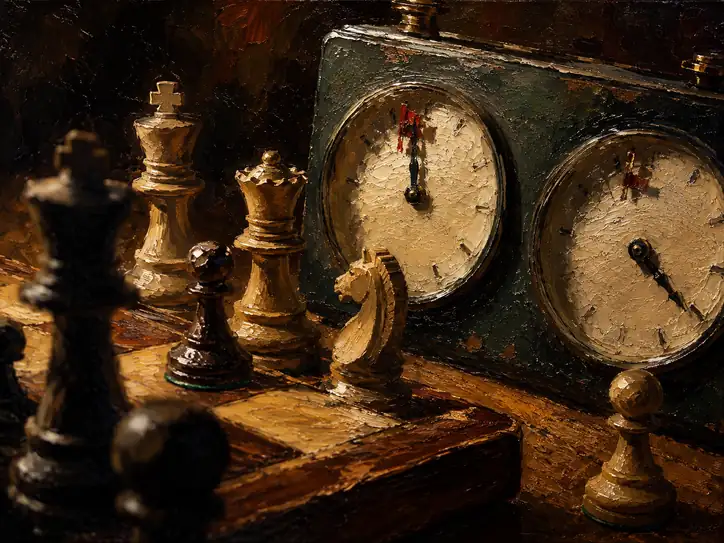 A Breath Before the Fall
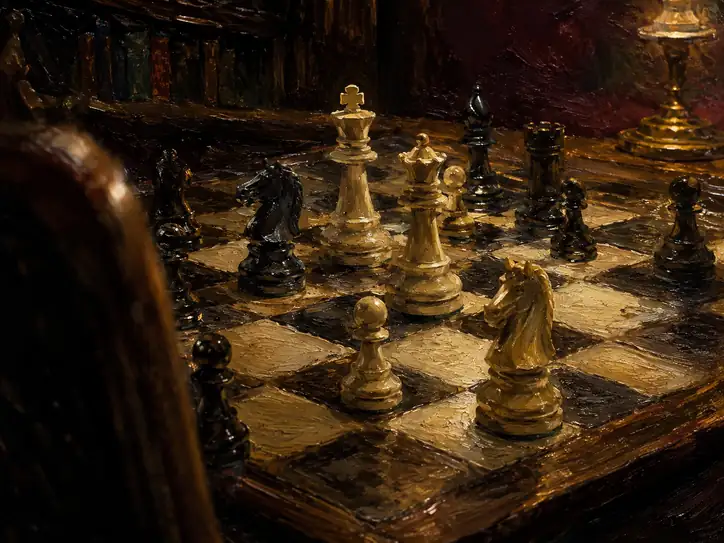 The Unfinished Game
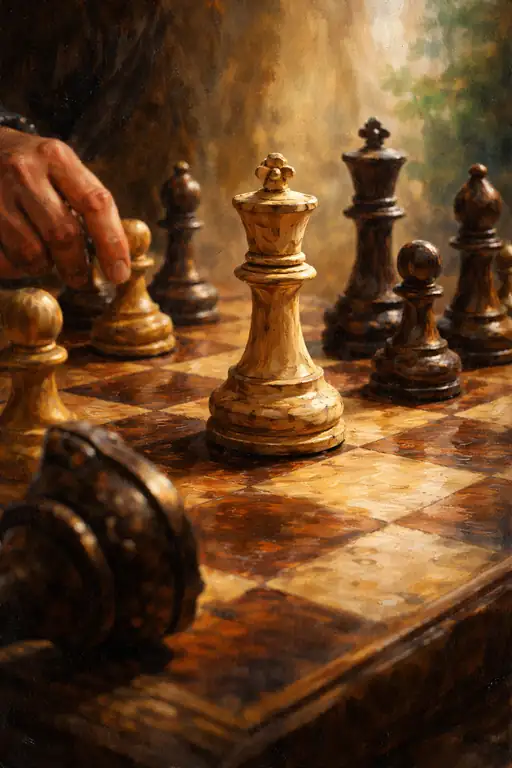 Silence Before the Storm
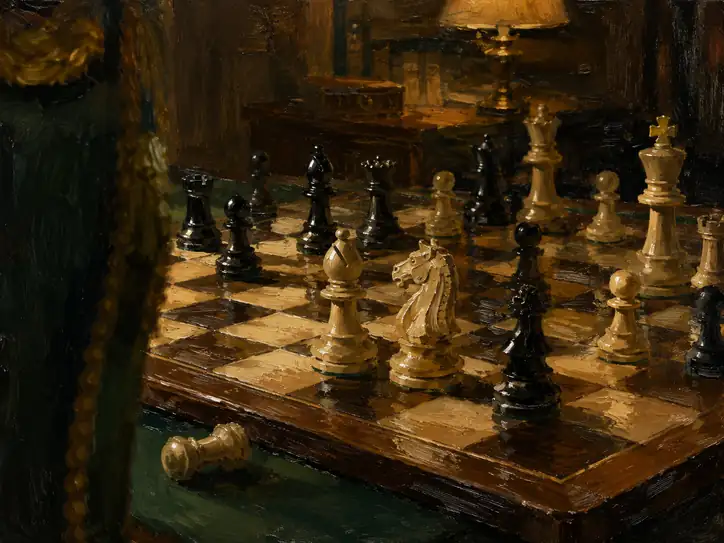 Decisions in the Warm Shadow
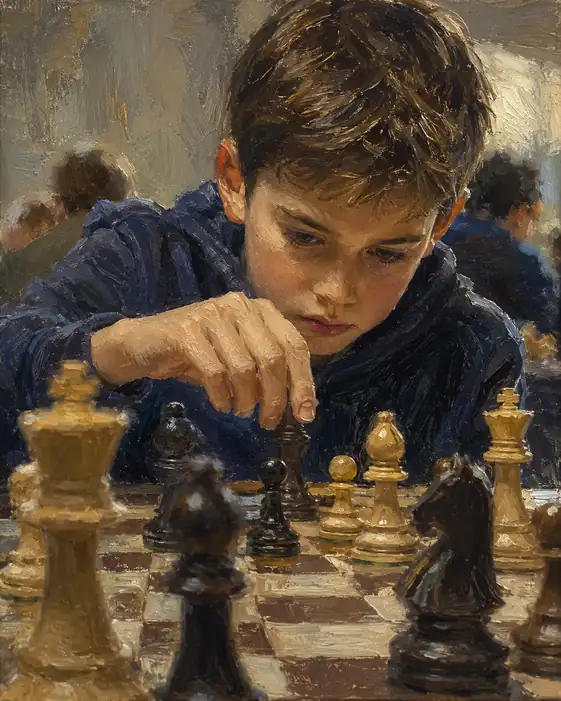 A Quiet Storm Within
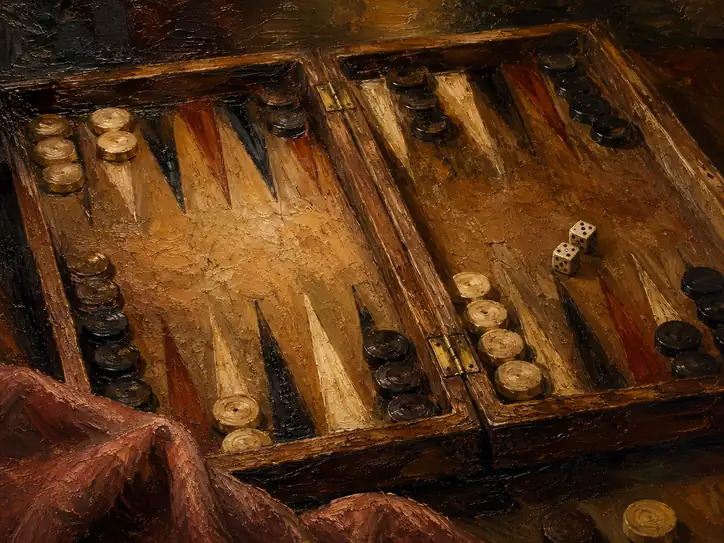 The Cast of Fortune
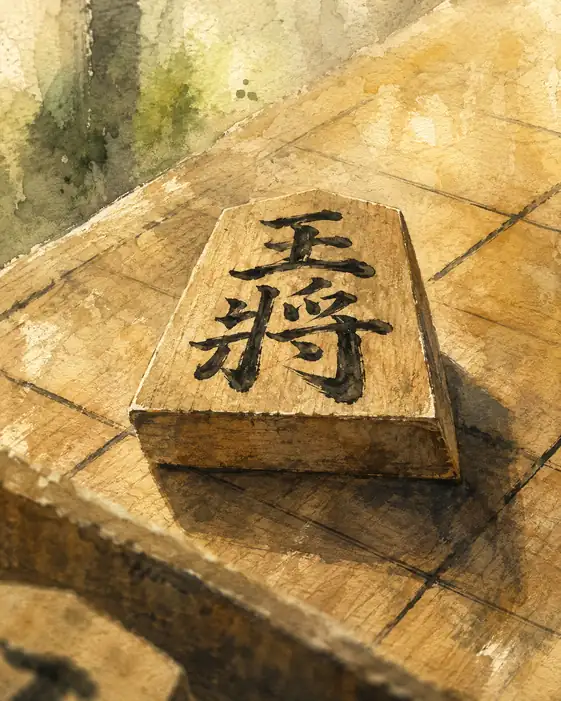 A Crown of Shadow
 The Silent Dialogue