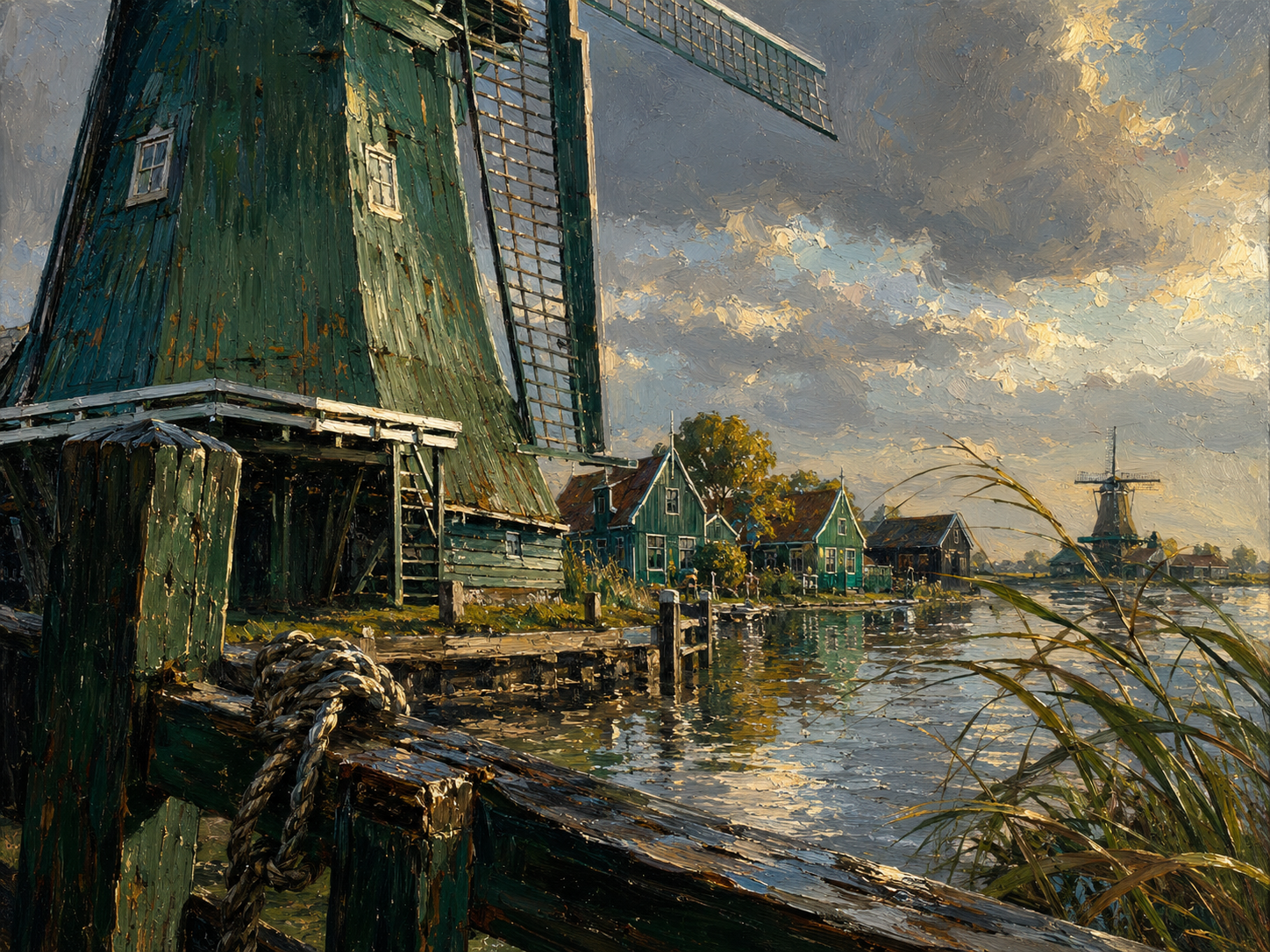
Breath of the Ancient Wind
Critique
1. Introduction This artwork is a richly textured oil painting depicting a traditional waterfront village characterized by its iconic windmills. There is no visible signature, and specific details regarding the exact date of creation remain unconfirmed. 2. Description The left foreground is dominated by the imposing structure of a weathered green windmill. Nearby, a sturdy wooden dock features a coiled rope resting on its surface. Across the calm water, a row of charming green houses lines the shore, leading toward another windmill in the distance. The sky is filled with expressive clouds that allow warm sunlight to break through, reflecting shimmering patterns onto the water, while tall grasses frame the bottom right. 3. Analysis The artist employs a pronounced impasto technique, using thick layers of paint to build a sculptural surface. This effectively conveys the rough texture of the wooden structures and the dynamic nature of the clouds. The composition is well-balanced, using the massive windmill to anchor the scene, while the receding shoreline creates a deep sense of perspective. The color palette contrasts the deep greens of the architecture with the luminous golds of the sky. 4. Interpretation and Evaluation The painting captures the nostalgic essence of a historic waterfront, evoking a sense of enduring strength and rural tranquility. The robust application of paint gives the scene a resilient physical presence, suggesting a deep connection between man-made structures and nature. The artwork is highly evaluated for its masterful handling of texture and light, successfully transforming a traditional landscape subject into a vibrant visual experience. 5. Conclusion Initially appearing as a classic pastoral scene, the artwork reveals its true complexity through the vigorous brushwork upon closer observation. It is a compelling landscape that celebrates both architectural heritage and the beauty of natural light.
 Stillness Bathed in Gold
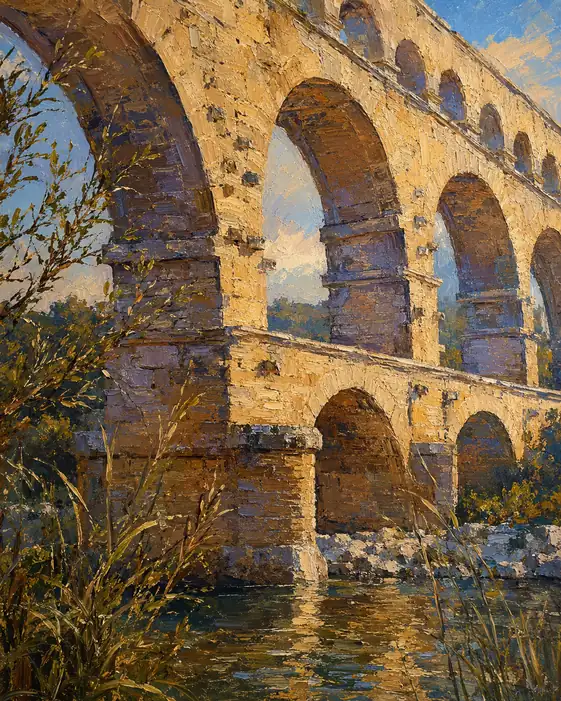 Whispers of the Eternal Arch
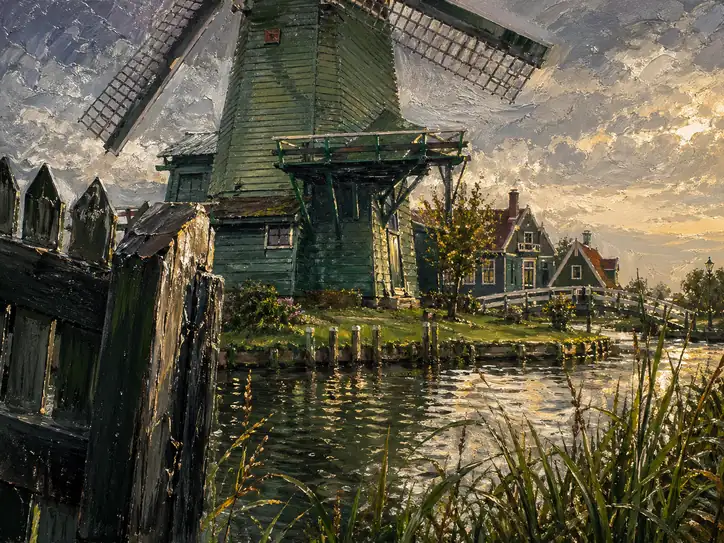 Resonance of the Golden Hour
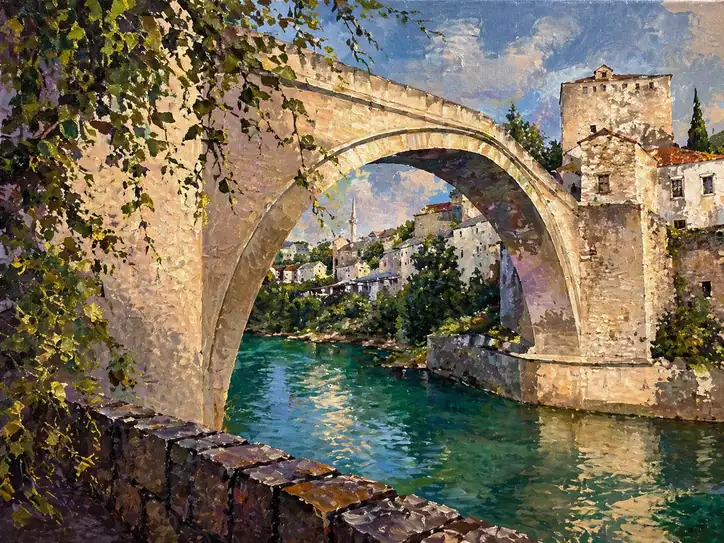 The Eternal Span of Emerald Dreams
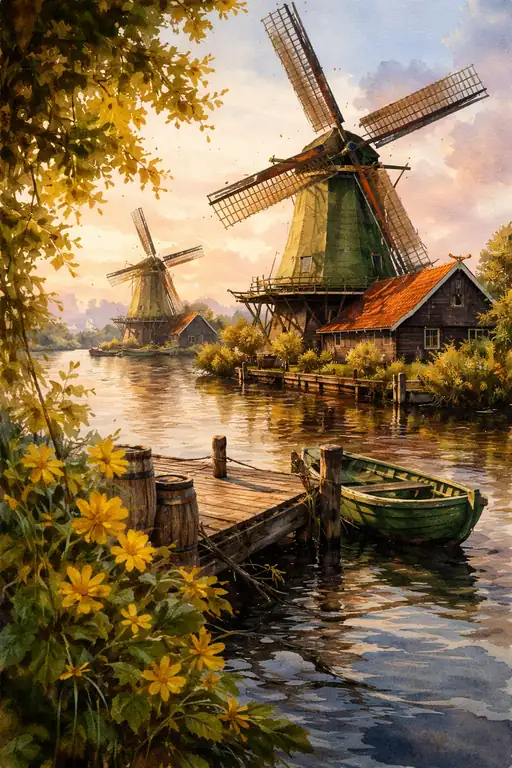 Golden Hour Retreat
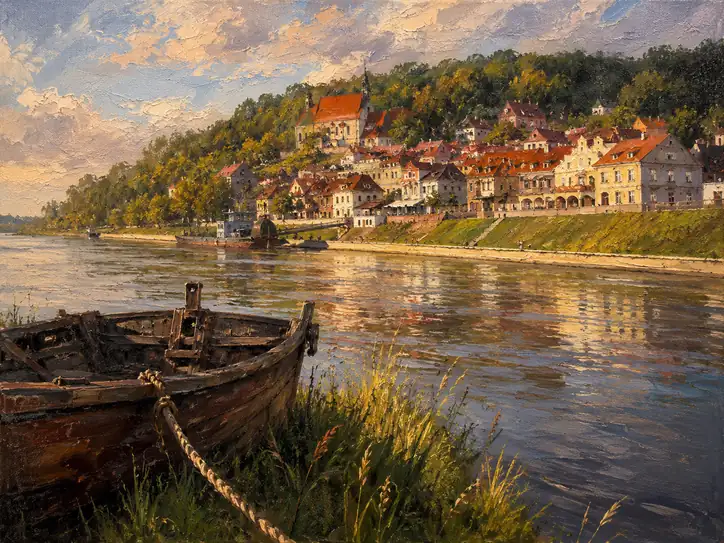 The Quiet Anchor of the River's Flow
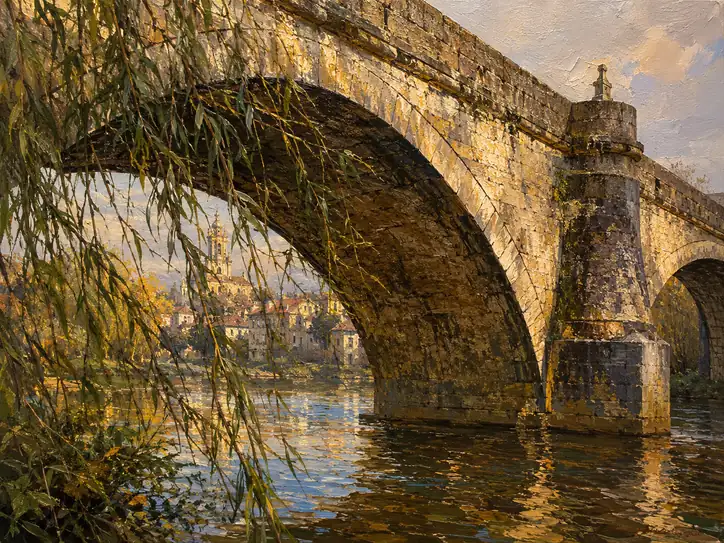 Beyond the Golden Arch
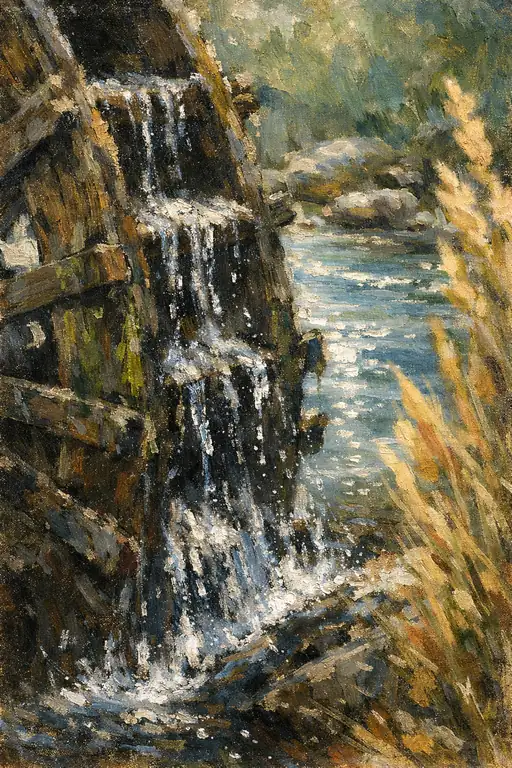 The Wheel of Time
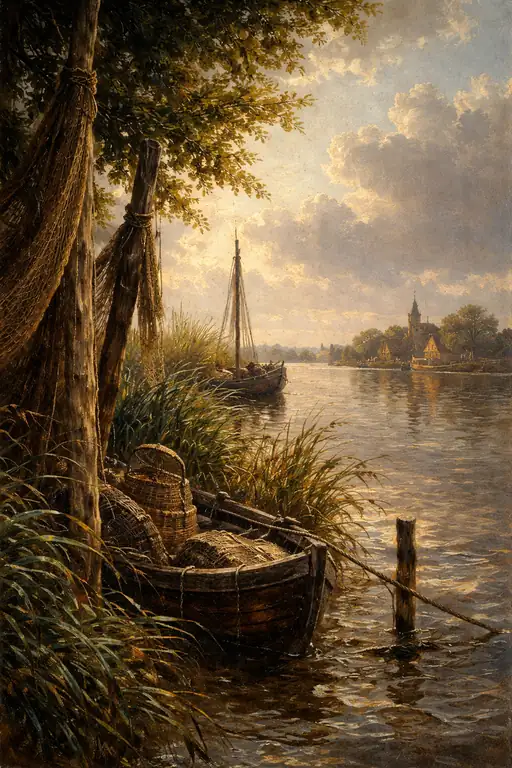 Tranquil Reverie by the Reeds
 Pastoral Hymn of the Golden Stream
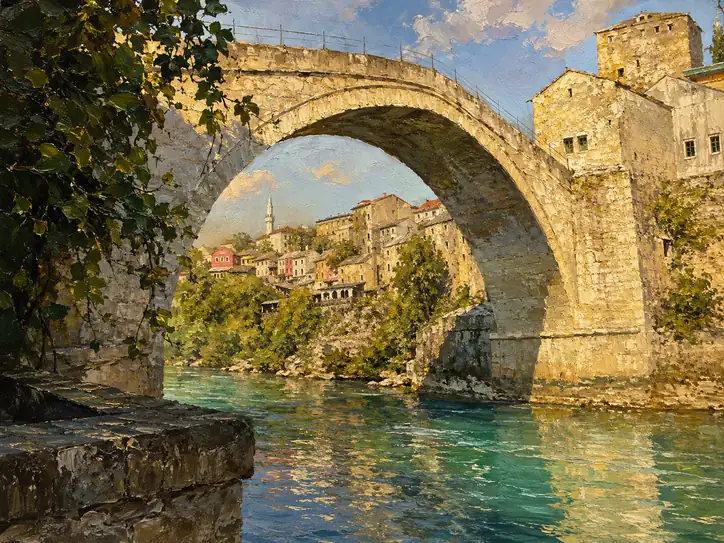 Arc of the Ancient Flow