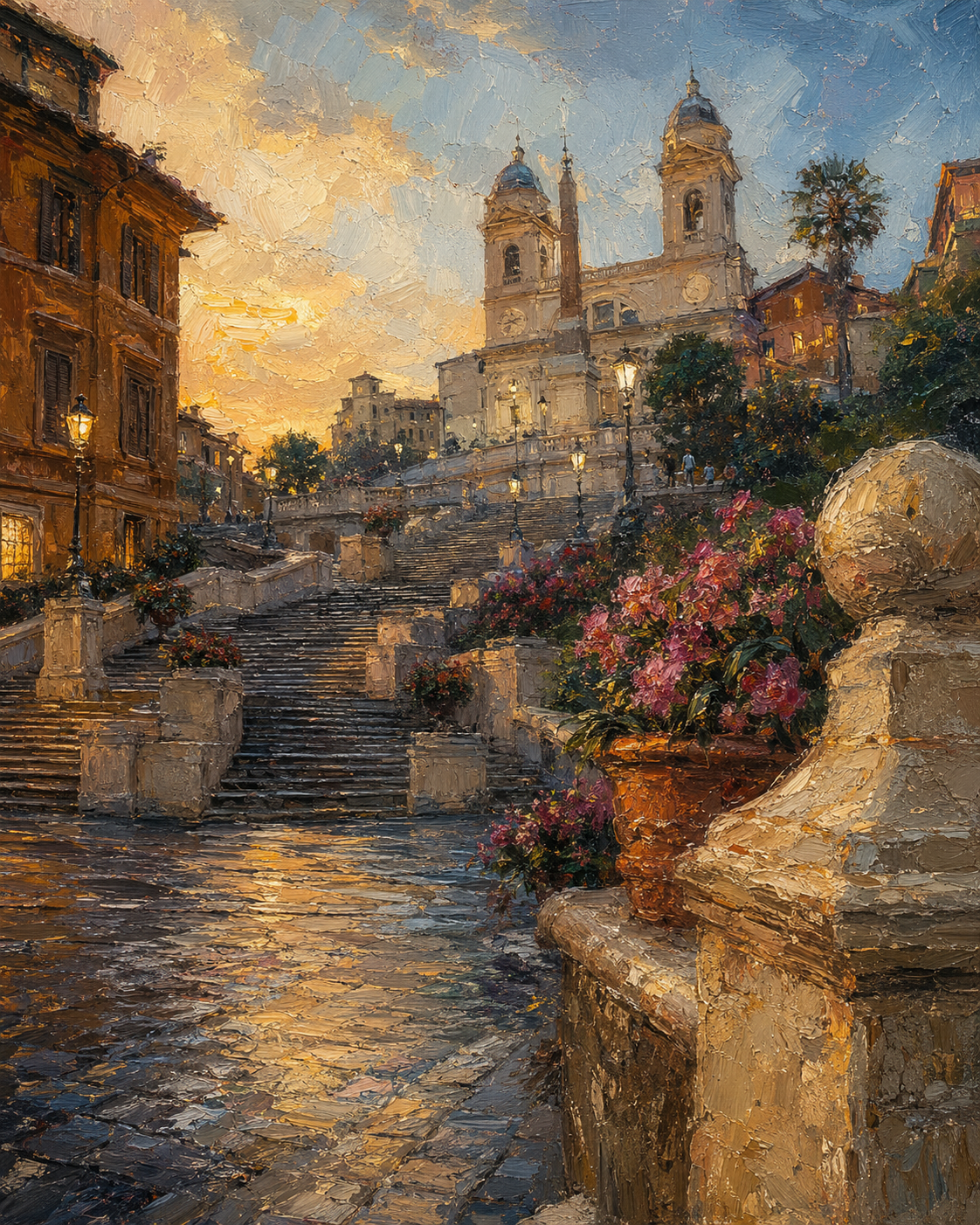
Whispers of Light on the Eternal Steps
Critique
1. Introduction This oil painting presents a captivating architectural landscape that captures a historic urban scene during the transition from late afternoon to evening. The work focuses on a grand staircase ascending toward a twin-towered church, a composition that immediately evokes the classical atmosphere of European heritage sites. Executed with a rich, textured technique, the painting transforms a literal city view into a vibrant study of light and form. The artist employs a modern impressionistic approach to bridge the gap between historical architecture and contemporary expressive painting. 2. Description The composition is dominated by a wide, wet-surfaced stone staircase that curves upwards from the lower left toward the center background. In the foreground, a prominent stone pedestal supports a large terracotta pot filled with lush pink and purple flowers, providing a sharp focus point. To the left, several multi-story buildings with warm ochre facades frame the view, their windows catching the golden glow of the setting sun. At the summit of the stairs, a monumental church with two distinct domes and a central obelisk stands against a sky filled with dramatic clouds. The ground reflects the sky's light, suggesting recent rain on the cobblestone pavement. 3. Analysis The artist uses a heavy impasto technique, applying paint in thick, rhythmic strokes that give the surface a palpable physical presence. The color palette is built on a sophisticated contrast between the warm golden-yellows of the sunlight and the cool lavender-blues of the shadows and sky. Light is used as a structural element, defining the edges of the steps and the architectural details through sharp highlights and deep, receding shadows. The perspective is handled through strong diagonal lines that draw the viewer’s eye through the space, creating a deep sense of environmental immersion. The varied textures of stone, water, and foliage are differentiated through changes in brushwork and paint thickness. 4. Interpretation and Evaluation This work successfully captures the fleeting beauty of a specific moment, where natural light and man-made structures interact in a harmonious display. The decision to depict the scene after rain allows for a brilliant play of reflections, which enhances the overall luminosity of the piece. The artist demonstrates exceptional skill in balancing the intricate details of the architecture with a bold, gestural application of color. By avoiding a purely realistic rendering, the painting emphasizes the emotional and sensory experience of the location over mere topographical accuracy. The composition feels both monumental and intimate, inviting the viewer to contemplate the timeless quality of the urban landscape. 5. Conclusion The painting stands as a powerful testament to the enduring appeal of classical architecture when seen through a modern artistic lens. The vibrant use of color and texture elevates a familiar view into a profound exploration of light and atmosphere. Upon closer inspection, the initial impression of a grand city view reveals a complex layer of artistic choices and technical mastery. This work effectively combines historical reverence with a dynamic, expressive execution that resonates with contemporary viewers. The final result is a balanced and evocative representation of urban beauty and historical grandeur.
Same Subcategory
 Steps of Silence on the Ancient Path
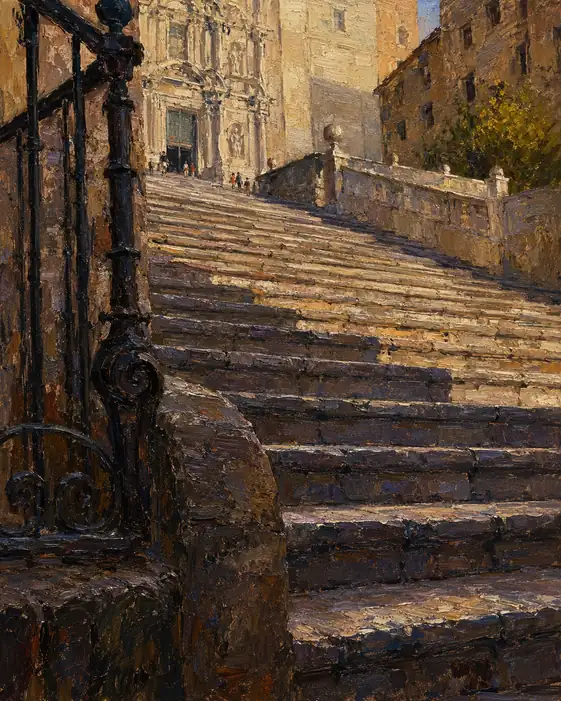 Stairway to the Golden Sanctuary
Similar Artworks
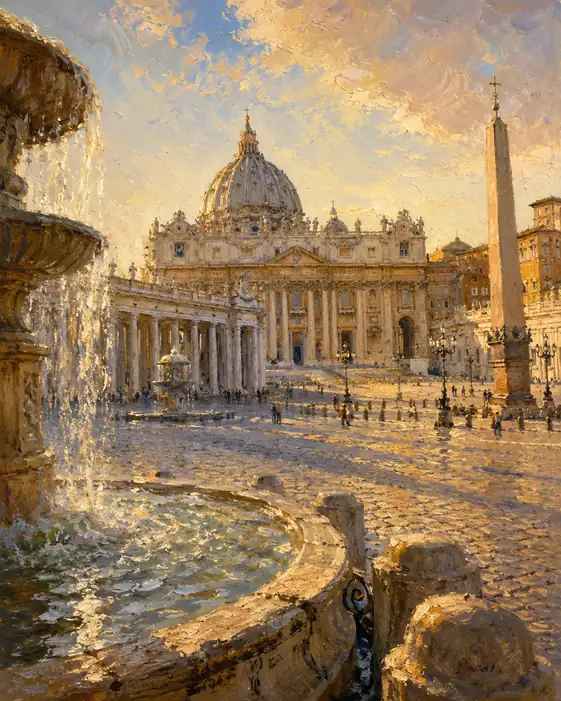 A Golden Vigil Over the Eternal Square
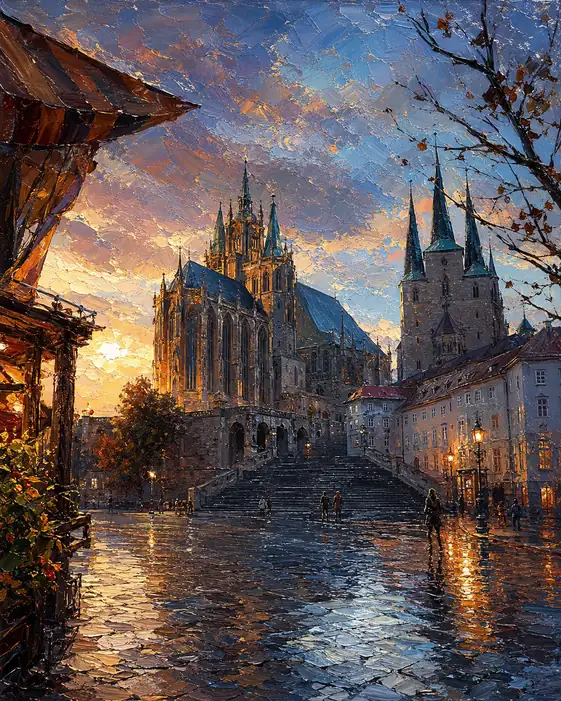 Reflections of a Golden Twilight
 Ascending into the Golden Splendor
 The Spire that Reaches for the Golden Heavens
 Symphony of the Burning Twilight
 Rain-Washed Reflections of Cefalu
 Resonance of the Golden Spire
 The Stone That Remembers the Sun
 The Golden Gate to Assisi
 The Eternal Spires in the Shimmering Rain