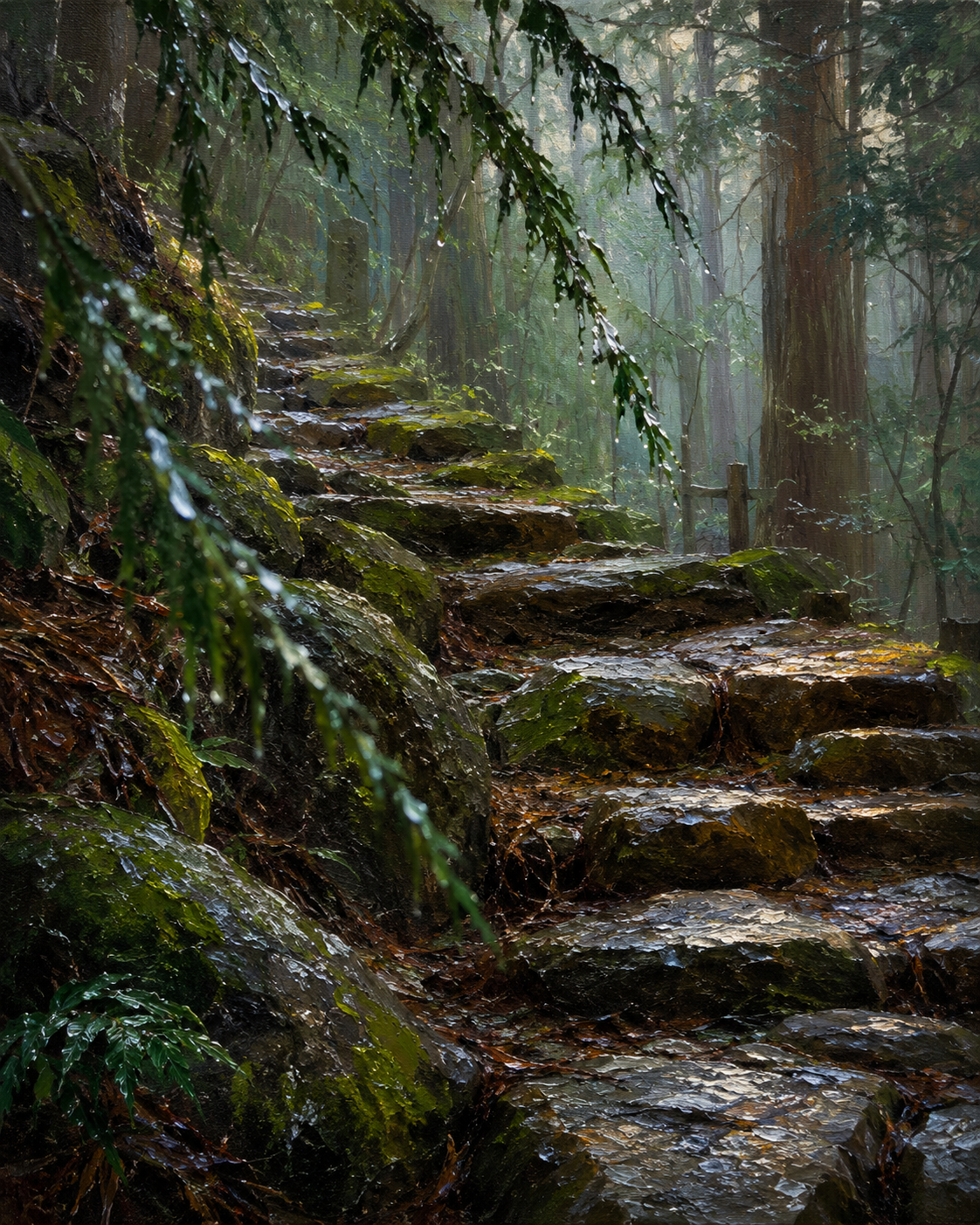
Steps of Silence on the Ancient Path
Critique
1. Introduction This evocative oil painting depicts a moss-covered stone staircase winding through a dense, ancient forest, likely a path leading to a hidden shrine. The work is executed with an extraordinary level of realism, where the play of light on wet surfaces and the intricate textures of nature take center stage. The composition uses a low-angle perspective that emphasizes the physical effort of the climb, drawing the viewer into a quiet, meditative journey through the wilderness. The atmosphere is thick with moisture and silence, capturing a moment of profound spiritual connection with the natural world. 2. Description The main subject is a series of uneven, moss-covered stone steps that lead the eye upward and into the depth of the forest. The stones are damp, reflecting a soft light that suggests recent rain or persistent mist. On either side, lush greenery including ferns and deep green moss clings to the rocks, while tall, straight cedar trunks rise into the hazy background. In the foreground, a few pine needles with shimmering water droplets hang into the frame, partially blurring the view and adding to the sense of depth. A subtle, filtered light breaks through the canopy in the distance, illuminating the misty air and creating a soft glow behind the trees. 3. Analysis The artist demonstrates a masterly control over texture and value, contrasting the rough, hard surface of the stone with the soft, velvet-like quality of the moss. The color palette is dominated by deep forest greens, earthy browns, and muted greys, which are unified by the cool, diffused light that permeates the scene. Atmospheric perspective is used effectively; the foreground is sharply detailed, while the background trees become increasingly ghostly and pale as they recede into the mist. The composition is dynamic, using the diagonal line of the staircase to create a sense of movement and progression within a static forest environment. 4. Interpretation and Evaluation The painting successfully captures the sacred and timeless quality of the Japanese forest path, where every stone and tree seems to possess its own spirit. By focusing on the dampness and the moss, the artist emphasizes the passage of time and the slow, inevitable reclamation of man-made paths by nature. The lighting is particularly successful, evoking the feeling of "komorebi"—the dappled light that filters through leaves—even in a more overcast or misty setting. Technically, the work is a tour de force of oil painting, showing an ability to render complex organic forms with both scientific accuracy and poetic sensitivity. 5. Conclusion Initially, the viewer is struck by the hyper-realistic detail of the wet stones, but the focus soon shifts to the overarching sense of peace and mystery that the forest provides. The painting does not just represent a landscape; it invites an emotional response, encouraging a sense of reverence for the quiet, enduring beauty of the natural world. It is a powerful exploration of the boundary between the physical and the spiritual, rendered with exceptional skill and deep artistic intent. Ultimately, the work leaves a lasting impression of the profound silence and ancient power found within the heart of the woods.
Same Subcategory
 The Radiant Path of Silent Prayer
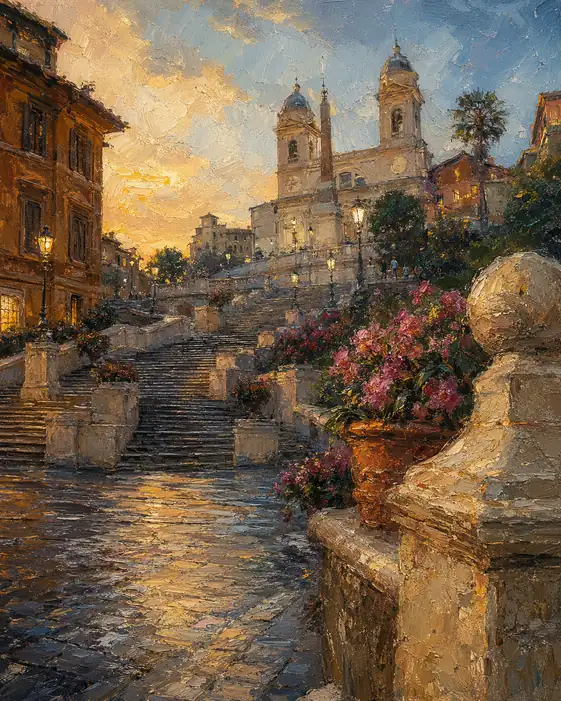 Whispers of Light on the Eternal Steps
Similar Artworks
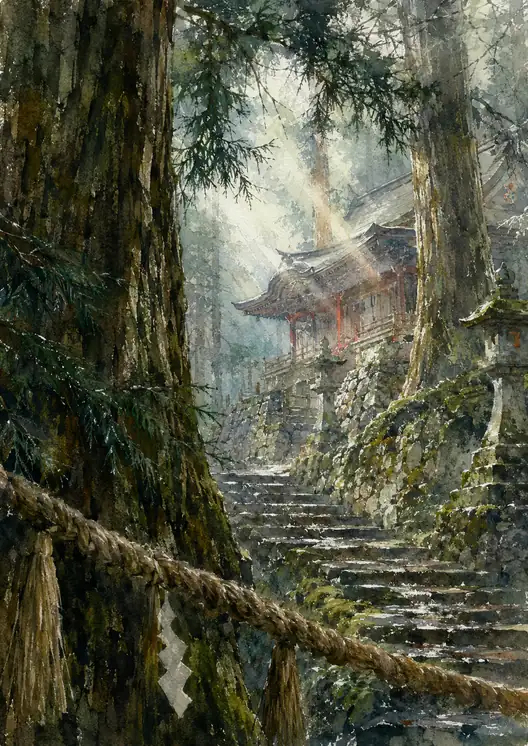 Sanctuary of the Piercing Light
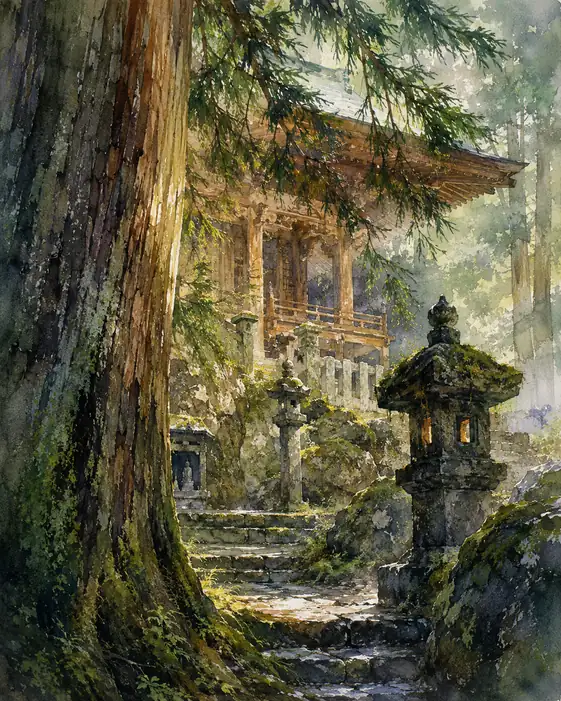 Sanctuary of the Ancient Cedars
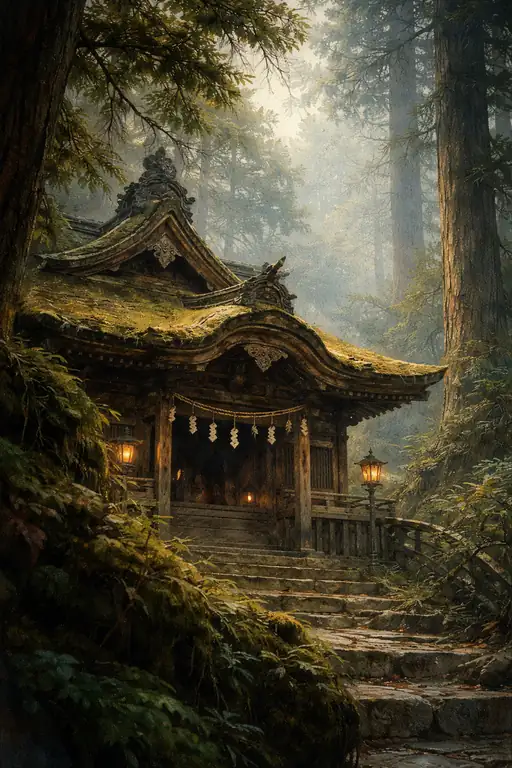 Sanctuary in the Shadows
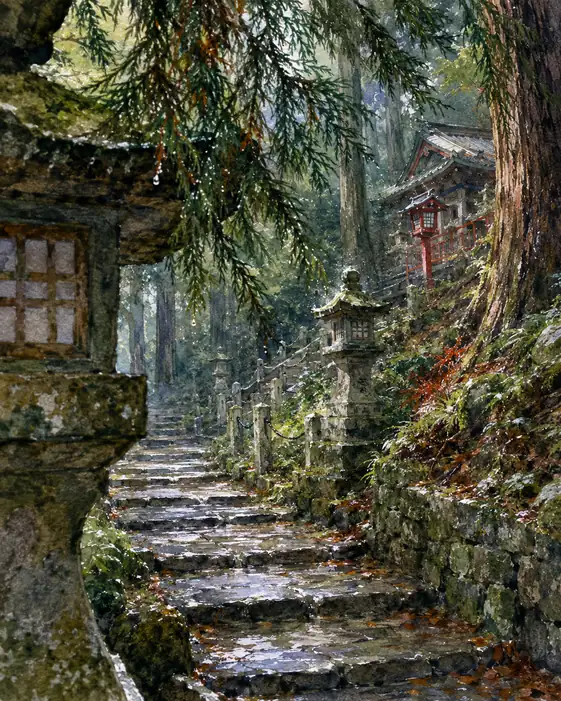 Purifying Whispers of the Sacred Rain
 Mystic Gateway in the Honeycombed Cliffs
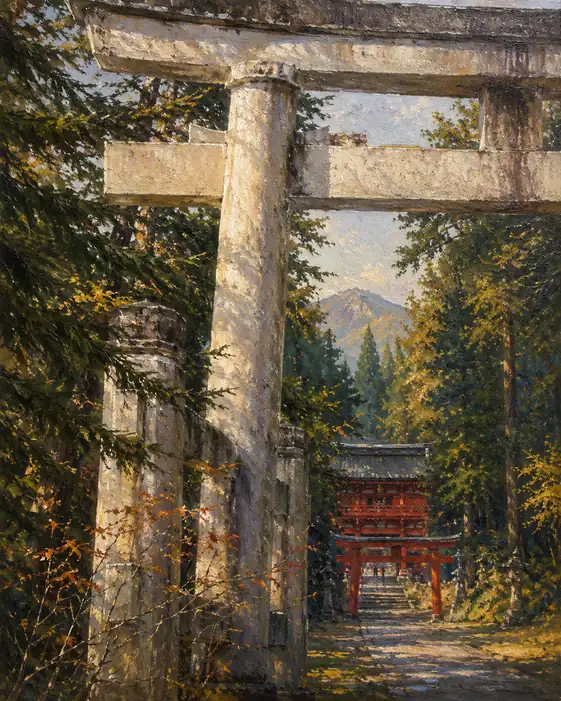 Passage Through the Sacred Shadows
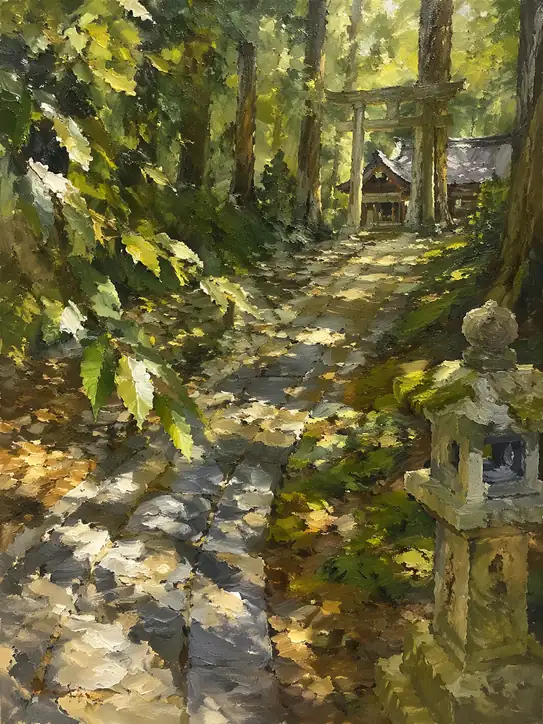 Sacred Light Through the Canopy
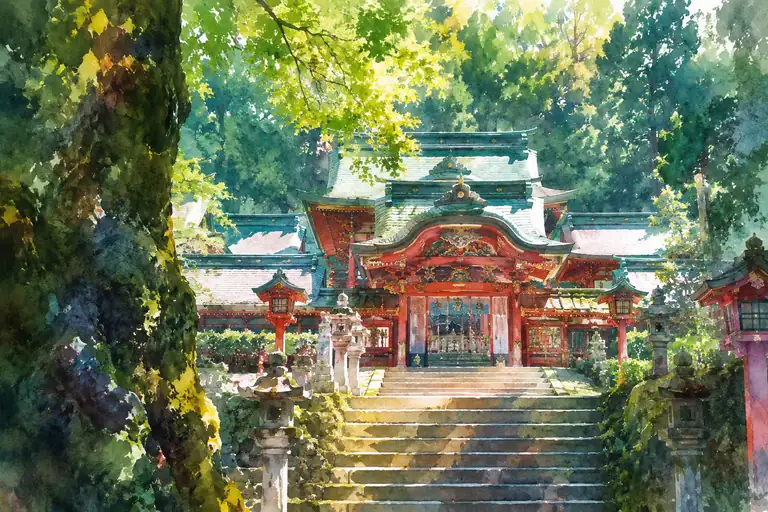 Sunlight on the Sacred Path
 Echoes of the Sacred Grove
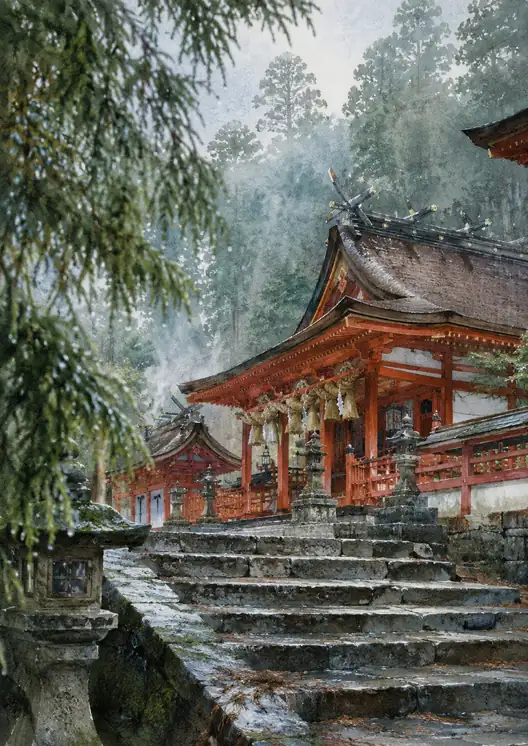 The Vermilion Silence of the Mist