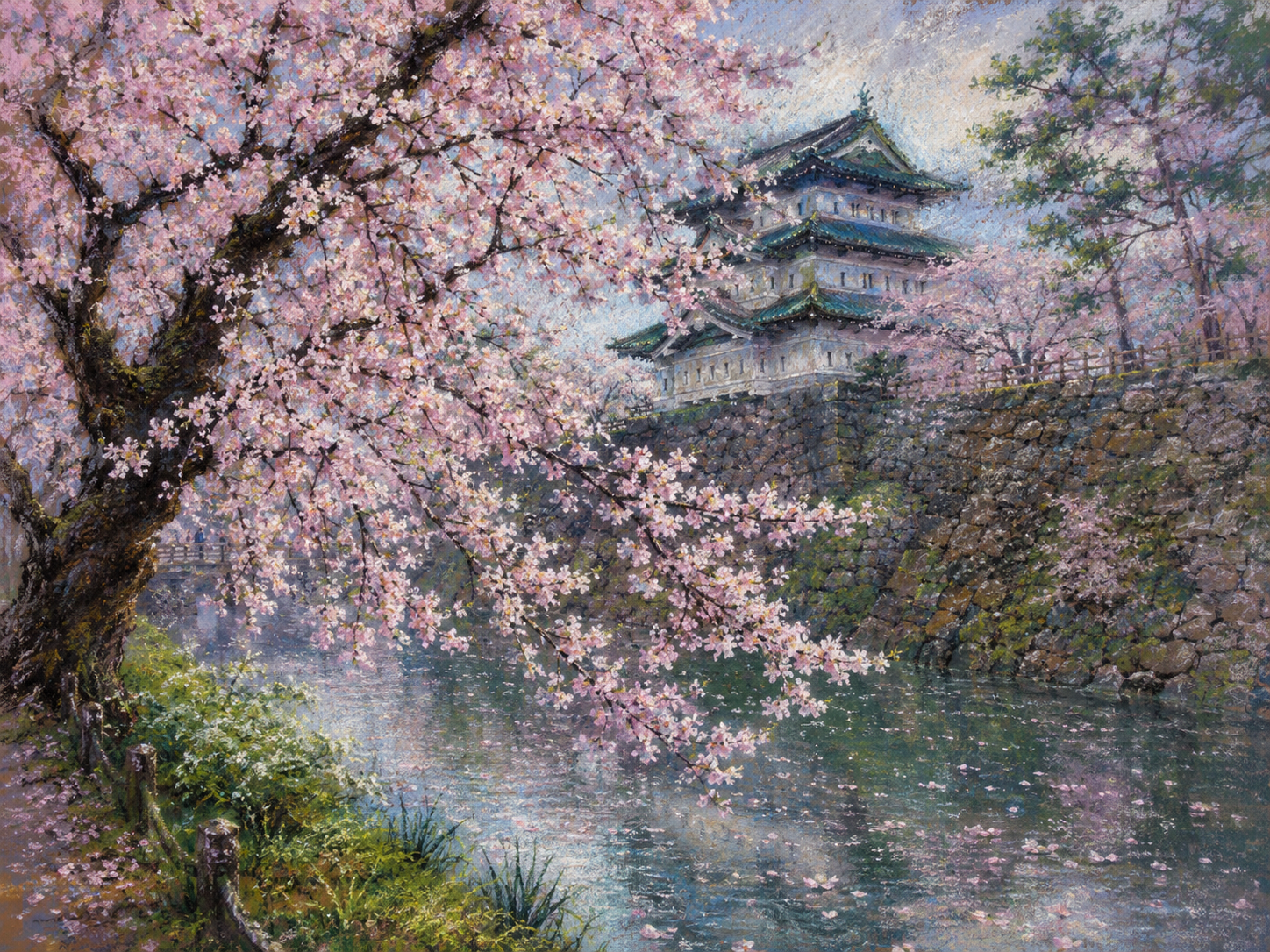
Breath of the Petals: A Timeless Dream
Critique
1. Introduction This oil painting depicts a traditional Japanese castle surrounded by cherry blossoms in full bloom. The composition captures a quintessential spring scene in Japan, emphasizing the harmony between architectural heritage and the ephemeral beauty of nature. The work invites the viewer into a serene environment where the passage of time is marked by falling petals. 2. Description In the foreground, a large cherry blossom tree extends its blossoming branches toward the center of the frame. Below the tree, a calm moat reflects the soft light of the sky, with delicate pink petals scattered across its surface. A majestic three-story castle sits atop a rugged stone foundation in the middle ground, framed by more cherry trees and lush greenery. The sky above is filled with soft, hazy light that illuminates the entire landscape. 3. Analysis The artist employs a textured, impressionistic technique that gives the painting a tactile quality. Broad, expressive brushstrokes are used to render the cherry blossoms, creating a sense of volume and movement. The color palette is dominated by soft pinks, whites, and pale greens, which are grounded by the dark, earthy tones of the tree trunk and the stone walls. The contrast between the solid castle and the airy blossoms creates a balanced visual weight. 4. Interpretation and Evaluation This artwork effectively communicates the concept of seasonal transition and the transient nature of beauty. The skillful use of light conveys the atmosphere of a bright, breezy spring day, while the detailed rendering of the castle demonstrates a deep respect for historical architecture. The composition is well-conceived, using the foreground tree as a natural frame that draws the eye toward the central subject. 5. Conclusion The painting successfully captures a moment of tranquil elegance within a historical setting. While the initial impression is one of overwhelming floral beauty, closer inspection reveals a sturdy structural foundation and a sophisticated use of texture. It serves as a poignant tribute to the enduring charm of the Japanese landscape and its seasonal cycles.
Same Subcategory
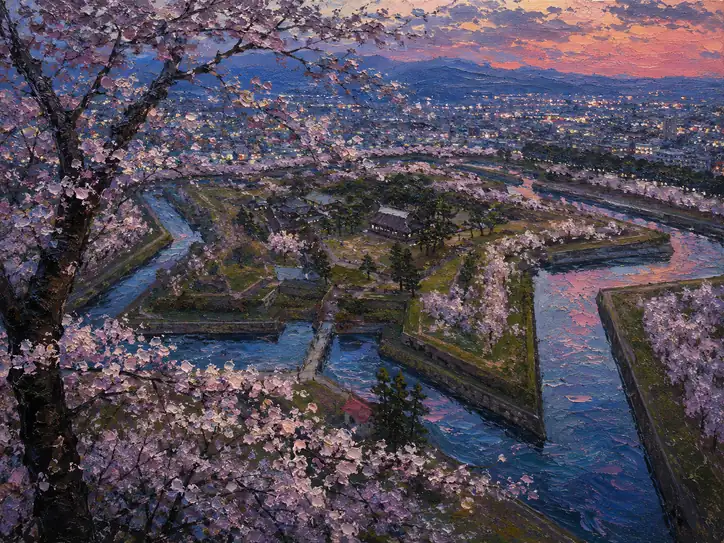 The Earthly Star: A Twilight Dream of Sakura
Similar Artworks
 Festive Petals Dancing Above the Moat
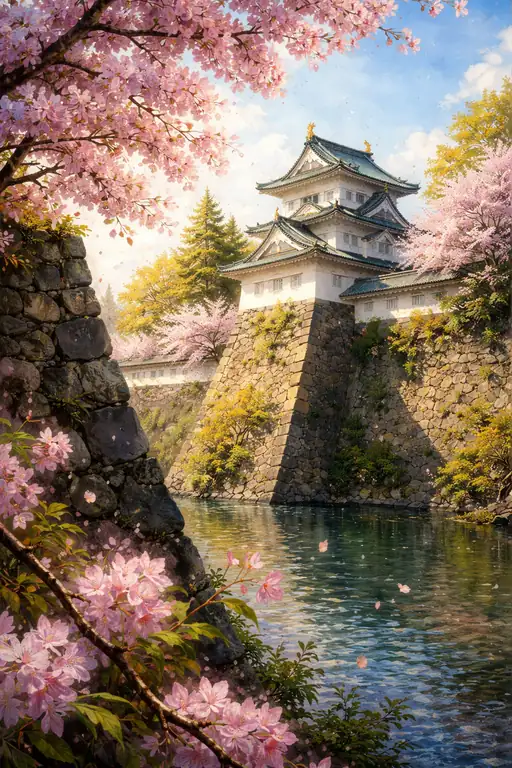 A Fragile Moment of Timeless Pride
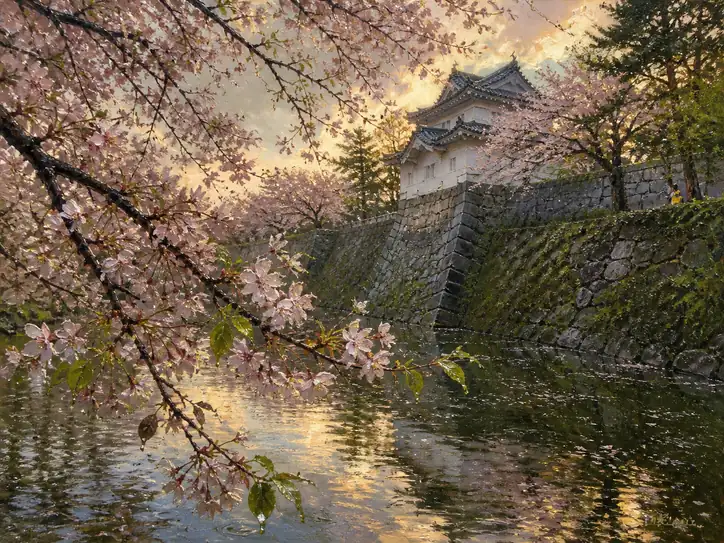 Spring Sunset at the Castle Moat
 Vibrant Echoes of the Sakura Citadel
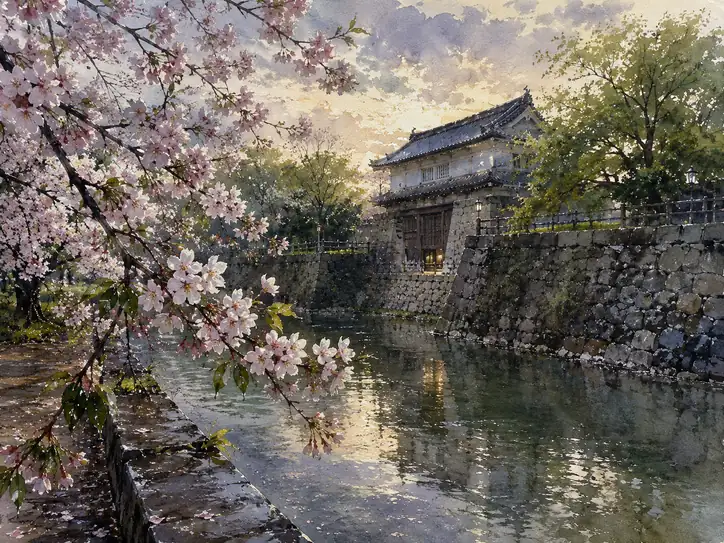 Eternal Spring at the Castle Moat
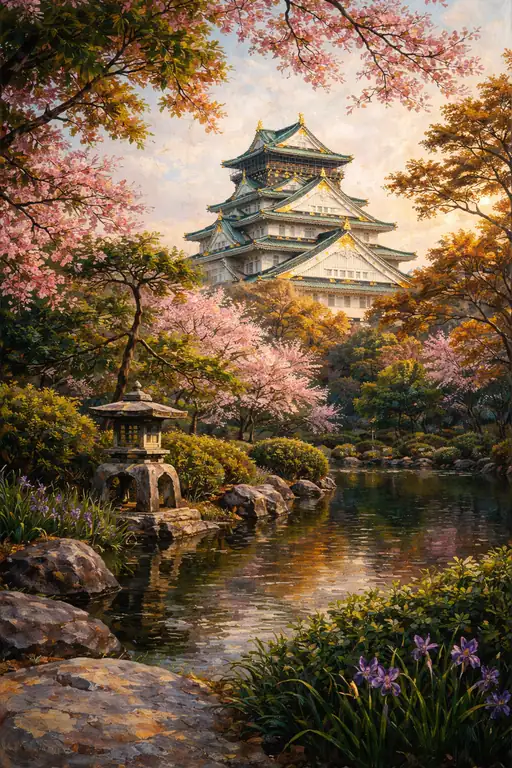 Spring's Golden Vigil Over the Castle
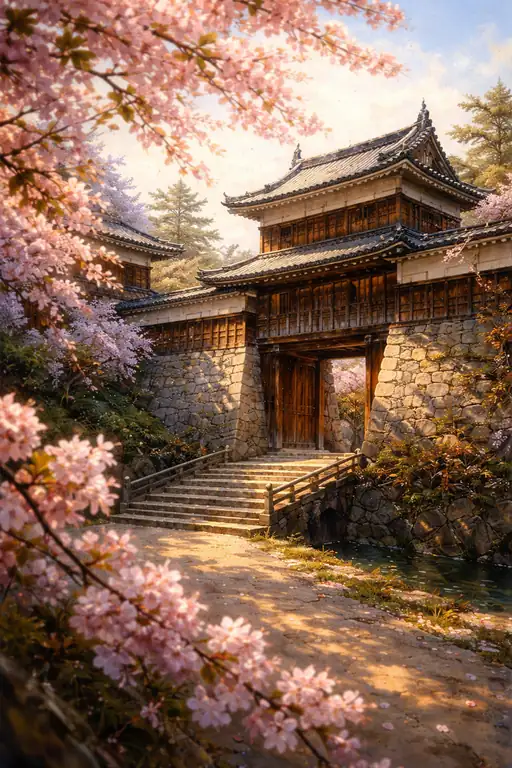 Spring's Gentle Embrace
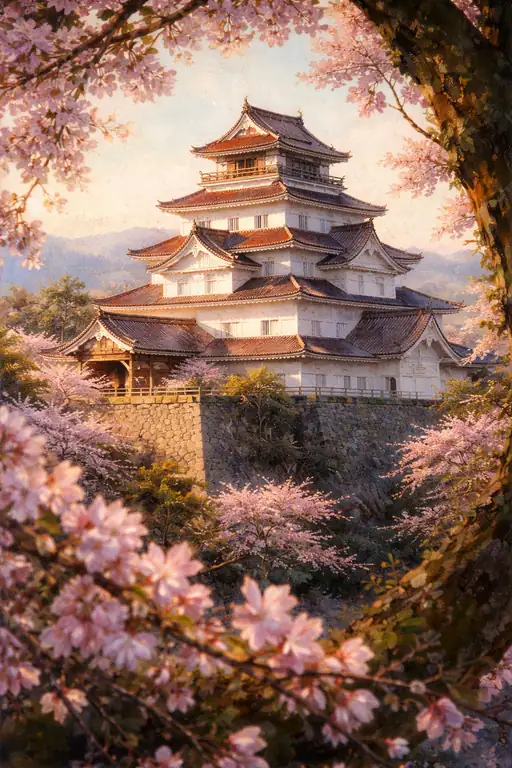 Spring's Embrace of the Ancient Citadel
 Echoes of a Fleeting Spring
 Eternal Spring Beyond the White Walls