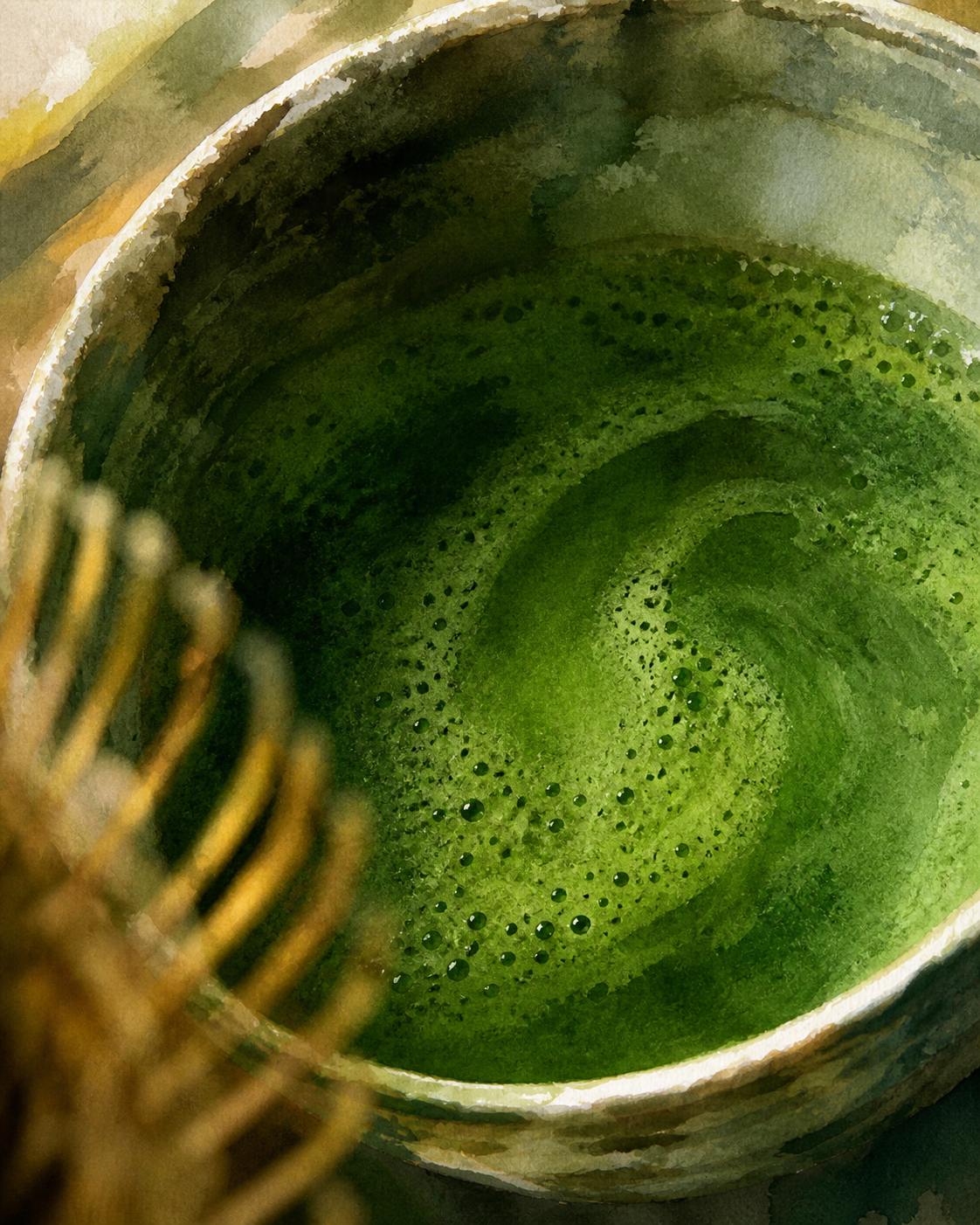
Where the Heart Rests in Green
Critique
1. Introduction This watercolor painting presents a focused, top-down view of a traditional ceramic bowl containing freshly prepared matcha tea. The work highlights the vibrant, organic qualities of the tea, juxtaposed with the rugged, earthy textures of the vessel and a bamboo whisk. Through a masterful application of watercolor techniques, the artist captures a moment of quiet preparation, emphasizing the sensory richness found in a simple bowl of tea. 2. Description The composition is centered on a deep green matcha liquid, characterized by a swirling pattern of pale foam and numerous tiny air bubbles across its surface. The tea is held within a rustic ceramic bowl that features an irregular rim and a mottled interior glaze of olive green and muted browns. In the lower-left foreground, a bamboo tea whisk is shown in soft focus, its fine tines suggesting a sense of depth and immediate history. The lighting is soft and diffused, illuminating the vibrant green of the tea while casting gentle shadows inside the bowl. 3. Analysis The artist utilizes a sophisticated range of watercolor methods, including wet-on-wet washes for the liquid tea and dry brush strokes for the textured ceramic edges. The fine bubbles are rendered with meticulous detail, likely using stippling or a masking technique to preserve the brightness of the paper. A strong tonal contrast exists between the luminous green of the matcha and the darker, more neutral tones of the bowl’s interior. The shallow depth of field effectively isolates the tea as the primary subject, creating a sense of intimacy. 4. Interpretation and Evaluation The work can be interpreted as an homage to the ritual of tea preparation and the beauty of natural materials. The technical execution is particularly successful in its ability to convey the varying densities of the tea foam and the tactile nature of the ceramic surface. There is a palpable sense of movement in the swirling foam, which contrasts with the stillness of the bowl. The composition is expertly balanced, with the out-of-focus whisk providing a natural entry point for the viewer’s eye into the center of the frame. 5. Conclusion A viewer’s initial attraction to the intense green color evolves into a deeper contemplation of the painting’s varied textures and atmospheric quality. The work succeeds in elevating a common cultural ritual into a compelling visual experience through its careful attention to detail and light. Ultimately, the painting serves as a refined study of color and form, capturing the essence of a tranquil moment with both precision and artistic flair.
Same Subcategory
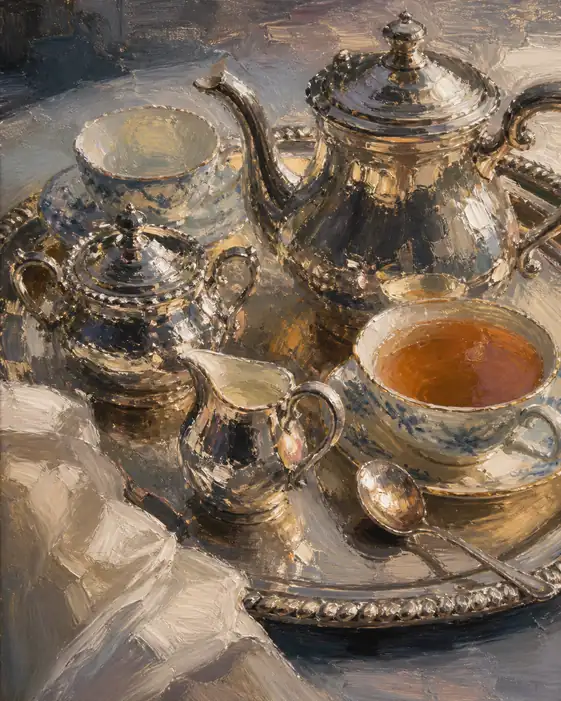 An Afternoon Written in Silver
Similar Artworks
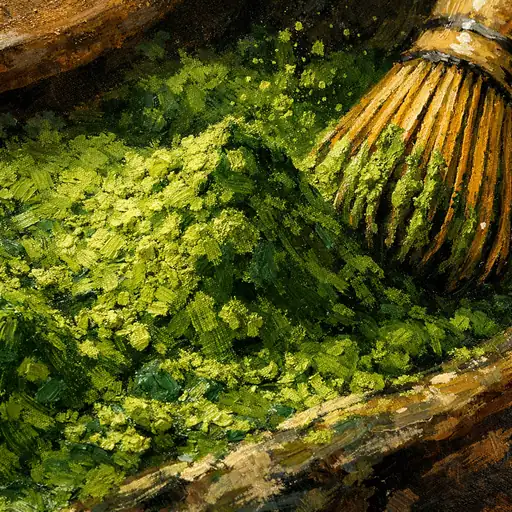 Silent Verdure
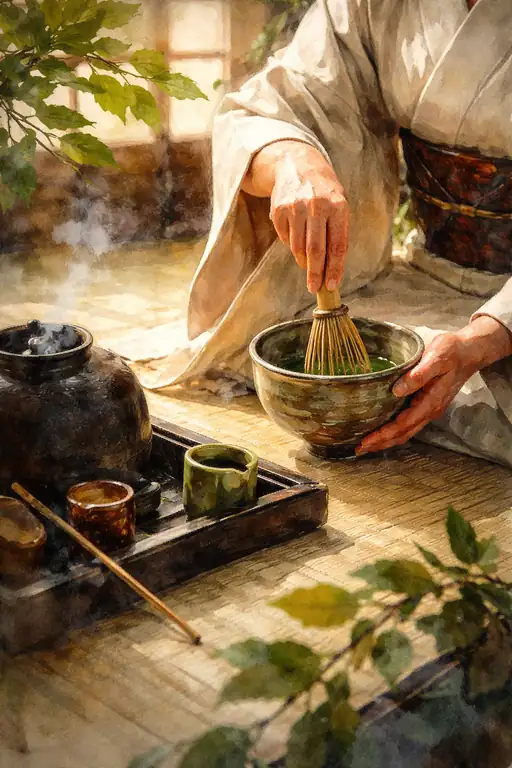 The Meditative Flow of Matcha
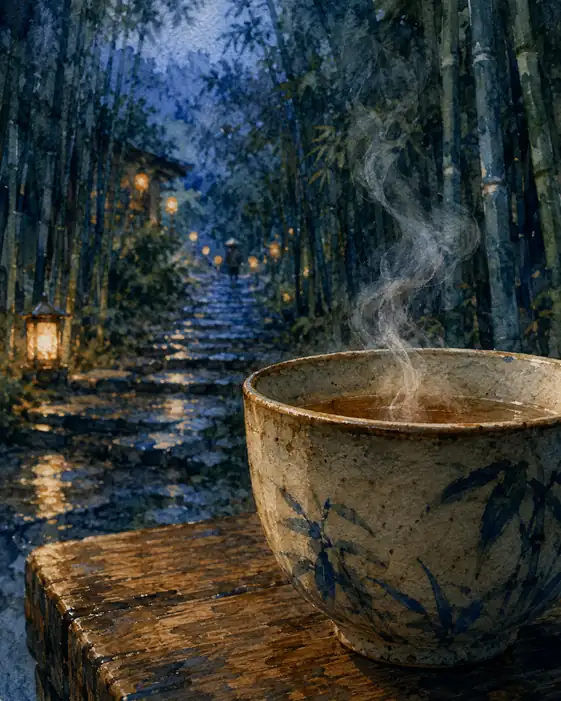 Steaming Solace Before the Night Journey
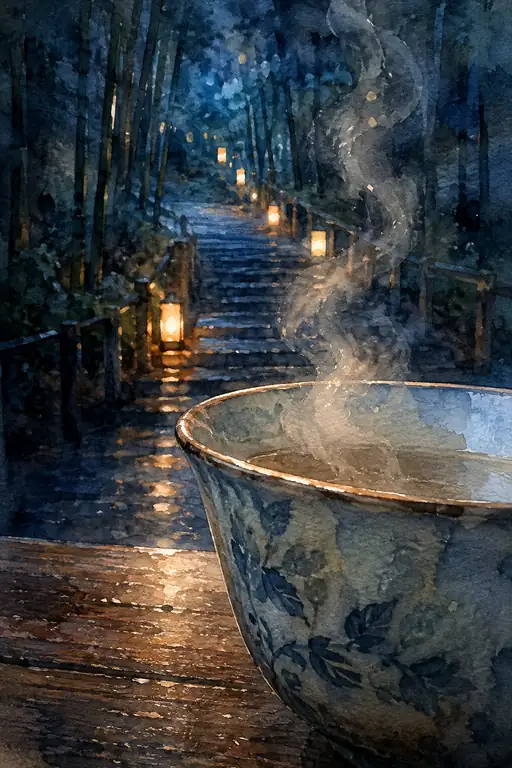 A Warm Bowl Before the Ascent
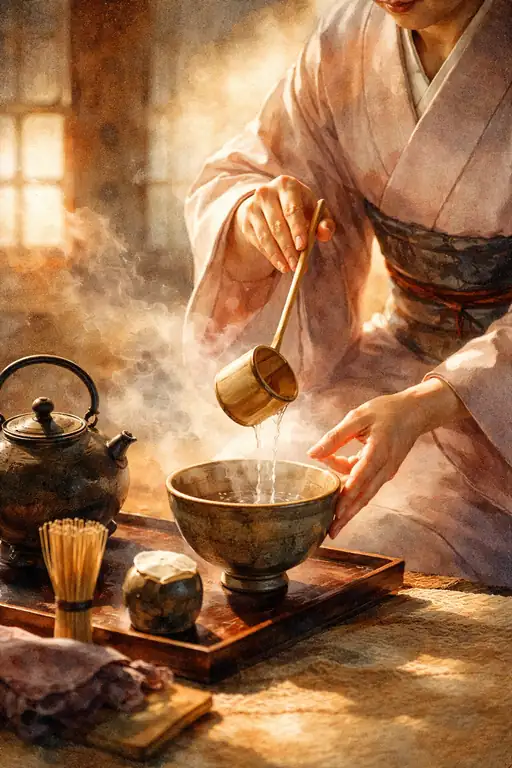 Fleeting Elegance: A Sip of Golden Serenity
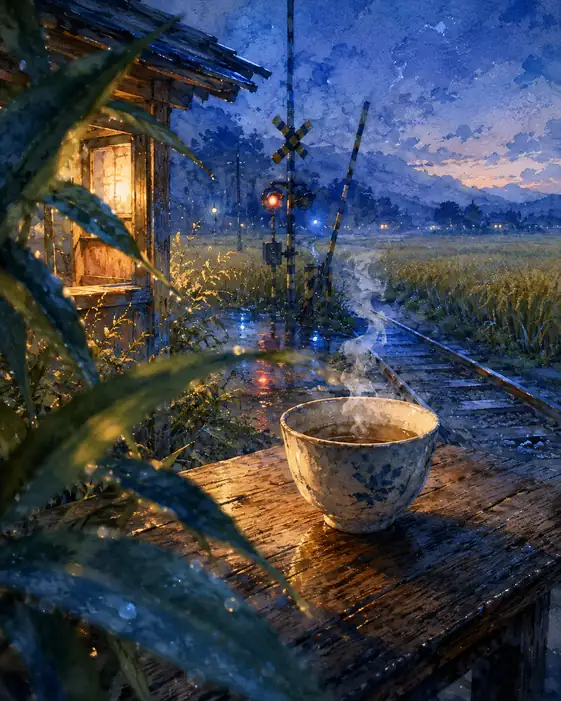 Steam Rising by the Quiet Country Station
 A Flow of Quiet Warmth
 Pouring the Morning Warmth
 An Afternoon Tea Where Flowers Unfold
 Whispers of Wabi-Sabi