
Resonance of Ancient Wood
Critique
1. Introduction This powerful oil painting presents a focused study of a violin, rendered with an expressive impasto technique that emphasizes the instrument's physical presence and historical character. The composition is tightly cropped, centering on the body and scroll of the violin as it rests against a background of weathered textures. Set in a palette of warm, autumnal tones, the work captures a sense of musical heritage and the enduring beauty of handcrafted wooden objects. 2. Description The violin is depicted from a slightly elevated, diagonal perspective, with its elegant body dominating the lower half of the frame. The rich, amber varnish of the wood is represented by thick strokes of orange, sienna, and deep brown, while the black fingerboard and strings provide a sharp linear contrast. In the upper right, the scrolled headstock and tuning pegs are clearly visible, their forms built up with heavy paint. The background consists of rough, vertical elements that suggest aged books or wooden panels. 3. Analysis The artist employs a vigorous application of paint, using a palette knife or large brushes to create a surface full of energy and movement. This heavy texture catches the light, creating dramatic highlights on the violin's curves and the bridge, which enhances the sense of volume and depth. The composition relies on strong diagonal lines to guide the viewer's eye across the instrument's anatomy. The contrast between the saturated warm hues and the dark, shadowy recesses creates a brooding, chiaroscuro-like effect. 4. Interpretation and Evaluation The work can be seen as an homage to the soul of the instrument, where the ruggedness of the paint application mirrors the intensity of the music it might produce. The thick, tactile surface suggests a connection between the visual and auditory arts, evoking the vibrations of sound through the visible traces of the artist's hand. Technically, the mastery of the impasto technique is evident in how the artist manages to maintain the structural integrity of the violin while using such expressive and non-literal brushwork. 5. Conclusion Through its bold execution and evocative lighting, the painting successfully transforms a traditional musical subject into a compelling modern masterpiece. The balance between the instrument's refined form and the raw energy of the paint creates a fascinating visual tension. Upon closer inspection, the initial impression of a simple still life dissolves into a profound meditation on craft, memory, and the expressive power of the oil medium. The work stands as a testament to the enduring allure of classical instruments.
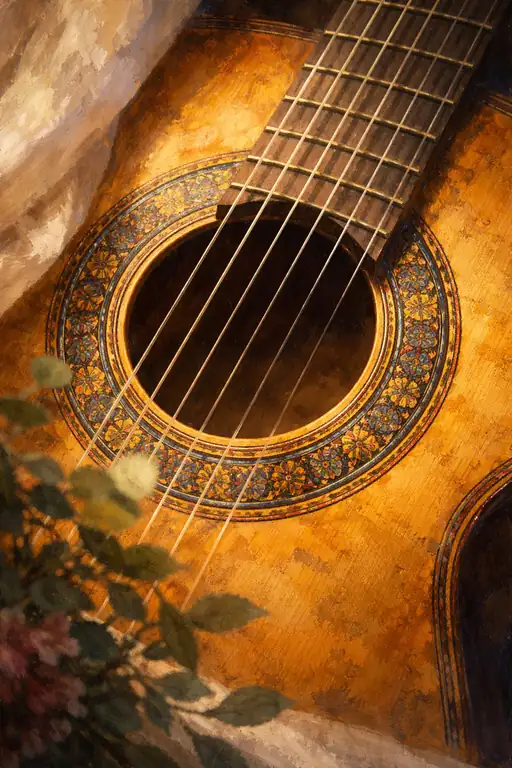 Echoes of a Golden Melody
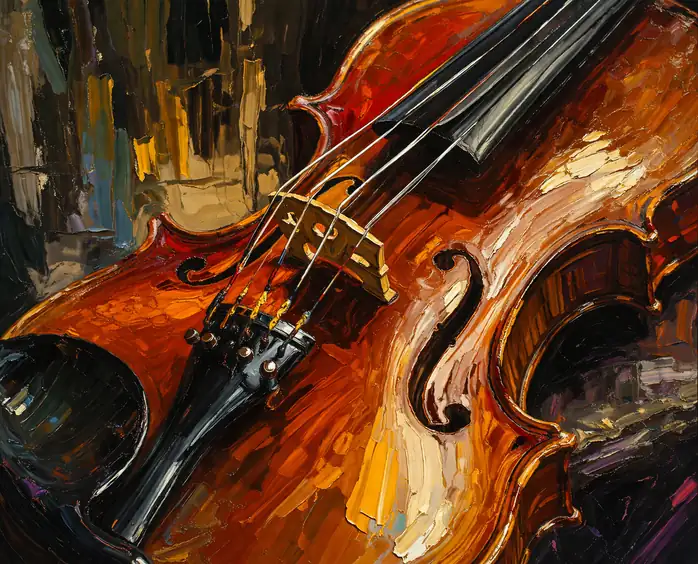 Resonance in Amber and Wood
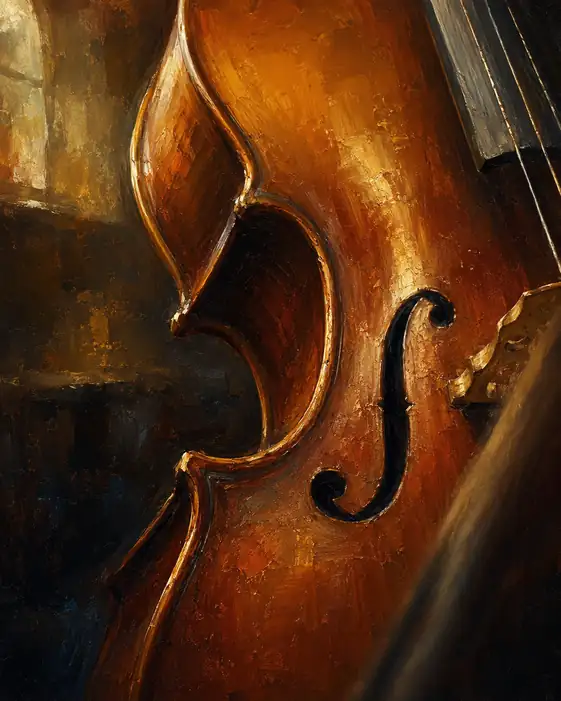 Resonant Silence
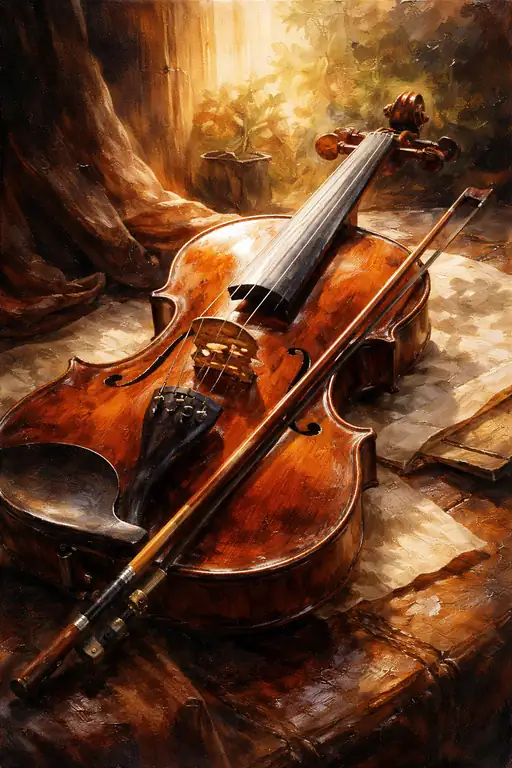 The Silent Potential of Strings
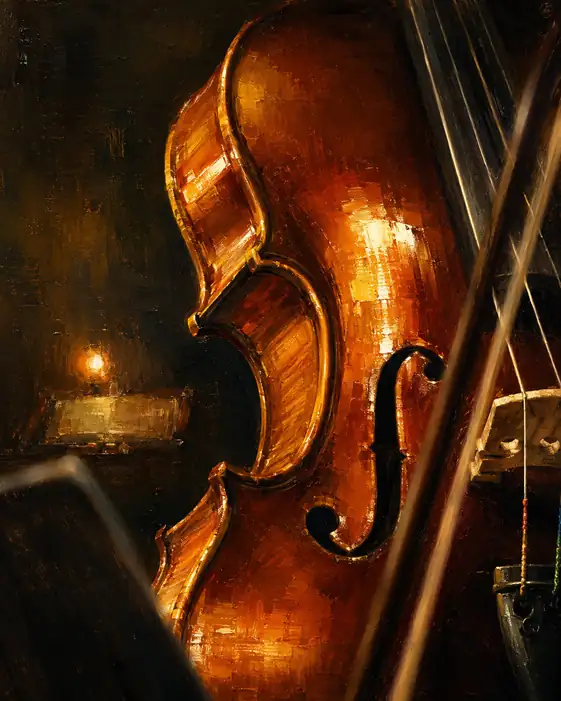 The Resonance of Silence
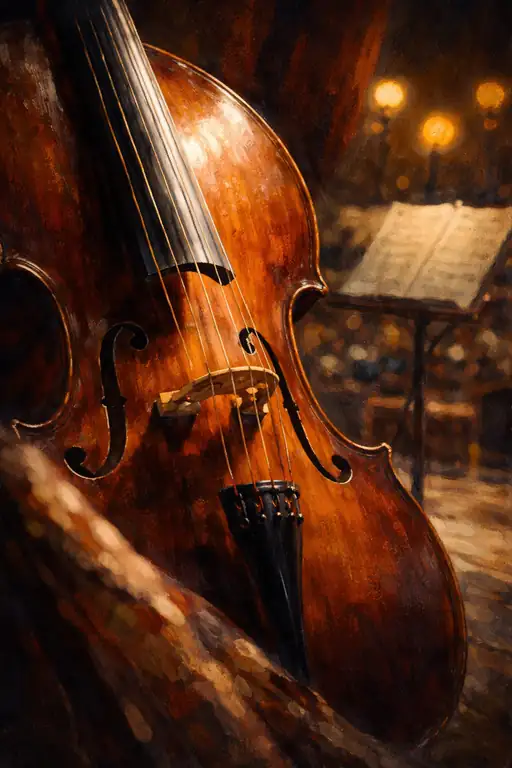 The Cello's Golden Silence
 Melody of the Fragmented Soul
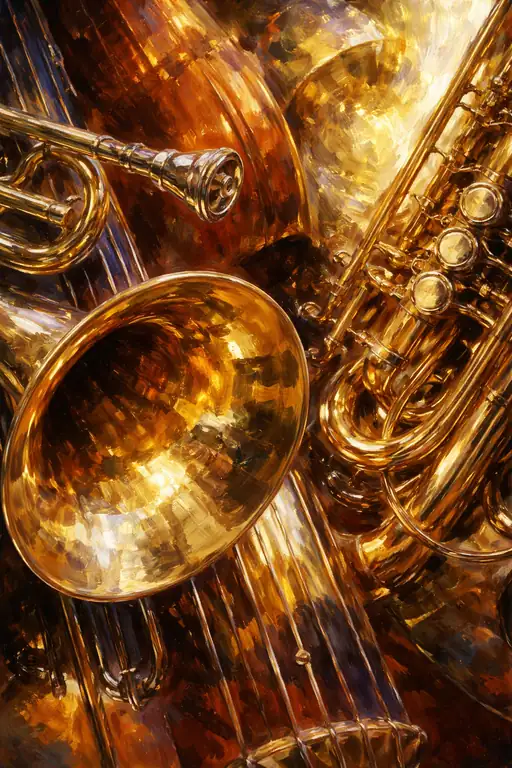 Brilliance of the Gilded Brass
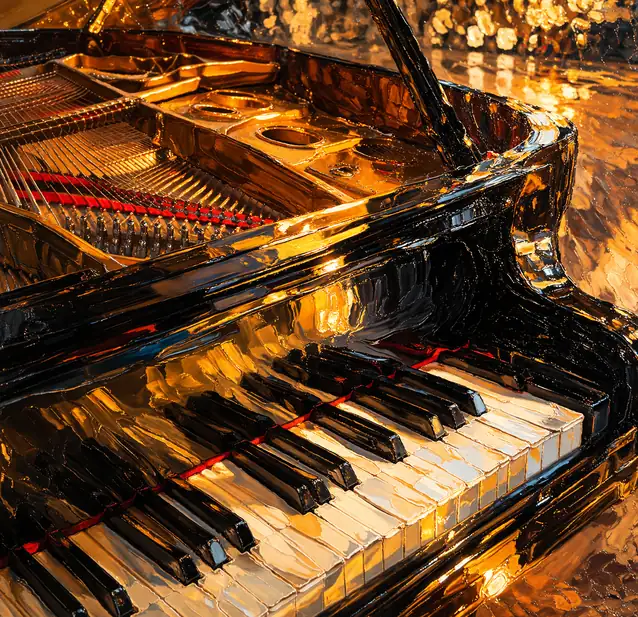 Symphony in Golden Light
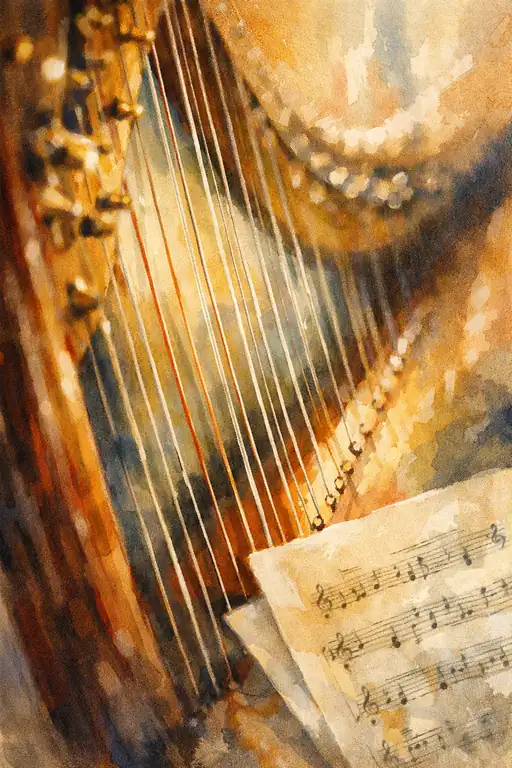 Golden Strings of Harmony