
Chasing the Boundless Blue
Critique
Introduction This watercolor painting depicts a flock of geese soaring through a vast, cloud-drenched sky. The work captures the essence of migratory movement and the expansive freedom of flight. The composition is notable for its dynamic framing, utilizing a large bird in the immediate foreground and the feathered edge of another wing to create a sense of immersion within the avian group. Description The primary focus is a large white goose positioned on the left, its neck extended and wings spread wide. Its feathers are rendered with subtle blue and grey shadows that suggest form and light. In the distance, a V-shaped formation of smaller geese flies towards the horizon, their silhouettes varying in tone from light grey to dark charcoal. The sky is a blend of pale cerulean and creamy white, with erratic splatters of paint suggesting atmospheric moisture or light. Analysis The artist utilizes the inherent transparency of watercolor to create a luminous sky and soft, ethereal clouds. The contrast between the detailed foreground bird and the simplified, gestural distant flock creates a strong sense of aerial perspective. The color palette is restricted to naturalistic tones of blue, ochre, sienna, and white, which harmonize to evoke a serene yet powerful natural environment. The use of negative space in the clouds adds to the feeling of immense scale. Interpretation and Evaluation The painting successfully conveys the collective energy and grace of birds in motion. The loose, expressive brushwork reflects the fluidity of flight, while the carefully placed splatters add a modern, spontaneous quality to the traditional subject matter. The technical handling of the watercolor medium is impressive, particularly in the way the colors bleed into one another to suggest a misty atmosphere. The work is both a biological study of flight and a poetic interpretation of the open sky. Conclusion In summary, this is a compelling portrayal of nature that balances detailed observation with artistic freedom. It captures a moment of synchronized movement that feels both grand and intimate. The initial perception of a simple landscape evolves into an appreciation for the artist's ability to manipulate light and space, ultimately leaving the viewer with a profound sense of the majesty inherent in the natural world's migrations.
 Wings of Eternal Grace
 Nectar's Glow
 Soaring High on the Winds of Destiny
 Anthem of the Skies: A Thousand Wings
 Echoes of the Summer Rain
 Flight of the Golden Light
 Wings of the Fluid Dawn
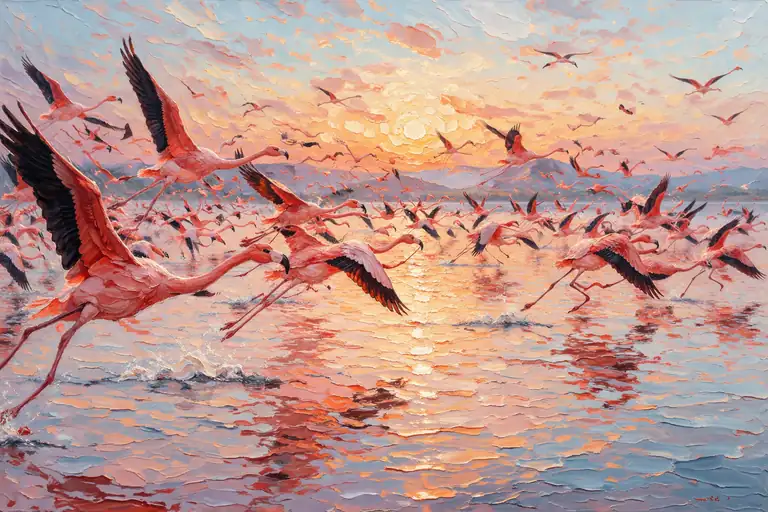 The Sky's Awakening
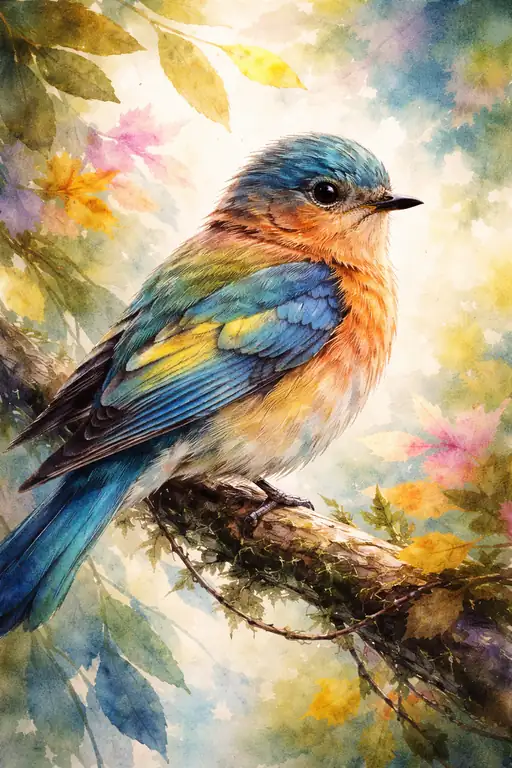 Autumn's Serenade
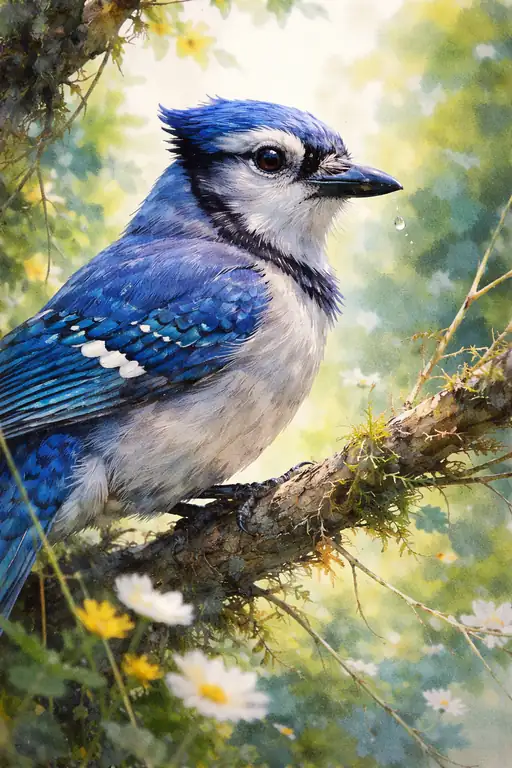 A Tiny Guardian of the Daisy Garden
 Ascent into Ethereal Light