
A Promise of Spring Bloom
Critique
1. Introduction This watercolor painting presents a breathtaking vista of a blossoming tulip field under a soft spring light. The composition captures the vibrant essence of nature's awakening, utilizing a delicate yet expressive technique that emphasizes the transience of the season. Through a focused perspective, the work invites the viewer to experience the floral landscape from a ground-level intimacy, bridging the gap between the observer and the botanical subjects. 2. Description The foreground is dominated by several large, detailed tulips in shades of crimson, pink, and pale yellow, their petals rendered with soft gradients and subtle highlights. Beyond these immediate blossoms, a vast expanse of countless tulips stretches toward the horizon, creating a dense tapestry of varied colors. In the upper left corner, a cherry blossom tree with delicate pink petals overreaches the field, while white speckles like falling petals or light rain are scattered across the entire scene. 3. Analysis The artist employs a warm and highly saturated color palette, where the vivid reds and pinks are harmoniously balanced by the lush greens of the foliage. The lighting appears to originate from the upper center of the frame, casting a gentle glow that softens the distant landscape and creates a sense of depth. The watercolor technique is evident in the fluid transitions and the slightly blurred background, which focuses the viewer's attention on the crisp details of the foreground tulips and their sturdy stems. 4. Interpretation and Evaluation This work effectively communicates a sense of renewal and the exuberant energy of spring through its masterful use of color and light. The decision to include the cherry blossoms alongside the tulips adds a layer of cultural and temporal depth, suggesting a peak moment of seasonal beauty. The technical execution is commendable, particularly in the way the transparency of the watercolor medium captures the delicate texture of the petals and the atmospheric moisture of a spring day. 5. Conclusion The painting succeeds in transforming a familiar landscape into a poetic vision of natural abundance. Initial impressions of simple floral beauty evolve into an appreciation for the complex interplay of light and texture across the vast field. Ultimately, the work serves as a powerful testament to the enduring appeal of the botanical world, leaving the viewer with a lingering sense of tranquility and wonder at the diversity of the spring season.
 Golden Symphony of Spring
 Golden Cosmos Path
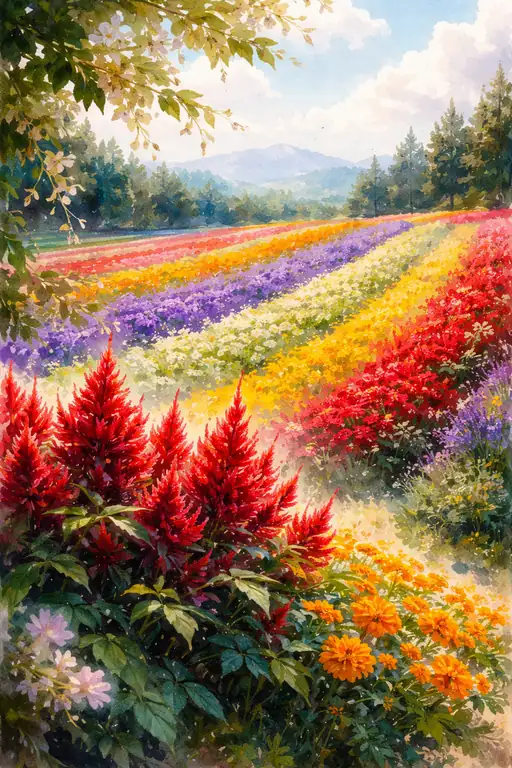 Vibrant Path to the Silent Peaks
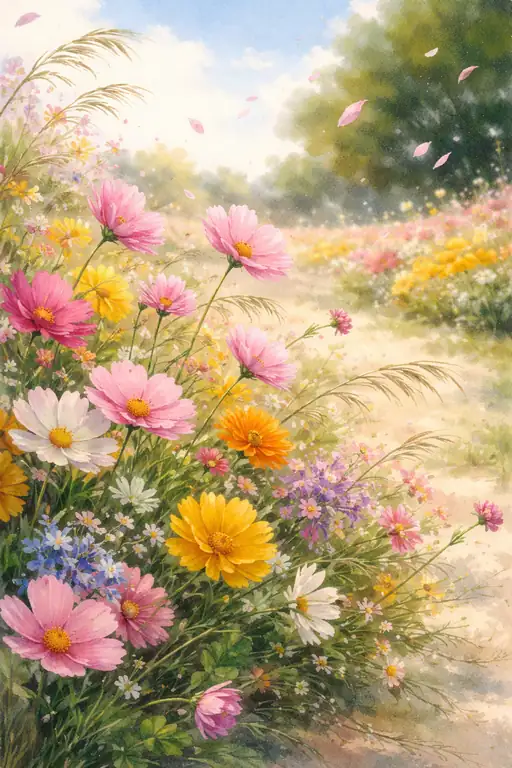 Dancing Petals in the Summer Breeze
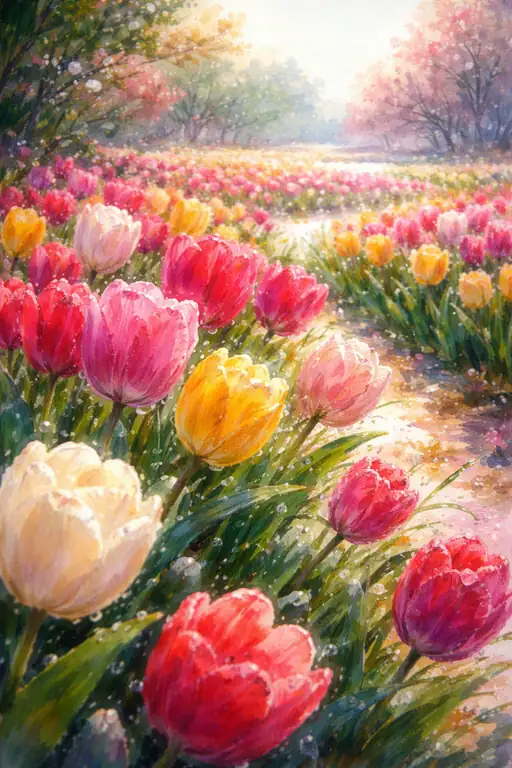 Morning Light Through Blooming Tulips
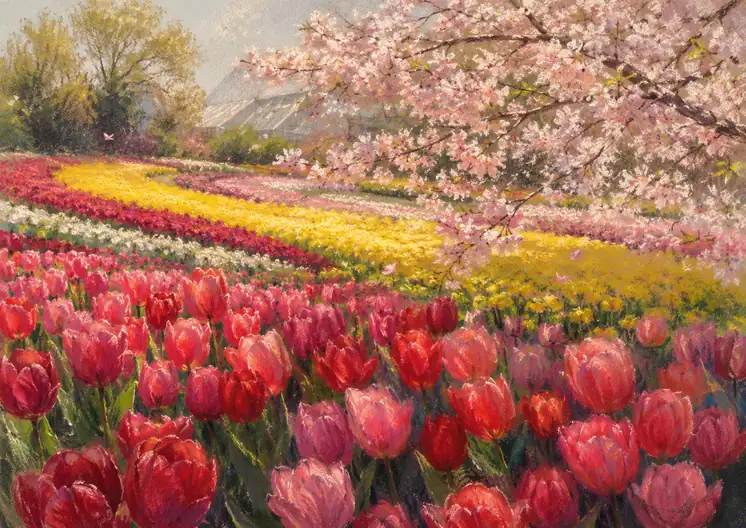 A Breath of Spring
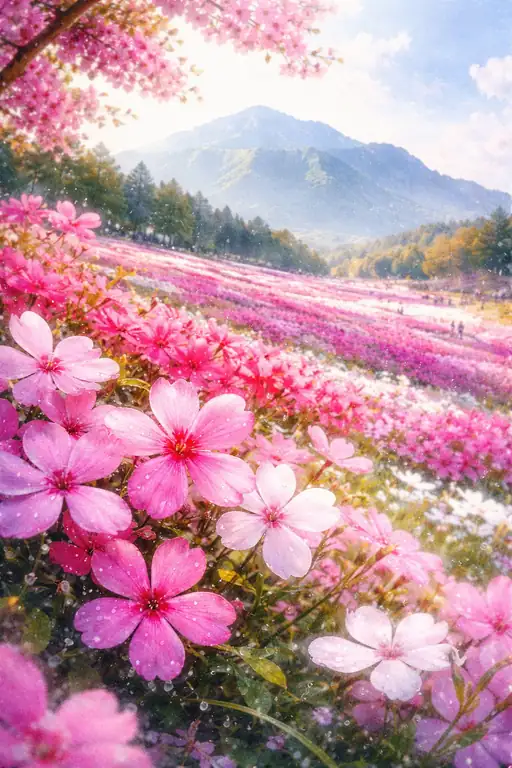 When the Earth Blushes for Spring
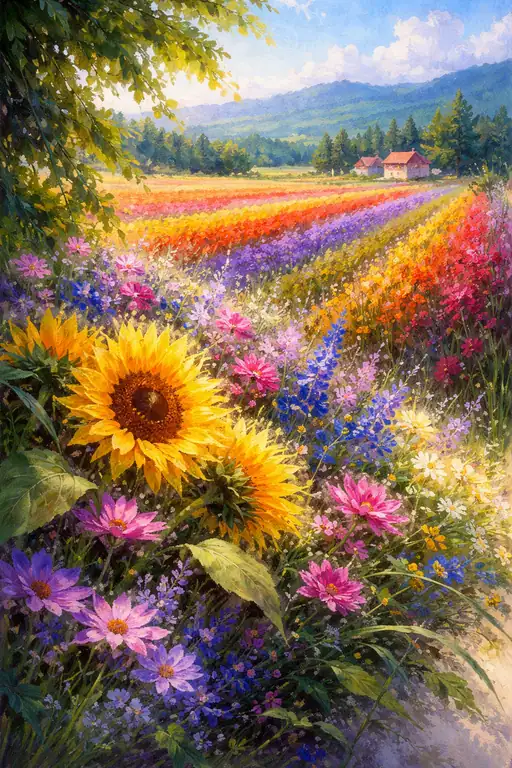 Joyful Chorus of Summer Blooms
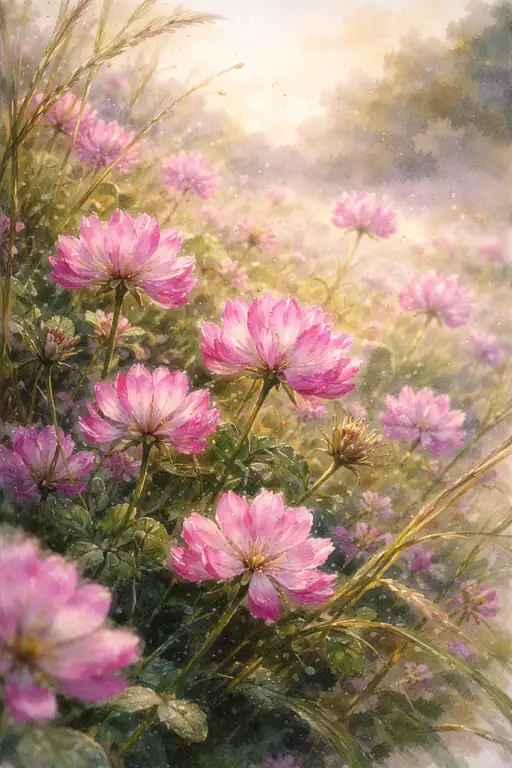 Whispers of the Spring Meadow
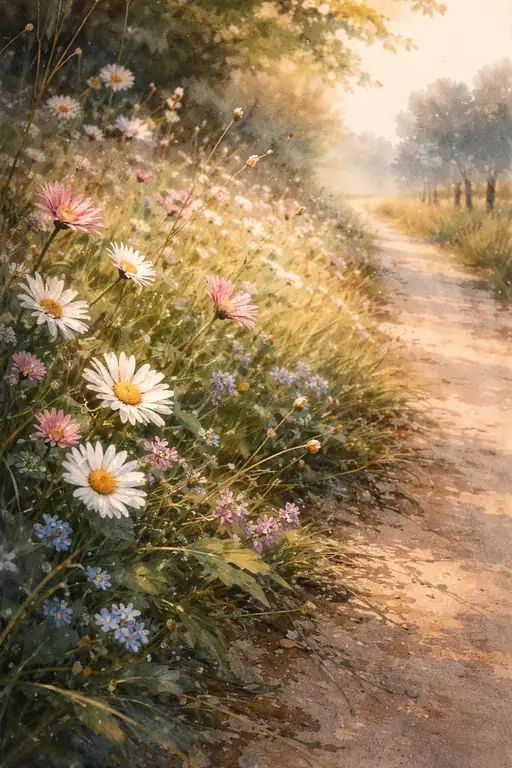 Path of Wildflowers