
A Breath of Frozen Light
Critique
1. Introduction This watercolor painting presents a captivating scene of crystalline minerals emerging from a rugged, rocky environment. The composition focuses on three primary crystal pillars that dominate the center of the frame, surrounded by smaller shards and coarse stone surfaces. The artist utilizes the fluid properties of watercolor to capture the interplay of light and mineral transparency. 2. Description The central subjects are translucent teal and aquamarine crystals with well-defined faceted edges and pointed terminations. Their surfaces exhibit a complex variety of textures, from smooth glazes to granular pigment deposits that suggest internal inclusions. The surrounding rocks are depicted in muted shades of sienna, umber, and charcoal grey, providing a stark chromatic and structural contrast to the luminous blue minerals. 3. Analysis Technically, the work employs a sophisticated blend of wet-on-wet and dry-brush techniques. The background features soft, atmospheric washes with subtle bokeh-like highlights, creating a shallow depth of field. Light originates from the upper portion of the canvas, casting soft shadows that emphasize the three-dimensional volume of the hexagonal forms. The sharp linework on the crystal edges contrasts effectively with the organic, blurred edges of the stone. 4. Interpretation and Evaluation The piece successfully conveys a sense of subterranean discovery and the intrinsic beauty of geological formations. The juxtaposition of the cool, ethereal crystals against the warm, grounded earth elements creates a compelling visual tension. The artist’s mastery of watercolor transparency is evident in the way light appears to pass through the mineral bodies, suggesting both fragility and enduring strength. 5. Conclusion This artwork is an accomplished study of light, color, and texture within a specialized subject matter. While the theme is traditional, the execution provides a fresh perspective on natural light and mineral form. The initial impression of cold stone evolves into an appreciation for the vibrant, hidden life contained within the earth's crust.
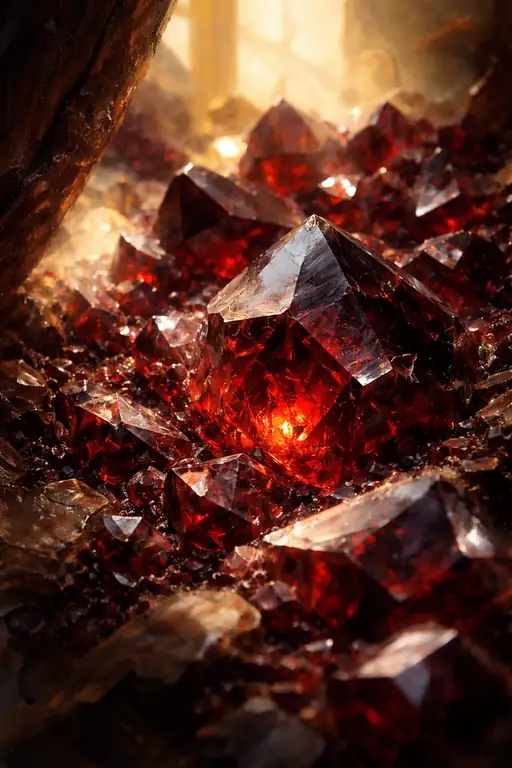 The Heart of the Cavern
 Fragments of a Cobalt Sky
 Echoes of the Amethyst Dream
 Heart of the Earth
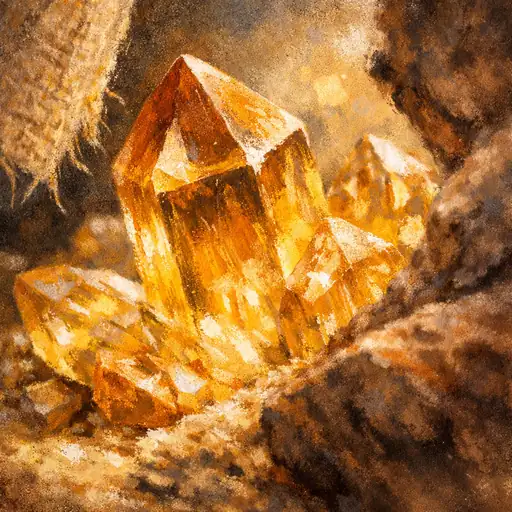 The Ember's Core
 Sanctuary of the Violet Light
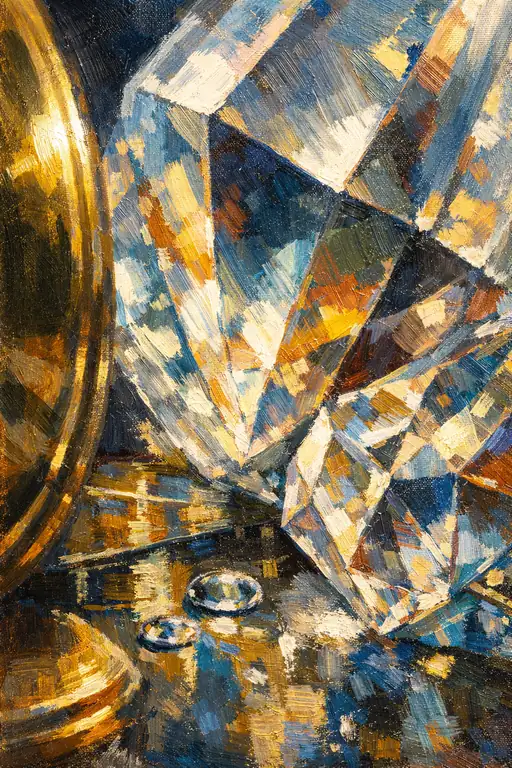 Shattered Light of Eternity
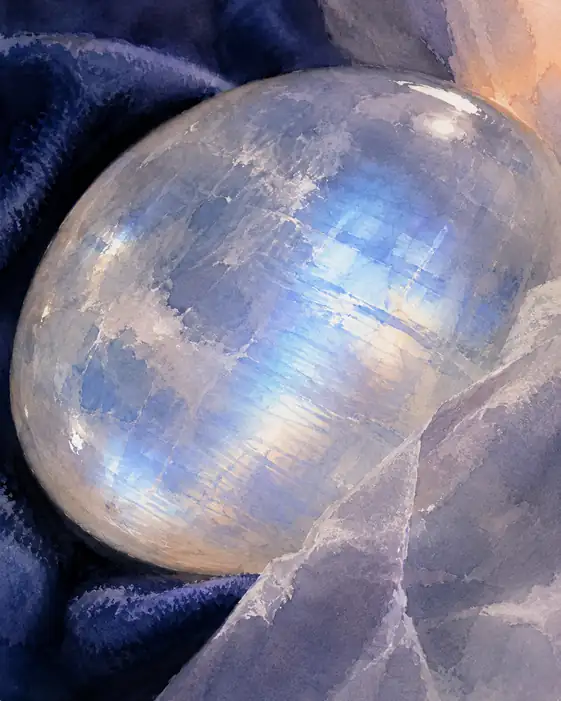 Cradle of Captured Moonlight
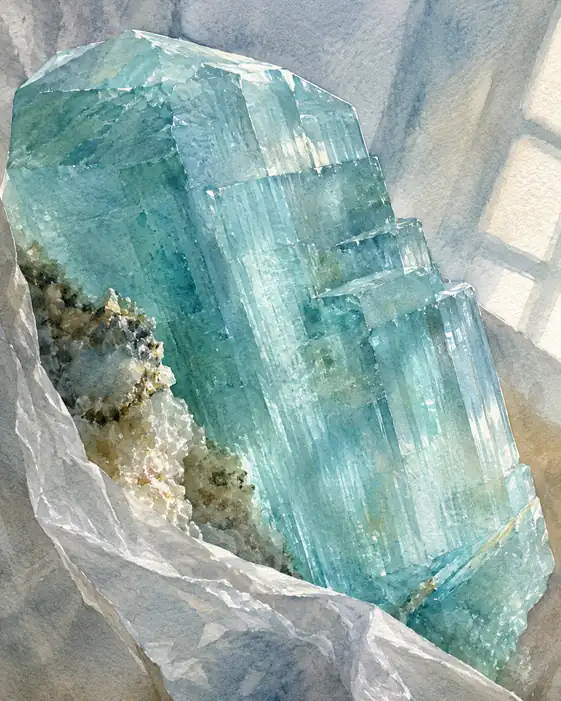 Prism of Silent Morning
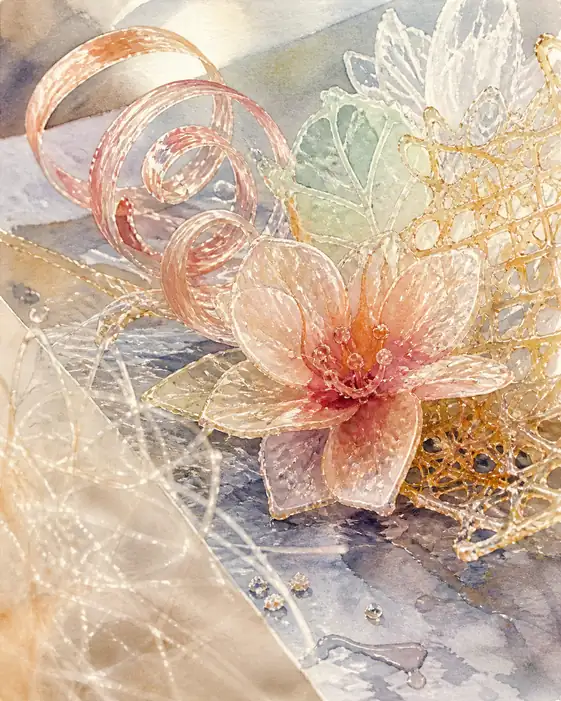 The Spiral of Glass and Light
 Frozen Time: Reflections in Blue
 Beacon in the Deep Earth