
Elegance Written in Shadow and Silk
Critique
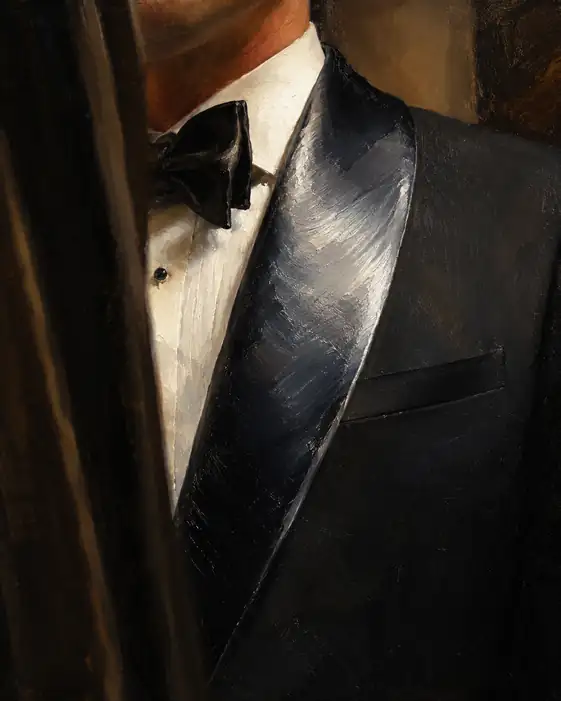
1. Introduction This oil painting offers a compelling close-up examination of formal masculine attire, specifically focusing on the collar and chest area of a tuxedo. By isolating this specific segment of a portrait, the artist shifts the viewer's attention away from individual identity toward the aesthetic qualities of fabric and light. The work employs a bold, expressive style that breathes life into a traditionally rigid and formal subject matter. Through this focused lens, the painting explores the inherent drama found within the sharp contrasts of ceremonial dress. 2. Description The composition is dominated by the dark, lustrous lapel of a tuxedo, rendered with vigorous strokes that capture the sheen of silk or satin. A black bow tie is nestled against a crisp white shirt, which is depicted with thick layers of impasto paint that emphasize its physical presence. A single, dark button serves as a focal point amidst the bright whites of the shirt fabric. The surrounding areas, including hints of the wearer's neck, are filled with warm earthy tones and deep shadows that provide a somber background. 3. Analysis Structurally, the painting relies on a strong diagonal arrangement that creates a sense of movement and architectural stability. The interplay between the deep blacks and brilliant whites exemplifies a masterly use of chiaroscuro, creating a high-contrast visual impact. The brushwork is particularly noteworthy for its raw, gestural quality, where the physical direction of the paint mirrors the contours of the clothing. Subtle variations in the black pigments, ranging from cool charcoals to warm obsidians, prevent the darker passages from losing their formal definition. 4. Interpretation and Evaluation This artwork represents a successful reinterpretation of classical themes through a modernist, almost visceral execution. The contradiction between the neatly groomed appearance of a tuxedo and the chaotic energy of the visible brushstrokes creates a fascinating tension. The artist demonstrates exceptional skill in translating the tactile sensations of different materials—satin, cotton, and skin—into the language of heavy oil paint. This creative approach elevates a standard sartorial study into a profound statement on texture and the act of painting itself. 5. Conclusion What begins as a study of a formal garment ultimately reveals itself to be an exploration of the power of light and material substance. The harmony achieved between the structured lines of the tuxedo and the organic flow of the paint reflects a sophisticated artistic vision. By highlighting the beauty in the mundane details of attire, the work encourages a deeper appreciation for the craftsmanship of both the tailor and the painter. It is a work of significant visual weight and enduring elegance that leaves a lasting impression.
Same Subcategory
 Tears of the Emerald Star
Similar Artworks
 The Silent Prelude to the Evening
 The Final Touch: Anticipation in the Glow of Diamonds
 The Gentleman's Ritual: A Study in Navy
 Whispers in the Leather
 A Silent Bloom Near the Heart
 A Glimpse into Opulent Theatricality
 Summer's Gentle Crown
 The Quiet Folds
 Tangled Rhythms of the Heart
 Evening's Refraction