
The Luminous Veil of Promise
Critique
1. Introduction This oil painting presents a captivating rear view of a bride adorned in a wedding dress and a long, flowing veil. The composition captures a moment of quiet reflection, where the absence of a visible face invites viewers to project their own emotions onto the scene. Through a delicate balance of light and texture, the artist creates a sacred atmosphere that resonates with the gravity and beauty of a matrimonial celebration. 2. Description The artwork features a central figure draped in an intricate white veil with elaborate lace detailing along its edges. The bride's shoulders and the upper portion of her gown are rendered with thick, tactile brushstrokes that give the fabric a sculptural quality. In the lower-left corner, a bouquet of soft pink and white flowers adds a touch of organic color to the monochromatic palette. A warm, golden light emanates from the upper right, illuminating the translucent layers of the veil. 3. Analysis Technically, the painting excels in its handling of light as it interacts with various textiles. The diagonal flow of the veil across the canvas establishes a dynamic rhythm, drawing the eye toward the interplay of highlights and shadows. The use of impasto on the dress contrasts effectively with the thin, ethereal washes used for the veil's transparency. Furthermore, the subtle integration of cool blue tones within the shadows provides a chromatic depth that prevents the white garments from appearing flat. 4. Interpretation and Evaluation The piece successfully bridges the gap between traditional portraiture and expressive impressionism through its focus on material sensations. The meticulous rendering of the lace patterns demonstrates exceptional patience and technical skill, elevating the work beyond a mere study of form. Light is employed here not just as a visual element, but as a symbolic force that suggests hope and transition. The creative choice to focus on the textures of the attire results in a highly original and evocative aesthetic. 5. Conclusion While the initial impression is one of simple bridal beauty, a closer inspection reveals a complex exploration of transparency and luminescence. The harmony achieved between the physical weight of the paint and the perceived lightness of the fabric is a testament to superior artistic control. Ultimately, the work stands as a poignant celebration of a fleeting moment, masterfully transformed into a timeless visual poem. This execution is both technically proficient and emotionally stirring.
 Threads of a Timeless Vow
 The Velvet Radiance
 The Radiant Promise of White
 A Private Symphony of Pearls and Light
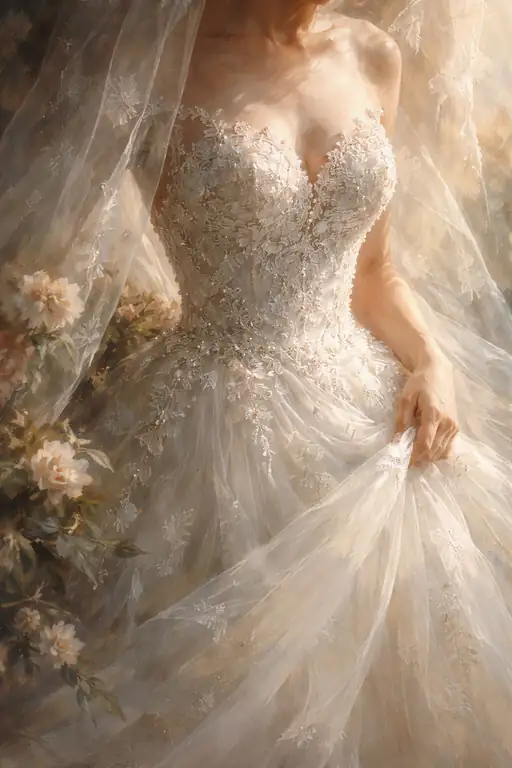 The Ethereal Bride
 The Weight of a Pearl
 A Whispered Morning Grace
 Vanity in the Golden Mirror
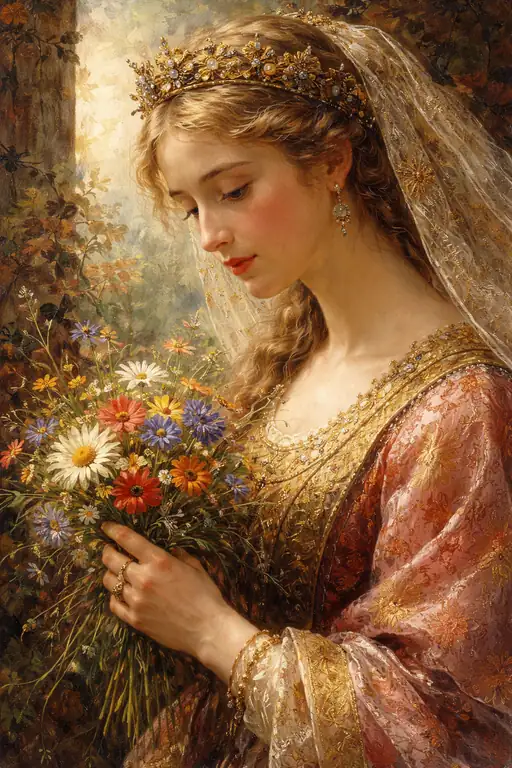 A Crown of Golden Promises
 Whispers of a Sunlit Courtyard
 The Eternal Vow in Sacred Light
 The Ritual of Radiance