
Rhythm of the Earth
Critique
1. Introduction This vibrant oil painting captures the sprawling beauty of a rural landscape, characterized by rolling hills and diverse agricultural fields. The artist utilizes a bold impasto technique, applying thick layers of paint to create a highly textured surface that pulses with energy. Through this expressive approach, the work celebrates the vitality of the earth and the rhythmic patterns of the cultivated land. The scene invites viewers to immerse themselves in a world of rich color and dynamic form, evoking a sense of joy and abundance. 2. Description The composition features a series of undulating hills that stretch toward a distant range of blue mountains. In the foreground, a brilliant field of yellow flowers dominates the lower right, contrasted by a patch of dark, tilled earth on the left. A winding dirt path weaves through the various fields of green, gold, and purple, leading the eye into the deep space of the painting. The sky is filled with voluminous white clouds against a bright blue backdrop, their forms mirrored by the heavy, textured brushstrokes used throughout the landscape. 3. Analysis The painting is structured around the sweeping curves of the hills and the s-shaped path, which provide a strong sense of movement and depth. The most prominent formal element is the extreme texture created by the impasto method, which gives the work a three-dimensional quality and emphasizes the physical presence of the paint. The color palette is exceptionally bright and saturated, featuring primary and secondary colors that are placed in close proximity to enhance their intensity. The light appears uniform and bright, illuminating the entire scene with a clear, midday glow. 4. Interpretation and Evaluation The artist demonstrates exceptional control over the palette knife and brush, using the thickness of the paint to represent the varied textures of the landscape, from the soft clouds to the rough soil. This tactile quality adds a layer of sensory experience to the visual representation, making the scene feel alive and tangible. The composition is well-balanced, with the vibrant yellow foreground providing a powerful anchor for the viewer’s gaze. This work successfully conveys the grandeur of the natural world while highlighting the artist’s unique, expressive vision. 5. Conclusion Through the bold use of color and texture, the artist transforms a familiar countryside scene into a celebration of light and life. The thick application of paint serves not only to depict the landscape but also to express the artist’s emotional response to the beauty of the earth. While the subject is traditional, the modern, tactile execution provides a fresh and engaging perspective. Ultimately, the painting leaves the viewer with a profound sense of the earth’s richness and the enduring power of the landscape as a source of inspiration.
Same Subcategory
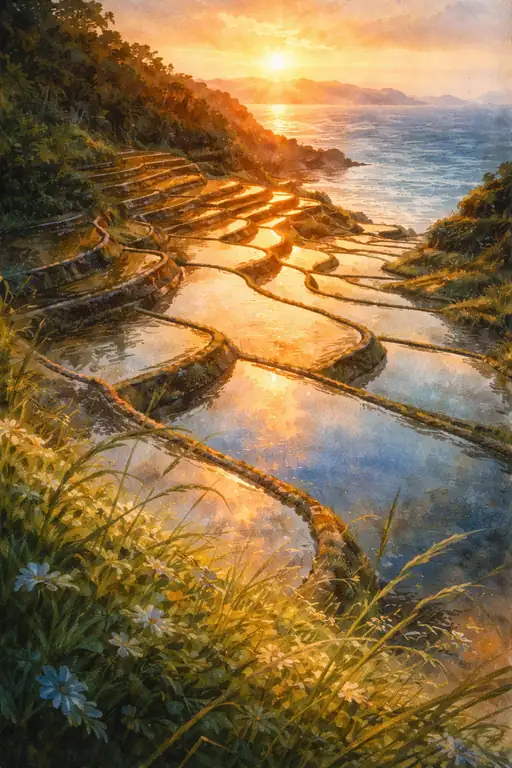 The Golden Mirror of the Hills
Similar Artworks
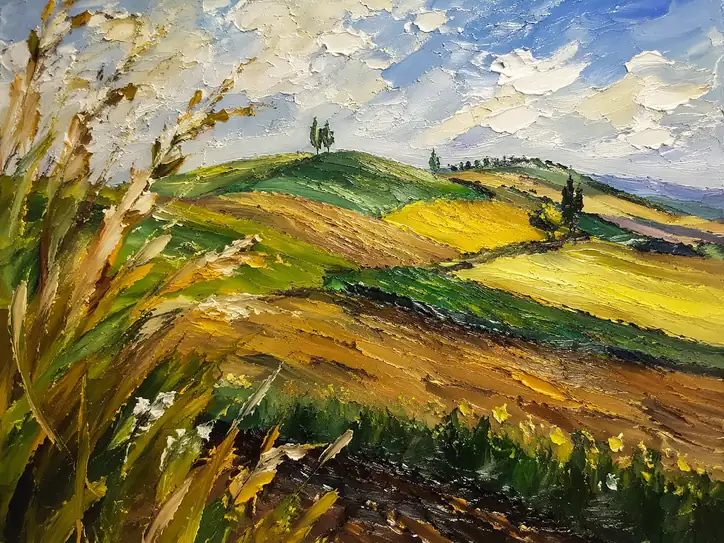 The Symphony of Sunlit Slopes
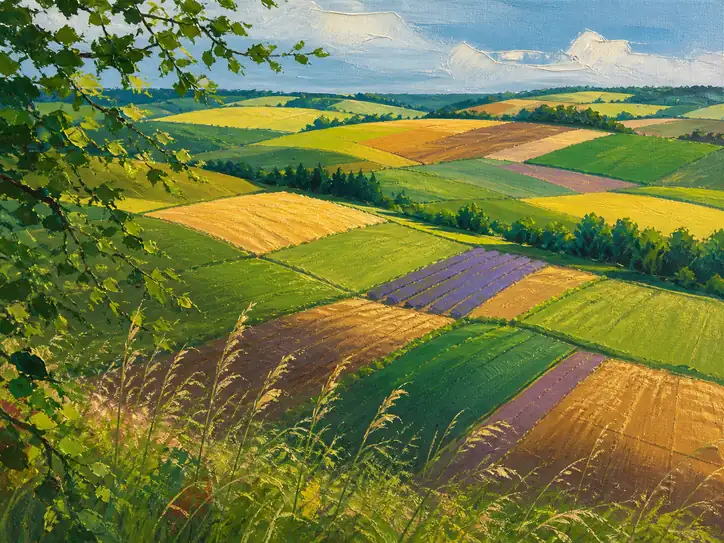 The Golden Patchwork of Rolling Hills
 Whispers Across the Patchwork Hills
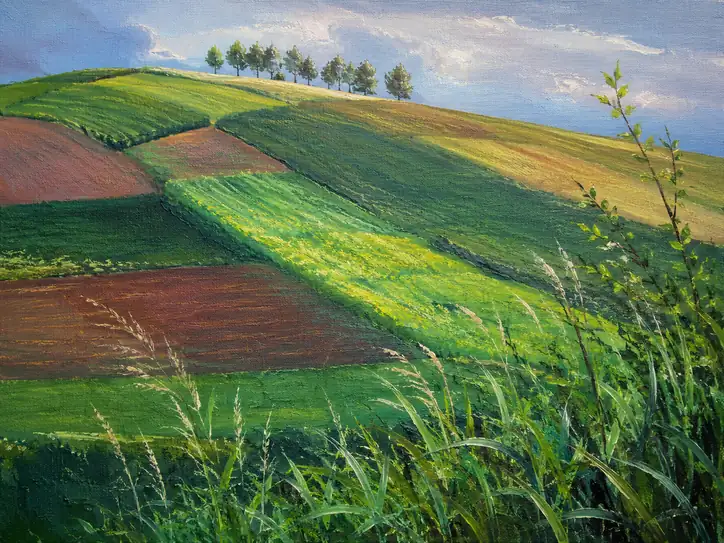 The Earth's Gentle Quilt
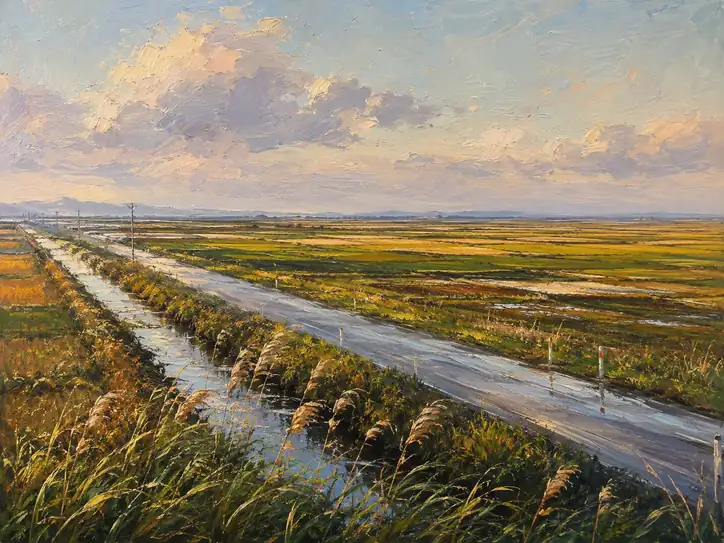 Reflection on the Eternal Fields
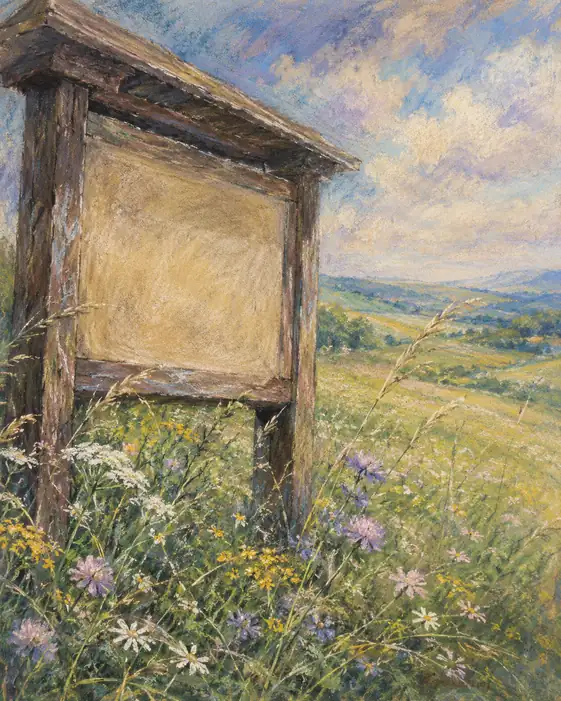 Whispers of the Unwritten Journey
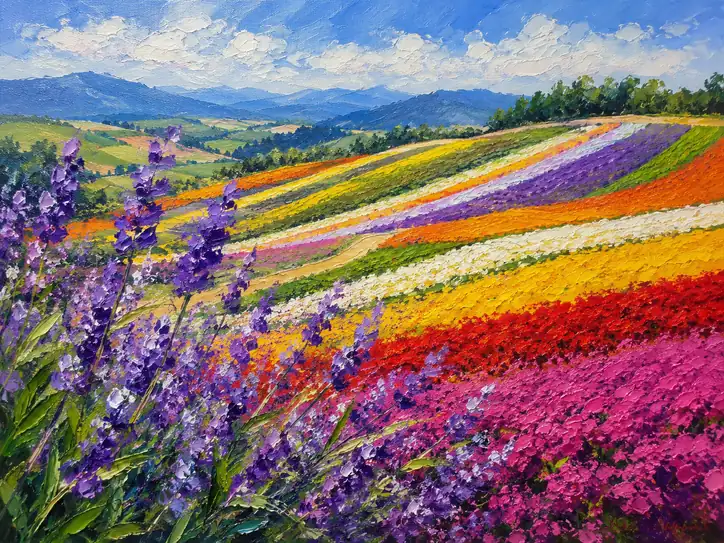 A Rainbow Journey to the Horizon
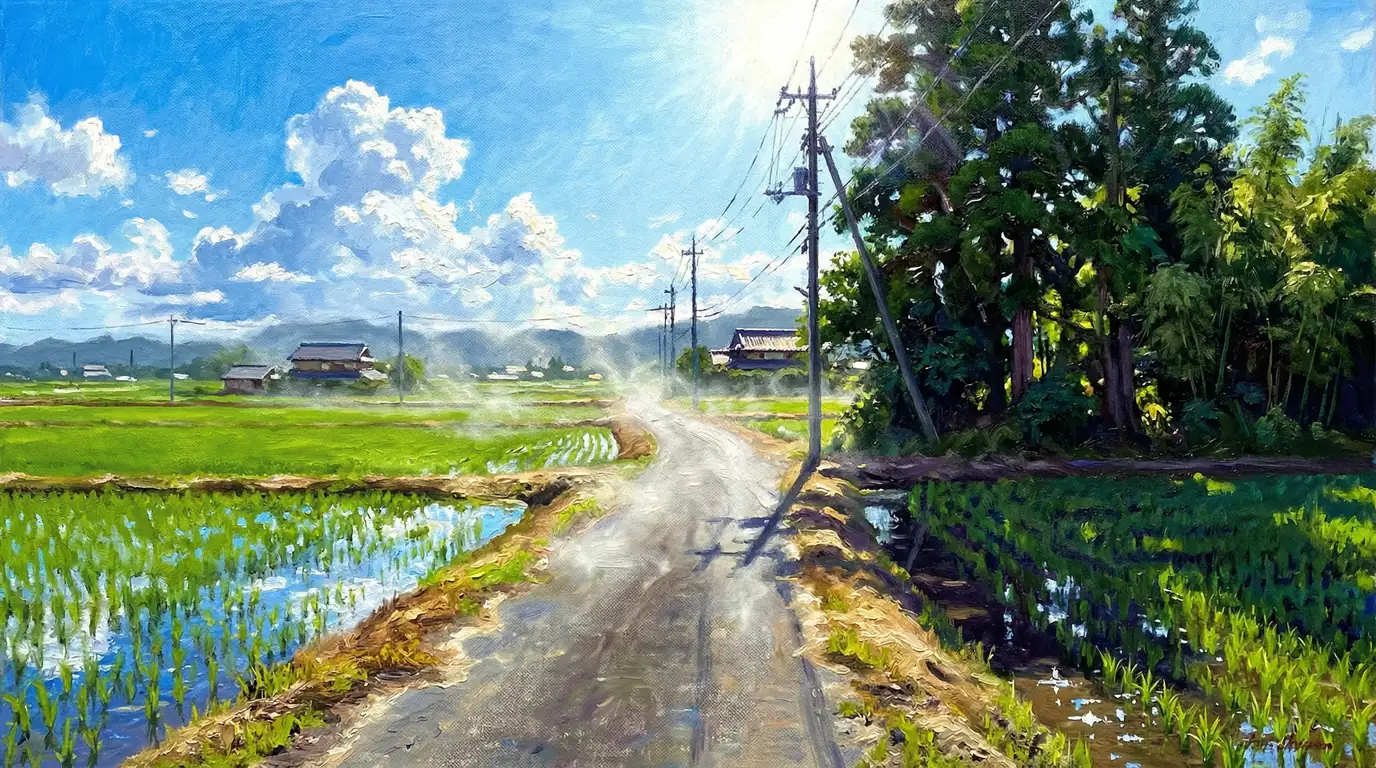 Midsummer Nostalgia
 Where Wildflowers Bloom
 The Golden Breath of the Earth