
Guardian of the Vermilion Twilight
Critique
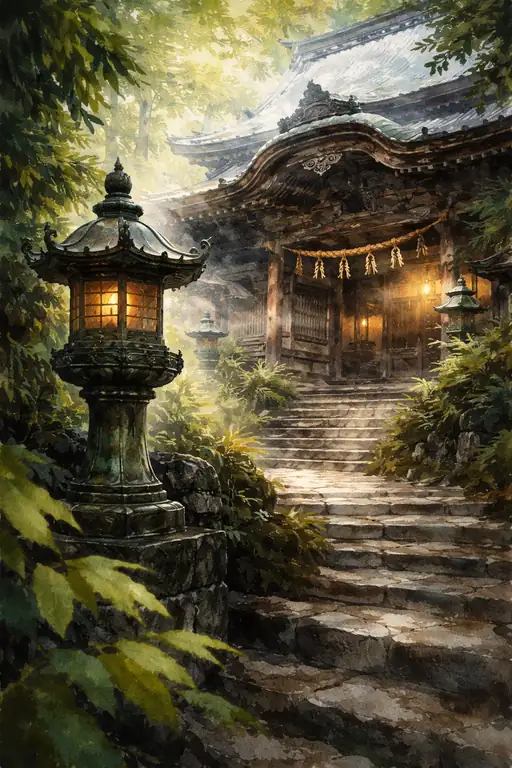
1. Introduction This painting presents an atmospheric view of a Japanese Shinto shrine, rendered with an expressive technique. The scene features a dramatic interplay of light and shadow, emphasizing the sacred nature of the site. The artwork transports the viewer into a serene environment where architecture meets the natural world, establishing a focus on cultural heritage. 2. Description In the foreground, a large stone komainu is depicted with significant texture, catching a warm light. Beyond this, stone steps lead toward a vermilion shrine building adorned with gold. Two stone lanterns flank the entrance, their glowing interiors providing a focal point against the dark, shadowy forest foliage in the background. 3. Analysis The composition utilizes the large komainu to create a sense of depth and scale. The artist employs a warm palette of reds and golds, heightened by the luminous lanterns. The brushwork is thick and textured, adding a tactile dimension. Light is used strategically to guide the viewer’s path toward the illuminated heart of the sanctuary. 4. Interpretation and Evaluation This work evokes a sense of reverence, capturing the quiet power of a sacred space. The contrast between the lit shrine and the surrounding darkness suggests spiritual enlightenment. The technical execution balances architectural detail with an impressionistic handling of light. The painting achieves a strong expression by infusing a familiar motif with vibrant energy. 5. Conclusion In conclusion, the artwork explores the spiritual qualities of Japanese shrine architecture. The integration of the guardian figure with the sanctuary creates a narrative of protection. The painting stands as a tribute to the enduring beauty of sacred sites. Appreciation for the atmospheric depth grows upon inspection, revealing a well-considered and evocative composition.
Same Subcategory
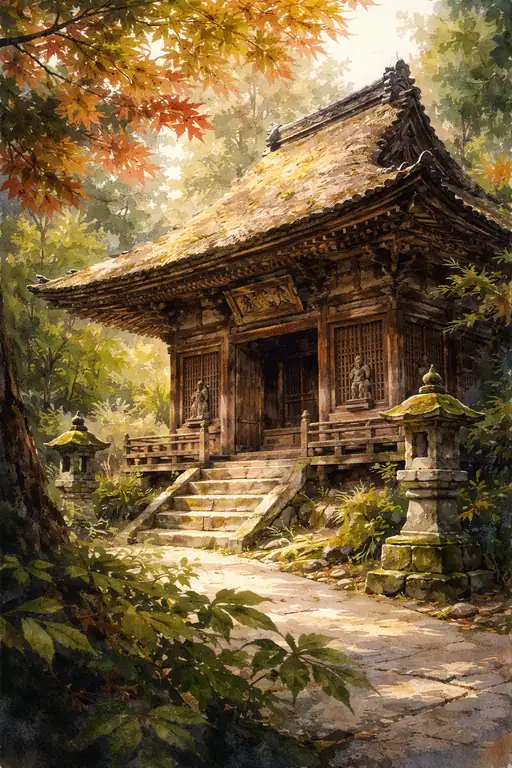 Sunlight Through the Crimson Gate
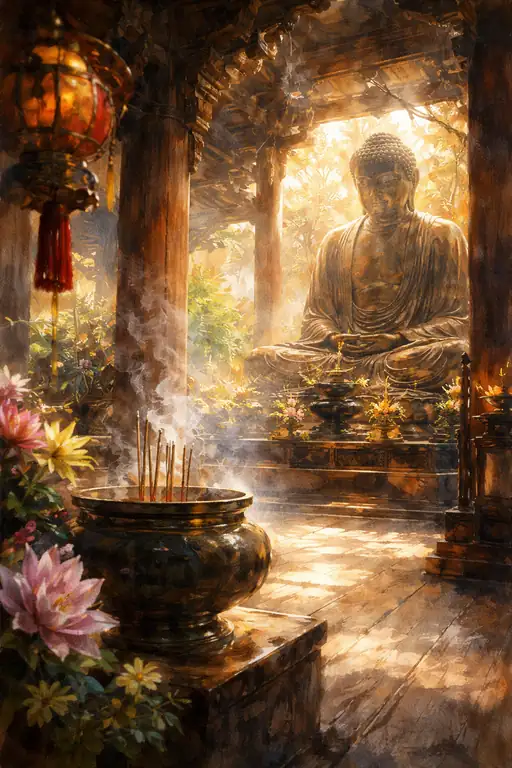 Incense and the Golden Zen
Similar Artworks
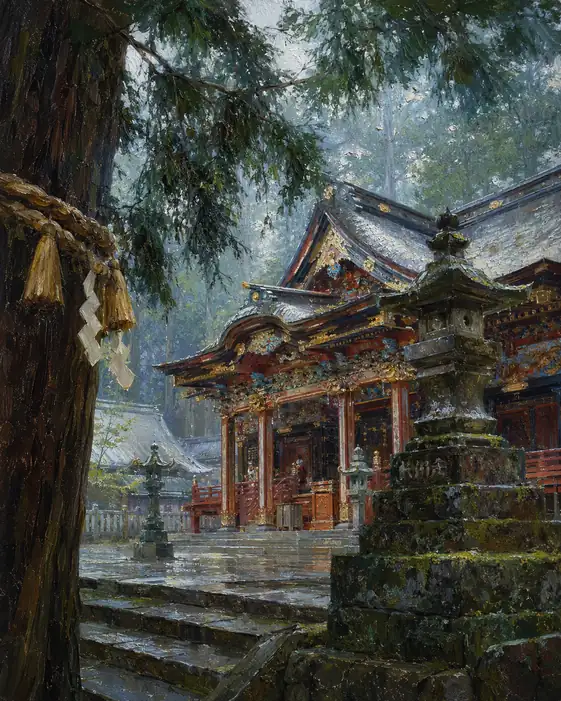 Whispers of the Misty Sanctuary
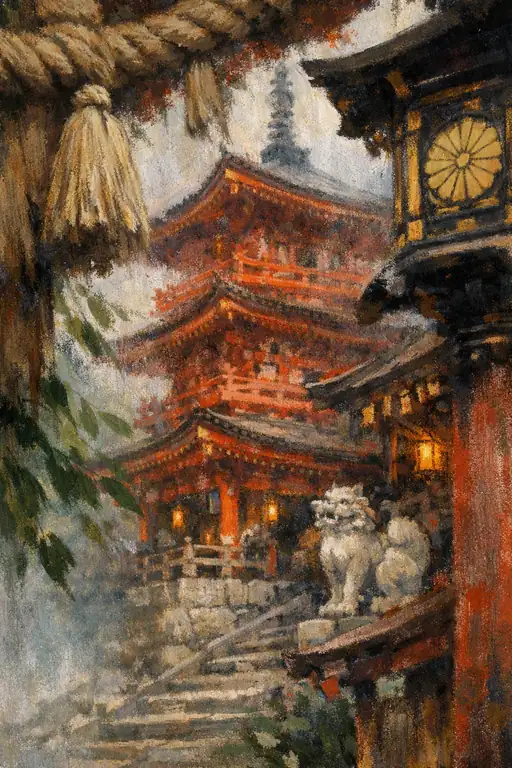 Vermilion Reverence
 Guardian of the Glimmering Portal
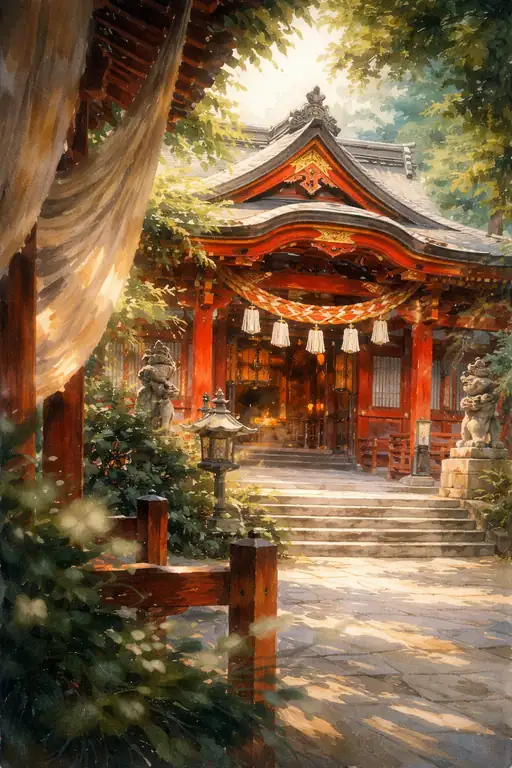 Sunlight Upon the Vermilion Pillars
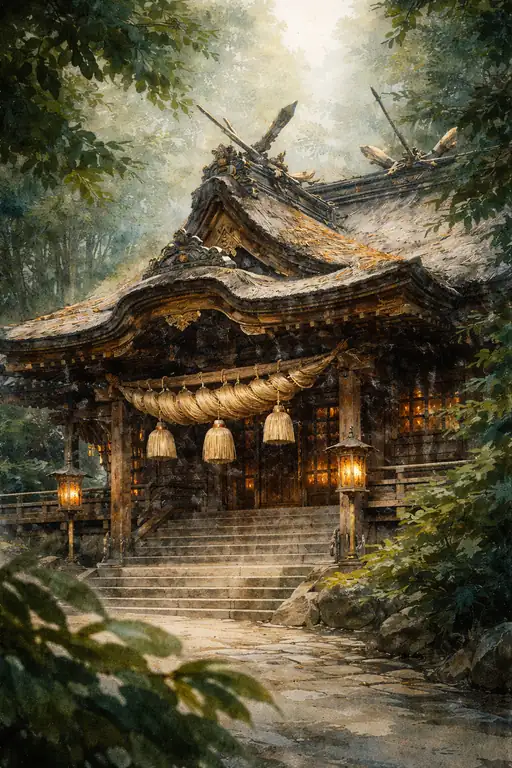 The Sacred Silence of the Moss-Covered Hall
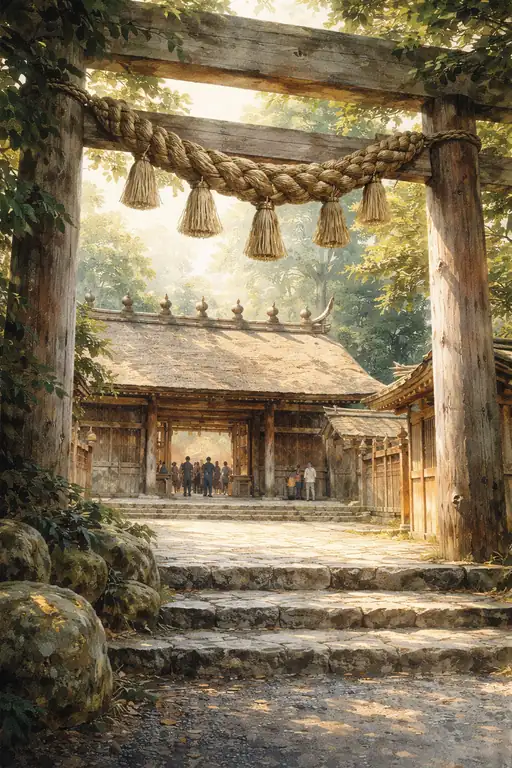 Awakening the Sacred Path
 Golden Splendor in the Sacred Woods
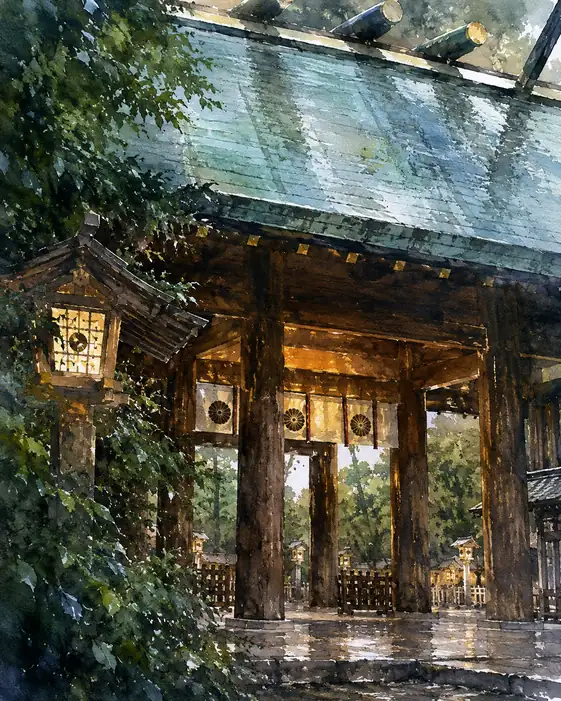 The Silent Breath of the Shrine
 Whispers of the Sacred Silence
 Sanctuary of the Silent Forest