
The Castle's Dream in the Golden Dawn
Critique
1. Introduction This oil-style painting features a magnificent Japanese castle perched atop a formidable stone foundation, viewed through the weathered branches of ancient pine trees. The dark foliage in the foreground acts as a natural frame, directing the viewer’s attention toward the brilliant white walls of the central keep. Soft sunlight illuminates the structure, infusing the historical architecture with a sense of vitality and dramatic atmosphere that contrasts with its enduring stillness. 2. Description The castle is characterized by tiered tiled roofs and pristine white plaster, supported by an intricately detailed stone wall. In the background, a calm expanse of water stretches toward misty mountains, creating a vast sense of spatial depth. Dense vegetation surrounds the fortress, with pine needles in the foreground catching the golden light of dawn or dusk. The sky is filled with luminous clouds that add a rhythmic, dynamic quality to the otherwise serene environment. 3. Analysis The composition employs a diagonal arrangement, where the castle and pine branches create a balance between stability and visual tension. The color palette harmonizes the stark white and charcoal tones of the architecture with deep forest greens and brilliant golden highlights, reinterpreting traditional aesthetics with contemporary sensitivity. The artist uses thick, impasto brushwork to emphasize the rough texture of the stone walls, enhancing the physical presence of each element. 4. Interpretation and Evaluation The work explores the harmony between traditional architecture and the natural world, evoking a sense of timelessness. The radiant castle serves as a symbol of historical resilience and dignity, standing as a landmark integrated seamlessly into its environment. With its masterful control of lighting and sophisticated handling of textures, the painting offers a profound reflection on cultural heritage and the enduring beauty of the landscape through a refined visual language. 5. Conclusion While the painting adheres to classical conventions, the dramatic use of light and bold execution reveal a distinctive artistic voice. By introducing dynamic lighting into this historical space, the artist transcends mere documentation, creating a powerful statement on the relevance of traditional beauty. This evocative portrayal successfully invites the viewer to appreciate the sublime intersection of history, nature, and the fleeting moments of the day.
Same Subcategory
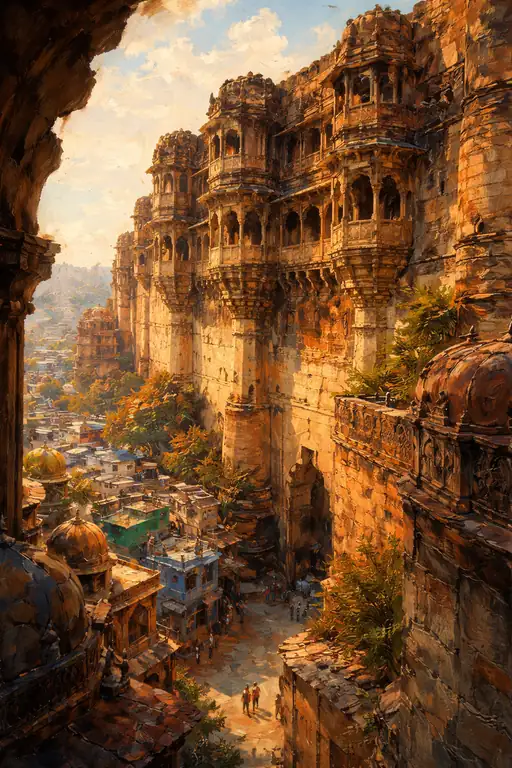 Echoes of Empire: The Sunlit Metropolis
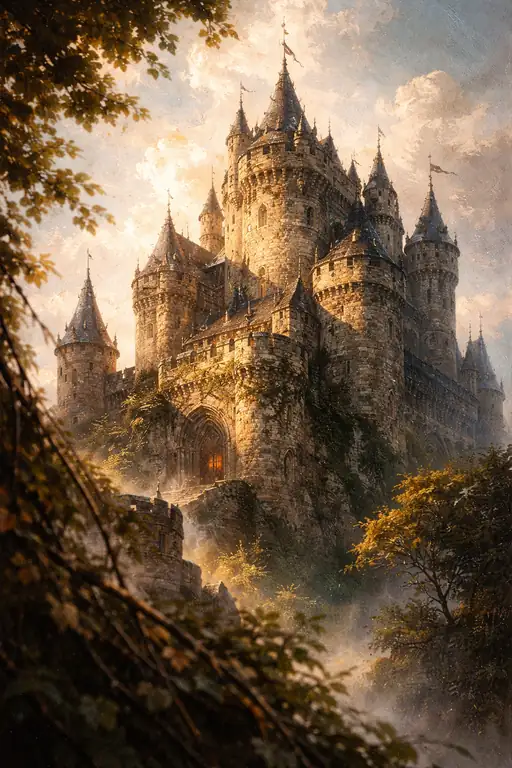 Slumbering Giants of Stone
Similar Artworks
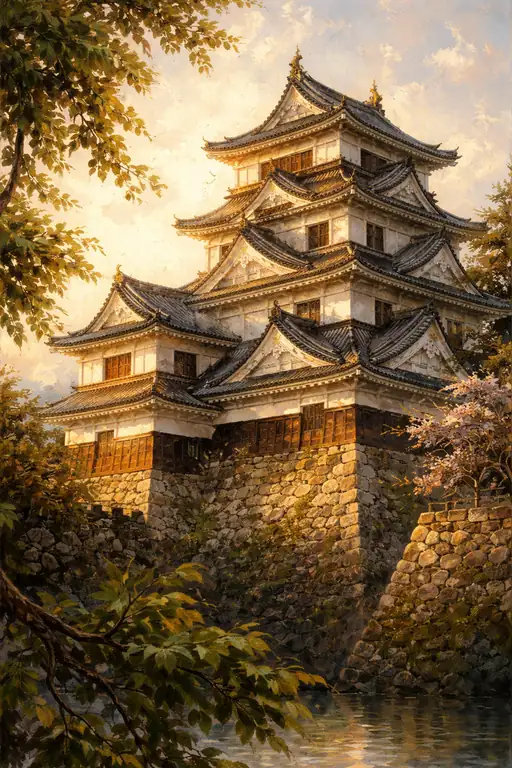 Majestic Fortress in the Golden Hour
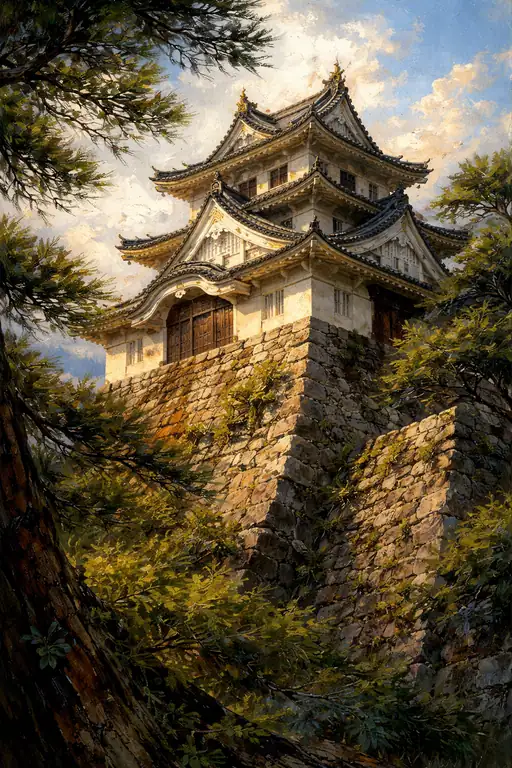 The Silent Sentinel of the Ages
 Golden Sentinel of a Fading Era
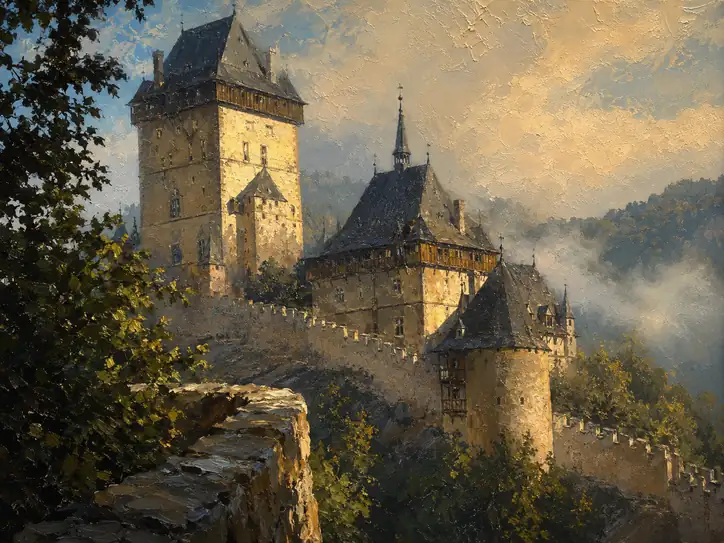 Guardian of the Silent Peaks
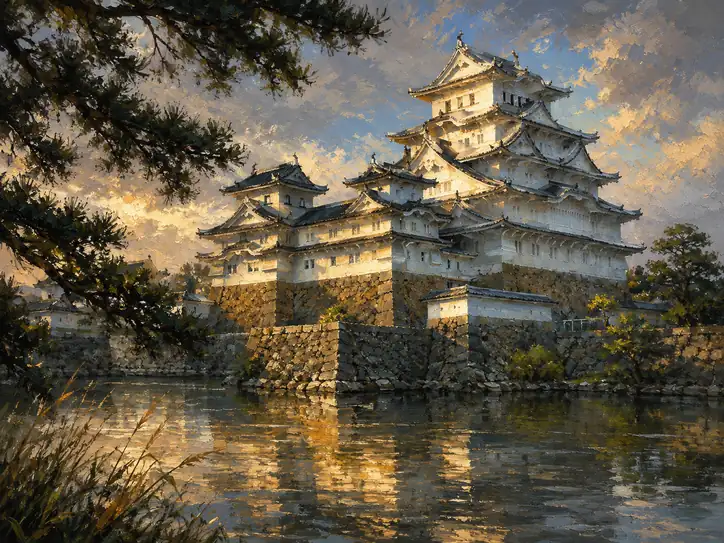 Eternal Gaze in the Amber Sunset
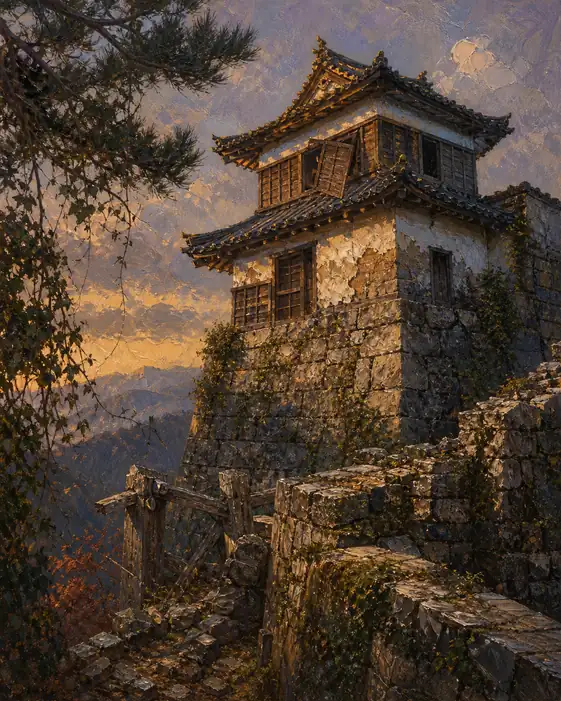 Silent Resilience on the Ancient Ramparts
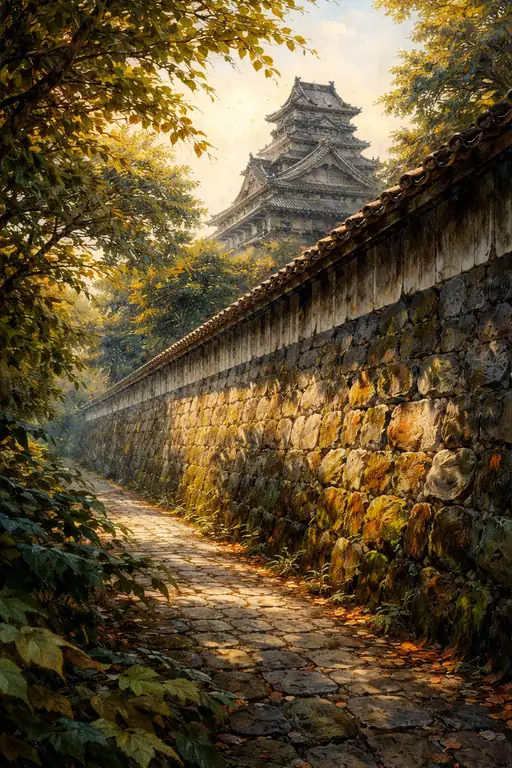 Golden Pathway to the Keep
 The Citadel's Quiet Breath
 Majesty against the Rising Tides
 Eternal Fortress of the White Tower