
The Radiant Grandeur of the Golden Gate
Critique
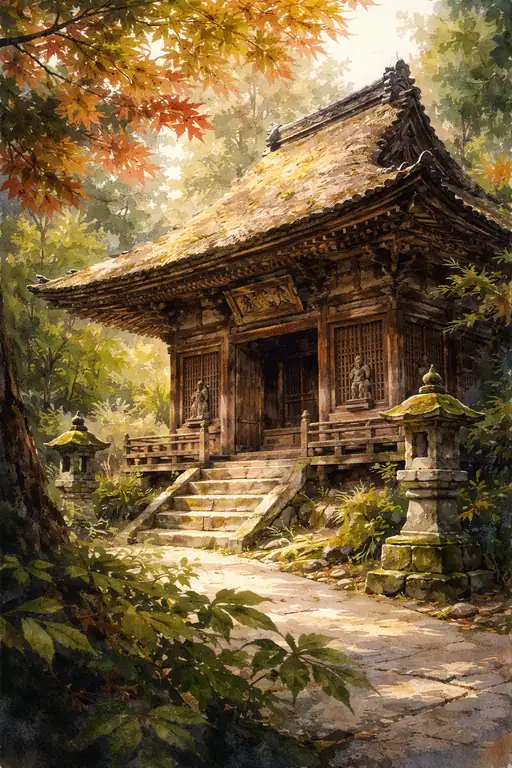
1. Introduction This oil painting presents a striking close-up of the ornate upper level of a traditional Japanese shrine gate, rendered with a powerful impasto technique. The work focuses on the vibrant vermillion woodwork and shimmering gold accents that define the majesty of sacred architecture. By emphasizing texture and color, the artist transforms a structural subject into a dynamic exploration of material presence and cultural splendor. 2. Description The composition is dominated by the intricate eaves and bracket systems of the gate, executed in brilliant red and adorned with lavish gold leaf patterns. The dark grey roof tiles feature golden decorative elements that catch the light, while a central plaque displays a stylized floral motif. To the left, branches of autumn maple and ginkgo leaves provide a soft, organic contrast to the rigid geometry of the building. The base of the structure is finished with white plaster, which serves to amplify the intense saturation of the colors above. 3. Analysis The artist utilizes a heavy application of paint, likely with a palette knife, to create a three-dimensional surface that suggests the physical weight of the timber. A bold color scheme of red and gold is balanced by subtle touches of green in the windows and the cool blue of the sky. The low-angle perspective creates a sense of monumentality, making the structure appear to loom over the viewer with divine authority. Each brushstroke is deliberate, capturing both the broad forms of the architecture and the delicate details of its ornamentation. 4. Interpretation and Evaluation This piece transcends mere architectural documentation by imbuing the gate with a sense of living energy and historical depth. The use of impasto reflects the layering of time and tradition, while the brilliant colors evoke the spiritual power inherent in the site. Technically, the work is exceptional for its ability to maintain structural clarity despite the aggressive texture of the medium. It represents a unique synthesis of traditional Japanese aesthetics and modern expressionist painting, resulting in a profound visual impact. 5. Conclusion The tactile quality of the paint brings an extraordinary sense of realism to the scene, allowing the viewer to feel the warmth of the sun on the lacquered wood. While the initial impression is one of overwhelming opulence, closer inspection reveals a meticulous respect for the underlying craftsmanship of the building. The painting successfully captures the enduring beauty and solemnity of Japan’s architectural heritage through a contemporary artistic lens.
Same Subcategory
Similar Artworks
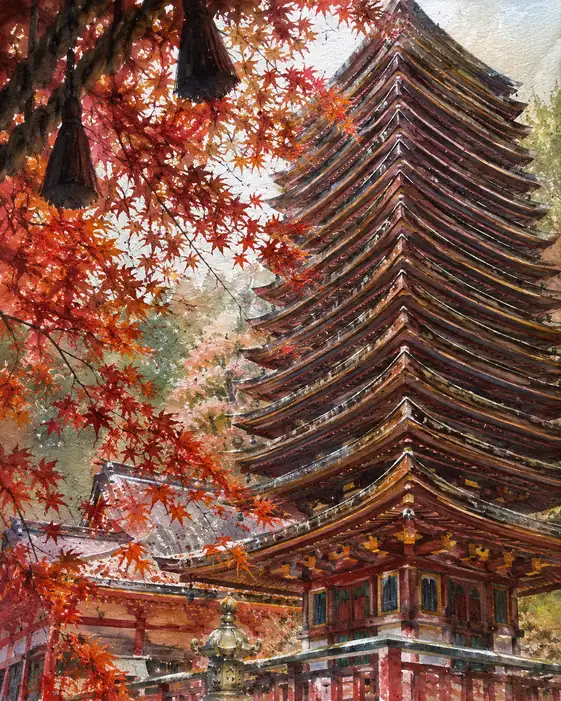 Vermilion Prayer in the Wind
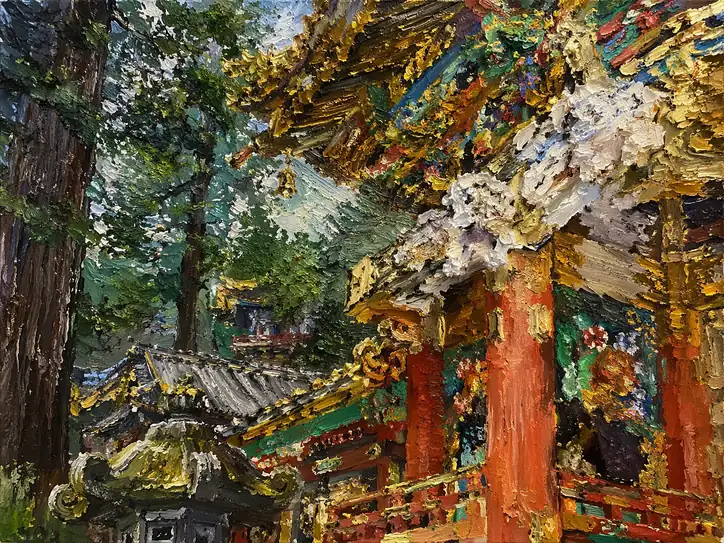 The Gilded Heart of the Forest
 The Threshold of Golden Light
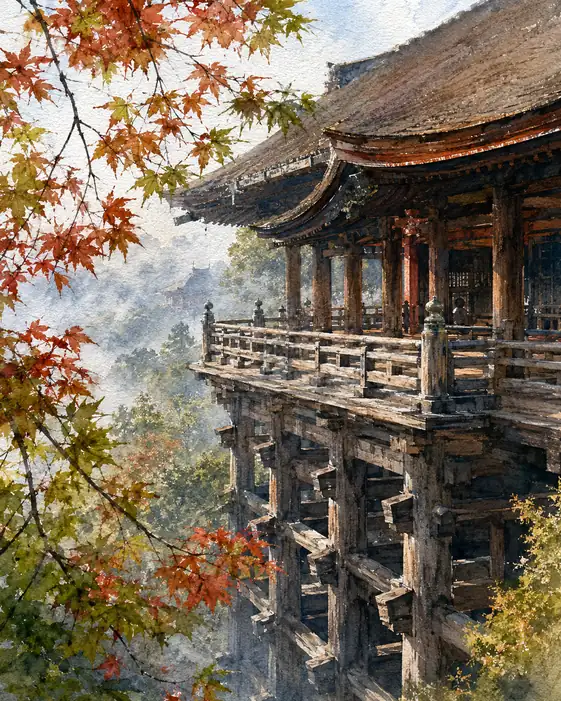 Suspended in the Autumn Mist
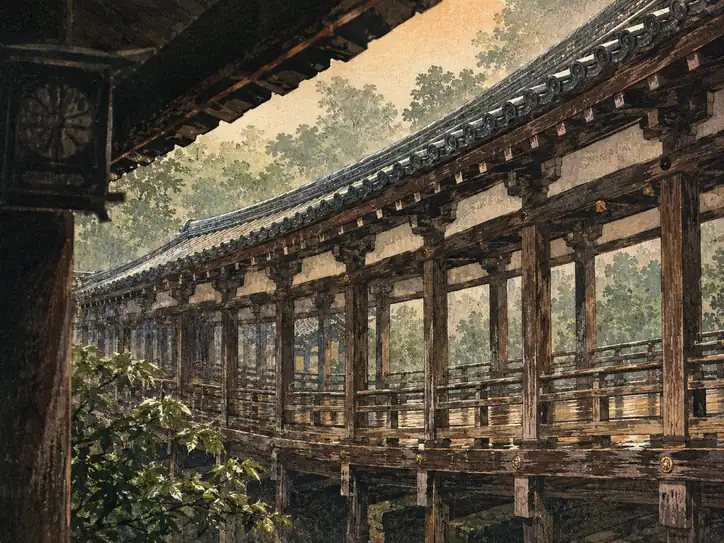 Whispers of the Ancient Corridor
 A Thousand Vows to the Autumn Sky
 The Crimson Threshold of Silence
 Shadows of the Sacred Path
 Sanctuary Amidst the Vapors
 Sunlight Through the Crimson Gate