
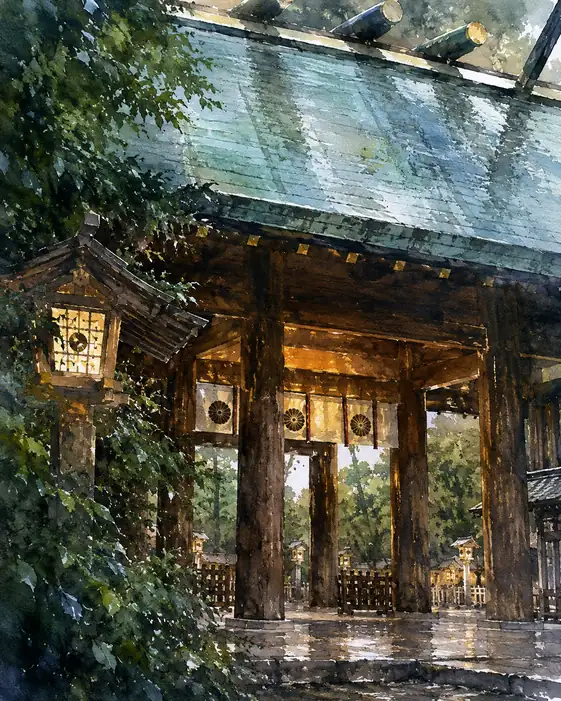
The Threshold of Golden Light
Critique
1. Introduction This painting captures the majestic presence of a traditional Japanese shrine gate, known as a Romon, illuminated by the warm glow of lanterns at dusk. The grand wooden structure serves as a threshold between the mundane and the sacred, offering a glimpse into the sanctuary beyond. It combines architectural precision with atmospheric lighting to create a scene that is both imposing and deeply evocative. 2. Description The two-story gate features a complex tiled roof and vibrant red pillars that exhibit a weathered yet dignified texture. Numerous lanterns hang from the eaves and stand along the path, casting a golden radiance that reflects off the damp, cobblestone pavement. In the foreground, dark green foliage frames the view, partially obscuring the lower corners to focus attention on the illuminated entryway. Through the open gate, a smaller shrine is visible in the distance, further enhancing the sense of spatial depth. 3. Analysis The artist employs a striking color contrast between the fiery oranges of the lanterns and the cool, shadowed greens of the surrounding forest. The rendering of light is particularly noteworthy, as it convincingly depicts how the artificial glow interacts with different surfaces, such as wood and stone. Broad, expressive brushstrokes are used for the foliage, while more refined techniques define the intricate joinery of the architecture. The vertical composition emphasizes the height and stability of the gate, grounding the ethereal light within a solid structural framework. 4. Interpretation and Evaluation Beyond its representational qualities, the work explores the concept of the gate as a spiritual transition point, enhanced by the symbolic warmth of the lanterns. The interplay of light and shadow suggests a sanctuary that offers protection and enlightenment against the encroaching darkness of the night. Technically, the execution of light reflections on the stone path is exceptional, adding a tactile quality to the scene. This piece is a masterful example of landscape art that successfully integrates cultural heritage with sophisticated visual storytelling. 5. Conclusion Every detail, from the glowing lanterns to the textured roof tiles, contributes to a unified atmosphere of reverence and quiet beauty. While the initial attraction is the brilliant illumination, the deep shadows provide the necessary balance that gives the work its spiritual resonance. The painting stands as a powerful testament to the enduring allure of traditional Japanese architecture and its harmonious relationship with the natural world.
Same Subcategory
 Crimson Grandeur in the Spring
Similar Artworks
 Golden Glow in the Maple Shadows
 The Sacred Silence of the Moss-Covered Hall
 Awakening the Sacred Path
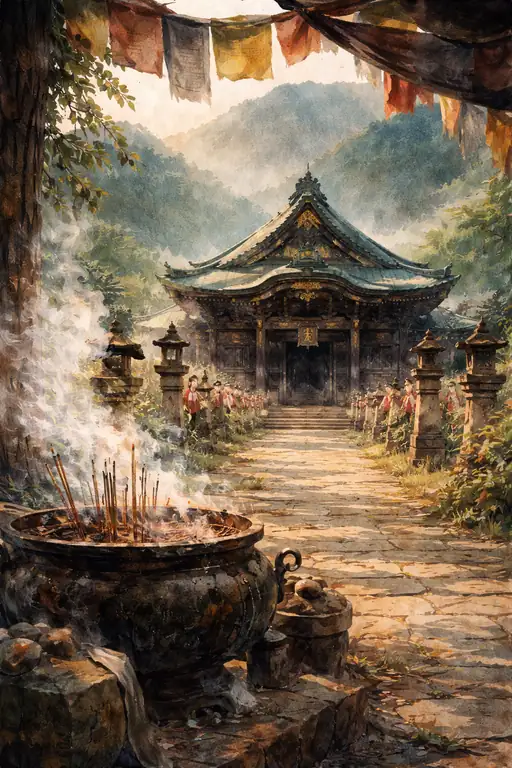 Incense and Solitude at the Mountain Shrine
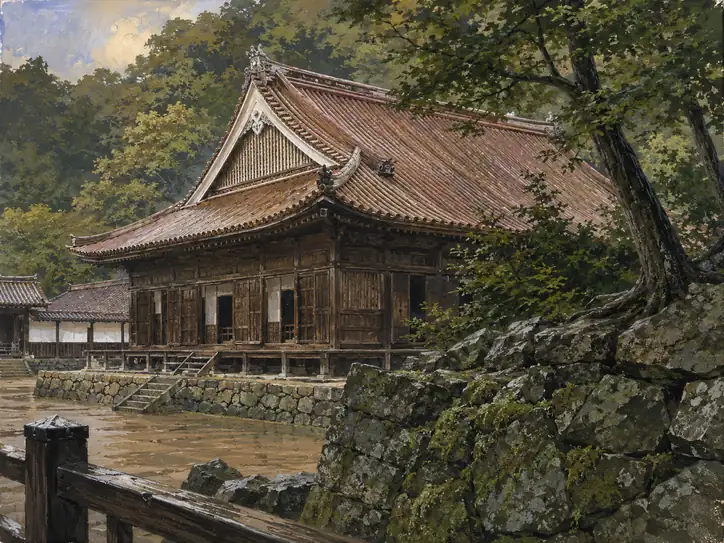 Eternity in the Moss-Covered Hall
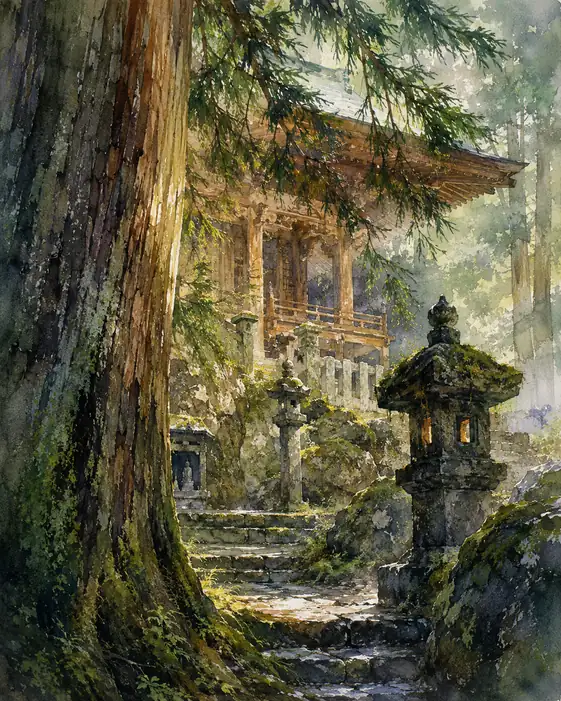 Sanctuary of the Ancient Cedars
 The Radiant Grandeur of the Golden Gate
 Whispers in the Mossy Sanctuary
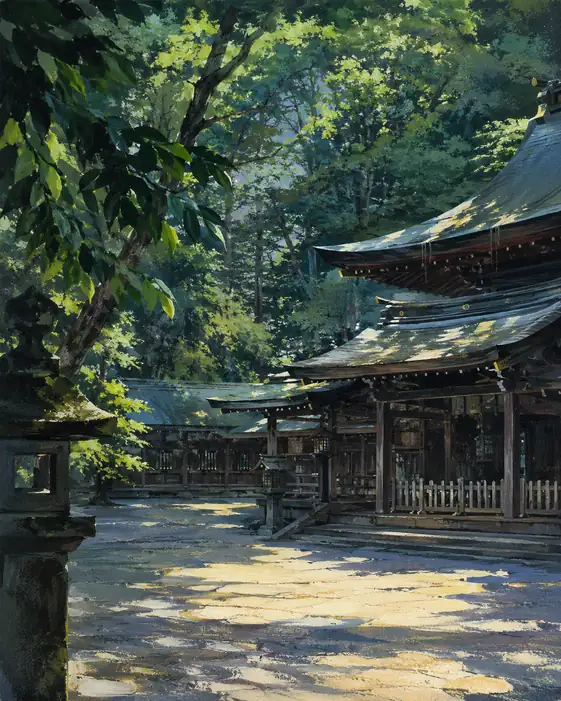 Whispers of the Sunlit Sanctuary
 The Silent Breath of the Shrine