
Where the Soul Rests in Cherry Blossoms
Critique
1. Introduction This oil painting presents a picturesque view of a traditional Japanese canal town during the peak of the cherry blossom season. The work explores the relationship between architectural heritage and the natural environment, utilizing a complex composition to capture the peaceful rhythm of life in a historical district. By blending elements of water, stone, and flora, the artist creates a layered and evocative scene that celebrates the timeless aesthetic of regional Japan. 2. Description The perspective is from an elevated position, looking down onto a stone-paved street lined with two-story wooden merchant houses. In the foreground, a series of mossy stone steps lead toward a clear canal, which is spanned by a small, arched stone bridge. A traditional stone lantern stands on the right, partially obscured by blossoming cherry branches that also frame the top of the canvas. Several figures are seen strolling along the path under a warm, golden sky. 3. Analysis The artist employs a rich and textured brushwork technique, particularly effective in rendering the weathered surfaces of the stone walls and the intricate patterns of the roof tiles. The color palette is dominated by earthy browns, moss greens, and soft pinks, all unified by a warm, sun-lit glow that creates long shadows across the cobblestones. The vertical composition emphasizes the depth of the town, drawing the viewer’s eye from the intimate details of the canal to the hazy, mountainous horizon. 4. Interpretation and Evaluation This piece can be interpreted as a nostalgic reflection on the harmony between human settlement and nature. The technical execution is highly proficient, especially in the way the artist captures the reflection of light on the water and the delicate, translucent quality of the falling cherry petals. The choice of an elevated viewpoint is an original approach that provides a comprehensive sense of the town's layout, making the historical setting feel both grand and intimately accessible. 5. Conclusion While the individual elements of the painting are traditional, the masterful handling of light and texture provides a fresh and emotionally engaging experience. The work successfully evokes the sensory details of a spring afternoon, from the coolness of the water to the softness of the blossoms. Ultimately, the painting stands as a sophisticated tribute to the enduring beauty of Japan’s cultural landscapes and the quiet dignity of its historical architecture.
Same Subcategory
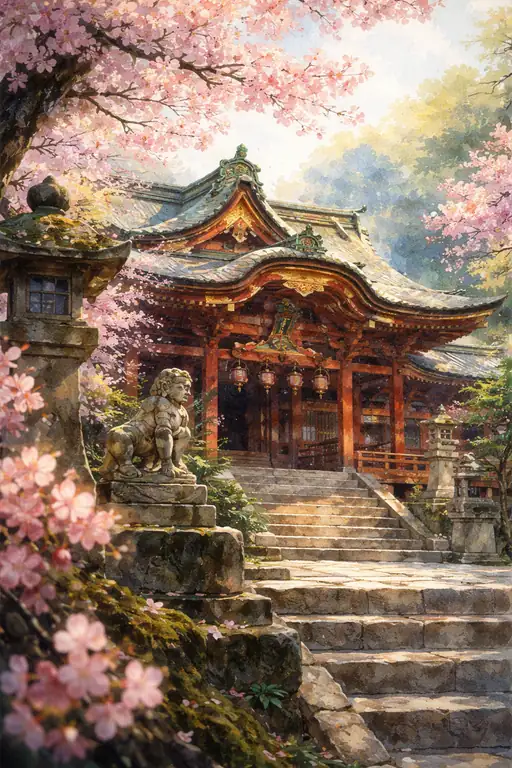 Whispers of the Spring Sanctuary
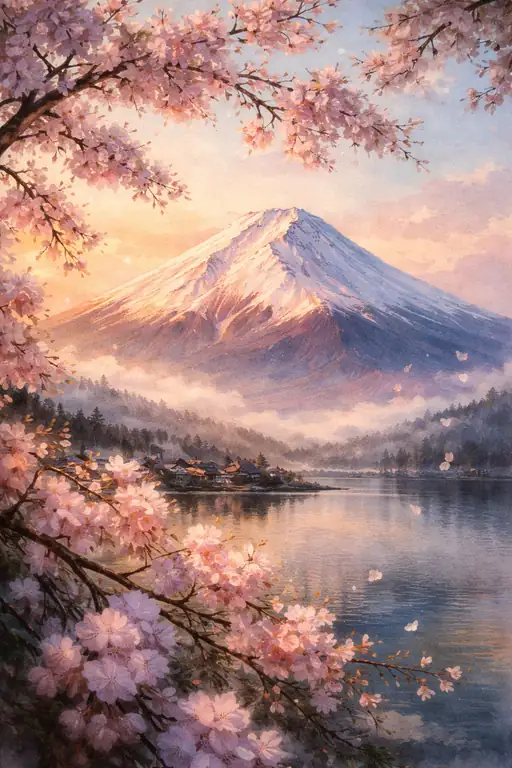 Sakura's Embrace of the Golden Fuji
Similar Artworks
 Blossoms Over the Quiet Stream
 Nostalgia Residing in Thatch
 Slumbering Village of the High Peaks
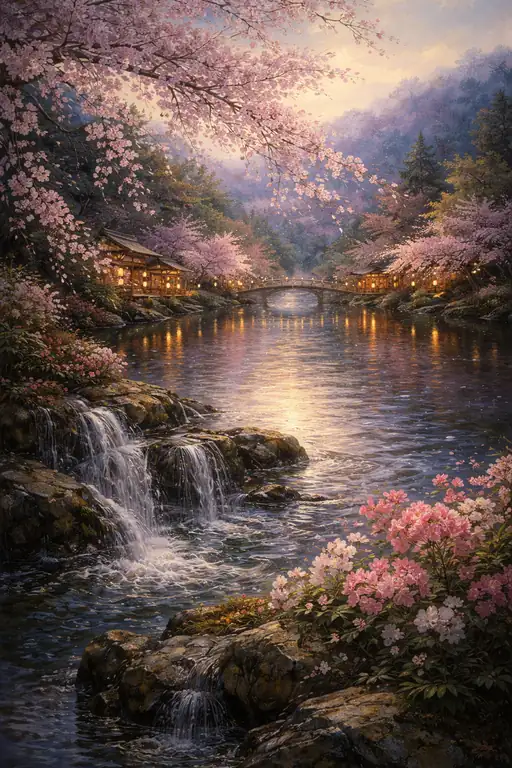 Whispers of the Sakura Moon
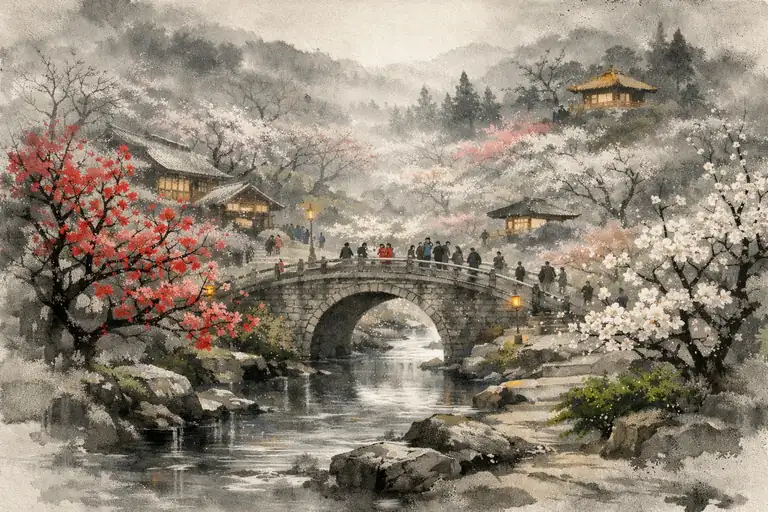 Under the Canopy of Pink Clouds
 The Floral Embrace: A Dream of Pink Petals
 Morning Revelation: Light Piercing the Spring Veil
 Petals Falling on the Gentle Stream
 Lanterns and Falling Petals in the Spring Dusk
 Spring's Eternal Float