
Spring Celebration at the Vermilion Gate
Critique
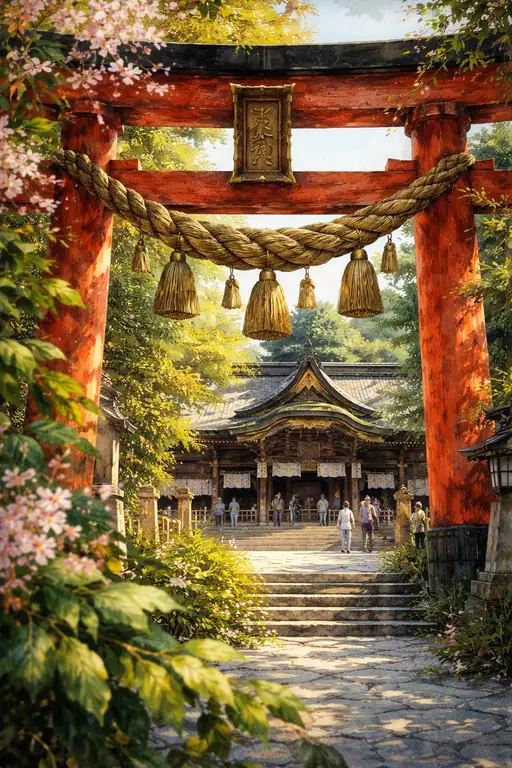
1. Introduction This watercolor painting captures the vibrant essence of spring at a traditional Japanese Shinto shrine. The work focuses on the intersection of sacred architecture and the fleeting beauty of nature, specifically the iconic cherry blossoms. By depicting a lively scene of visitors passing through a grand ceremonial gate, the artist illustrates a cultural ritual that remains a cornerstone of regional identity and seasonal celebration. 2. Description The central element is a massive, ornate red gate (mon) with a dark tiled roof, intricately detailed with gold accents. Surrounding the gate are several cherry trees in full bloom, their delicate pink blossoms framing the upper and side portions of the composition. In the foreground, a traditional stone lantern stands amidst mossy rocks and scattered petals, while a diverse crowd of people in both modern and traditional attire moves through the sun-drenched courtyard. 3. Analysis The artist utilizes a bright and cheerful color palette, where the bold vermilion of the gate serves as a striking focal point against the soft, ethereal pinks of the blossoms. The watercolor medium is handled with exceptional skill, using transparent washes to suggest the airy volume of the trees and fine brushwork to define the architectural complexity of the shrine. The dappled light filtering through the branches creates a dynamic pattern of highlights and shadows across the stone path and the figures. 4. Interpretation and Evaluation This piece can be interpreted as a celebration of renewal and the harmonious coexistence of tradition and modern life. The technical execution is particularly noteworthy for its ability to balance the weight of the massive structure with the lightness of the floral display. The artist demonstrates originality in the way they capture the collective experience of the crowd, making the scene feel inclusive and vibrant rather than purely decorative or static. 5. Conclusion While the subject is a classic trope in Japanese art, the specific attention to the play of light and the detailed textures of the foreground elements provides a fresh perspective. The painting successfully conveys the festive atmosphere of a spring festival, evoking a sense of joy and reverence. Ultimately, the work stands as a sophisticated and technically accomplished tribute to one of the most beloved seasonal spectacles in the natural and cultural landscape.
Same Subcategory
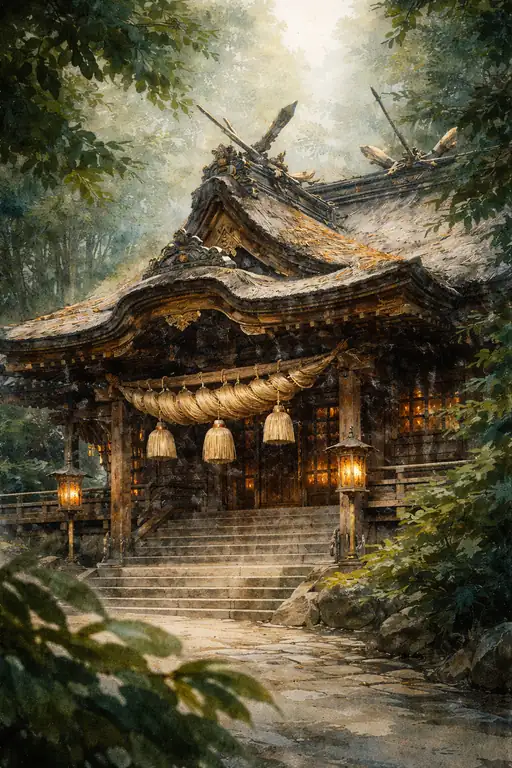 The Sacred Silence of the Moss-Covered Hall
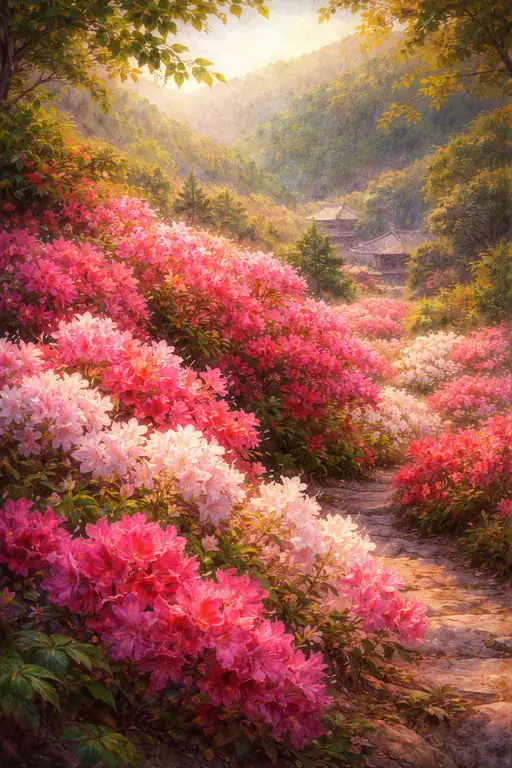 Crimson Grandeur in the Spring
Similar Artworks
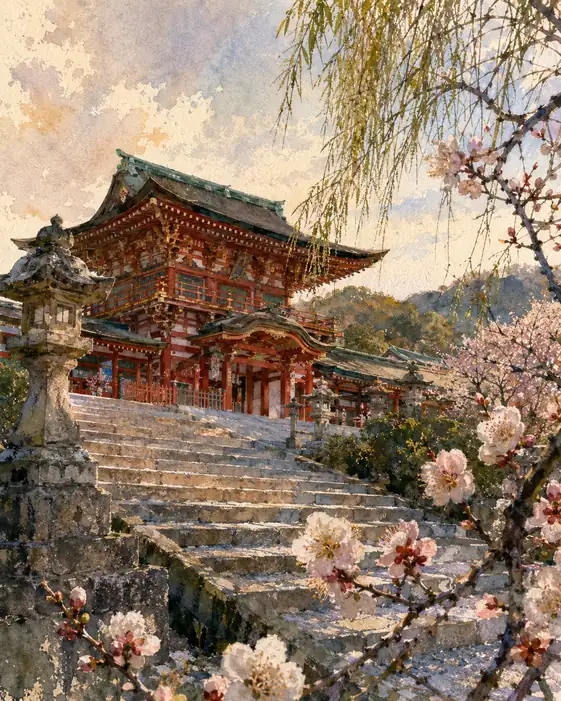 Eternal Glow of the Sacred Spring
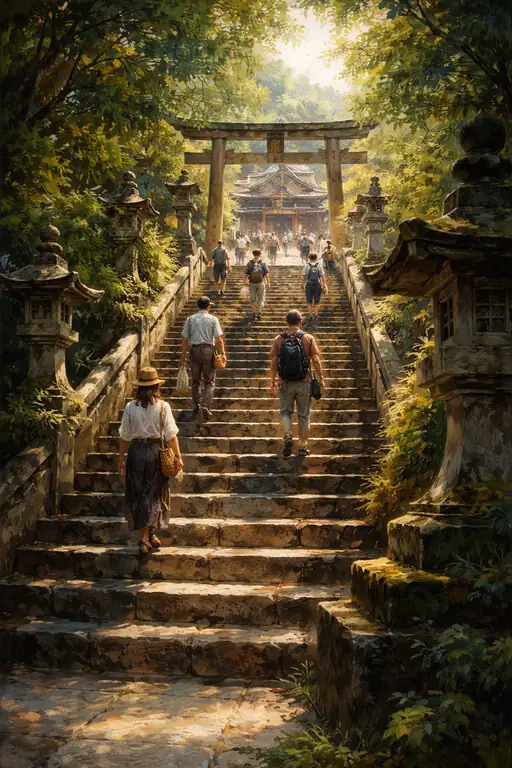 Path to the Sacred Light
 Passage Through the Sacred Shadows
 Sanctuary in the Forest
 Where Crimson Meets the Emerald Wilds
 Whispers of the Sunlit Sanctuary
 The Threshold of Golden Light
 Awakening the Sacred Path
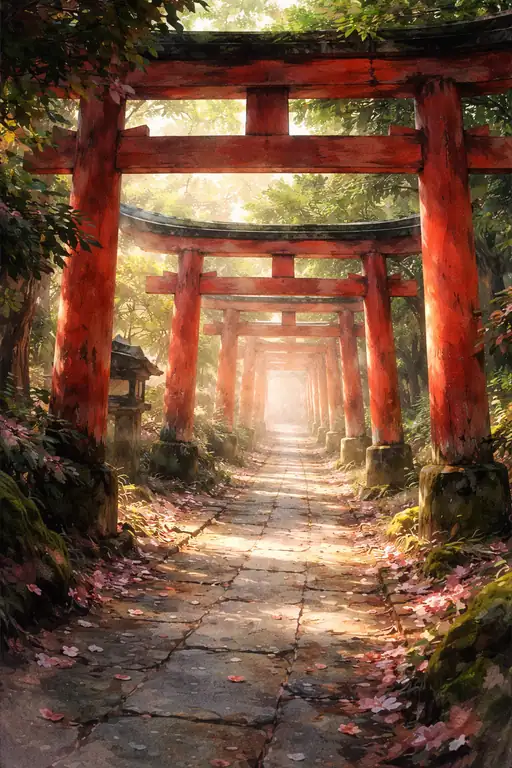 The Radiant Path of a Thousand Gates
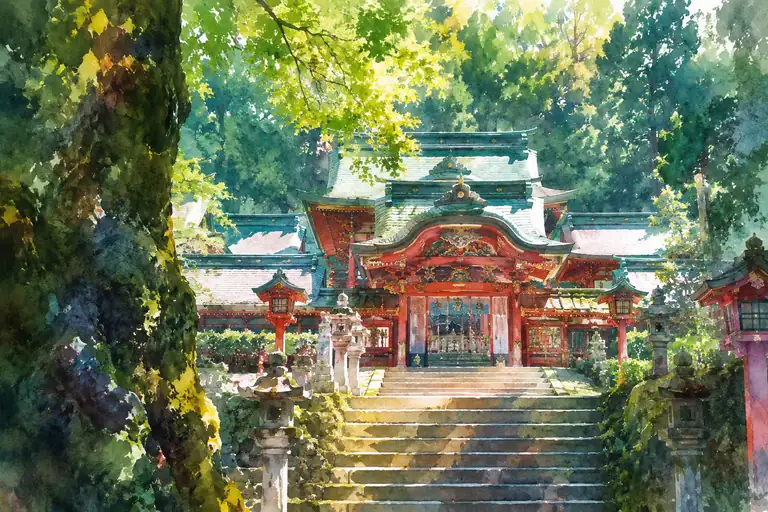 Sunlight on the Sacred Path