
Path to the Sacred Light
Critique
Introduction This evocative painting depicts a bustling scene at a traditional Japanese shrine, centered on a steep stone staircase that leads the viewer upward toward a majestic torii gate and a distant temple structure. The work masterfully utilizes the effect of sunlight filtering through a dense forest canopy, creating a dappled light effect that lends a sacred and ethereal quality to the pilgrimage. It captures a moment of collective spiritual journeying within a serene natural environment. Description The foreground is flanked by large, weathered stone lanterns, their textured surfaces showing the passage of time. A diverse group of people, dressed in modern attire, are shown ascending the many stone steps, their figures partially illuminated by patches of brilliant sunlight. In the middle ground, a large stone torii gate marks the entrance to the inner sanctuary, where the ornate roof of a shrine building is visible against a backdrop of lush, sun-drenched greenery. Analysis The vertical composition emphasizes the physical effort of the climb and the height of the sacred site. The artist employs a "komorebi" effect—light filtering through leaves—to break up the solid forms of the stone and create a sense of movement and depth. The color palette is grounded in natural greens, browns, and greys, but is elevated by the high-value yellows and whites used for the sunlight, which acts as a guide for the eye as it travels up the stairs. Interpretation and Evaluation This piece successfully illustrates the intersection of modern life and ancient tradition. The contrast between the stoic, permanent stone structures and the transient figures of the visitors creates a poignant narrative about the continuity of faith. The technical execution of the light and shadow is particularly impressive, as it convincingly renders the atmospheric quality of a forest path. The level of detail in the stonework and the architectural elements demonstrates a sophisticated level of craftsmanship. Conclusion While the initial focus is on the scale of the staircase and the architecture, a deeper resonance is found in the way light unifies the various elements of the scene. The harmony between the man-made path and the surrounding forest creates a powerful sense of place that is both inviting and awe-inspiring. Ultimately, the painting stands as a beautiful tribute to the enduring spiritual landscapes of Japan, leaving the viewer with a sense of quiet reverence and wonder.
Same Subcategory
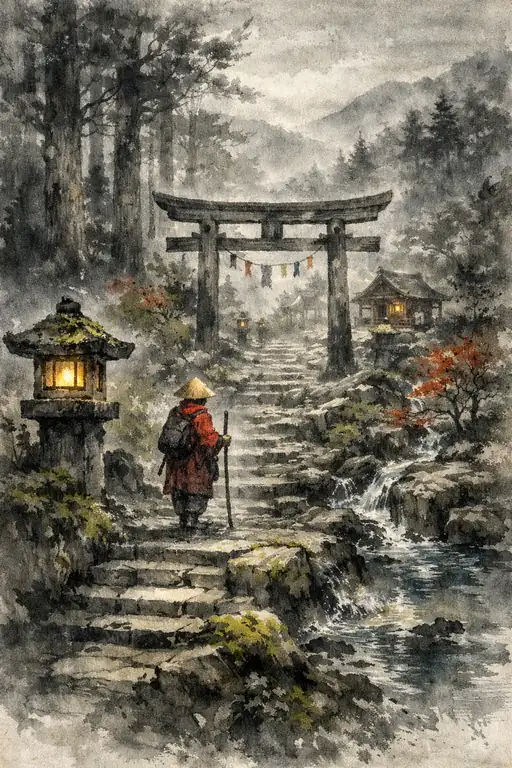 The Pilgrim’s Crimson Steps
 Ascent into the Light
Similar Artworks
 Echoes of the Sacred Grove
 Spring Celebration at the Vermilion Gate
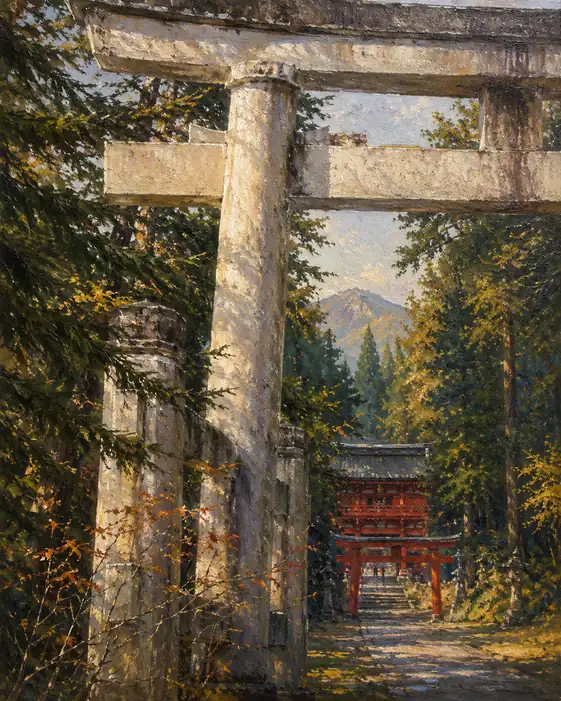 Passage Through the Sacred Shadows
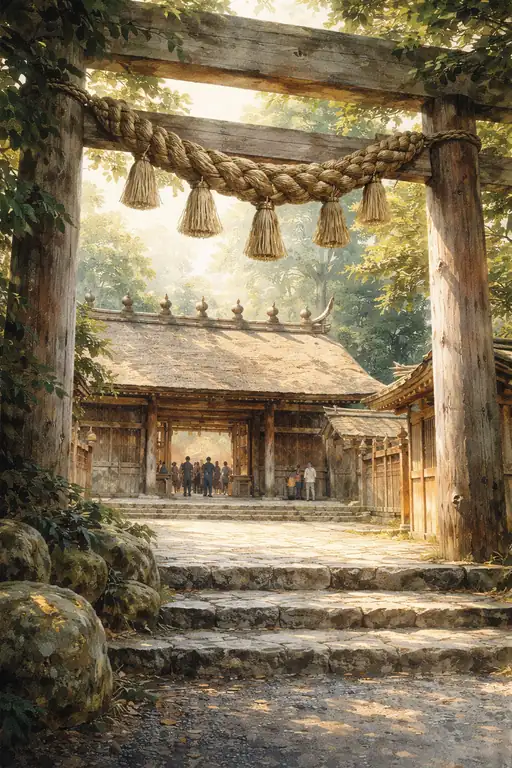 Awakening the Sacred Path
 Guardian of the Glimmering Portal
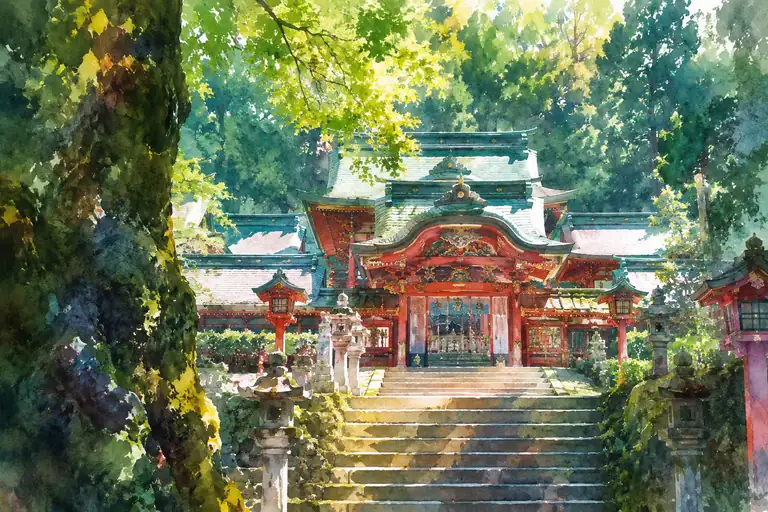 Sunlight on the Sacred Path
 Mystic Gateway in the Honeycombed Cliffs
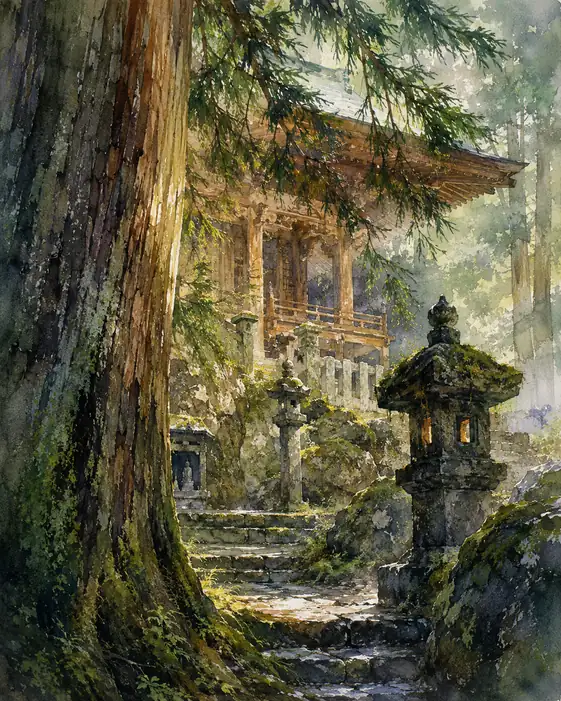 Sanctuary of the Ancient Cedars
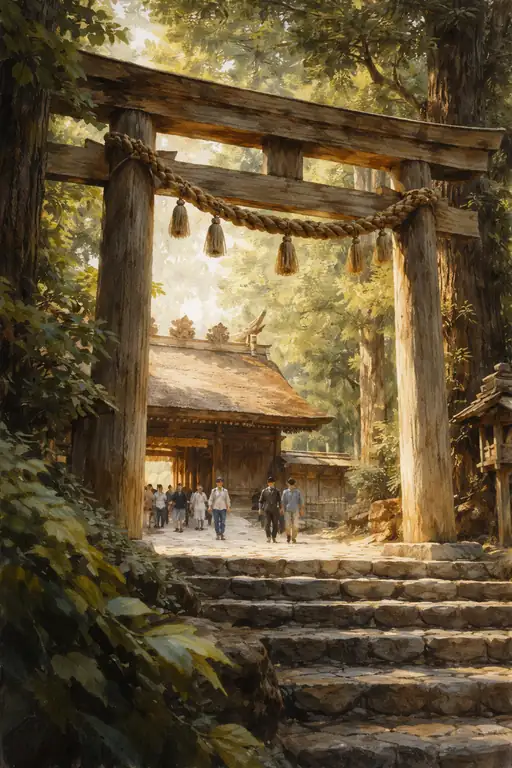 Passage to the Sacred Grove
 Where Crimson Meets the Emerald Wilds