
Horizon of Silent Isles
Critique
Introduction This panoramic landscape painting offers a stunning aerial perspective of a coastal archipelago, viewed from a rustic wooden observation deck. The composition is masterfully framed by the rugged branches of pine trees at the top, which anchor the viewer's gaze and provide a natural window into the expansive scene below. The work effectively captures the serene beauty of a high-altitude lookout point, emphasizing the vastness of the natural world and the quietude of a remote coastal region. Description In the immediate foreground, a sturdy wooden fence made of rough-hewn logs runs along a stone-paved terrace, with long shadows stretching across the textured floor. Beyond the railing, the land drops away into steep, densely forested hills that meet a shimmering sea. The water is dotted with several lush, green islands of varying sizes, while a brilliant path of sunlight reflects off the surface, leading the eye toward a distant horizon where hazy mountains meet a soft, clouded sky. Analysis The artist utilizes a complex layered composition, using the foreground terrace to establish a sense of scale and physical presence. The use of atmospheric perspective is evident in the way the distant landmasses fade into a pale blue-grey, creating a profound sense of depth. The lighting is particularly noteworthy, with the low angle of the sun creating high-contrast highlights on the wooden logs and a dazzling, almost metallic sheen on the water's surface, which provides a strong focal point. Interpretation and Evaluation This piece successfully conveys the feeling of "mono no aware," a Japanese aesthetic sense of the beauty of the ephemeral and the vastness of nature. The technical rendering of textures—from the scaly bark of the pine trees to the rippling water—shows a high degree of skill and attention to detail. The choice of a high-altitude viewpoint allows the viewer to experience a sense of liberation and awe, making the work both emotionally resonant and visually captivating. Conclusion Initial impressions of the painting are dominated by its expansive view, yet closer inspection reveals the intricate care taken in the foreground details. The harmony between the man-made observation point and the untouched natural beauty of the archipelago creates a compelling narrative of human interaction with the environment. Ultimately, the work serves as a powerful reminder of the transcendent power of the landscape, leaving a lasting impression of peace and grandeur.
Same Subcategory
 Haven of the Sapphire Bay
Similar Artworks
 Where the Blue Horizon Whispers to the Heart
 Solitary Sentinel on the Sunlit Path
 Beyond the Horizon's Embrace
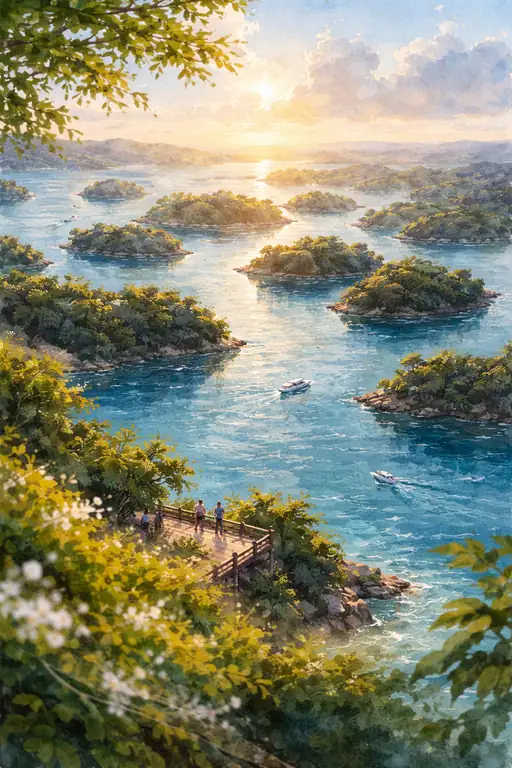 The Golden Path to a Thousand Dreams
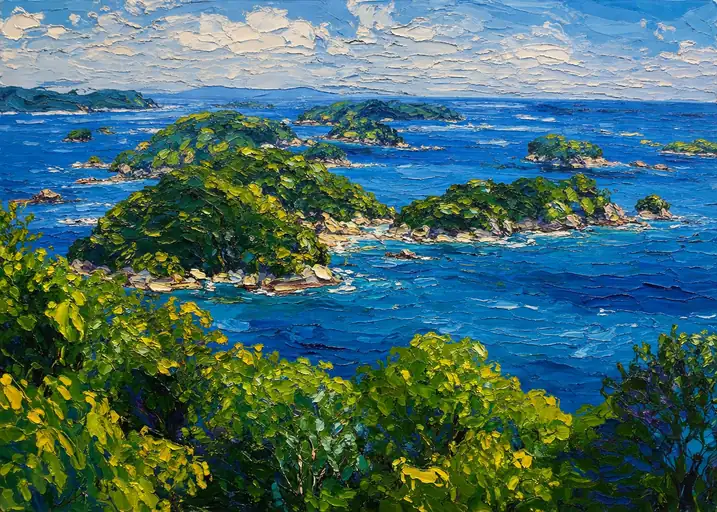 Enduring Pulses of the Azure Labyrinth
 Breath of the Golden Dawn
 Luminous Glimpses of the Azure Horizon
 The Fjord's Embrace
 Solitary Voyage Across the Turquoise Haven
 Golden Twilight Over the Islands