
Echoes of a Sunlit Antiquity
Critique
1. Introduction This painting presents a serene landscape dominated by classical stone architecture bathed in the warm, golden light of a sunlit day. The composition features a variety of structures, including a prominent obelisk, a domed gazebo, and massive arched ruins. These elements are arranged across a series of stone steps and platforms, creating a sense of depth and ancient grandeur. The overall atmosphere is one of timeless tranquility and enduring monumentality. 2. Description In the center of the frame stands a tall, slender white obelisk with a sharp pyramidal top, reflecting the bright sunlight. To its right, a circular gazebo with a domed roof and slender columns sits atop a stone base, its delicate form contrasting with the more massive structures. On the left, a large, weathered stone arch frames a portion of the background, where distant blue mountains can be glimpsed under a soft sky. The foreground consists of rough-hewn stone blocks and steps, their surfaces textured with visible brushstrokes. 3. Analysis The artist utilizes a warm color palette dominated by whites, creams, and golden tones, accented by the cool blues of the sky and distant hills. The directional lighting from the left creates strong highlights and deep shadows, emphasizing the three-dimensional forms of the architecture. The brushwork is expressive and painterly, particularly in the foliage on the right and the textures of the stone. This technique softens the rigid lines of the classical forms, imbuing the scene with a sense of atmosphere and light. 4. Interpretation and Evaluation The work can be interpreted as a meditation on the passage of time and the beauty of architectural ruins. The choice of classical motifs evokes a sense of historical weight, while the vibrant lighting suggests a continued relevance or a spiritual quality. Technically, the painting demonstrates a strong command of light and shadow, using them to define space and volume effectively. The balance between the massive stone blocks and the airy, light-filled sky creates a harmonious and balanced composition. 5. Conclusion The initial impression of a simple sunlit ruins evolves into an appreciation for the intricate interplay of light, texture, and classical form. The painting succeeds in capturing a moment of quiet majesty, inviting the viewer to contemplate the enduring nature of these structures. Through its skillful application of color and brushwork, the piece offers a compelling vision of a monumental past that remains vibrant and evocative. The work is a testament to the evocative power of light in landscape painting.
Same Subcategory
 Still Watching Over the Dream
 Twilight Reverie by the Domed Cathedral
Similar Artworks
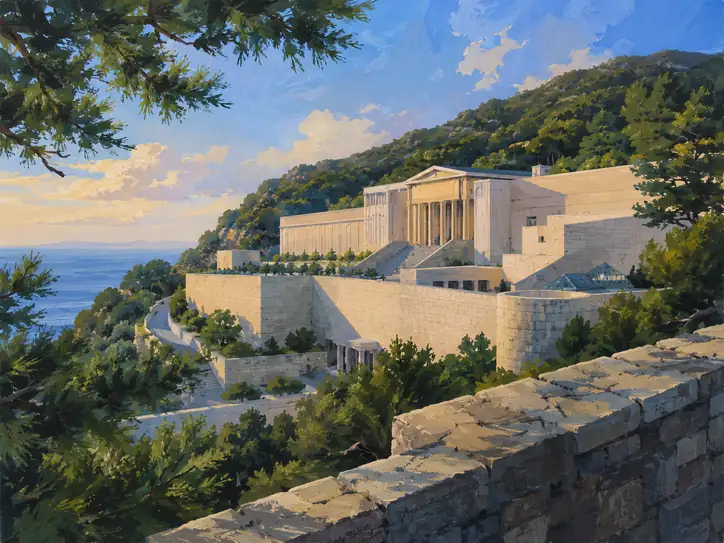 Sanctuary on the Azure Slopes
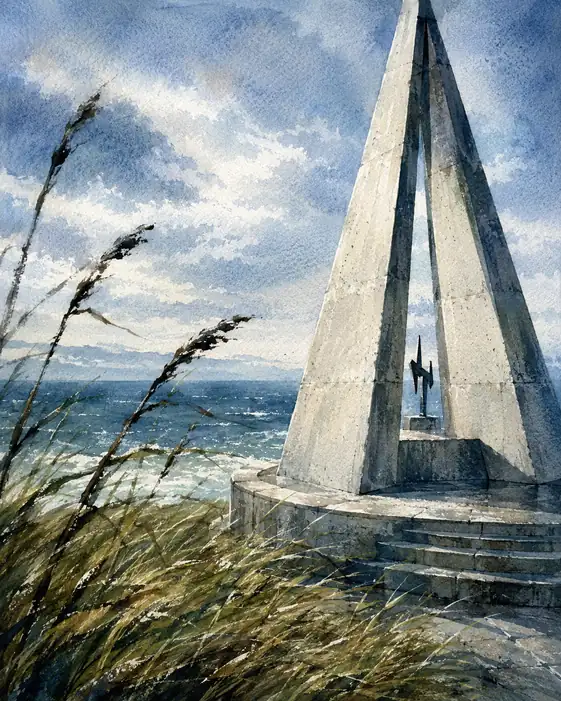 Sentinel of the Shore: Echoes of Memory
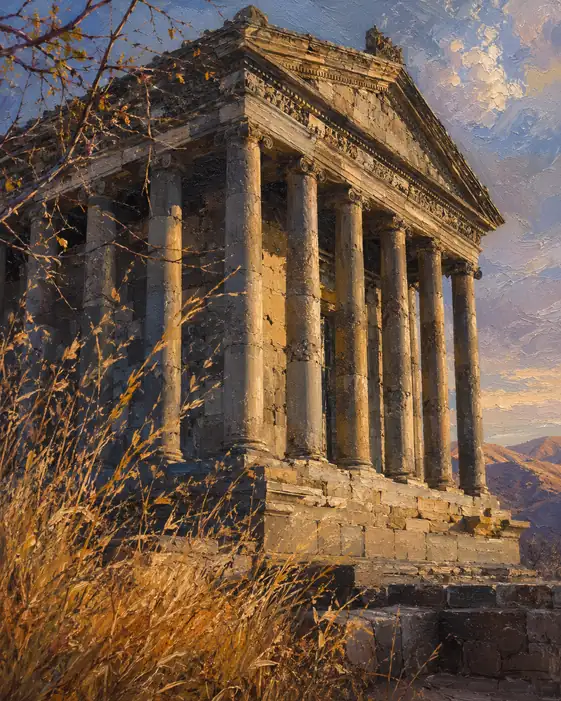 Symphony of Stone and Fading Light
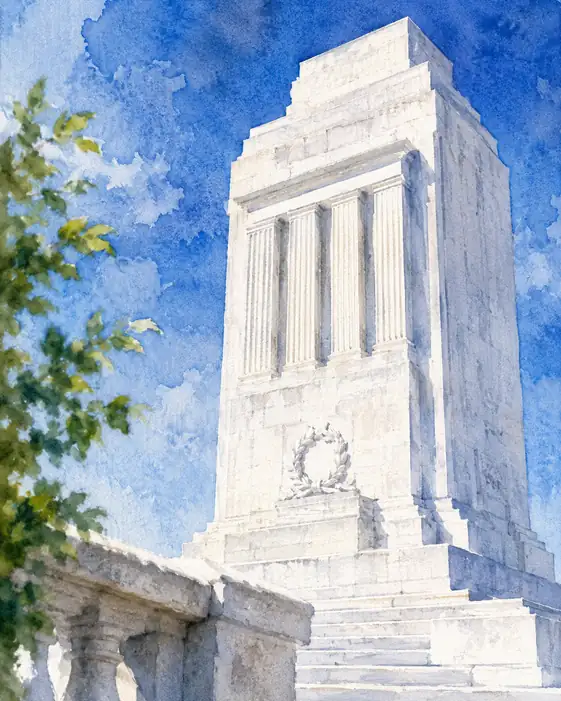 Skyward Remembrance
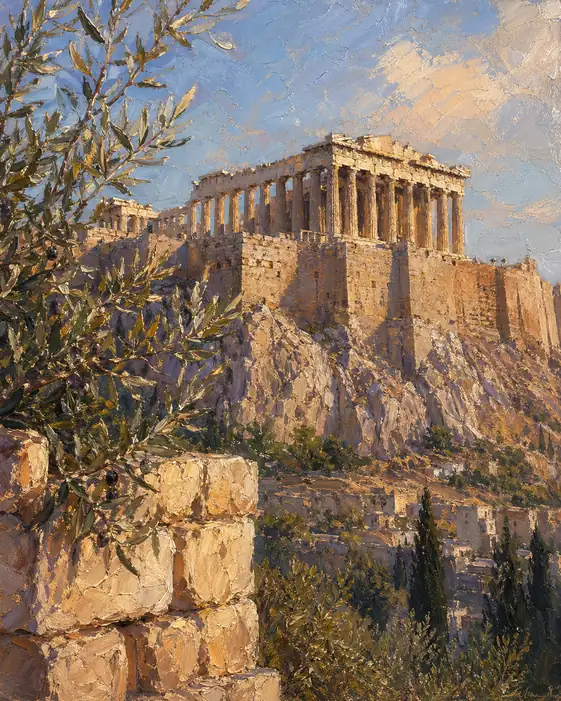 Whispers of Eternal Stone
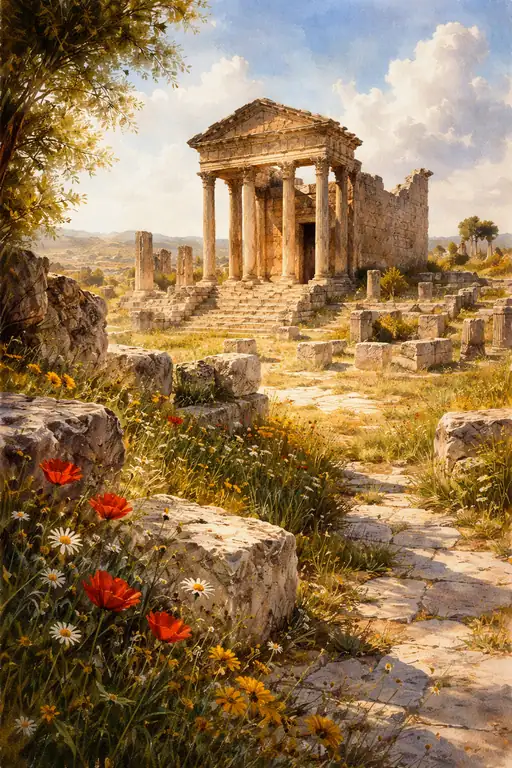 Where Time Sleeps Among the Ruins
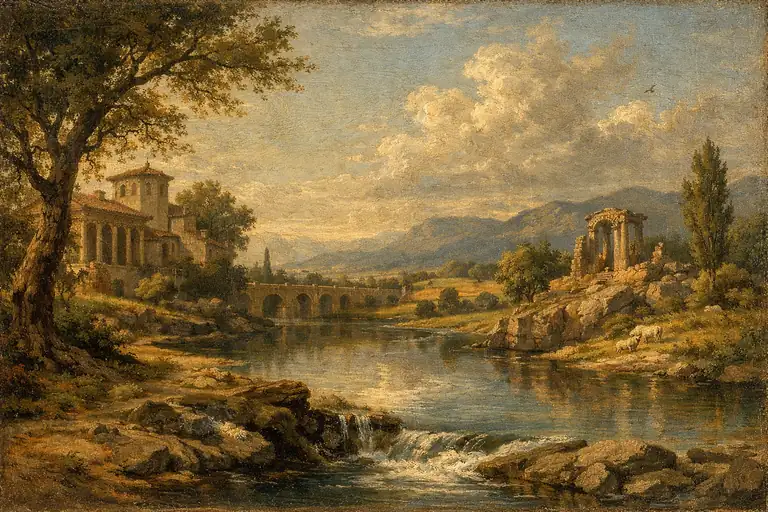 Villa, Bridge, and Ruins
 Legacy of the Golden Afternoon
 The Golden Chateau's Sunlit Slumber
 Golden Dawn Over the Marble Dream