
Twilight Beacon on the Canal
Critique
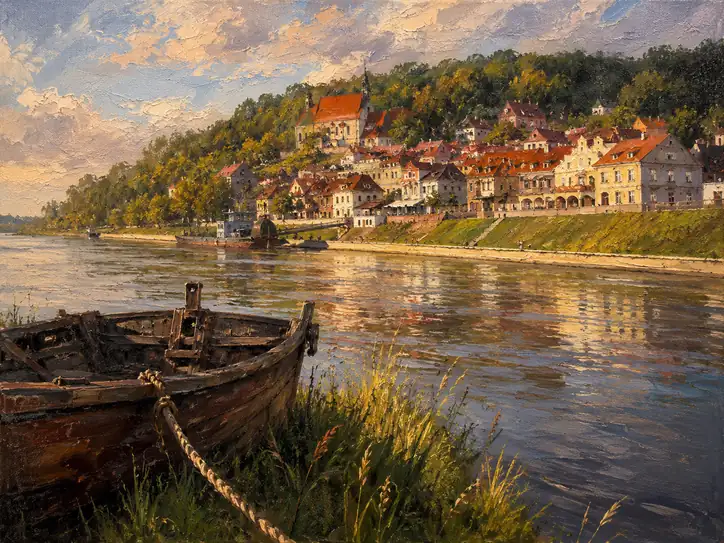
1. Introduction This atmospheric landscape painting depicts a traditional riverside town at twilight, masterfully utilizing light and shadow to create a sense of nostalgia and quiet activity. The composition centers on a prominent stone lantern in the foreground, which serves as a visual anchor and a symbolic beacon. The harmonious blend of natural elements and human settlement invites the viewer to experience a serene, transitory moment in a timeless cultural setting. 2. Description In the immediate left foreground stands a large, weathered stone lantern, its lattice windows glowing with a warm, amber light. Below it, a dark wooden boat floats silently on the deep blue water, which reflects the surrounding illumination in shimmering ripples. To the right, a row of multi-story wooden buildings lines the riverbank, their interiors and exterior lanterns casting a golden radiance onto the crowded walkways and the various boats moored nearby. The background features a series of misty, forested hills that recede into a pale, overcast evening sky. 3. Analysis The artist employs a sophisticated vertical composition that balances the heavy, textured mass of the stone lantern against the fluid, reflective surface of the river. The use of complementary colors—deep blues for the environment and warm oranges for the artificial light—creates a striking visual tension and a cozy, inviting mood. The brushwork is particularly expressive in the rendering of the water, where short, rhythmic strokes capture the dynamic play of light on the moving surface, enhancing the feeling of depth and atmosphere. 4. Interpretation and Evaluation This work beautifully captures the transition from day to night, symbolizing the enduring rhythm of community life and the comfort of returning home. The stone lantern acts as a symbol of guidance and tradition, grounding the ephemeral nature of the twilight hour in a sense of permanence. The technical execution is superb, especially in the artist's ability to convey a complex emotional atmosphere through a limited but effective palette and varied textural contrasts between stone, wood, and water. 5. Conclusion What begins as a study of a single architectural element expands into a comprehensive portrait of a living, breathing historical landscape through careful observation. The painting successfully balances intimate foreground detail with a broad, atmospheric perspective of the town and distant mountains. Ultimately, it stands as a poignant celebration of light, water, and the timeless charm of riverside settlements, leaving a lasting impression of tranquility and cultural depth.
Same Subcategory
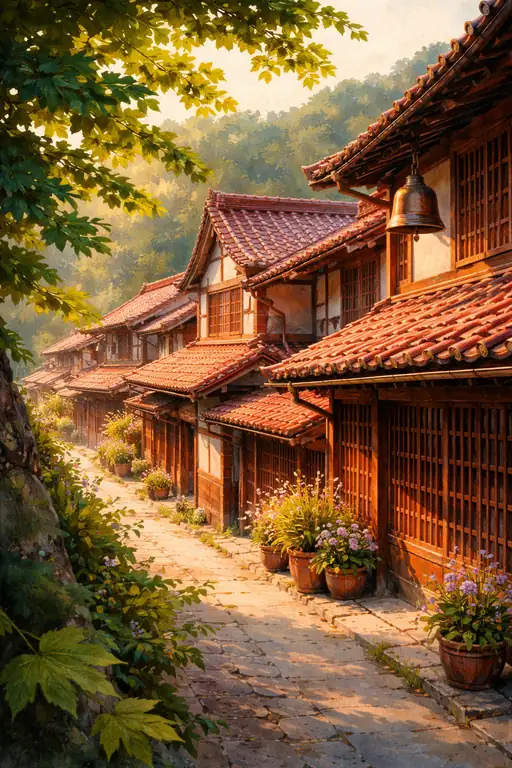 Nostalgia on the Stone Path
 Sunset Glow on the Ancient Road
Similar Artworks
 The Golden Cradle of Memories
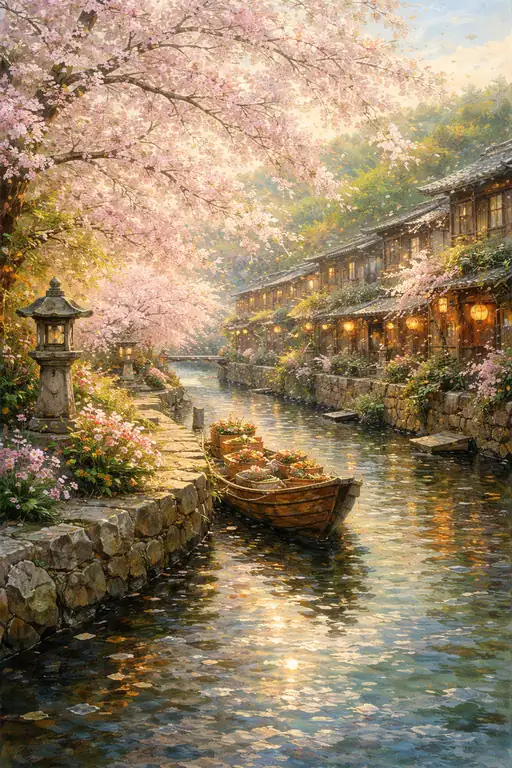 Reflections of a Peaceful Voyage
 Lanterns on the Blossom Tide
 Lotus River through the Ancient Village
 Warmth in the Quiet River Town
 The Village of Evening Calm
 Journey to the Floating Shrine at Dusk
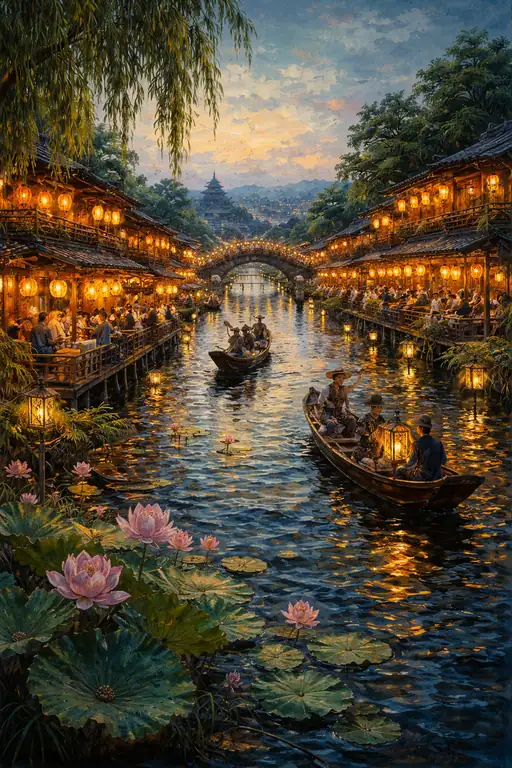 Reflections of the Silent Ryokan
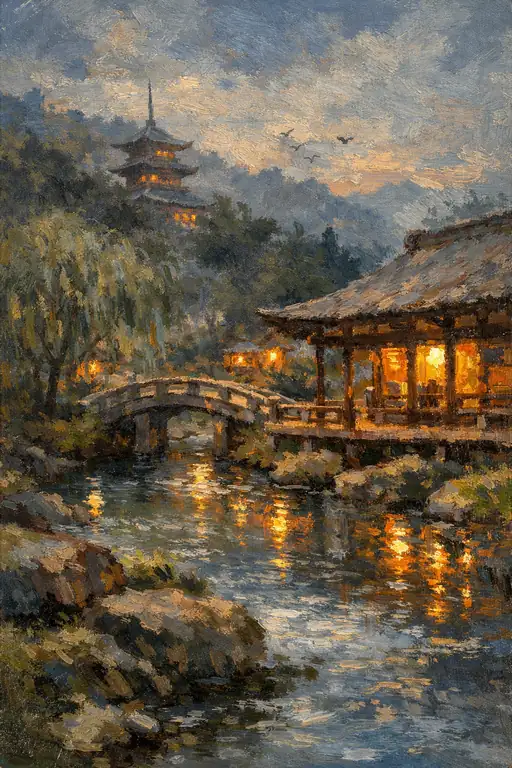 Echoes of the Gilded Twilight: A Serene Voyage Through Time's Painted River
 The Quiet Anchor of the River's Flow